

Understanding cloud service Cloud sla monitoring
In today's interconnected digital landscape, businesses increasingly rely on cloud services for their critical operations. Ensuring these services consistently meet agreed-upon performance and availability standards is paramount for business continuity and customer satisfaction. This is precisely where effective cloud service Cloud sla monitoring becomes indispensable, providing the visibility needed to uphold contractual commitments.
cloud service Cloud sla monitoring refers to the systematic process of continuously observing, evaluating, and reporting on a cloud provider's adherence to the service level agreements (SLAs) established with their customers. These SLAs legally bind providers to specific performance metrics, defining the expected level of service quality. Without robust monitoring, organizations are often left in the dark about actual service performance.
Traditional IT monitoring, while valuable, often falls short when applied to dynamic cloud environments. Cloud services introduce complexities like shared infrastructure, multi-tenancy, and distributed architectures that require specialized monitoring approaches. Therefore, understanding the nuances of cloud service level agreement monitoring is crucial for any organization leveraging the cloud. This guide aims to be your definitive cloud service Cloud sla monitoring guide.
Effective monitoring ensures that your cloud providers are held accountable for the services they deliver. It helps identify potential issues before they impact end-users, facilitating proactive problem resolution. Ultimately, consistent monitoring supports strategic decision-making regarding cloud adoption and vendor management.
The Importance of Robust cloud service Cloud sla monitoring
Robust cloud service Cloud sla monitoring is not merely a technical necessity; it is a strategic imperative that directly impacts a business's operational efficiency, financial health, and reputation. When cloud services falter, the consequences can range from minor disruptions to significant financial losses and reputational damage. Comprehensive monitoring acts as a safeguard against these potential pitfalls.
One of the primary benefits is risk mitigation. By continuously tracking key performance indicators against SLA targets, organizations can quickly detect deviations and potential breaches. This early detection allows for timely intervention, minimizing downtime and its associated costs. Moreover, it provides crucial data for holding cloud providers accountable for their service delivery.
Beyond immediate operational concerns, diligent cloud service Cloud sla monitoring helps in ensuring business continuity. Consistent adherence to performance standards means critical applications remain available and responsive, supporting uninterrupted business processes. This is especially vital for customer-facing applications where downtime can directly lead to lost sales and decreased customer trust.
Furthermore, compliance requirements often necessitate demonstrable proof of service performance. For industries with strict regulatory guidelines, public cloud SLA tracking and private cloud SLA compliance are non-negotiable. Monitoring provides the auditable data required to demonstrate adherence to these regulations, protecting businesses from potential fines and legal repercussions.
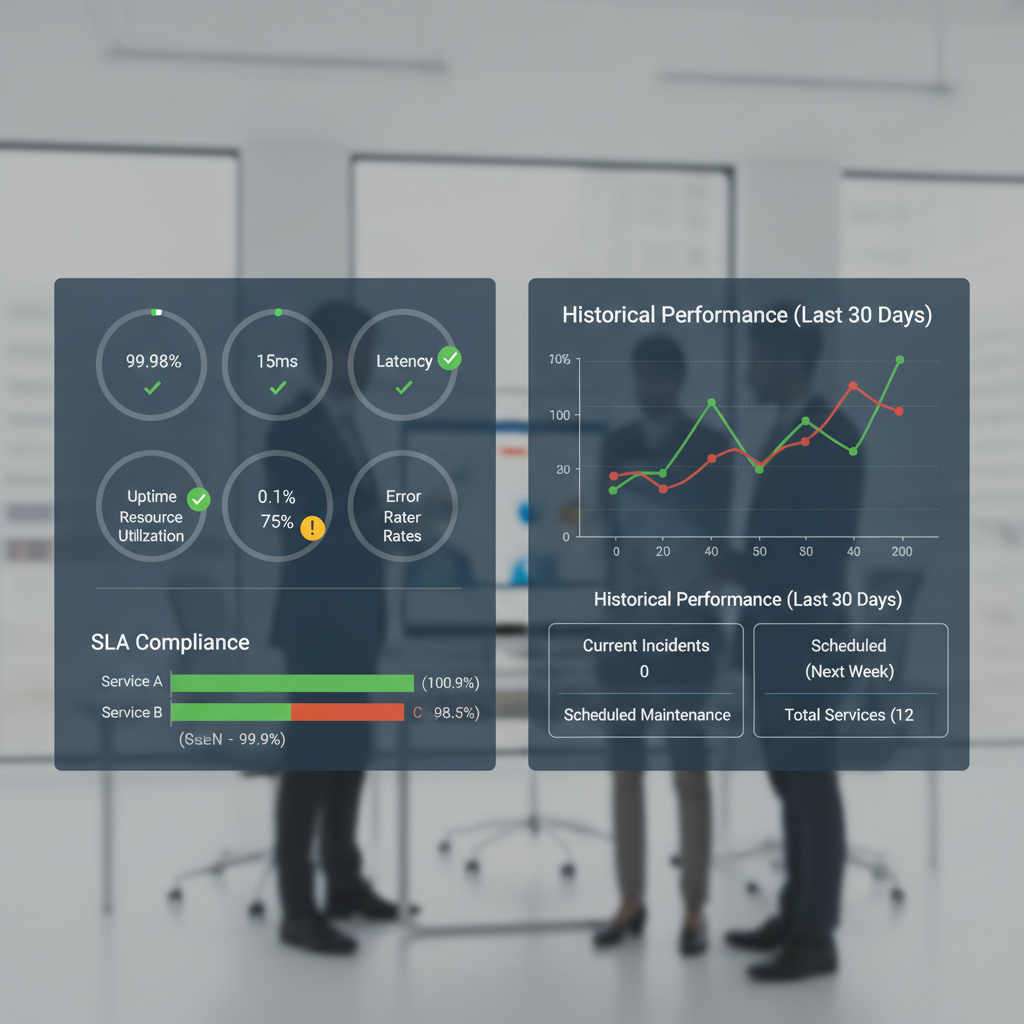
Key Components of an Effective cloud service Cloud sla monitoring Strategy
Building an effective cloud service Cloud sla monitoring strategy involves several critical components that work in tandem to provide a holistic view of service performance. Each element plays a vital role in transforming raw data into actionable insights, enabling informed decision-making. A well-designed strategy ensures that all relevant aspects of cloud service delivery are continuously scrutinized.
The foundation of any robust monitoring strategy lies in clearly defining metrics and thresholds. These metrics, often stipulated in the SLA, typically include availability (e.g., uptime percentage), performance (e.g., latency, throughput), and security (e.g., incident response times). Establishing precise thresholds for each metric allows for automated alerts when performance dips below acceptable levels.
Next, selecting the right tools and technologies is crucial for efficient data collection and analysis. Modern monitoring solutions integrate with various cloud platforms and offer advanced analytics capabilities. They can aggregate data from multiple sources, visualize performance trends, and generate custom reports tailored to specific business needs. These tools are essential for comprehensive public cloud SLA tracking.
Automated alerting mechanisms are another indispensable component. When a defined threshold is breached, the system must immediately notify relevant stakeholders through various channels. This ensures that IT teams are aware of issues as soon as they arise, facilitating rapid response and problem resolution, thereby reducing the mean time to recovery.
Finally, comprehensive reporting and analytics capabilities are vital for demonstrating accountability and driving continuous improvement. Regular reports on SLA compliance provide transparency and enable performance reviews with cloud providers. Trend analysis helps identify recurring issues and areas for optimization, ensuring long-term service quality and adherence to private cloud SLA compliance standards.
SaaS SLA Monitoring, IaaS SLA Monitoring, and PaaS SLA Monitoring: Key Differences
While the core principles of cloud service Cloud sla monitoring remain consistent, the specifics of implementation and the metrics tracked often vary significantly across different cloud service models. Understanding these distinctions is crucial for tailoring an effective monitoring strategy for your specific cloud environment. Each model delegates different responsibilities, impacting what needs to be monitored.
SaaS SLA monitoring focuses primarily on the end-user experience and the application's availability and functionality. Since the provider manages the entire software stack, monitoring involves tracking application uptime, response times, feature availability, and data integrity from an end-user perspective. Customers have less control over the underlying infrastructure, shifting the monitoring focus upwards.
IaaS SLA monitoring, in contrast, delves deeper into the infrastructure layer. Here, the customer is responsible for managing operating systems, applications, and data, while the provider manages virtualization, servers, storage, and networking. Monitoring priorities include virtual machine uptime, network latency, storage performance (IOPS), and resource utilization. This requires a more granular view of infrastructure components.
PaaS SLA monitoring sits somewhere in between, focusing on the platform's availability, scalability, and performance for developers building and deploying applications. Providers manage the operating system, middleware, and runtime environment. Monitoring efforts concentrate on platform availability, deployment success rates, database performance, and the underlying infrastructure's health. It blends application and infrastructure concerns.
Despite these differences, all three models share common monitoring challenges such as data correlation, alert fatigue, and establishing clear lines of responsibility. Effective solutions often involve using specialized tools that can adapt to the unique characteristics of SaaS, IaaS, and PaaS environments. A unified dashboard capable of monitoring across these diverse models can significantly simplify cloud service Cloud sla monitoring.
ENSURE UNINTERRUPTED SERVICE
Ensure uninterrupted service delivery and proactively prevent costly SLA breaches. Leverage our automated, real
✓ Free consultation✓ No commitment required
✓ Trusted by experts
Implementing cloud service Cloud sla monitoring: Best Practices and Tips for 2026
Effective implementation of cloud service Cloud sla monitoring requires a structured approach and adherence to best practices that evolve with the dynamic cloud landscape. As cloud technologies advance and become more complex, so too must our monitoring strategies. Here are some essential tips for a robust monitoring framework in 2026.
Firstly, thoroughly understand your cloud provider's SLA documents. These are legal contracts outlining performance commitments and responsibilities. Pay close attention to definitions of downtime, measurement methodologies, and service credit clauses. A clear understanding prevents disputes and ensures you monitor the right things.
Next, invest in specialized cloud monitoring tools. Generic monitoring solutions may lack the depth and integration capabilities required for complex cloud environments. Look for tools that offer native cloud integration, AI-powered anomaly detection, and unified dashboards for comprehensive public cloud SLA tracking. The best cloud service Cloud sla monitoring solutions are purpose-built for the cloud.
Establish clear communication channels and processes with your cloud providers. When a potential SLA breach is detected, knowing exactly who to contact and what information to provide can significantly expedite resolution. Regular performance review meetings are also crucial for discussing trends and optimizing service delivery. These cloud service Cloud sla monitoring tips are vital for success.
Regularly review and adapt your monitoring strategy as your cloud footprint evolves. New services, increased usage, or changes in business requirements might necessitate adjustments to your monitored metrics and thresholds. A static monitoring strategy will quickly become obsolete in a dynamic cloud environment. Consider integrating monitoring data into your overall IT operations management.
Finally, leverage automation wherever possible. Automated alert routing, incident management integration, and report generation can significantly reduce manual effort and improve response times. This allows your teams to focus on analysis and resolution rather than routine monitoring tasks.
Challenges in cloud service Cloud sla monitoring and How to Overcome Them
Despite its critical importance, implementing and maintaining effective cloud service Cloud sla monitoring presents several significant challenges for organizations. These complexities stem from the inherent nature of cloud computing, requiring specialized strategies to overcome. Recognizing these hurdles is the first step toward building a resilient monitoring framework.
One major challenge is data sprawl and complexity. Cloud environments generate vast amounts of telemetry data from various services, regions, and layers. Correlating this data to get a coherent view of overall service health and SLA compliance can be daunting. Overcoming this requires advanced analytics platforms that can ingest, process, and correlate diverse data streams effectively.
Another hurdle is the lack of standardization across different cloud providers. Each provider may have unique metrics, terminology, and reporting formats, making it difficult to establish consistent monitoring practices across a multi-cloud or hybrid cloud strategy. Adopting vendor-agnostic monitoring tools and establishing internal standards can help mitigate this.
Vendor lock-in concerns also extend to monitoring. Relying solely on a single cloud provider's native monitoring tools can make it challenging to gain an unbiased view of performance or switch providers easily. Employing third-party, multi-cloud monitoring solutions offers greater flexibility and reduces dependence on any single vendor, providing better private cloud SLA compliance.
Defining clear accountability boundaries can be ambiguous, especially in PaaS or serverless models where shared responsibility is intricate. It's crucial to meticulously review SLAs and establish internal processes that clearly delineate what your team monitors versus what the provider is responsible for. This clarity aids in incident resolution and avoids finger-pointing during outages.
Finally, the sheer dynamic nature of cloud resources, with auto-scaling and ephemeral instances, makes traditional fixed-host monitoring inadequate. Monitoring solutions must be capable of dynamically discovering and tracking resources as they spin up and down. This adaptability is key for accurate public cloud SLA tracking and effective cloud service Cloud sla monitoring.
Real-World cloud service Cloud sla monitoring Examples
Examining real-world cloud service Cloud sla monitoring examples can illustrate the tangible benefits and practical applications of these strategies. These scenarios highlight how businesses leverage diligent monitoring to maintain service quality, ensure compliance, and optimize their cloud investments. From small startups to large enterprises, the principles remain universal.
Consider a retail company relying on an e-commerce platform hosted on IaaS. Their SLA guarantees 99.95% uptime for virtual machines and less than 50ms latency for database queries. Through diligent IaaS SLA monitoring, their team detects a sudden spike in database latency during peak shopping hours, threatening an SLA breach. Their monitoring tool immediately alerts them, identifying a misconfigured caching service as the root cause. This proactive detection and rapid fix prevented potential lost sales and customer dissatisfaction, demonstrating the value of active monitoring.
Another example involves a healthcare provider using a SaaS-based electronic health records (EHR) system. Their SLA specifies a maximum of two hours for security incident response and data availability of 99.9%. Their SaaS SLA monitoring solution tracks system uptime and also integrates with audit logs to flag unusual access patterns. When an attempt to access patient data from an unauthorized region is detected, an alert triggers immediate investigation, fulfilling the security incident response time outlined in the SLA and protecting sensitive patient information.
For a software development firm utilizing a PaaS platform for their CI/CD pipelines, their SLA outlines specific build and deployment success rates, along with platform availability. PaaS SLA monitoring identifies a consistent decline in deployment success rates on a particular region, indicating an underlying platform issue. Armed with this data, the firm can approach their cloud provider with concrete evidence, leading to a resolution that improves developer productivity and maintains project timelines. These cloud service Cloud sla monitoring examples highlight the diverse applications.
These examples underscore that effective cloud service Cloud sla monitoring is not just about detecting downtime; it encompasses a broader scope of performance, security, and operational metrics. It empowers organizations to ensure their cloud providers deliver on their promises, fostering trust and enabling critical business functions to operate smoothly.
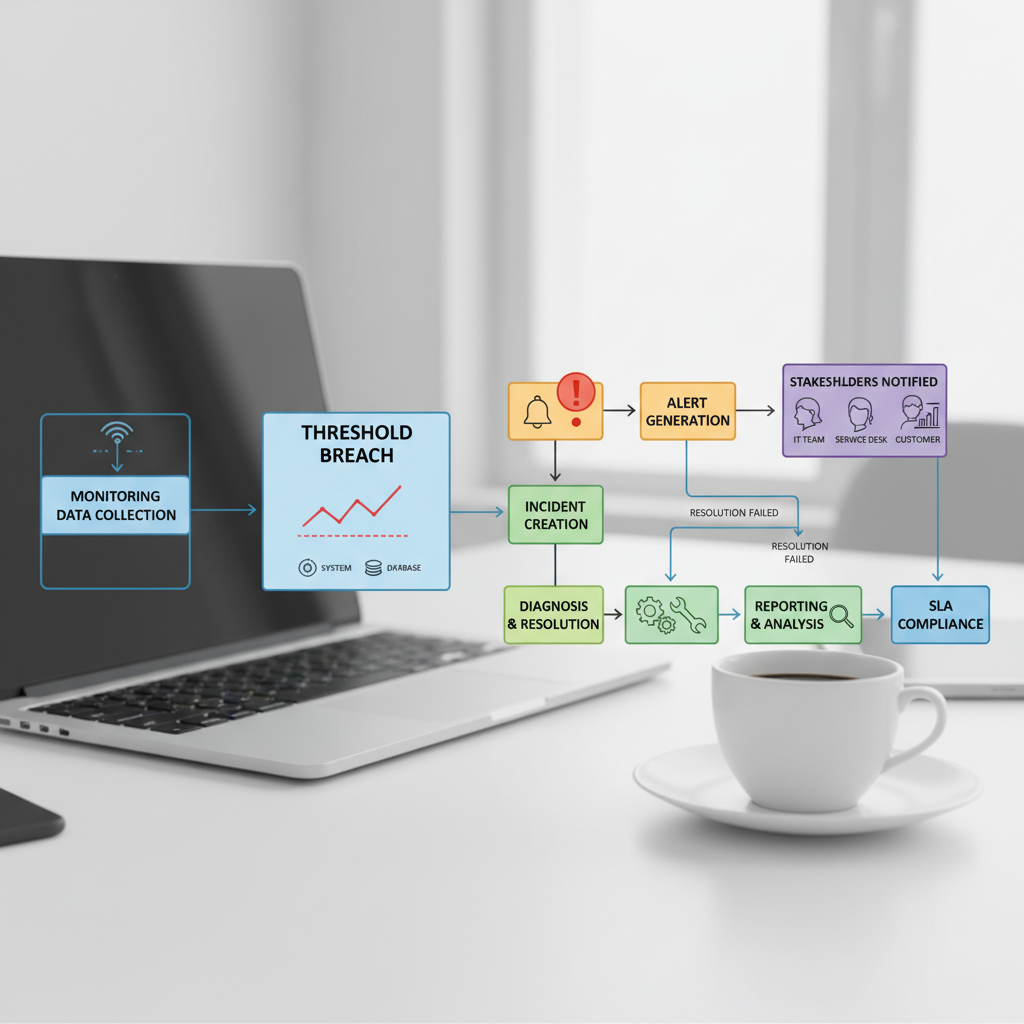
Choosing the Best cloud service Cloud sla monitoring Solution
Selecting the best cloud service Cloud sla monitoring solution is a critical decision that impacts your ability to effectively manage cloud performance and vendor relationships. With numerous tools available, understanding what to look for can significantly streamline the evaluation process. The right solution should align with your specific cloud architecture and business needs.
Firstly, consider the solution's compatibility and integration capabilities. It should seamlessly integrate with your existing cloud providers (AWS, Azure, Google Cloud, etc.) and other IT operations tools, such as incident management systems and CMDBs. Native integration ensures accurate data collection and a unified view across your environment, whether for public cloud SLA tracking or private cloud SLA compliance.
Scalability and flexibility are also paramount. Your monitoring solution must be able to scale alongside your cloud infrastructure, handling increasing volumes of data and a growing number of services. It should also offer the flexibility to monitor various cloud models, including SaaS, IaaS, and PaaS, accommodating your evolving cloud strategy without requiring multiple disparate tools.
Evaluate the depth and breadth of its monitoring capabilities. Look for features such as real-time performance metrics, historical data analysis, customizable dashboards, and intelligent alerting with anomaly detection. The solution should provide granular visibility into key performance indicators directly relevant to your SLAs. A comprehensive platform often represents the best cloud service Cloud sla monitoring option.
Cost-effectiveness is another vital factor. Consider not just the licensing fees but also the operational costs associated with deployment, maintenance, and training. A solution that provides significant value through automation, proactive issue detection, and comprehensive reporting can often justify its investment by preventing costly downtime and improving efficiency.
Finally, assess the vendor's reputation, support, and continuous development roadmap. A reputable vendor with strong customer support and a commitment to ongoing innovation ensures your monitoring solution remains current and effective against emerging cloud challenges. This strategic choice underpins the success of your entire cloud service Cloud sla monitoring endeavor.
Frequently Asked Questions
What is cloud service Cloud sla monitoring?
cloud service Cloud sla monitoring is the continuous process of observing, measuring, and reporting on a cloud provider's adherence to the performance, availability, and security standards outlined in their Service Level Agreements (SLAs). It ensures that contractual obligations are met and helps identify any deviations from expected service levels.
Why is cloud service Cloud sla monitoring important?
It is crucial for several reasons, including risk mitigation, ensuring business continuity, holding cloud providers accountable, and demonstrating compliance with regulatory requirements. Effective monitoring helps prevent costly downtime, protects data, and maintains customer trust by ensuring consistent service quality.
What metrics are typically monitored in cloud SLAs?
Common metrics include availability (e.g., uptime percentage), performance (e.g., latency, response times, throughput), and security (e.g., incident response times, data integrity). Specific metrics vary depending on the cloud service model (SaaS, IaaS, PaaS) and the nature of the service.
How does SaaS SLA monitoring differ from IaaS SLA monitoring?
SaaS SLA monitoring primarily focuses on the end-user application's availability and performance, as the provider manages the entire stack. IaaS SLA monitoring, conversely, concentrates on infrastructure components like virtual machine uptime, network performance, and storage capabilities, as the customer manages the operating system and above.
Can cloud service Cloud sla monitoring help with compliance?
Yes, it is vital for compliance. Many industry regulations and standards require organizations to demonstrate that their cloud services meet specific performance and security benchmarks. Monitoring provides the auditable data needed to prove adherence to these requirements, mitigating legal and financial risks.
What should I look for in a cloud service Cloud sla monitoring tool?
Key features include seamless integration with your cloud providers, scalability, comprehensive monitoring capabilities (real-time and historical data, custom dashboards), intelligent alerting with anomaly detection, and strong reporting features. It should also be cost-effective and backed by a reputable vendor.
ENSURE UNINTERRUPTED SERVICE
Ensure uninterrupted service delivery and proactively prevent costly SLA breaches. Leverage our automated, real
✓ Free consultation✓ No commitment required
✓ Trusted by experts
Conclusion
Effective cloud service Cloud sla monitoring is an indispensable practice for any organization leveraging cloud technologies in 2026 and beyond. It moves beyond mere technical oversight to become a strategic tool for risk management, cost optimization, and ensuring uninterrupted business operations. By diligently tracking performance against SLAs, businesses can hold providers accountable and proactively address potential issues.
Implementing a robust monitoring strategy, understanding the nuances of SaaS, IaaS, and PaaS SLA monitoring, and choosing the right solutions are all critical steps. This cloud service Cloud sla monitoring guide provides a comprehensive framework to ensure your cloud investments consistently deliver the promised value. Embrace proactive monitoring to secure your cloud future.
Opsio provides cloud consulting and managed services to help organizations implement and manage their technology infrastructure effectively.