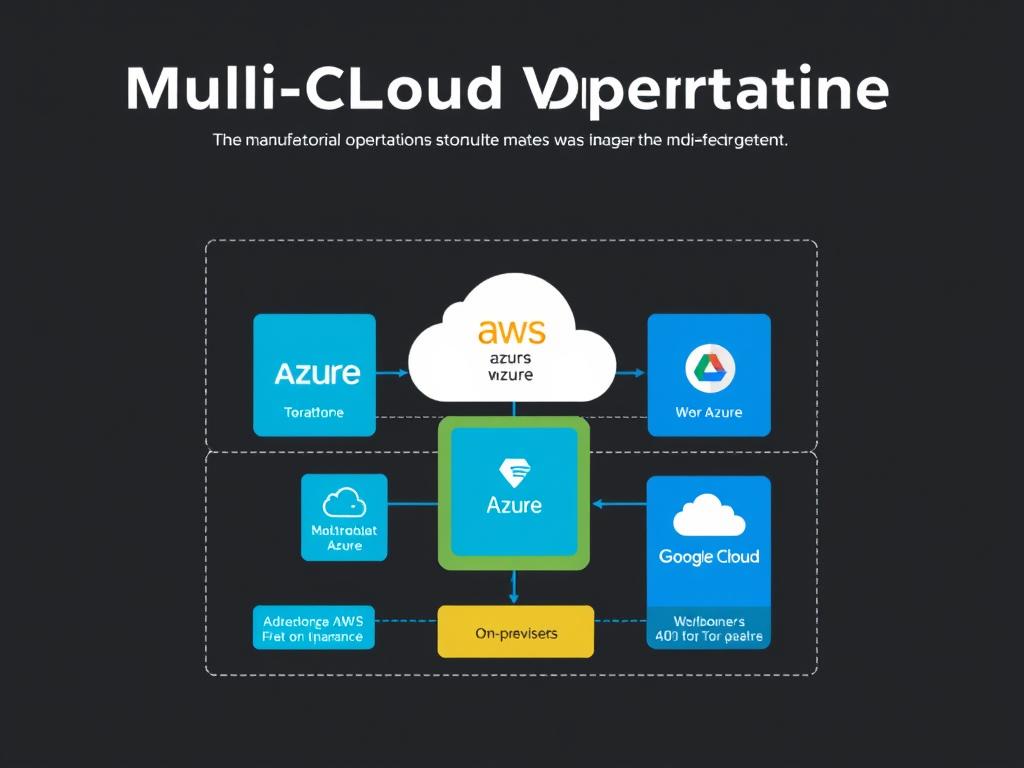
The manufacturing landscape is undergoing a profound transformation as cloud technologies redefine what’s possible on the factory floor. Today’s manufacturers face mounting pressure to reduce costs, increase uptime, and accelerate innovation cycles. Cloud technologies for manufacturing have evolved from optional enhancements to essential strategic enablers of smarter factories, resilient supply chains, and faster product lifecycles.Over the last decade, we’ve witnessed manufacturers shift from isolated, on-premises automation systems to connected, data-driven operations powered by cloud platforms. These platforms provide the scale, centralized analytics, and global integration capabilities needed to turn raw sensor data into actionable insights that improve throughput and reduce costly downtime.
“Cloud-first” architectures enable manufacturers to shift from capital-heavy investments in servers and proprietary stacks to a more agile, service-based model that supports continuous improvement.
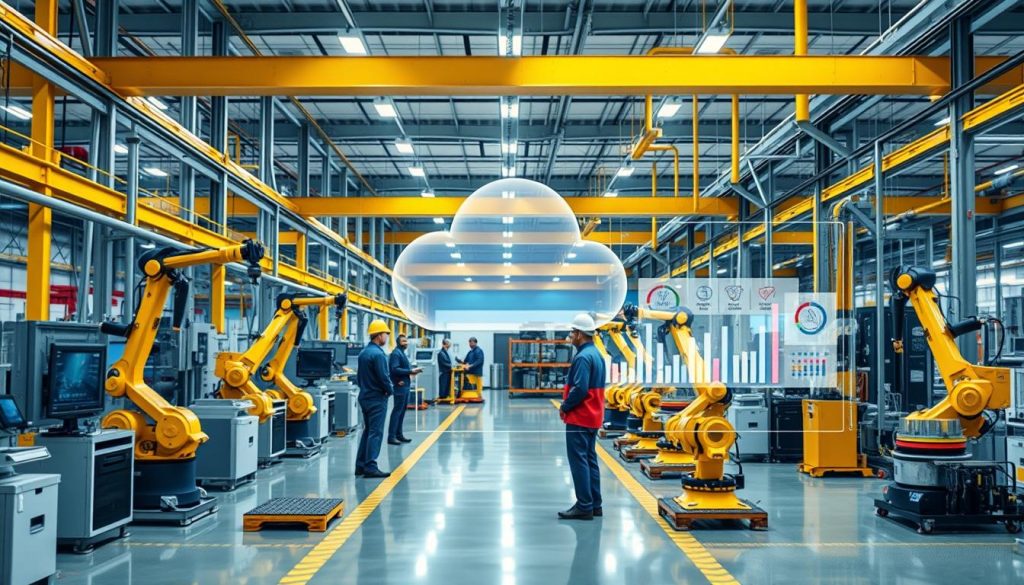
Why Cloud Technologies for Manufacturing Matter
According to research from McKinsey, manufacturers implementing cloud-based solutions report up to 20-40% reduction in maintenance costs and 10-20% improvements in overall equipment uptime. These gains stem from the fundamental advantages cloud platforms offer:
- Shift from capital expenditure to operational expenditure models
- Rapid scalability to accommodate production fluctuations
- Centralized data collection enabling cross-plant analytics
- Enhanced collaboration across global manufacturing networks
- Faster deployment of new capabilities and innovations
In this article, we’ll explore the core emerging technologies driving cloud adoption in manufacturing, examine platform innovations, address security considerations, and provide a practical roadmap for implementation. Whether you’re just beginning your cloud journey or looking to optimize existing deployments, you’ll find actionable insights to drive your manufacturing operations forward.
Core Emerging Technologies Driving Cloud Adoption in Manufacturing

Edge Computing and Hybrid Cloud: Bridging Plant-Floor and Cloud Services
Edge computing represents one of the most significant emerging technologies in cloud for manufacturing, placing compute and analytics capabilities close to sensors, robots, and programmable logic controllers (PLCs). This approach overcomes the latency and bandwidth limitations that have historically challenged cloud adoption in time-sensitive manufacturing environments.
Real-World Example: A packaging plant runs real-time vision inspection on an on-premise edge box, sending only flagged anomalies to a cloud model for deeper root cause analysis. This hybrid approach reduces bandwidth costs by up to 80% while maintaining sub-millisecond response times for critical quality control.
The benefits of edge-cloud integration include:
Reduced Latency
Time-critical decisions happen locally, eliminating network delays that could impact production quality or safety.
Lower Bandwidth Costs
By filtering and preprocessing data before cloud transmission, manufacturers dramatically reduce data transfer volumes and associated costs.
Enhanced Resilience
Operations continue even during WAN connectivity interruptions, with data synchronizing when connections restore.
Selective Processing
Time-sensitive control loops run at the edge while complex analytics leverage cloud computing power.
AI/ML and Analytics in the Cloud: Boosting Predictive Maintenance and Quality Control
Cloud-hosted machine learning enables training on aggregated, cross-site datasets — producing models that generalize across plants and equipment types. This capability transforms how manufacturers approach maintenance and quality control.
According to Deloitte’s Industry 4.0 research, manufacturers implementing cloud-based predictive maintenance report:
- 20-40% reduction in maintenance costs
- 10-20% improvement in equipment uptime
- 30-50% reduction in time spent on routine inspections
Practical applications of AI/ML in manufacturing include:
Predictive Maintenance
Detect bearing wear, motor anomalies, and other equipment issues before failure occurs, reducing costly unplanned downtime.
Quality Control
Deploy computer vision models that identify micro-defects on production lines with greater accuracy than human inspection.
Process Optimization
Implement reinforcement learning to continuously tune process parameters for maximum yield and efficiency.
Digital Twins and Simulation as Cloud-Native Services
Digital twins replicate machines, production lines, and entire plants in the cloud to simulate what-if scenarios, validate process changes, and run predictive analytics. These virtual replicas provide unprecedented visibility into operations and enable risk-free experimentation.

Cloud-native digital twins offer several key advantages:
- Elastic compute resources for large-scale simulation without hardware constraints
- Integration with live telemetry for near-real-time mirroring of physical assets
- Multi-site comparisons to identify best practices across global operations
- Collaborative environments where teams can work on process improvements simultaneously
Leading platforms supporting digital twin architectures include Siemens MindSphere, GE Digital Predix, and specialized offerings from major cloud providers like AWS, Microsoft Azure, and Google Cloud Platform.
Security, Compliance, and Operational Impacts
Zero Trust, Encryption, and Secure Cloud Practices for Industrial Environments
Industrial environments require robust security to protect intellectual property and safety-critical systems. As manufacturing operations move to the cloud, security practices must evolve to address new threat vectors.
Key security practices for cloud manufacturing include:
- Zero trust networking: Verify every device and user continuously, regardless of location
- End-to-end encryption: Implement TLS for telemetry in transit and strong encryption at rest
- Hardware-based trust: Deploy TPM or secure elements in edge devices for strong identity
- Micro-segmentation: Isolate critical systems and limit lateral movement within networks
Important: Manufacturers must extend IT security principles into operational technology (OT) environments, including segmentation, least privilege access, and automated patching where possible.
Compliance, Standards, and Regulatory Concerns
Regulatory requirements and industry standards significantly influence cloud adoption strategies in manufacturing:
Data Privacy
GDPR in Europe and similar regulations worldwide affect where manufacturing data can be stored and processed.
Industry Standards
ISO 27001, NIST Cybersecurity Framework, and IEC 62443 provide guidance for secure industrial systems.
Safety Regulations
Requirements for traceability and validation of control logic changes impact how cloud systems are implemented.
To support compliance efforts, manufacturers should maintain auditable trails of model updates, data lineage, and configuration changes. This documentation proves invaluable during regulatory reviews and audits.
Observability and Reliability: Monitoring Cloud Operations
Manufacturing environments demand high reliability. Modern observability practices combine logs, metrics, and traces for both cloud and edge components to provide comprehensive visibility into system health.
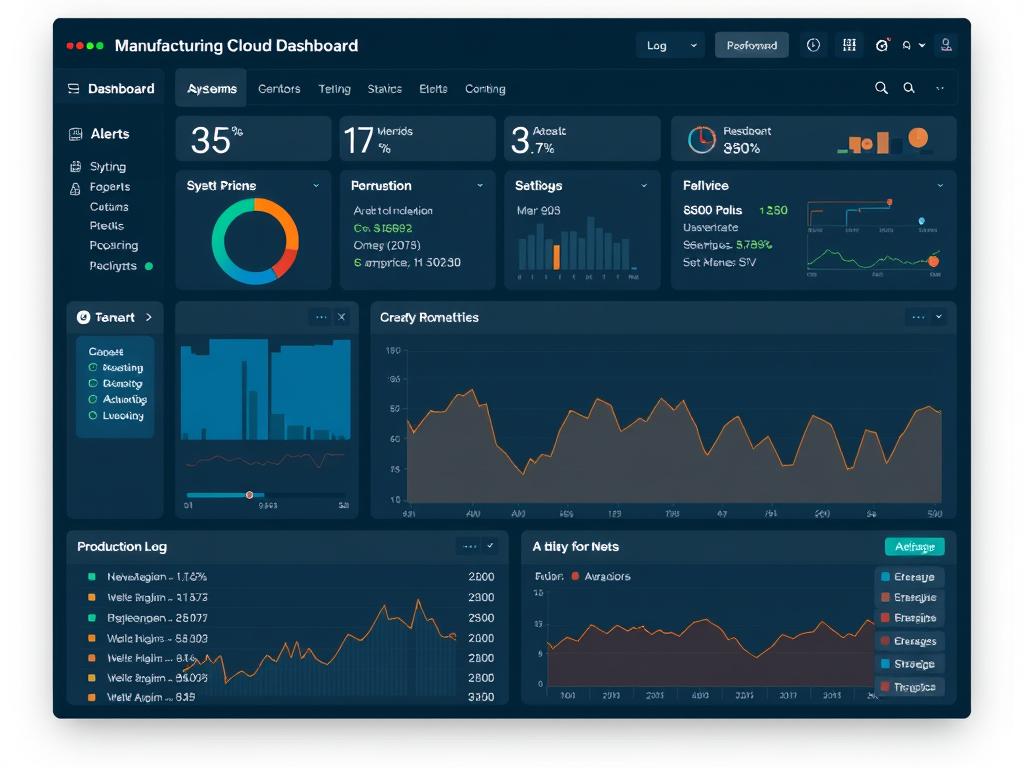
Site Reliability Engineering (SRE) practices adapted for industrial contexts help:
- Define Service Level Objectives (SLOs) for plant uptime and processing latency
- Implement runbooks that combine OT procedures with cloud operations response
- Use synthetic tests to validate end-to-end workflows from sensor to dashboard
- Establish incident response procedures specific to manufacturing environments
Effective observability directly improves production Overall Equipment Effectiveness (OEE) by reducing mean time to detection (MTTD) and mean time to repair (MTTR) for system issues.
Business Outcomes and Use Cases
Smart Factories and Connected Supply Chains
Cloud-enabled smart factories integrate production, quality, and logistics into a single data fabric, delivering transformative business outcomes:
Increased Agility
Faster product changeovers and dynamic scaling across production lines to meet shifting demand.
Improved Quality
Fewer defects through closed-loop control systems and ML-powered quality insights.
End-to-End Traceability
Lot-level visibility across the entire supply chain from raw materials to finished goods.

Success Story: A U.S. electronics manufacturer reduced defect rates by 35% by applying cloud-based vision models across five global plants and sharing model improvements centrally.
Cost, Scalability, and Agility: Quantifying Benefits
The financial and operational benefits of cloud adoption in manufacturing are compelling:
- OPEX over CAPEX: Shift to pay-as-you-go reduces upfront investment and improves cash flow
- Elastic scalability: Handle seasonal demand or new product ramps without hardware procurement delays
- Faster time-to-market: Prototype changes in the cloud and deploy tested models to edge quickly
- Resource optimization: Pay only for the computing resources you actually use
According to industry reports, cloud adoption typically reduces infrastructure provisioning time from weeks to minutes and can shrink development cycles by 30-50% when combined with modern DevOps practices.
Illustrative Use Cases
Predictive Maintenance at Scale
Aggregating telemetry across sites yields models that extend Mean Time Between Failures (MTBF) and reduce unscheduled downtime by 20-40%.
See AWS case studies
Digital Twin for Line Optimization
A European automotive supplier used a cloud twin to test line changes virtually, cutting physical trial time by 40% and reducing implementation risks.
Explore Azure examples
Connected Aftermarket Services
A machinery OEM uses cloud telemetry to offer performance-based contracts and remote diagnostics, creating new recurring revenue streams.
Challenges and Adoption Considerations
Skills, Cultural Change, and Vendor Management
Successful cloud adoption in manufacturing is as much about people and processes as it is about technology. Organizations face several common challenges:
Skills Gap
Manufacturing organizations need cloud engineers, data scientists, and industrial automation specialists who understand both IT and OT environments.
Cultural Change
Operators and engineers must adopt new tools and workflows, requiring effective change management and training programs.
Vendor Governance
Organizations must balance specialized industrial vendors with hyperscaler cloud services to create integrated solutions.
Legacy Integration
Existing equipment and systems must be connected to cloud platforms, often requiring specialized gateways and protocols.

Building cross-functional teams that bridge OT, IT, and data science is critical for successful cloud adoption. Use pilot projects to demonstrate ROI before scaling to broader deployment.
Data Sovereignty, Latency, and Integration Challenges
Manufacturing environments present unique technical challenges for cloud adoption:
- Protocol Translation: Use gateways to bridge OT protocols (OPC UA, Modbus) to cloud services
- Latency Management: Design for low-latency local loops at the edge with asynchronous cloud analytics for non-real-time tasks
- Data Residency: Address sovereignty requirements by selecting appropriate cloud regions or private cloud options
- Bandwidth Constraints: Implement edge filtering and compression to reduce data transfer volumes
Risk Management and ROI Considerations
When evaluating cloud technologies for manufacturing, organizations should carefully assess:
Risk Factors
Security exposure, vendor lock-in potential, and operational disruption during migration must be carefully managed.
ROI Analysis
Quantify benefits (reduced downtime, labor savings, increased throughput) and estimate realistic payback periods for investments.
Scalability Planning
Ensure solutions can evolve with new products, changing regulations, and business growth over time.
We recommend a staged investment approach: start with high-impact, low-risk pilots (such as non-critical predictive maintenance) and iterate based on measured results before broader deployment.
Future Outlook — What Comes Next
Emerging Technologies That Will Reshape Manufacturing
Several cutting-edge technologies are poised to further transform cloud manufacturing:
Federated Learning
Share model improvements across plants without sharing raw data, preserving privacy while enhancing collective intelligence.
TinyML and Edge AI
Deploy sophisticated models into constrained edge devices for ultra-low latency decision-making without cloud connectivity.
Quantum-Safe Cryptography
Prepare for future threats to long-term IP confidentiality with quantum-resistant encryption algorithms.
These emerging technologies will accelerate decentralized intelligence and improve privacy and performance in industrial contexts, creating even more resilient and capable manufacturing systems.
Evolving Business Models and Product Lifecycles
Cloud-enabled capabilities are fundamentally changing how manufacturers compete:
- Product-as-a-Service: Sensors and cloud analytics enable subscription-based revenue models
- Faster Iterations: Digital twins and cloud simulation reduce prototype cycles and time-to-market
- Supply Chain Agility: Predictive insights allow dynamic sourcing and inventory optimization
- Customization at Scale: Cloud-coordinated production enables mass customization without efficiency loss
Companies that incorporate cloud-native innovation can shorten product lifecycles and respond faster to market demands, creating sustainable competitive advantages.
Practical Roadmap for Manufacturers
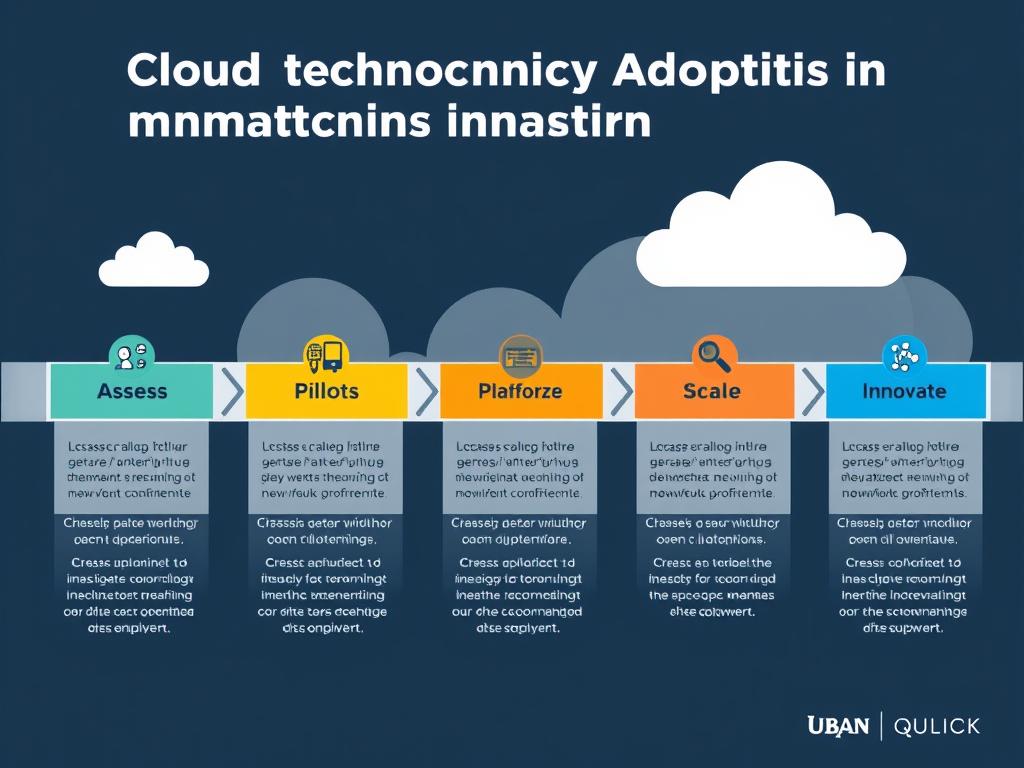
We recommend a structured approach to cloud adoption in manufacturing:
- Assess: Inventory assets, connectivity, and data flows. Map high-value use cases and potential ROI.
- Pilot: Choose a measurable pilot project with cross-functional sponsors and clear success metrics.
- Platformize: Adopt a consistent edge + cloud architecture, data model, and governance framework.
- Scale: Automate deployments, catalog models, and establish an SRE/ops model for production.
- Innovate: Integrate advanced capabilities like federated learning and digital twins as maturity grows.
Practical Checklist:
- Start with one line or plant as a sandbox environment
- Reuse proven cloud-native patterns (containers, event-driven serverless, data lake)
- Bake in security and compliance from day one
- Measure and communicate business outcomes, not just technical metrics
- Invest in skills development alongside technology implementation
Conclusion
Cloud technologies for manufacturing — from edge computing and AI/ML to digital twins and serverless architectures — are transforming how products are made, maintained, and monetized. The cloud technology trends we’ve explored are accelerating hybrid approaches, multi-cloud strategies, and cloud-native patterns that materially improve agility, cost structures, and business outcomes.
As you consider your organization’s cloud journey, we recommend focusing on measurable business outcomes, adopting hybrid architectures that balance edge and cloud capabilities, investing in people and change management, and prioritizing security and governance from the start.
The time to act is now. Start small, measure impact, and scale fast to capture the competitive advantages that emerging technologies in cloud for manufacturing can deliver.
Frequently Asked Questions
How does edge computing reduce latency in manufacturing environments?
Edge computing reduces latency by processing time-sensitive data locally at or near the source (machines, sensors, PLCs) rather than sending it to distant cloud data centers. This local processing eliminates network transmission delays, which can range from tens to hundreds of milliseconds. For manufacturing processes requiring real-time control or monitoring, edge computing ensures sub-millisecond response times while still allowing non-time-critical data to be sent to the cloud for deeper analytics and long-term storage.
What security measures are essential when connecting manufacturing systems to the cloud?
Essential security measures include: 1) Network segmentation to isolate critical OT systems from IT networks, 2) End-to-end encryption for all data in transit and at rest, 3) Strong identity management and access controls following zero-trust principles, 4) Regular security assessments and vulnerability management, 5) Secure device onboarding and certificate-based authentication for IoT devices, and 6) Comprehensive monitoring and incident response procedures. These measures help protect intellectual property and prevent operational disruptions while enabling the benefits of cloud connectivity.
How can manufacturers calculate ROI for cloud technology investments?
Manufacturers should consider both direct and indirect benefits when calculating ROI. Direct benefits include reduced infrastructure costs (CAPEX to OPEX shift), lower maintenance expenses, and decreased energy consumption. Indirect benefits include improved uptime (calculate the value of each hour of avoided downtime), quality improvements (reduced scrap and rework costs), faster time-to-market, and labor productivity gains. For a comprehensive ROI analysis, establish a baseline of current costs and performance metrics, implement cloud technologies in a controlled pilot, measure the improvements, and extrapolate the benefits to full-scale implementation while accounting for implementation and ongoing costs.
What skills are needed to successfully implement cloud technologies in manufacturing?
Successful implementation requires a blend of technical and domain expertise: 1) Cloud architecture and DevOps skills for building and maintaining cloud infrastructure, 2) Data engineering and data science capabilities for analytics and AI/ML implementation, 3) OT/IT integration knowledge to connect industrial systems to cloud platforms, 4) Cybersecurity expertise specific to industrial environments, 5) Manufacturing process knowledge to identify high-value use cases, and 6) Change management skills to drive adoption. Many organizations build cross-functional teams that combine these capabilities or partner with specialized service providers to supplement internal resources.
How do digital twins improve manufacturing operations?
Digital twins improve manufacturing operations by creating virtual replicas of physical assets, processes, or systems that can be analyzed, manipulated, and optimized without disrupting actual production. They enable: 1) Virtual commissioning to test changes before physical implementation, 2) Predictive maintenance by simulating component wear and failure conditions, 3) Process optimization through what-if scenario testing, 4) Operator training in a risk-free virtual environment, and 5) Remote monitoring and troubleshooting capabilities. By providing a safe environment for experimentation and optimization, digital twins reduce implementation risks and accelerate continuous improvement initiatives.