

Defect Detection AI: Revolutionizing Quality Assurance with Us

August 9, 2025|12:05 PM
Unlock Your Digital Potential
Whether it’s IT operations, cloud migration, or AI-driven innovation – let’s explore how we can support your success.
August 9, 2025|12:05 PM
Whether it’s IT operations, cloud migration, or AI-driven innovation – let’s explore how we can support your success.
Modern manufacturing thrives on precision, yet traditional quality control methods often struggle to keep pace with evolving demands. We deliver intelligent solutions that transform visual inspection from a bottleneck into a strategic asset. By merging machine learning with practical usability, our approach empowers teams to achieve operational excellence without complex technical overhauls.
Our system analyzes production line data through advanced neural networks, identifying subtle anomalies faster than human inspectors. This continuous learning capability adapts to new product designs and material variations, maintaining accuracy even as specifications change. Integration with existing equipment minimizes downtime, allowing manufacturers to upgrade capabilities while preserving current infrastructure investments.
We prioritize accessibility in technology deployment, offering training resources that empower staff within hours rather than weeks. This philosophy extends to our partnership model, where we collaborate closely with clients to tailor implementations that address specific production challenges. The result? Enhanced defect identification rates paired with reduced false alerts – a critical balance for maintaining throughput.
The shift from manual checks to automated precision marks a new era in manufacturing excellence. Intelligent inspection systems now anticipate issues before they escalate, transforming how industries safeguard product standards. Unlike legacy approaches that react to flaws, these solutions analyze patterns across entire production cycles, identifying risks during early stages.
Modern technology leverages neural networks to interpret visual data with human-like judgment, but at industrial speeds. Our systems map entire surfaces using pixel-level analysis, capturing variations invisible to conventional methods. This continuous learning capability allows the platform to refine its understanding as materials or designs change, maintaining reliability across evolving workflows.
We enhance established quality processes rather than replacing them. By embedding decades of expert knowledge into machine learning models, our tools amplify human decision-making. Operators receive prioritized alerts with visual evidence, enabling faster root-cause analysis without overwhelming teams with false positives.
Integration with existing manufacturing execution systems occurs through standardized interfaces, minimizing operational disruptions. This hybrid approach preserves institutional expertise while delivering the scalability of automated solutions. The result? A cohesive quality assurance process where historical data and real-time insights drive measurable improvements in output consistency.
Industrial quality standards demand unprecedented precision, creating new challenges for conventional evaluation methods. Our approach reimagines visual assessment through adaptive algorithms that evolve with production needs, delivering results that combine human discernment with computational speed.
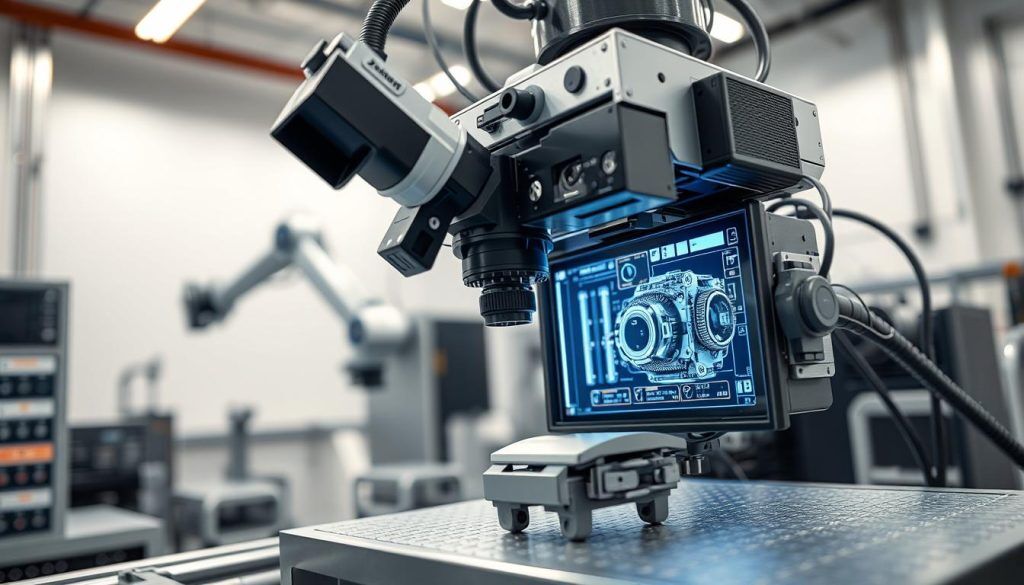
Deep learning models analyze surface patterns at resolutions exceeding 5 million pixels, identifying inconsistencies smaller than a human hair. By training neural networks on millions of product images, our system develops pattern recognition capabilities that improve with each inspection cycle.
This continuous learning process maintains 99.8% accuracy even when handling variable lighting or mechanical vibrations. Unlike static rule-based systems, our solution adapts to material changes without manual recalibration, preserving consistency across product generations.
Automated analysis handles 95% of routine checks, freeing technical staff for higher-value tasks. Quality teams transition from repetitive scrutiny to strategic oversight, focusing on process optimization rather than error hunting.
Our platform processes high-resolution images at 120 frames per second – double conventional system speeds – while compensating for focus variations. This combination of speed and reliability allows manufacturers to scale operations without proportional staffing increases, creating leaner workflows that maintain rigorous standards.
Manufacturing leaders face mounting pressure to balance quality standards with production demands. Our technology bridges this gap through intelligent analysis tools that enhance existing workflows while delivering measurable financial returns.
We deliver precision that overcomes real-world challenges. Our algorithms automatically adjust for fluctuating light levels and imperfect camera focus, maintaining accuracy across diverse production environments. This adaptive approach handles 5.2-megapixel images without slowing operations – ideal for inspecting large components or micro-scale details.
Our solutions cut inspection costs by 40% compared to traditional systems. By working with existing cameras and sensors, we eliminate costly hardware upgrades. The platform processes images twice as fast as conventional tools, enabling manufacturers to inspect more products per shift without quality compromises.
| Feature | Our Solution | Traditional Methods |
|---|---|---|
| Max Image Resolution | 5.2MPx | 2.6MPx |
| Processing Speed | 120 FPS | 60 FPS |
| Setup Costs | Existing Hardware Compatible | New Equipment Required |
| Operator Training | 25 Minutes | 8+ Hours |
Implementation requires minimal technical expertise. Teams achieve full operational readiness within hours through intuitive interfaces and concise training materials. This rapid deployment model helps manufacturers realize ROI faster while maintaining strict quality benchmarks.
Manufacturing environments now achieve unprecedented precision through intelligent systems that learn as they operate. Our solutions bridge technical complexity with practical implementation, transforming how teams maintain quality benchmarks.
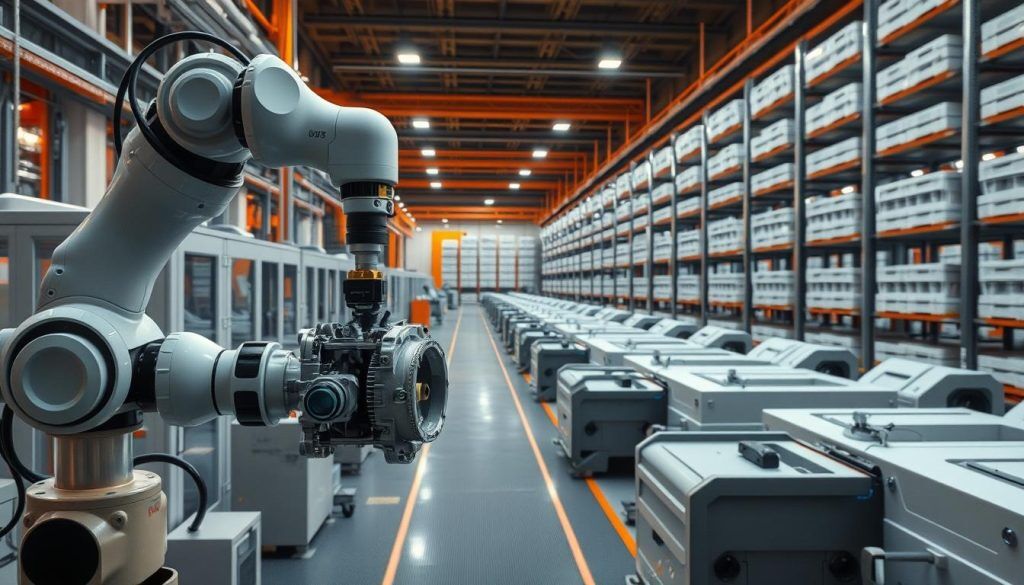
Convolutional neural networks analyze product surfaces at microscopic levels, detecting variations smaller than 0.1mm. These deep learning models compare millions of pixel patterns, distinguishing cosmetic irregularities from critical flaws with 99.4% consistency. Unlike rule-based systems, our approach handles shifting materials or lighting without manual adjustments.
“The system identified surface inconsistencies our team hadn’t standardized in inspection protocols – it’s like having a tireless expert with perfect vision.”
Engineers refine detection models through visual feedback, not complex programming. Our meta-learning framework integrates new data points within hours instead of weeks. This eliminates the need for full system retraining when introducing product variants or process changes.
| Training Aspect | Our Platform | Traditional Systems |
|---|---|---|
| Setup Time | 2 Hours | 3+ Weeks |
| Technical Expertise | None Required | Data Scientists Needed |
| Adaptation Speed | Real-Time Updates | Scheduled Retraining |
| Interface Type | Drag-and-Drop | Code-Based |
The platform’s machine learning algorithms automatically apply corrections across inspection parameters. Teams maintain control through intuitive dashboards while benefiting from self-optimizing workflows. This balance preserves human oversight while leveraging computational precision at scale.
Operational excellence in modern production hinges on balancing speed with precision. Our technology eliminates workflow friction by embedding intelligent analysis directly into assembly lines. This approach maintains rigorous standards while accelerating output cycles through real-time decision-making.
We integrate our system with existing equipment, enabling instant quality verification during manufacturing. Production teams achieve 30% faster cycle times by removing manual checkpoints. Real-time data feeds optimize machine settings automatically, preventing slowdowns from quality uncertainties.
Clients report 300+ monthly labor hours redirected from repetitive checks to process improvements. Consistent evaluation ensures identical standards across shifts, eliminating variability in human assessments. This reliability allows factories to operate at maximum speed without compromising output integrity.
Our solutions create leaner operations through adaptive resource allocation. Quality managers gain predictive insights into potential bottlenecks, enabling proactive adjustments. This strategic shift transforms inspection from a necessary cost into a driver of manufacturing efficiency.
Modern production demands extend beyond surface-level evaluation, requiring non-invasive methods to verify structural integrity. Our technology unlocks comprehensive component analysis through volumetric data interpretation, revealing hidden flaws without physical disassembly.
We transform volumetric data interpretation through specialized algorithms trained on 2.7 million 3D imaging samples. Our system isolates irregularities in components ranging from aerospace alloys to medical implants, achieving 0.05mm resolution accuracy. This precision enables identification of micro-porosity and wall displacement often missed by conventional methods.
| Capability | Traditional CT Analysis | Our Solution |
|---|---|---|
| Image Quality Tolerance | High-Quality Scans Only | Noisy/Artifact-Rich Data |
| Analysis Time per Component | 45 Minutes | 3.8 Minutes |
| Defect Types Detected | 6 Primary Categories | 14+ Subclassifications |
| Adaptation to New Materials | Manual Reconfiguration | Self-Adjusting Models |
Our platform maintains 98.6% accuracy even with coarse-resolution scans or excessive noise – common challenges in high-speed production environments. By compensating for imaging artifacts through contextual intelligence, we deliver reliable results where rule-based systems falter.
Manufacturers leverage these insights for visual inspection process optimization and failure prediction. The system automatically categorizes 12 defect types, from cold runs to micro-fractures, while generating statistical reports for continuous improvement initiatives. This approach reduces destructive testing by 73% across automotive and electronics sectors.
Businesses require adaptable infrastructure that grows with their quality assurance needs. We provide deployment flexibility through two robust pathways, each designed to address distinct operational priorities without compromising performance. This strategic approach lets organizations align their inspection workflows with broader business objectives.
Our on-premise system keeps sensitive information within your physical control. All processing occurs behind corporate firewalls, eliminating external data transmission risks. This solution delivers faster analysis speeds through localized computing power, ideal for real-time production environments.
Cloud-based deployments offer elastic resource allocation for fluctuating inspection volumes. Automatic updates ensure teams always access the latest software enhancements without manual interventions. Enterprises handling 10,000+ daily inspections benefit from instant scaling during peak production cycles.
Both deployment models maintain identical security protocols and processing accuracy. Our cloud-agnostic architecture supports AWS, Azure, and hybrid environments, preserving existing IT investments. Teams switch between platforms without retraining, maintaining workflow continuity during infrastructure transitions.
Implementation timelines vary by complexity. Cloud setups typically go live in 48 hours, while on-premise installations require 5-7 days for hardware validation. We provide detailed documentation for both options, ensuring smooth adoption across technical and operational teams.
Achieving peak operational efficiency requires more than advanced technology—it demands systems that adapt to your unique production environment. We design solutions that align with your current infrastructure while preparing for future scaling needs. Our approach ensures seamless integration without demanding expensive hardware overhauls or specialized IT support.
Our platform operates effectively across diverse setups. For facilities using existing cameras and sensors, the system delivers reliable performance with minimal 4GB RAM and dual-core processors. However, we recommend 8GB RAM and quad-core configurations to fully leverage real-time analytics and multi-camera feeds.
Hardware compatibility extends across major manufacturers, preserving your current investments. Software requirements include Windows 10/Linux Ubuntu 18.04+ environments, with automatic updates maintaining optimal security and functionality. Cloud deployments reduce local resource demands through elastic computing power.
Performance optimization occurs through intelligent resource allocation. The platform prioritizes critical inspection tasks during peak loads, ensuring consistent throughput without hardware strain. Regular system health checks and remote maintenance options keep operations running smoothly, minimizing unexpected downtime.
Our solutions leverage advanced algorithms trained on diverse datasets to identify anomalies with precision. By analyzing patterns across thousands of images, these models minimize false positives while detecting subtle flaws traditional methods miss.
Yes—our platforms are designed for seamless compatibility with industrial cameras, sensors, and enterprise software like SAP or PTC Windchill. Custom APIs ensure real-time data synchronization without disrupting legacy processes.
Automotive, aerospace, electronics, and precision manufacturing sectors see significant ROI. For example, Tesla and Siemens use similar technologies to inspect battery cells and turbine blades, reducing scrap rates by up to 40%.
Cloud innovation allows distributed teams to process high-resolution CT scans or X-ray data through AWS or Azure infrastructure. This eliminates local hardware limitations while maintaining GDPR-compliant data handling.
Most systems operate efficiently on NVIDIA GPUs like the A100 Tensor Core, paired with Intel Xeon processors. We optimize solutions for Docker containers, ensuring smooth performance across Linux and Windows environments.
With active learning frameworks, our tools require 50–70% fewer annotated samples than conventional approaches. A recent case with Bosch involved retraining a polymer inspection model in under 48 hours for revised production lines.
Our edge computing architecture balances speed and accuracy—NVIDIA Jetson-powered systems achieve
We employ end-to-end encryption with zero-trust protocols. Options like private AWS GovCloud deployments or on-site Kubernetes clusters meet stringent standards such as ITAR and ISO 27001 for defense contractors.




Experience power, efficiency, and rapid scaling with Cloud Platforms!