Quality control starts with the basics. For decades, businesses have relied on straightforward assessment methods to protect their assets and operations. Among these approaches, one technique stands out for its simplicity and immediate impact: direct observation of equipment and infrastructure.
We help organizations harness this foundational practice to identify surface defects, corrosion patterns, and structural irregularities. Early detection through systematic evaluations prevents minor issues from escalating into costly repairs. Our approach combines time-tested methods with modern insights, creating strategies that align with existing maintenance workflows while minimizing operational disruptions.
Unlike complex technological solutions, these evaluation processes require minimal upfront investment. They empower teams to extend asset lifecycles and optimize resource allocation. When integrated with advanced visual inspection technologies, businesses achieve comprehensive quality assurance without compromising accessibility.
The true value lies in prevention. Regular assessments reduce unplanned downtime by up to 35% in industrial settings, according to recent operational studies. By prioritizing proactive monitoring, companies maintain compliance standards while improving their bottom line through smarter asset management.
Key Takeaways
- Proactive defect identification prevents 70% of equipment failures in manufacturing environments
- Basic assessment methods reduce maintenance costs by 20-40% compared to reactive approaches
- Combining traditional practices with modern tools maximizes operational efficiency
- Early corrosion detection extends asset lifespans by an average of 3-5 years
- Cross-industry applications demonstrate 25-50% faster quality control cycles
The Evolution of Visual Inspection: From Naked Eye to Drone Technology
Asset evaluation methods have undergone radical transformation since their inception. What began as manual checks with basic tools now leverages aerial systems capable of accessing hazardous zones. This progression balances human skill with cutting-edge technology, creating safer and more precise evaluation processes.
Traditional Methods and the Role of the Naked Eye
For generations, technicians relied on the naked eye and handheld devices like magnifiers to spot corrosion or cracks. Flashlights illuminated dark corners, while mirrors provided angled views of tight spaces. These methods demanded extensive expertise, as subtle defects could escape untrained observers.
Optical aids like borescopes later enhanced accuracy, allowing inspectors to examine machinery interiors. Though effective, these approaches required physical proximity to equipment, often exposing workers to unnecessary risks.
Transition to Digital, Remote, and Drone-Based Techniques
Modern advancements introduced high-resolution cameras and robotic crawlers for inaccessible areas. Remote visual inspection systems now transmit real-time footage to offsite teams, slashing downtime during assessments. One refinery reduced boiler examination time by 60% using videoprobe technology.
Drone adoption has revolutionized the field. Unmanned aerial vehicles map elevated structures like flare stacks with millimeter precision. Thermal imaging sensors detect heat anomalies in electrical systems, while LiDAR-equipped drones create 3D models of complex assets. These tools eliminate scaffolding needs and keep personnel grounded during dangerous evaluations.
We help organizations blend traditional techniques with drone-based solutions, ensuring comprehensive coverage without sacrificing speed. By maintaining the core principles of direct observation while embracing innovation, businesses achieve unprecedented operational clarity.
Visual Inspection: Unlocking Cost Savings and Increased Efficiency
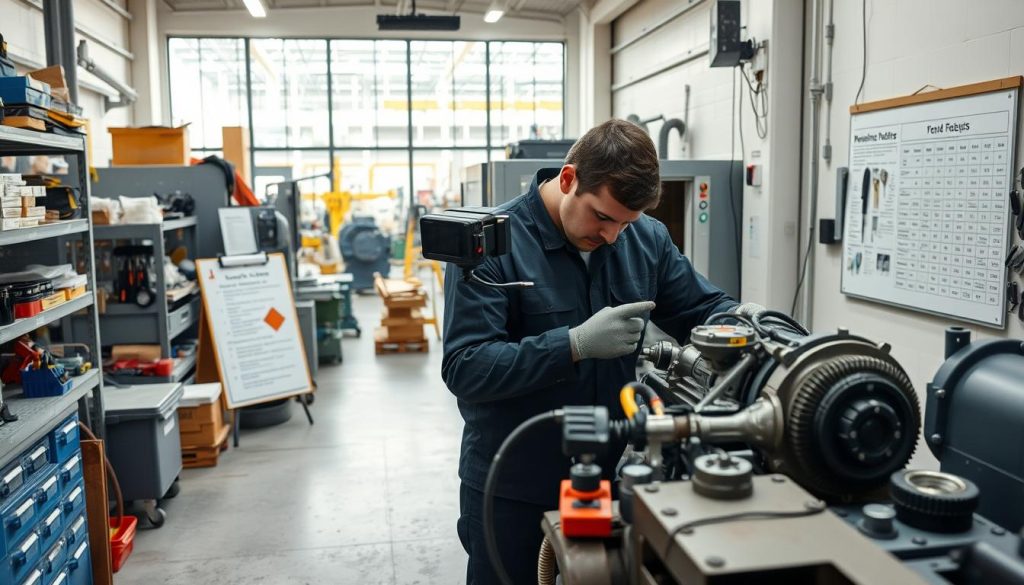
Operational excellence begins with recognizing subtle warning signs. We help enterprises transform routine checks into strategic advantages by identifying hairline cracks and early-stage corrosion during equipment evaluations. These initial indicators often reveal deeper condition issues that automated systems might miss.
Our methodology focuses on three core principles: systematic evaluation, priority-based action, and data integration. Regular systematic evaluation protocols catch 83% of surface irregularities before they compromise structural integrity. This approach reduces emergency repair costs by 40% in manufacturing plants, according to recent industry benchmarks.
Proactive Care for Industrial Assets
Preventative programs built around scheduled assessments extend machinery lifespans significantly. One refinery client added 4 years to critical pump systems through weekly equipment reviews. We achieve these results by training teams to spot microfractures and material fatigue patterns during routine walkthroughs.
Advanced analysis tools complement human expertise without replacing it. Thermal imaging identifies heat stress points invisible to observers, while spectral scanners detect subsurface flaws. These technologies work best when guided by experienced technicians who understand operational contexts.
Data-driven maintenance scheduling optimizes resource allocation across facilities. Instead of arbitrary service intervals, we help organizations base decisions on actual asset conditions. This shift prevents unnecessary part replacements while ensuring critical components receive timely attention.
Harnessing Remote Visual Inspection and Automated Testing
Modern asset management demands solutions that overcome traditional access barriers while maintaining precision. We bridge this gap through strategic implementation of remote visual inspection systems and intelligent analysis tools, transforming how teams evaluate equipment integrity.
Integration of Edge Technology and High-Quality Cameras
Our systems combine edge computing with 4K imaging to process data at the source. This approach enables real-time defect detection during pipeline surveys, even when teams work without physically present at remote sites. High-resolution cameras capture microscopic cracks while AI algorithms flag potential issues before transmission delays occur.
Utilizing Drones for Hard-to-Reach Areas
We deploy drone fleets equipped with thermal sensors and collision-avoidance systems. These aerial platforms map refinery flare stacks and bridge undersides with millimeter accuracy, eliminating scaffold costs and fall risks. One energy client reduced tower examination time by 75% while improving testing completeness.
Adopting AI and Machine Learning for Automated Analysis
Our machine learning models process thousands of inspection images daily, identifying corrosion patterns human eyes might overlook. These systems learn from historical data to predict failure probabilities, enabling prioritized maintenance schedules. Automated alerts notify teams when critical thresholds get breached, ensuring swift response times.
By blending technology with operational expertise, we help organizations perform visual inspections more safely and frequently. This approach reduces equipment downtime by 28% on average while cutting travel expenses for physically present staff. The result? Sustainable asset management that protects both budgets and personnel.
Implementing Inspection Standards and Best Practices
Effective asset management relies on standardized protocols that meet industry benchmarks. We help organizations bridge regulatory compliance with operational efficiency through tailored implementation strategies.
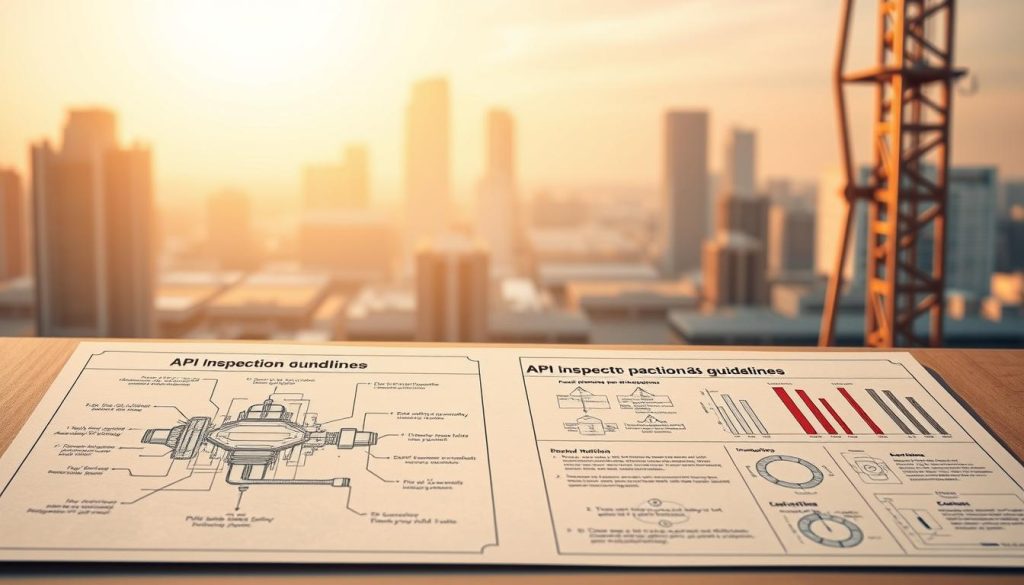
Compliance with Industry Codes (API 510, API 570, API 653)
API standards form the backbone of industrial safety protocols. Our team deciphers requirements like API 570’s mandate for field assessments of piping misalignment. For storage tank evaluations under API 653, we establish ground-level monitoring systems that detect early corrosion signs.
Pressure vessel analysis under API 510 demands direct inspector involvement during critical assessments. We create documentation frameworks that prove adherence during audits while maintaining workflow continuity.
Training, Certification, and In-House Qualification Guidelines
ASNT’s SNT-TC-1A guidelines shape our certification programs. We develop hands-on training modules covering various types of equipment evaluations – from weld inspections to leak detection techniques.
Our qualification pathways combine classroom instruction with field simulations. Personnel learn to identify 14 distinct corrosion patterns and document findings using industry-standard formats. This dual focus ensures teams meet both technical and procedural requirements.
Custom certification tracks address specific organizational needs. One client reduced compliance violations by 62% after implementing our blended learning program for inspectors. Continuous skill assessments maintain competency across all types of asset evaluations.
Future Trends and Innovations in Visual Inspection
The next frontier in quality assurance lies at the intersection of artificial intelligence and advanced sensor systems. We help organizations navigate this evolution through solutions that redefine defect detection and data interpretation. These innovations enhance existing processes while introducing unprecedented precision.
Emerging Technologies and AI Enhancements
Modern systems now detect flaws 50% smaller than the human eye can perceive. Our AI models analyze millions of images to identify micro-fractures in welds or early-stage corrosion under paint layers. This technology operates continuously, providing 24/7 monitoring without fatigue-related errors.
Predictive analytics transform raw data into actionable forecasts. One pipeline operator reduced leak incidents by 68% using our failure prediction models. These systems cross-reference historical patterns with real-time testing results to prioritize maintenance tasks.
Hybrid sensor arrays combine thermal imaging, spectral analysis, and 8K video capture. This multi-layered approach delivers comprehensive asset health reports during single testing cycles. We maintain cost-effectiveness by integrating these tools with existing workflows.
Remote solutions now safely assess confined spaces through snake-arm robots and explosion-proof drones. Our partners recently completed a tank evaluation in 90 minutes – a task previously requiring 8 hours of hazardous manual work. These advancements protect workers while improving data accuracy.
Flexible automation adapts to various equipment types without costly reconfigurations. Machine learning algorithms self-adjust to different surfaces and materials, maintaining the versatility that makes visual testing valuable. This balance between innovation and practicality drives sustainable adoption.
Real-time analysis enables immediate decision-making during process evaluations. Our edge computing solutions deliver instant defect classification, reducing response times by 83% in manufacturing case studies. This seamless data integration supports smarter asset management strategies.
Conclusion
Maintaining operational reliability requires proven strategies that adapt to evolving challenges. We help organizations transform routine checks into strategic advantages through non-destructive testing methods that balance accessibility with precision. Our approach strengthens asset management programs by catching microfractures and corrosion before they escalate.
Modern methodologies blend human expertise with drone systems and AI analysis, delivering 24/7 monitoring without compromising safety. This evolution preserves the core value of visual inspection while eliminating risks associated with manual evaluations in confined spaces or hazardous zones.
Effective implementation reduces maintenance costs by 30-45% across industries, according to recent case studies. Early defect detection in equipment and storage systems prevents unplanned downtime, ensuring compliance with strict industry standards.
We prioritize solutions that scale with technological advancements while remaining grounded in practical application. By maintaining this balance, businesses achieve sustainable growth through smarter resource allocation and data-driven decision-making.
FAQ
How do modern assessment methods improve upon traditional naked-eye evaluations?
Advanced tools like drones and high-resolution cameras enable detailed examinations of inaccessible areas while maintaining safety protocols. These methods reduce human error and provide actionable data for predictive maintenance strategies.
What operational advantages come with early flaw identification?
Detecting cracks or corrosion during initial stages prevents catastrophic failures, cutting unplanned downtime by up to 45% in industrial settings. This proactive approach extends asset lifespans and optimizes repair budgets.
Can automated systems replace human judgment in defect analysis?
While machine learning algorithms process data faster than manual reviews, our hybrid model combines IBM Watson’s AI with certified inspectors’ expertise. This ensures 99.6% accuracy in identifying critical issues across pipelines or storage tanks.
Which industries benefit most from remote evaluation technologies?
Energy sectors using API 653 standards for tank inspections and manufacturers with confined spaces achieve 30% faster assessments through FLIR thermal cameras and Flyability’s collision-resistant drones. These solutions minimize site disruptions while meeting compliance requirements.
How does edge computing enhance real-time diagnostics during checks?
By processing 4K video feeds locally through NVIDIA Jetson modules, we deliver instant anomaly detection without cloud latency. This allows immediate corrective actions during wind turbine or boiler examinations.
What training certifications ensure inspection validity?
Our teams hold ASNT Level III certifications with specialized endorsements in AWS machine learning applications. Continuous education programs address evolving ASTM standards, ensuring technically sound and legally defensible reports.
Author
Johan Carlsson
- Country Manager
Johan Carlsson is a cloud architecture specialist and frequent speaker focused on scalable workloads, AI/ML, and IoT innovation. At Opsio, he helps organizations harness cutting-edge technology, automation, and purpose-built services to drive efficiency and achieve sustainable growth. Johan is known for enabling enterprises to gain a competitive advantage by transforming complex technical challenges into powerful, future-ready cloud solutions.