Modern cloud infrastructure demands rigorous methods to assess environmental compliance. Two critical approaches—particulate density analysis and protocol-driven monitoring—form the backbone of emission control strategies. These methodologies ensure businesses meet regulatory standards while optimizing operational efficiency in cloud-based systems.
Quantifiable metrics like particulate measurement provide actionable data for sustainability goals. By tracking emission density, organizations gain insights into air quality trends, enabling proactive adjustments to cloud management workflows. This approach aligns technical accuracy with real-world environmental accountability.
Complementary monitoring protocols leverage human expertise to validate automated systems. Standardized checks create cost-effective oversight without requiring complex hardware upgrades. This dual-layer strategy maintains compliance across distributed cloud networks while preserving capital for core business investments.
Combined, these methods establish adaptable frameworks for sustainable growth. Decision-makers receive both immediate compliance verification and long-term operational insights. The result balances ecological responsibility with scalable cloud infrastructure development.
Key Takeaways
- Emission control effectiveness relies on precise measurement and verification systems
- Particulate density metrics provide compliance data for cloud infrastructure management
- Protocol-driven monitoring reduces hardware costs through standardized methodologies
- Integrated frameworks support sustainable growth and regulatory alignment
- Cloud systems benefit from combined technical analysis and human oversight
Introduction to Opacity and Visual Inspection
Cloud-based operational frameworks require precise evaluation tools to maintain regulatory alignment. At the core of emission management lies particulate density assessment, a measurable indicator of environmental impact. This approach combines technical precision with practical compliance strategies.
Measuring Light Obstruction for Compliance
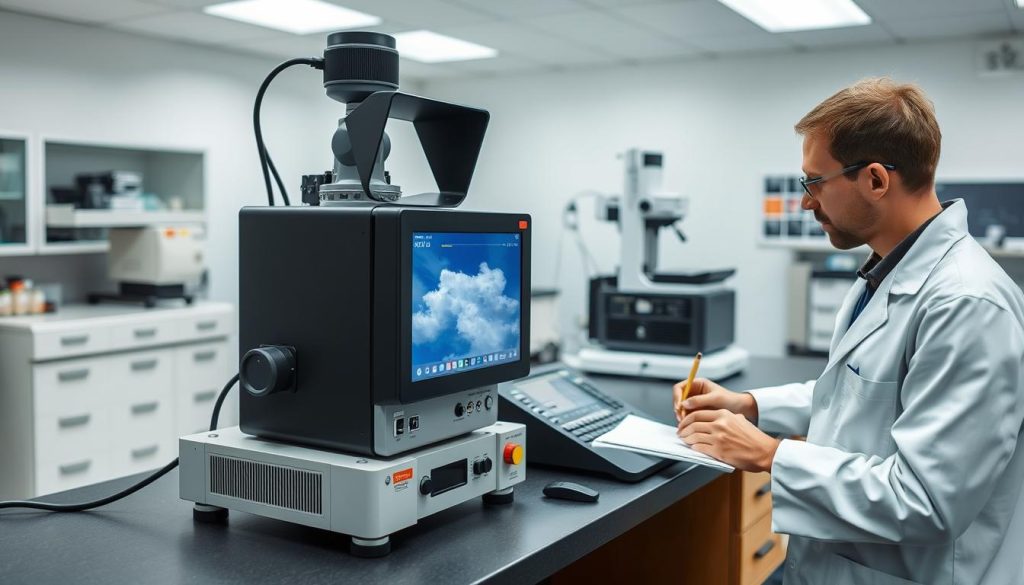
Emission streams are evaluated through light obstruction percentages. Thicker plumes correlate with higher pollutant concentrations – a 50% reading means half the background remains visible. EPA-approved Method 9 protocols validate these observations through standardized field assessments.
Optimizing Operations Through Certified Monitoring
Systematic observation techniques reduce hardware costs while ensuring accuracy. Our certified training programs develop consistent evaluation skills across teams. Key benefits include:
- Real-time compliance verification during peak operational loads
- Reduced equipment costs through human expertise integration
- Standardized reporting formats for regulatory audits
This dual approach supports sustainable infrastructure growth while meeting strict emission targets. Facilities maintain operational flexibility without compromising environmental responsibilities.
Regulatory Guidelines and Testing Procedures
Recent legislative updates establish stringent benchmarks for particulate emissions in cloud operations. The 2022 Commercial Harbor Craft Amendments define exact thresholds for engine exhaust systems, requiring organizations to implement rigorous verification processes. These standards balance environmental protection with operational feasibility across distributed networks.
Performance Thresholds for Emission Control
Diesel Particulate Filter-equipped engines must maintain 5% maximum emission density, while non-DPF systems allow 40% thresholds. This tiered structure creates measurable compliance targets:
| Engine Type |
Maximum Allowable Density |
Testing Frequency |
| With DPF |
5% |
Biennial |
| Without DPF |
40% |
Field audits only |
Validation Protocols and Expertise Development
Main propulsion engines undergo mandatory assessments every 24 months, with submissions to CARB by March 31 of even-numbered years. Our certification programs align with SAE J1667 standards, ensuring personnel master observation techniques through CCDET-approved curricula.
Standardized Assessment Methodologies
Method 9 procedures account for environmental variables like sunlight angles and weather patterns during evaluations. This systematic approach reduces interpretation errors while maintaining assessment consistency across diverse operational conditions.
Implementing what is opacity and visual inspection for Effective Cloud Management
Operational continuity in emission-sensitive environments requires layered verification strategies. We help organizations embed compliance checks directly into equipment maintenance cycles, creating early warning systems for potential regulatory issues.
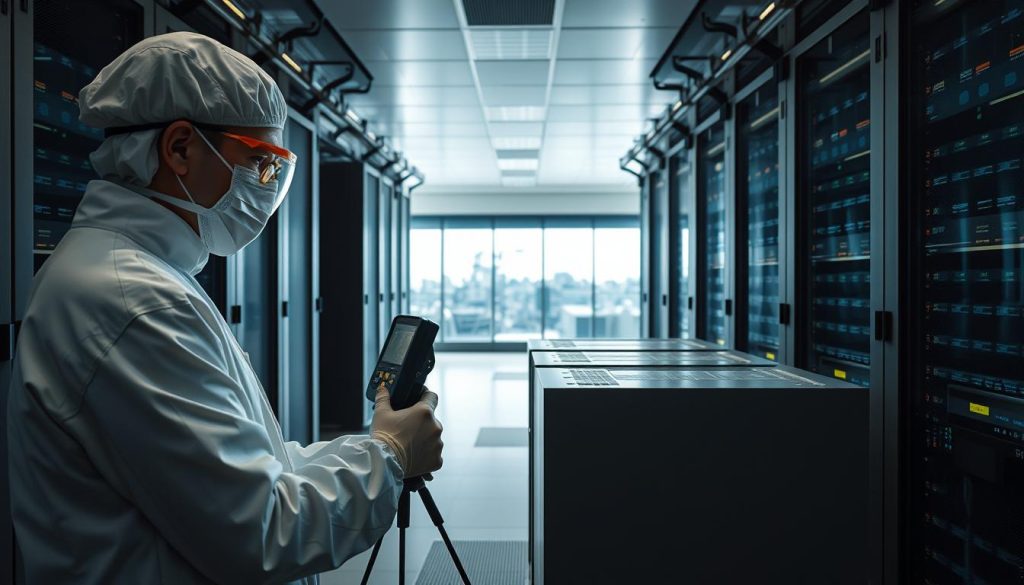
Automated Monitoring Meets Scheduled Verification
When particulate measurements exceed thresholds, immediate corrective measures become mandatory. Our protocols enforce a strict 30-day resolution window for failed assessments – either through component repairs or temporary system shutdowns. This balance maintains operational flexibility while prioritizing environmental accountability.
Post-repair validation remains critical before returning engines to active duty. Our teams conduct follow-up evaluations using EPA Method 9 standards, ensuring all diesel-powered systems meet density targets. This dual-phase approach minimizes downtime while guaranteeing compliance.
Building Expertise Through Specialized Programs
Certified personnel form the foundation of effective monitoring systems. We recommend the CCDET IV Commercial Harbor Craft curriculum for mastering emission assessment techniques. Key program components include:
- Field observation standardization across weather conditions
- Documentation practices meeting subsection (m)(18) requirements
- Repair verification workflows for DPF-equipped engines
California’s CARB website provides updated testing resources, while CCDET schedules offer hands-on training opportunities. These investments create workforce competencies that translate directly into sustained compliance and operational reliability.
Conclusion
Effective emission control strategies balance technical precision with workforce expertise. Our partnership with certification bodies like Eastern Technical Associates demonstrates this synergy – their annual training programs qualify 10,000 professionals across three territories to assess smoke density accurately. These specialists maintain proven reliability through biannual recalibration and Method 9 recertification.
Rigorous testing protocols form the foundation of credible compliance. Evaluators must identify 50 smoke plumes within 15% margin of error, achieving 90% success rates before field deployment. This standard ensures consistent decision-making for diesel engine maintenance and repair timelines.
The pandemic highlighted these methods’ adaptability when traditional inspections became impractical. Outdoor assessments continued uninterrupted, verifying air quality without facility access. Such resilience proves why visual evaluation remains vital for modern emission management systems.
We empower organizations to meet evolving regulations through integrated solutions. Combining workforce development with precise testing frameworks creates sustainable growth paths – where environmental accountability strengthens operational continuity rather than hindering it.
FAQ
How do opacity limits apply to cloud infrastructure monitoring?
Opacity limits in cloud environments establish thresholds for system transparency, ensuring critical performance metrics remain visible for analysis. We align these benchmarks with compliance frameworks like SOC 2 and ISO 27001, enabling businesses to maintain operational clarity while meeting industry regulations.
What certification standards ensure compliance in cloud systems?
Major certifications like ISO 27001 for security management and CSA STAR for cloud-specific controls validate compliance. Our team integrates these standards into automated monitoring platforms, reducing manual verification efforts while maintaining audit-ready status across hybrid cloud architectures.
Why is continuous observation critical for cloud service audits?
Persistent monitoring mirrors emission-testing methodologies in physical systems, detecting configuration drift or performance degradation in real time. We implement AI-driven anomaly detection paired with automated reporting, creating actionable insights that prevent compliance violations before they impact operations.
How often should organizations validate cloud environment transparency?
We recommend quarterly validation cycles supplemented by real-time monitoring, similar to preventive maintenance schedules in industrial settings. This cadence balances operational continuity with rigorous compliance demands, adapting automatically to workload fluctuations or regulatory updates through machine learning systems.
Can automated tools replace manual verification in cloud management?
While automation handles 90%+ of routine checks through platforms like AWS Config or Azure Policy, we maintain certified specialists for complex audits. This hybrid approach mirrors EPA testing protocols, combining machine efficiency with human expertise to address edge cases in multi-cloud environments.
Author
Johan Carlsson
- Country Manager
Johan Carlsson is a cloud architecture specialist and frequent speaker focused on scalable workloads, AI/ML, and IoT innovation. At Opsio, he helps organizations harness cutting-edge technology, automation, and purpose-built services to drive efficiency and achieve sustainable growth. Johan is known for enabling enterprises to gain a competitive advantage by transforming complex technical challenges into powerful, future-ready cloud solutions.