Top Cloud SLA Monitoring Tools: Boost Your Uptime & Performance
March 6, 2026|2:54 PM
Unlock Your Digital Potential
Whether it’s IT operations, cloud migration, or AI-driven innovation – let’s explore how we can support your success.
Home /
Work /
Blogs /
Top Cloud SLA Monitoring Tools: Boost Your Uptime & Performance
Introduction to Cloud SLA Monitoring
In today’s dynamic digital landscape, ensuring the reliability and performance of cloud services is paramount for businesses. This comprehensive guide delves into the world of Cloud sla monitoring tools, offering insights into their functionality, importance, and best practices for deployment. These specialized tools are indispensable for organizations leveraging cloud infrastructure.
Understanding how your cloud services perform against agreed-upon service level agreements (SLAs) is crucial for operational stability and customer satisfaction. Cloud sla monitoring tools provide the necessary visibility and control. They empower businesses to proactively identify issues, prevent outages, and maintain high standards of service delivery.
Why Cloud SLA Monitoring is Crucial for Modern Businesses
The reliance on cloud services has grown exponentially, making robust cloud performance monitoring tools a necessity, not a luxury. Businesses depend on the cloud for everything from core applications to data storage, and any disruption can have significant financial and reputational impacts. Effective monitoring ensures these critical services remain available and performant.
Cloud sla monitoring tools help organizations uphold their commitments to customers and stakeholders by validating service level agreements. They provide objective data on uptime, response times, and resource utilization, which are key metrics for SLA compliance. This proactive approach minimizes risks and fosters trust in your digital services.
Maintaining visibility into cloud environments is often complex due to their distributed and elastic nature. Cloud service monitoring utilities overcome this challenge by offering centralized dashboards and automated alerts. They turn raw performance data into actionable insights, enabling rapid issue resolution before users are significantly impacted.
Key Features of Effective Cloud SLA Monitoring Tools
Effective Cloud sla monitoring tools come equipped with a suite of features designed to provide comprehensive oversight of cloud service performance. These functionalities are critical for ensuring that service level objectives are met consistently. Organizations should look for solutions that offer a robust combination of capabilities.
Here are some essential features to consider:
Real-time Performance Monitoring: Continuous tracking of key metrics like CPU usage, memory, network latency, and application response times. This provides an immediate understanding of current system health and performance bottlenecks.
SLA Tracking and Reporting: The ability to define, track, and report on specific SLA parameters, such as uptime percentages and transaction success rates. This functionality ensures that service level agreement software precisely measures adherence to contractual obligations.
Alerting and Notifications: Customizable alerts triggered by predefined thresholds or anomalies, delivered via various channels like email, SMS, or integration with incident management systems. Timely notifications are vital for rapid response.
Root Cause Analysis: Tools that help pinpoint the exact cause of performance issues by correlating events and metrics across different layers of the cloud stack. This capability significantly reduces diagnostic time.
Historical Data and Trend Analysis: Storing performance data over time allows for trend analysis, capacity planning, and identifying recurring issues. This historical perspective is invaluable for long-term service improvement.
Integration Capabilities: Seamless integration with existing IT infrastructure, other monitoring tools, and cloud provider APIs (AWS, Azure, GCP). Comprehensive integration creates a unified monitoring ecosystem.
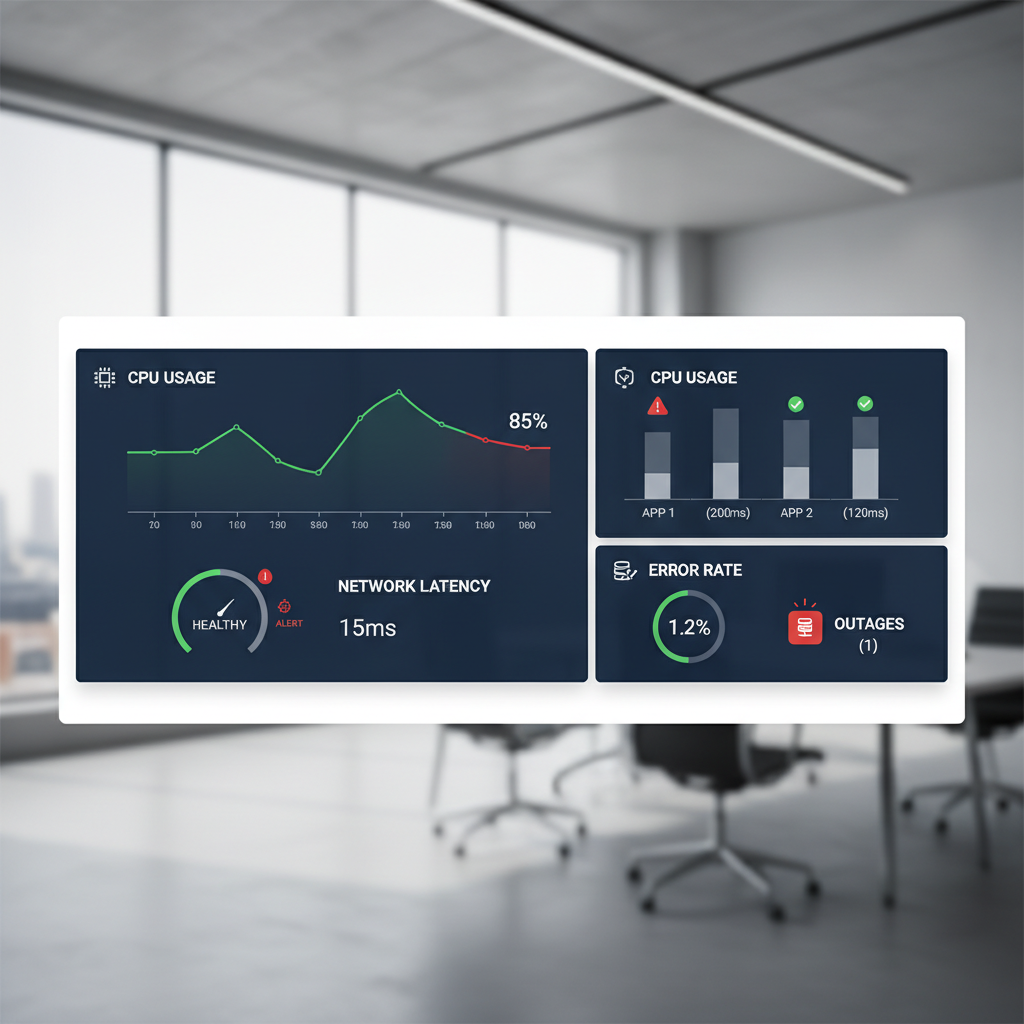
A dashboard displaying various real-time cloud performance metrics like CPU usage, network latency, and application response times with green and red indicators for health status.
ENSURE UNINTERRUPTED SERVICE
Ensure uninterrupted service delivery and proactively prevent costly SLA breaches. Leverage our automated, real
✓ Free consultation ✓ No commitment required ✓ Trusted by experts
Types of Cloud SLA Monitoring Tools and Their Applications
The market for Cloud sla monitoring tools is diverse, with various types catering to different monitoring needs and cloud environments. Choosing the right tool depends on the specific architecture, scale, and complexity of your cloud services. Each type offers unique advantages in gathering performance data.
Understanding these different categories can help organizations select the best Cloud sla monitoring tools for their operational requirements. Many modern solutions combine aspects of these types to offer a more holistic view.
Synthetic Monitoring Tools: These tools simulate user interactions and transactions to proactively test application availability and performance from various geographic locations. They are excellent for baseline performance measurement and detecting issues before real users encounter them.
Real User Monitoring (RUM) Tools: RUM tools collect data directly from actual user sessions, providing insights into real-world user experience and performance. They help identify geographical performance variations and user-specific bottlenecks, making them vital SLA compliance tools.
Agent-Based Monitoring Tools: These tools require agents to be installed on cloud servers or virtual machines to collect detailed performance metrics from within the operating system and applications. They offer deep visibility into infrastructure and application internals.
Agentless Monitoring Tools: Agentless solutions typically leverage cloud provider APIs, SNMP, or WMI to collect data without installing agents. They are easier to deploy and manage for large-scale infrastructure monitoring but may offer less granular application insights.
Cloud Provider Native Tools: AWS CloudWatch, Azure Monitor, and Google Cloud Monitoring are examples of native tools offered by cloud providers. These are deeply integrated with their respective ecosystems and often provide fundamental monitoring capabilities for their services.
Third-Party SaaS Solutions: Numerous independent vendors offer comprehensive Cloud sla monitoring tools as a service. These often provide multi-cloud capabilities, advanced analytics, and specialized features that extend beyond native offerings, acting as robust performance management tools.
Best Practices for Implementing Cloud SLA Monitoring
Effective implementation of Cloud sla monitoring tools goes beyond simply deploying software; it involves strategic planning and continuous refinement. To maximize the benefits of SLA tracking software, organizations must adhere to several best practices. These ensure that monitoring efforts are aligned with business objectives and operational realities.
Following these tips will help you establish a robust and valuable monitoring framework.
1. Clearly Define SLAs: Before implementing any monitoring, precisely define what constitutes an acceptable service level for each critical cloud service. This includes metrics like uptime, response time, error rates, and throughput. 2. Monitor End-to-End: Ensure your monitoring strategy covers the entire service delivery chain, from infrastructure components to application performance and user experience. A comprehensive view is essential for identifying bottlenecks. 3. Establish Meaningful Thresholds: Configure alerts with realistic and actionable thresholds. Too many alerts can lead to “alert fatigue,” while too few might miss critical issues. 4. Automate Alerting and Remediation: Leverage automation for anomaly detection and alert escalation to relevant teams. Consider automating basic remediation actions where appropriate to reduce manual intervention. 5. Regularly Review and Optimize: Cloud environments are dynamic. Regularly review your monitoring configuration, SLA definitions, and alert thresholds to ensure they remain relevant and effective. Adjust as your services evolve. 6. Integrate with Existing Tools: Integrate your Cloud sla monitoring tools with incident management, ticketing systems, and DevOps pipelines. This streamlines workflows and improves communication across teams. 7. Conduct Capacity Planning: Utilize historical performance data from your monitoring tools to predict future resource needs. This proactive capacity planning helps prevent performance degradation due to resource exhaustion.
Choosing the Right Cloud SLA Monitoring Tools for Your Needs
Selecting the appropriate Cloud sla monitoring tools is a critical decision that impacts operational efficiency and service reliability. With a plethora of options available, a structured approach is essential to identify the best fit for your organization. Consider your specific requirements, budget, and existing infrastructure when making a choice.
This Cloud sla monitoring tools guide emphasizes thoughtful evaluation.
Identify Your Core Requirements: Determine which cloud services (IaaS, PaaS, SaaS) need monitoring, the criticality of each, and the specific metrics crucial for your SLAs. Do you need deep application insights or just infrastructure oversight?
Consider Multi-Cloud or Hybrid Cloud Needs: If your environment spans multiple cloud providers or includes on-premises infrastructure, look for tools offering multi-cloud capabilities and unified visibility.
Scalability and Performance: Choose a solution that can scale with your growing cloud footprint without introducing significant overhead or performance bottlenecks. It should efficiently handle large volumes of data.
Ease of Use and Deployment: Evaluate the tool’s user interface, ease of setup, configuration, and maintenance. A complex tool can negate its benefits if it’s difficult for your team to use effectively.
Reporting and Analytics Capabilities: Look for robust reporting, customizable dashboards, and advanced analytics features that can provide deep insights into performance trends and SLA compliance. These are vital for performance management tools.
Cost-Effectiveness: Compare pricing models (subscription, per-resource, data volume) across different vendors. Ensure the tool provides a good return on investment for its features and capabilities.
Vendor Support and Community: Assess the vendor’s support quality, documentation, and the presence of an active user community. Reliable support is crucial for troubleshooting and maximizing tool utilization.
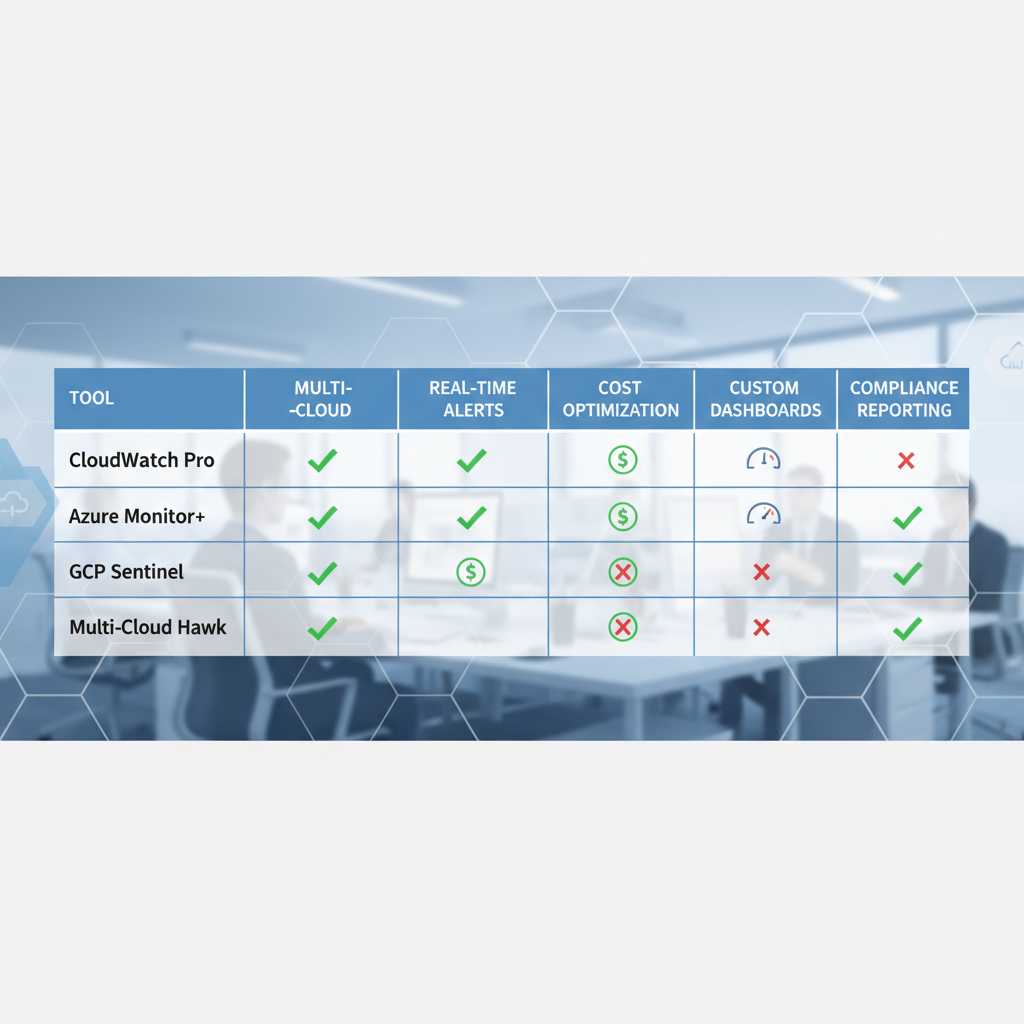
A comparative table or a feature matrix highlighting different Cloud SLA monitoring tools with checkmarks for various features like multi-cloud support, real-time alerts, and cost.
Future Trends in Cloud SLA Monitoring 2026
The landscape of Cloud sla monitoring tools is continuously evolving, driven by advancements in technology and the increasing complexity of cloud environments. Looking ahead to 2026, several key trends are set to reshape how organizations monitor and manage their cloud service agreements. These innovations promise more intelligent, proactive, and integrated monitoring solutions.
Keeping abreast of these developments is crucial for any Cloud sla monitoring tools guide aiming to provide forward-looking insights.
AI and Machine Learning Integration: Artificial intelligence and machine learning will play an even more significant role in anomaly detection, predictive analytics, and automated root cause analysis. This will enable proactive identification of potential SLA breaches before they occur.
AIOps for Automated Operations: The adoption of AIOps platforms will grow, consolidating monitoring data from various sources and using AI to automate insights, remediation, and even self-healing capabilities. This marks a significant step for performance management tools.
Enhanced Security and Compliance Monitoring: As cloud security becomes paramount, Cloud sla monitoring tools will increasingly integrate robust security monitoring features, helping organizations maintain compliance with regulations like GDPR, HIPAA, and NIS2, directly impacting SLA compliance.
Edge Computing Monitoring: With the rise of edge computing, monitoring will extend beyond central cloud data centers to distributed edge locations. Tools will need to adapt to monitor performance and availability at the very edge of the network.
Serverless and Container Monitoring: The proliferation of serverless functions and containerized applications demands specialized monitoring solutions. Future tools will offer deeper insights and better performance management for these ephemeral and highly dynamic workloads.
Sustainability Monitoring: A growing focus on environmental impact will likely lead to tools that can monitor and report on the energy consumption and carbon footprint of cloud resources, potentially becoming a new dimension of SLA tracking software.
More Granular and Business-Centric SLAs: SLAs will become more granular, moving beyond simple uptime percentages to focus on specific business transaction performance and user experience metrics. Cloud service monitoring utilities will adapt to track these more nuanced agreements.
Frequently Asked Questions (FAQ)
This section addresses common questions about Cloud sla monitoring tools, providing clear and concise answers to help clarify key concepts.
What is the primary purpose of Cloud sla monitoring tools?
The primary purpose of Cloud sla monitoring tools is to ensure that cloud services meet their agreed-upon performance and availability metrics. They provide visibility into service health, help detect deviations from SLAs, and enable proactive management of cloud resources to prevent service disruptions. These tools are essential for maintaining contractual obligations.
How do Cloud sla monitoring tools ensure SLA compliance?
Cloud sla monitoring tools ensure SLA compliance by continuously tracking key performance indicators such as uptime, response times, and error rates. When these metrics fall outside predefined thresholds, the tools trigger alerts, allowing teams to address issues rapidly. Comprehensive reporting features also provide auditable proof of compliance or non-compliance.
Can Cloud sla monitoring tools be used across multiple cloud providers?
Yes, many modern Cloud sla monitoring tools are designed to support multi-cloud and hybrid cloud environments. These tools offer unified dashboards and integrate with various cloud provider APIs (e.g., AWS, Azure, GCP), enabling organizations to monitor services across different platforms from a single interface. This capability is crucial for complex IT infrastructures.
What is the difference between synthetic monitoring and real user monitoring (RUM)?
Synthetic monitoring proactively simulates user interactions to test application performance and availability, often from various geographic locations, before real users are affected. Real User Monitoring (RUM), conversely, collects data directly from actual end-user sessions, providing insights into their real-world experience and identifying performance issues they encounter. Both are valuable components of comprehensive cloud performance monitoring tools.
Why is historical data important in Cloud sla monitoring?
Historical data in Cloud sla monitoring is crucial for several reasons. It allows organizations to identify long-term performance trends, conduct capacity planning based on past usage patterns, and diagnose recurring issues. Analyzing historical performance helps in optimizing resource allocation and predicting future performance challenges, leading to better service level management.
Are native cloud provider monitoring tools sufficient for SLA monitoring?
While native cloud provider monitoring tools (like AWS CloudWatch or Azure Monitor) offer robust monitoring for their respective ecosystems, they may not always be sufficient for comprehensive SLA monitoring, especially in multi-cloud or hybrid environments. Third-party Cloud sla monitoring tools often provide deeper application-level insights, multi-cloud aggregation, and advanced analytics that can go beyond native offerings, enhancing overall SLA tracking capabilities.
ENSURE UNINTERRUPTED SERVICE
Ensure uninterrupted service delivery and proactively prevent costly SLA breaches. Leverage our automated, real
✓ Free consultation ✓ No commitment required ✓ Trusted by experts
Conclusion
The effective utilization of Cloud sla monitoring tools is no longer optional but a strategic imperative for businesses navigating the complexities of modern cloud environments. These tools provide the critical visibility and control needed to ensure service reliability, uphold customer commitments, and drive operational excellence. By proactively monitoring, analyzing, and optimizing cloud service performance, organizations can significantly reduce risks and enhance user satisfaction.
As we look towards 2026, the evolution of these tools with AI, AIOps, and enhanced security features promises even greater efficiency and predictive capabilities. Investing in the right Cloud sla monitoring tools and implementing best practices will empower your business to thrive in an increasingly cloud-dependent world, ensuring your digital infrastructure consistently meets and exceeds expectations.
Jacob Stålbro is a seasoned digitalization and transformation leader with over 20 years of experience, specializing in AI-driven innovation. As Head of Innovation and Co-Founder at Opsio, he drives the development of advanced AI, ML, and IoT solutions. Jacob is a sought-after speaker and webinar host known for translating emerging technologies into real business value and future-ready strategies.