Boost Uptime with Application Cloud SLA Monitoring Strategies
March 6, 2026|2:51 PM
Unlock Your Digital Potential
Whether it’s IT operations, cloud migration, or AI-driven innovation – let’s explore how we can support your success.
Home /
Work /
Blogs /
Boost Uptime with Application Cloud SLA Monitoring Strategies
Understanding Application Cloud SLA Monitoring
In today’s fast-paced digital landscape, the performance and availability of cloud-based applications are paramount for business success. Effective application Cloud sla monitoring ensures that these critical services consistently meet agreed-upon performance benchmarks and customer expectations. This comprehensive guide will explore the intricacies of monitoring Service Level Agreements (SLAs) for cloud applications, providing insights into best practices and advanced strategies.
Service Level Agreements (SLAs) define the expected level of service from a provider to a customer, outlining specific metrics, responsibilities, and remedies. For cloud applications, these agreements are essential for guaranteeing uptime, response times, and overall operational quality. Robust monitoring allows organizations to track adherence to these crucial commitments.
What is an Application SLA?
An Application SLA is a contractually defined commitment regarding the performance, availability, and reliability of a specific application. It details measurable metrics that determine the quality of service an end-user or business unit can expect. These agreements are vital for maintaining trust and operational efficiency, especially within a cloud environment.
These metrics typically include uptime percentages, transaction processing times, error rates, and data availability. Establishing clear application performance SLA targets helps both providers and consumers understand their responsibilities and expected outcomes. Without defined SLAs, managing expectations and ensuring accountability becomes significantly challenging.
Why is application Cloud sla monitoring Crucial?
application Cloud sla monitoring is critical for several reasons, primarily to uphold service quality and prevent business disruptions. It provides a continuous assessment of how well cloud applications are performing against agreed-upon standards. This proactive approach helps identify potential issues before they escalate into major problems, impacting user experience and revenue.
Moreover, effective application Cloud sla monitoring ensures transparency and accountability between cloud service providers and their clients. It offers concrete data to verify compliance with contractual obligations, facilitating informed decision-making and performance optimization. Organizations can leverage this data to justify investments, manage vendor relationships, and plan future resource allocation more effectively.
Benefits of Effective application Cloud sla monitoring
Implementing a robust application Cloud sla monitoring system yields numerous benefits for organizations. It extends beyond simply tracking performance to encompass strategic advantages that bolster business operations. These advantages contribute to a more stable, efficient, and user-centric IT environment.
Key benefits include:
Improved User Experience: Consistent application performance leads directly to higher user satisfaction and engagement. Users expect fast, reliable access to their applications without interruption.
Enhanced Business Continuity: Proactive monitoring helps identify and resolve issues swiftly, minimizing downtime and ensuring continuous business operations. This directly impacts productivity and revenue streams.
Cost Optimization: By identifying inefficient resource usage or underperforming services, organizations can make data-driven decisions to optimize cloud spend. This prevents over-provisioning and ensures resources are allocated effectively.
Stronger Vendor Relationships: Clear SLA data fosters trust and enables constructive dialogue with cloud providers, leading to better service and support. It provides an objective basis for discussions and improvements.
Regulatory Compliance and Auditing: Many industries have strict regulatory requirements regarding data availability and system uptime. Monitoring provides the necessary data for compliance audits and reporting.
Data-Driven Decision Making: Performance data offers valuable insights into application behavior, allowing teams to prioritize improvements and allocate resources more intelligently. This leads to more strategic planning and development efforts.
Key Components of Effective application Cloud sla monitoring
Establishing an effective system for application Cloud sla monitoring requires a multifaceted approach, integrating various tools and processes. It’s not just about collecting data; it’s about collecting the right data and interpreting it correctly. A robust system provides a holistic view of application health, performance, and compliance.
The foundation of successful app SLA tracking lies in understanding the core elements that contribute to a comprehensive monitoring framework. These components work in synergy to ensure consistent service delivery and prompt issue resolution.
Monitoring Tools and Technologies
Modern application Cloud sla monitoring relies heavily on sophisticated tools and technologies designed to collect, analyze, and visualize performance data. These solutions range from agent-based monitoring to synthetic transaction testing. The choice of tools often depends on the application’s architecture, complexity, and specific SLA requirements.
Many platforms offer integrated capabilities for monitoring cloud app performance across various cloud providers and hybrid environments. They provide visibility into infrastructure, application code, and user experience. Selecting the best application Cloud sla monitoring tools is crucial for accurate and timely insights.
Baseline Performance Establishment
Before effective SLA monitoring can begin, it is essential to establish a baseline of normal application performance. This involves collecting performance data over a period to understand typical behavior during peak and off-peak hours. Without a baseline, distinguishing between normal fluctuations and actual performance degradation becomes incredibly difficult.
This process sets realistic expectations for future performance and helps in defining actionable SLA thresholds. Baselines provide a critical reference point against which all subsequent performance measurements can be compared. They are fundamental for accurate app SLA tracking and anomaly detection.
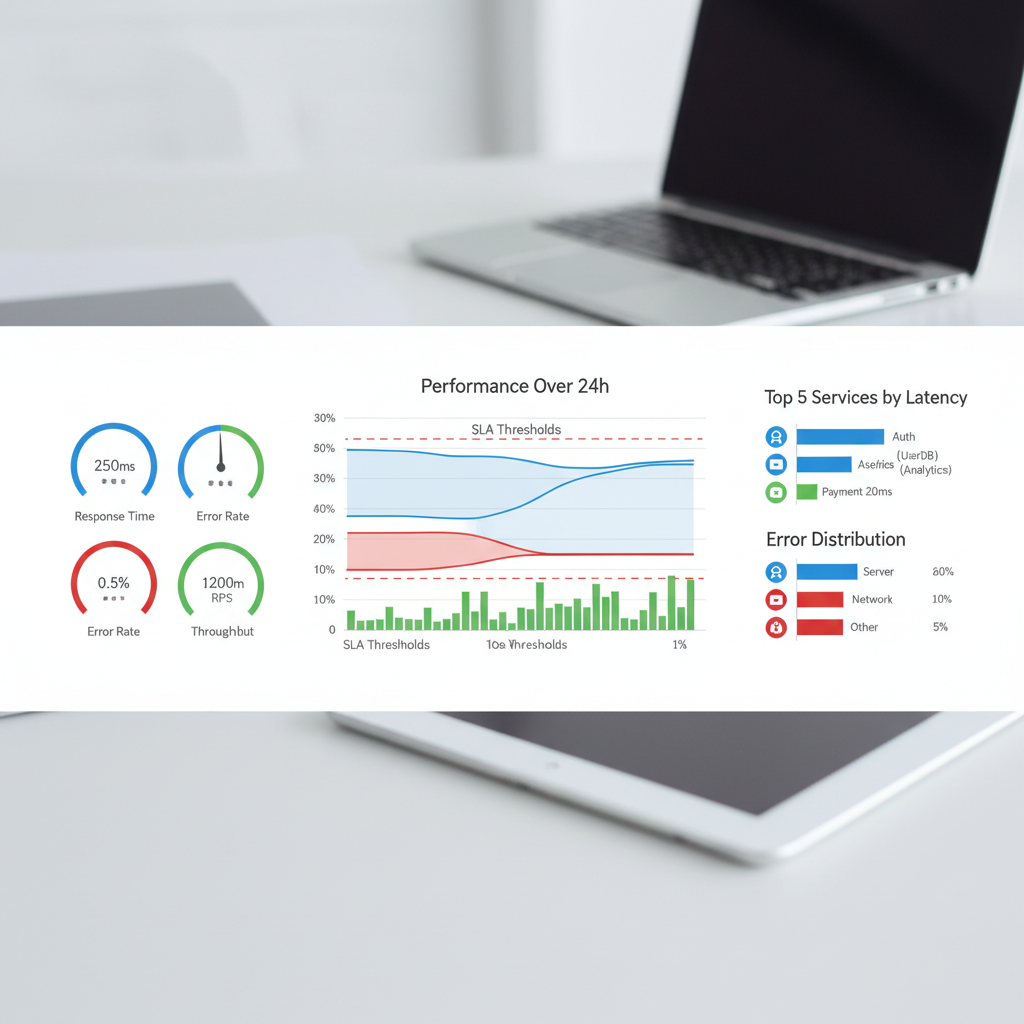
A dashboard showing various application performance metrics like response time, error rate, and throughput over time, with clear SLA thresholds marked on the graphs.
Alerting and Notification Systems
Timely alerting is a cornerstone of effective application Cloud sla monitoring. When an application’s performance deviates from its SLA thresholds, immediate notification is essential for rapid response and remediation. These systems should be configurable to send alerts through multiple channels, such as email, SMS, or integrated chat platforms.
Alerts should also be intelligent, prioritizing critical issues and minimizing false positives to prevent alert fatigue. Well-designed alerting ensures that the right people are informed at the right time, preventing minor issues from escalating into major outages. It is a vital part of ensuring rapid response to any cloud app performance degradation.
Reporting and Analytics
Comprehensive reporting and analytics capabilities are crucial for evaluating long-term SLA compliance and identifying trends. Monitoring data should be presented in clear, actionable dashboards and reports that cater to different stakeholders, from technical teams to business leadership. These insights help in understanding historical performance, pinpointing root causes of issues, and making informed strategic decisions.
Detailed reports can demonstrate adherence to application performance SLA terms and highlight areas for improvement. They also provide valuable evidence for auditing purposes and discussions with cloud service providers. Robust analytics enable continuous optimization of application performance and resource utilization.
Integrating with IT Service Management (ITSM)
Seamless integration with existing IT Service Management (ITSM) systems enhances the efficiency of application Cloud sla monitoring. When an SLA breach is detected, an automated ticket can be generated in the ITSM system, streamlining the incident management process. This ensures that issues are tracked, assigned, and resolved systematically.
Such integration bridges the gap between monitoring tools and operational workflows, ensuring a cohesive approach to IT service delivery. It enables a unified view of service health and contributes to faster resolution times, improving the overall enterprise application SLA management.
Best Practices for Implementing application Cloud sla monitoring
Implementing an effective application Cloud sla monitoring strategy requires careful planning and continuous refinement. Adhering to best practices ensures that your monitoring efforts are efficient, insightful, and ultimately contribute to superior service delivery. These practices span from initial setup to ongoing management and optimization.
A well-structured approach helps organizations avoid common pitfalls and maximize the value derived from their monitoring investments. This section offers practical application Cloud sla monitoring tips to guide your implementation.
Setting Realistic SLAs
One of the most critical aspects of application Cloud sla monitoring is setting realistic and achievable Service Level Agreements. SLAs should be challenging enough to drive performance improvements but not so ambitious that they are consistently missed, leading to frustration and distrust. Consider historical performance data, business requirements, and the capabilities of your cloud infrastructure.
Involve all relevant stakeholders, including business owners, IT operations, and cloud providers, in the SLA definition process. Realistic expectations are key to sustainable app SLA tracking and successful long-term partnerships. Unrealistic SLAs can undermine the entire monitoring effort.
Choosing the Right Metrics
The effectiveness of software service level monitoring hinges on selecting the appropriate metrics that truly reflect application performance and user experience. Focus on metrics that are measurable, actionable, and directly tied to business outcomes. Avoid vanity metrics that don’t offer meaningful insights into service quality.
Key metrics often include:
Availability/Uptime: Percentage of time the application is accessible and operational.
Response Time: The time it takes for the application to respond to a user request.
Error Rate: The percentage of failed requests or transactions.
Throughput: The number of requests or transactions processed per unit of time.
Resource Utilization: CPU, memory, network, and disk usage by the application.
Automating Monitoring Processes
Manual monitoring is prone to human error and cannot scale with the dynamic nature of cloud environments. Automating application Cloud sla monitoring processes is essential for efficiency and accuracy. This includes automated data collection, threshold alerting, and even some aspects of initial incident response.
Leverage monitoring tools that offer API integrations, scripting capabilities, and automated dashboard generation. Automation frees up IT staff to focus on more complex problem-solving and strategic initiatives. It ensures consistent, continuous app SLA tracking without constant manual intervention.
Regularly Reviewing and Adjusting SLAs
Cloud environments and business requirements are constantly evolving, making regular review and adjustment of SLAs imperative. What was a realistic SLA last year might be outdated today due to new features, increased user load, or infrastructure changes. Schedule periodic reviews, perhaps quarterly or bi-annually, to ensure your SLAs remain relevant and effective.
Gather feedback from users and stakeholders, and analyze historical performance data to inform these adjustments. This iterative process ensures that your application performance SLA remains a meaningful measure of service quality. Flexibility is key to maintaining relevant and impactful service level agreements.
Communicating SLA Status
Transparent communication about SLA status is vital for managing expectations and fostering trust. Regularly share performance reports and SLA compliance summaries with relevant stakeholders. This includes providing real-time dashboards for technical teams and executive summaries for business leaders.
In the event of an SLA breach or incident, communicate proactively and clearly about the issue, its impact, and the steps being taken for resolution. Open communication builds confidence and ensures everyone is informed about the current state of cloud app performance.
Ensuring Enterprise Application SLA Compliance
For large organizations, ensuring enterprise application SLA compliance across a diverse portfolio of applications and services is a significant undertaking. This requires a centralized monitoring strategy and consistent enforcement of SLA policies. Establish clear roles and responsibilities for SLA management.
Utilize tools that can aggregate data from multiple sources and provide a unified view of compliance across the entire enterprise. This holistic approach is crucial for maintaining consistent service quality and meeting the needs of various business units. It also helps identify systemic issues affecting multiple applications.
ENSURE UNINTERRUPTED SERVICE
Ensure uninterrupted service delivery and proactively prevent costly SLA breaches. Leverage our automated, real
✓ Free consultation ✓ No commitment required ✓ Trusted by experts
Challenges in application Cloud sla monitoring
While the benefits of robust application Cloud sla monitoring are clear, organizations often encounter several challenges in its implementation and ongoing management. Understanding these hurdles is the first step toward developing effective strategies to overcome them. The dynamic and distributed nature of cloud environments introduces complexities not present in traditional on-premise systems.
Addressing these challenges requires a combination of advanced tools, skilled personnel, and adaptable processes. Ignoring these difficulties can lead to inaccurate monitoring, missed SLAs, and ultimately, frustrated users.
Dynamic Nature of Cloud Environments
Cloud environments are inherently dynamic, with resources scaling up and down automatically based on demand. This elasticity, while beneficial for cost and performance, makes consistent app SLA tracking challenging. IP addresses, virtual machines, and container instances can change rapidly, making it difficult to maintain persistent monitoring configurations.
Monitoring solutions must be cloud-native and capable of automatically discovering and tracking these ephemeral resources. They need to adapt to auto-scaling events and serverless functions to provide continuous visibility. The constant flux requires highly adaptive monitoring strategies.
Complexity of Distributed Systems
Modern cloud applications are often built as distributed microservices, interacting across various cloud services and even hybrid architectures. Tracing transactions across multiple services, databases, and third-party APIs to understand end-to-end performance is a significant challenge. Pinpointing the root cause of a performance issue in such a complex chain can be time-consuming.
Effective software service level monitoring requires tools that offer distributed tracing and dependency mapping. This helps visualize the entire service architecture and identify bottlenecks or failures within specific components. Understanding these complex interdependencies is crucial for accurate diagnosis.
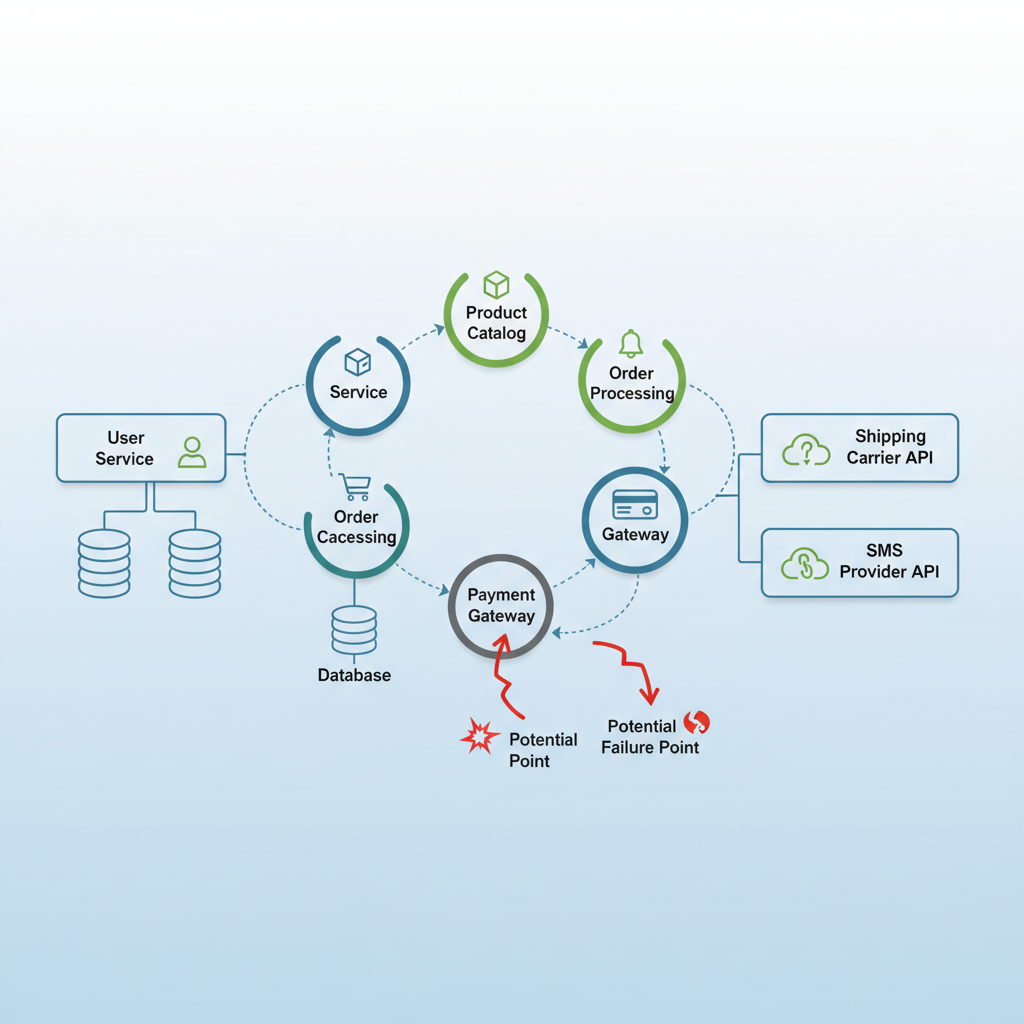
A diagram illustrating a microservices architecture with multiple interconnected services, databases, and external APIs, highlighting data flow and potential points of failure.
Data Volume and Noise
Cloud environments generate an enormous volume of telemetry data, including metrics, logs, and traces. Sifting through this “big data” to extract meaningful insights and identify actual SLA breaches can be overwhelming. Too much irrelevant data can lead to alert fatigue and obscure critical issues.
Advanced application Cloud sla monitoring solutions leverage artificial intelligence and machine learning to analyze this data more effectively. They can identify anomalies, correlate events, and reduce noise, helping teams focus on truly impactful performance deviations. Intelligent data processing is essential for practical insights.
Vendor Lock-in Considerations
Relying heavily on a single cloud provider’s native monitoring tools can lead to vendor lock-in. While these tools are often well-integrated, they may not offer the comprehensive capabilities needed for multi-cloud or hybrid environments. This can restrict an organization’s flexibility and increase migration costs later on.
Organizations should evaluate third-party monitoring solutions that offer broader compatibility and portability across different cloud platforms. This strategic choice helps maintain agility and ensures that monitoring capabilities are not constrained by a single vendor’s ecosystem. It offers greater control over your monitoring strategy.
Resource Allocation
Properly allocating resources for application Cloud sla monitoring, both human and technological, can be a challenge. Investing in sophisticated monitoring tools and skilled personnel is necessary but can be costly. Organizations must balance the investment against the potential risks of SLA breaches and poor application performance.
Optimizing the use of monitoring resources involves prioritizing critical applications, leveraging automation, and continually refining monitoring configurations. Efficient resource allocation ensures that monitoring efforts are focused where they deliver the most value. It is about smart spending, not just big spending.
Addressing Cloud App Performance Issues
When cloud app performance issues inevitably arise, effectively addressing them under the pressure of SLA commitments is a major challenge. Rapid diagnosis, root cause analysis, and efficient remediation are paramount. This requires well-defined incident response procedures and skilled technical teams.
Effective application Cloud sla monitoring provides the data needed for quick troubleshooting and post-incident analysis. It helps understand “what happened” and “why it happened,” facilitating continuous improvement and preventing recurrence. Proactive monitoring turns challenges into opportunities for resilience.
Advanced Strategies for SaaS application monitoring and SLA Compliance
As organizations increasingly adopt Software as a Service (SaaS) solutions, the complexities of SaaS application monitoring and ensuring SLA compliance evolve. While responsibility for the underlying infrastructure often lies with the SaaS vendor, clients still need to monitor the application’s performance and availability from their perspective. Advanced strategies leverage sophisticated techniques to gain deeper insights and proactive control.
These strategies empower businesses to hold SaaS providers accountable and ensure their critical cloud services meet operational demands. They go beyond basic uptime checks to provide a comprehensive view of user experience and business impact.
Synthetic Monitoring vs. Real User Monitoring (RUM)
Two powerful techniques for SaaS application monitoring are synthetic monitoring and Real User Monitoring (RUM). Synthetic monitoring proactively simulates user interactions from various geographical locations and networks, providing consistent, baseline performance data. It can detect issues before they affect real users.
RUM, conversely, collects data directly from actual end-user sessions, providing precise insights into user experience and performance variations across different devices, browsers, and locations. A combined approach offers the most comprehensive view, using synthetic monitoring for consistent checks and RUM for real-world user validation. This combination offers the best application Cloud sla monitoring coverage.
AI-powered Anomaly Detection
The sheer volume of data generated by cloud applications makes manual anomaly detection nearly impossible. AI-powered anomaly detection leverages machine learning algorithms to automatically identify deviations from normal behavior in metrics like response times, error rates, or transaction volumes. These systems can learn baselines and detect subtle changes that might indicate impending issues.
This proactive capability helps teams uncover problems that might otherwise go unnoticed, often before they impact SLAs. It significantly reduces alert fatigue by focusing on true anomalies rather than static threshold breaches. AI enhances the intelligence of application Cloud sla monitoring, making it more efficient.
Predictive Analytics for SLA Breaches
Moving beyond reactive monitoring, predictive analytics utilizes historical data and machine learning to forecast potential SLA breaches before they occur. By analyzing trends and patterns, these systems can identify leading indicators of performance degradation. This allows IT teams to take pre-emptive action to mitigate risks.
Predictive capabilities empower organizations to optimize resource allocation, scale infrastructure proactively, or even communicate potential issues to users ahead of time. This proactive stance significantly improves resilience and customer satisfaction. It transforms application Cloud sla monitoring from reactive to preventive.
Business Transaction Monitoring
Focusing solely on infrastructure metrics might not provide a complete picture of business impact. Business transaction monitoring tracks key user journeys and workflows within an application, from login to checkout or data submission. It measures the performance and success rate of these critical business processes.
By monitoring specific business transactions, organizations can directly correlate application performance with business outcomes. This provides a more relevant understanding of application performance SLA compliance from a business perspective. It allows for a more targeted approach to software service level monitoring.
Ensuring Software Service Level Monitoring for SaaS
Ensuring robust software service level monitoring for SaaS applications requires a strong partnership with the vendor and a clear understanding of their responsibilities versus yours. While the SaaS provider manages their infrastructure and application code, you are responsible for monitoring performance from your network edge to their service. This involves monitoring network latency, DNS resolution, and the application’s responsiveness from your end-users’ perspective.
Regularly review the SaaS provider’s own SLA reports against your independent monitoring data. This dual approach provides a comprehensive view of performance and helps validate the provider’s adherence to their commitments. It’s a critical aspect of effective application Cloud sla monitoring for outsourced services.
Choosing the Best Application Cloud SLA Monitoring Solution
Selecting the best application Cloud sla monitoring solution is a critical decision that impacts an organization’s ability to maintain high service levels and business continuity. The market offers a wide array of tools, each with varying capabilities and focus areas. A thorough evaluation process is essential to find a solution that aligns with specific business needs and technical requirements.
This selection process should consider both immediate needs and future scalability. Investing in the right tool ensures long-term effectiveness in managing application performance and SLA adherence.
Key Features to Look For
When evaluating application Cloud sla monitoring solutions, several key features stand out as essential for comprehensive coverage. These features ensure that the tool provides deep insights and actionable intelligence. Prioritizing these functionalities will guide you towards a more effective choice.
Look for solutions that offer:
End-to-End Visibility: Ability to monitor infrastructure, application code, network, and user experience.
Multi-Cloud/Hybrid Support: Compatibility with various cloud providers and on-premise environments.
Customizable Dashboards and Reporting: Flexibility to create tailored views for different stakeholders.
Intelligent Alerting: AI-powered anomaly detection and configurable notification channels.
Distributed Tracing: Capability to trace transactions across microservices and complex architectures.
Root Cause Analysis: Tools to quickly pinpoint the origin of performance issues.
Integration Capabilities: Seamless integration with ITSM, CI/CD pipelines, and other enterprise tools.
Scalability and Flexibility
The chosen application Cloud sla monitoring solution must be highly scalable to accommodate growth in application usage, infrastructure expansion, and data volume. It should be flexible enough to adapt to evolving cloud architectures and monitoring requirements without extensive re-configuration. A solution that can grow with your business prevents future re-platforming costs.
Consider solutions that offer flexible deployment options, whether SaaS-based or self-hosted, to match your operational preferences. The ability to easily add new monitoring agents, services, or locations is also crucial for long-term viability. This ensures your monitoring capabilities remain robust regardless of changes in your environment.
Integration Capabilities
A truly effective application Cloud sla monitoring solution does not operate in a silo. Its ability to integrate seamlessly with existing IT ecosystems is paramount. Look for tools that offer robust APIs and pre-built integrations with popular platforms like ITSM systems, incident management tools, and collaboration platforms.
These integrations streamline workflows, automate incident response, and ensure that monitoring data is accessible where it’s needed most. Comprehensive integration capabilities enhance the overall efficiency of your IT operations. This holistic approach is key to an effective application Cloud sla monitoring guide.
Support and Vendor Reputation
The quality of vendor support and their reputation in the industry are significant factors. A reliable vendor provides excellent technical support, regular updates, and a clear product roadmap. Their commitment to customer success can make a substantial difference in the long-term value of the monitoring solution.
Research customer reviews, case studies, and industry analyst reports to gauge vendor reputation. A strong support system ensures that you can effectively leverage the tool and resolve any issues promptly. Choosing a reputable partner is a critical application Cloud sla monitoring tip.
Considering a Comprehensive application Cloud sla monitoring guide
When selecting a solution, reference a comprehensive application Cloud sla monitoring guide like this one to ensure you cover all critical aspects. A good guide helps frame your requirements and evaluate potential tools against a complete set of criteria. It acts as a checklist, ensuring no vital element is overlooked.
Such a guide often includes practical application Cloud sla monitoring examples and scenarios to help you understand how different features apply in real-world situations. This structured approach helps in making an informed and strategic decision.
Frequently Asked Questions about Application Cloud SLA Monitoring
This section addresses common queries regarding application Cloud SLA monitoring, providing concise answers to help clarify key concepts. Understanding these fundamentals is crucial for anyone involved in managing cloud application performance. These questions cover a range of topics from basic definitions to practical implementation.
What is application Cloud sla monitoring?
Application Cloud SLA monitoring is the continuous process of observing, measuring, and reporting on the performance and availability of cloud-based applications against predefined Service Level Agreements (SLAs). It involves tracking key metrics such as uptime, response times, and error rates to ensure services meet contractual obligations and user expectations. This monitoring is vital for maintaining service quality and operational transparency.
Why are SLAs important for cloud applications?
SLAs are important for cloud applications because they provide a formal agreement on service quality, ensuring accountability between cloud providers and consumers. They set clear expectations for performance, availability, and reliability, which are critical for business continuity. Without SLAs, there would be no objective standard to measure service delivery against, leading to potential disputes and poor user experiences.
What metrics should be monitored for application performance SLA?
For application performance SLA, key metrics typically include application availability (uptime percentage), end-user response time, transaction success rate, and error rates. Other important metrics might involve resource utilization (CPU, memory), network latency, and specific business transaction timings. The choice of metrics depends on the application’s criticality and specific business objectives.
How often should SLAs be reviewed?
SLAs should be reviewed regularly, ideally on a quarterly or semi-annual basis, or whenever there are significant changes to the application, infrastructure, or business requirements. The dynamic nature of cloud environments and evolving business needs necessitate periodic adjustments to ensure SLAs remain relevant and achievable. Consistent review helps maintain their effectiveness.
Can application Cloud sla monitoring prevent outages?
While application Cloud SLA monitoring cannot completely prevent all outages, it significantly reduces their likelihood and impact. By providing real-time visibility and proactive alerts on performance deviations, it allows teams to identify and address potential issues before they escalate into full-blown outages. Predictive analytics further enhances this capability by forecasting future problems.
What are some application Cloud sla monitoring examples?
Common application Cloud SLA monitoring examples include tracking a SaaS CRM system’s uptime to ensure it’s available 99.95% of the time, monitoring an e-commerce platform’s transaction response time to ensure purchases complete within 2 seconds, or observing a cloud-hosted financial application’s error rate to keep it below 0.1%. These examples illustrate how specific metrics are tied to contractual agreements and user experience goals.
ENSURE UNINTERRUPTED SERVICE
Ensure uninterrupted service delivery and proactively prevent costly SLA breaches. Leverage our automated, real
✓ Free consultation ✓ No commitment required ✓ Trusted by experts
Conclusion
Effective application Cloud sla monitoring is no longer a luxury but a fundamental requirement for businesses operating in the cloud. It underpins reliable service delivery, enhances user satisfaction, and safeguards critical business operations. By diligently tracking application performance against predefined SLAs, organizations gain the visibility and control needed to navigate the complexities of modern cloud environments.
Embracing the best practices and advanced strategies discussed in this application Cloud sla monitoring guide empowers organizations to achieve optimal performance and maintain trust with their users and stakeholders. Investing in robust monitoring solutions and processes is an investment in business resilience and future growth. Continue to refine your approach, leverage new technologies, and ensure your cloud applications consistently meet the high standards expected in today’s digital world.
Jacob Stålbro is a seasoned digitalization and transformation leader with over 20 years of experience, specializing in AI-driven innovation. As Head of Innovation and Co-Founder at Opsio, he drives the development of advanced AI, ML, and IoT solutions. Jacob is a sought-after speaker and webinar host known for translating emerging technologies into real business value and future-ready strategies.