Discover Key Cloud Managed Benefits for Your Business Growth
March 5, 2026|1:05 PM
Unlock Your Digital Potential
Whether it’s IT operations, cloud migration, or AI-driven innovation – let’s explore how we can support your success.
Home /
Insights /
Discover Key Cloud Managed Benefits for Your Business Growth
Understanding Cloud Managed Services
In today’s fast-paced digital landscape, businesses are constantly seeking ways to optimize their operations, enhance security, and drive innovation. Cloud managed services offer a compelling solution, providing a pathway to leverage cloud technology without the burden of in-house management. This guide will explore the profound cloud managed benefits that businesses can unlock.
Embracing cloud management means entrusting the monitoring, management, and optimization of your cloud infrastructure and applications to a third-party provider. This strategic move allows organizations to focus on core competencies rather than the complexities of IT infrastructure. The advantages extend across various operational facets, from financial savings to enhanced strategic capabilities.
What Are Cloud Managed Services?
Cloud managed services involve outsourcing the daily management of cloud resources, including infrastructure, platforms, and applications. This encompasses a broad range of responsibilities, such as monitoring, security management, network operations, and performance optimization. Providers ensure that your cloud environment runs smoothly and efficiently.
These services can apply to public, private, or hybrid cloud environments. Businesses often opt for managed services to fill internal skill gaps or to free up existing IT teams for more strategic projects. It’s a comprehensive approach to managing complex cloud ecosystems.
The Shift to Cloud Management
The traditional model of IT management often involves significant upfront capital expenditure and ongoing operational costs. Maintaining an in-house team with diverse cloud expertise can be challenging and expensive. This is particularly true for small to medium-sized businesses.
The shift to cloud management reflects a desire for greater agility, financial predictability, and access to advanced capabilities. It moves IT from a cost center to a strategic enabler, aligning technology with business objectives more effectively. This paradigm shift is fundamentally altering how companies approach their digital infrastructure.
Key cloud managed benefits for Your Business
The decision to adopt cloud managed services brings a multitude of advantages that can profoundly impact a business’s bottom line and operational resilience. These benefits are not merely theoretical; they translate into tangible improvements across the organization. Understanding these core advantages is crucial for strategic planning.
By leveraging a managed service provider, companies can transform their IT challenges into opportunities for growth and innovation. This section delves into some of the most impactful cloud managed benefits, providing a clearer picture of their value. Each aspect contributes to a stronger, more adaptable business.
Enhanced Cost Savings and Budget Predictability
One of the most immediate and significant cloud managed benefits is the potential for substantial cost savings. By outsourcing cloud management, businesses can convert large capital expenditures into predictable operational expenses. This shift helps in better budget forecasting and resource allocation.
Managed service providers often achieve economies of scale, passing those efficiencies directly to their clients. This includes reduced spending on hardware, software licenses, and the significant costs associated with hiring and training specialized IT staff. These providers also help optimize cloud resource usage, preventing wasteful over-provisioning.
Boosting Operational Efficiency
Operational efficiency receives a considerable boost when cloud services are professionally managed. Routine tasks such as patching, updates, and troubleshooting are handled by experts, freeing up internal teams. This allows your in-house staff to concentrate on core business initiatives that drive innovation and competitive advantage.
Improved efficiency also stems from optimized resource allocation and proactive performance monitoring. Managed service providers ensure that your cloud infrastructure is always running at peak performance. This minimizes downtime and enhances application responsiveness, directly impacting user experience and productivity.
Unlocking Scalability and Flexibility
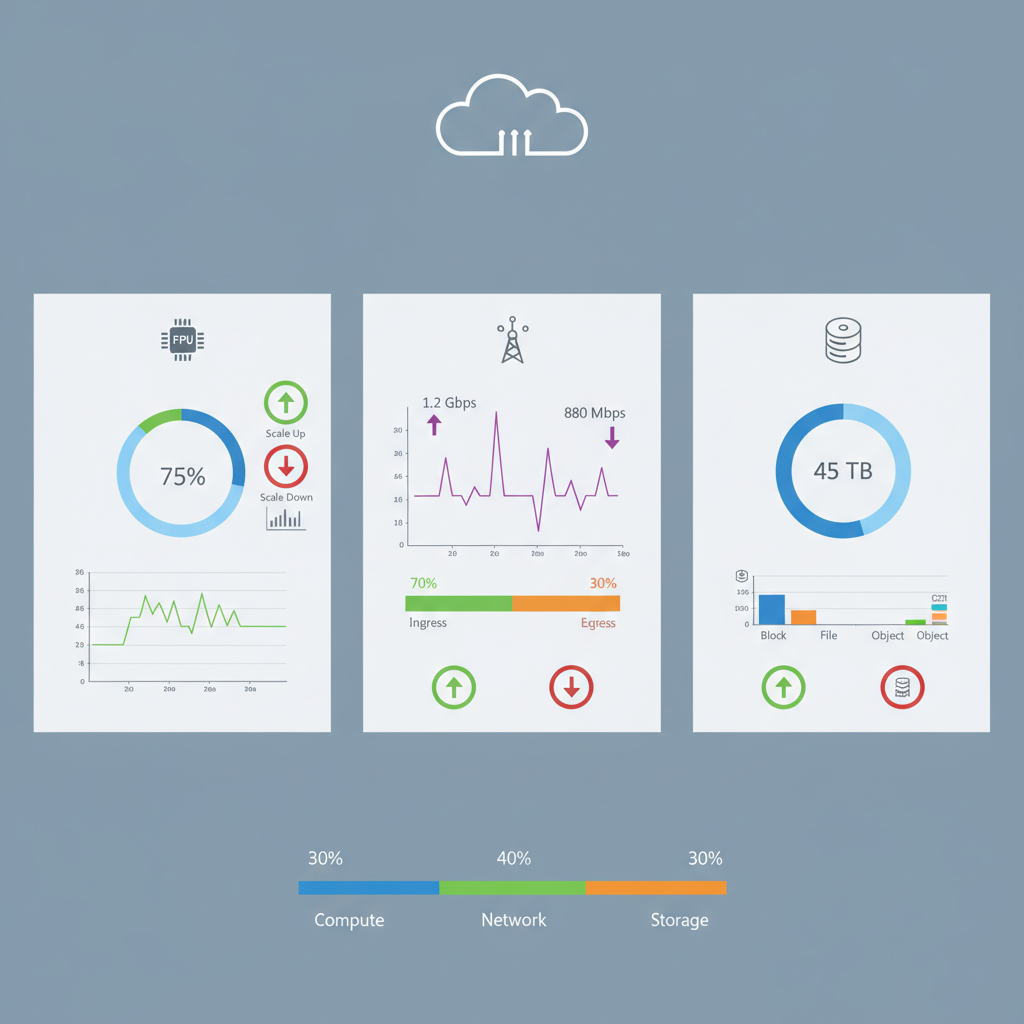
The inherent scalability of cloud environments is one of its most powerful attributes, and managed services amplify this cloud managed benefit. Businesses can easily scale resources up or down in response to fluctuating demand without significant lead times or capital investment. This flexibility is critical for adapting to market changes.
A dashboard showing various cloud service metrics like CPU usage, network traffic, and storage, with indicators for scaling up or down based on demand.
Whether facing seasonal peaks, rapid growth, or unexpected slowdowns, cloud managed services ensure your infrastructure can always match your needs. This agility allows businesses to respond quickly to new opportunities and challenges. It removes the guesswork and complexity from capacity planning, providing peace of mind.
Strengthening Your Business with Cloud Security and Reliability
In an era of increasing cyber threats and strict regulatory requirements, robust security and unwavering reliability are paramount. Cloud managed services offer specialized expertise and resources to fortify your digital assets against vulnerabilities. They provide a layered defense strategy that few individual companies can replicate on their own.
These services ensure that your operations remain uninterrupted and your data stays secure, even in the face of adversities. The commitment to maintaining high standards in both areas forms a critical part of the overall cloud managed benefits package. This protection allows businesses to operate with greater confidence.
Robust Security Posture and Compliance
Security is a top concern for any business leveraging cloud technology, and managed service providers specialize in maintaining a robust security posture. They implement advanced security measures, including intrusion detection, threat intelligence, and regular vulnerability assessments. This proactive approach helps mitigate risks before they escalate.
Providers are also well-versed in navigating complex regulatory landscapes, ensuring compliance with industry standards like GDPR, HIPAA, and PCI DSS. This expert support frees businesses from the burden of understanding and adhering to intricate compliance requirements. It ensures data protection and legal adherence.
Ensuring High Reliability and Uptime
Downtime can be incredibly costly, impacting productivity, revenue, and customer trust. Cloud managed services are designed to ensure high reliability and maximum uptime for your critical applications and data. They achieve this through continuous monitoring, proactive maintenance, and redundant systems.
Managed service providers often guarantee service level agreements (SLAs) that commit to specific levels of availability. Their teams are equipped to identify and resolve issues swiftly, often before they impact users. This commitment to reliability is a cornerstone of cloud managed benefits.
Achieving Business Continuity and Disaster Recovery
For businesses, the ability to recover quickly from unforeseen events is non-negotiable. Cloud managed services inherently support strong business continuity and disaster recovery strategies. They implement resilient architectures and data backup protocols, ensuring your operations can resume swiftly after a disruption.
This includes setting up automated backups, creating geographically dispersed data centers, and establishing clear recovery point and recovery time objectives (RPO/RTO). In the event of a disaster, these predefined plans minimize data loss and operational interruption. This is a critical aspect of protecting your business’s future.
MAXIMIZE YOUR CLOUDS
Maximize your cloud’s potential with expert management. Discover custom cloud solutions
✓ Free consultation ✓ No commitment required ✓ Trusted by experts
Practical Advantages: Reduced Overhead and Expert Support
Beyond the direct operational and security advantages, cloud managed benefits extend to alleviating the day-to-day burdens of IT management. Reducing overhead and gaining access to a pool of specialized talent are two highly practical outcomes. These aspects directly contribute to a more streamlined and agile business environment.
Many businesses struggle with the sheer volume of tasks involved in maintaining a complex IT infrastructure. Managed services simplify this, allowing internal teams to reallocate their focus. This section highlights how these practical advantages can reshape an organization’s internal workings.
Significant Reduction in Operational Overhead
Managing an IT infrastructure in-house involves considerable operational overhead, encompassing salaries, benefits, training, software licenses, and hardware maintenance. Cloud managed services significantly reduce this burden by consolidating these expenses into a single, predictable monthly fee. This allows for better financial planning.
Furthermore, the need to manage a large, specialized IT department diminishes. This reduces administrative tasks and human resource challenges associated with staffing. The overall effect is a leaner, more efficient operational structure that can quickly adapt to changing business needs without incurring extensive costs.
Access to Specialized Expert Support
One of the most undervalued cloud managed benefits is instant access to a team of highly specialized experts. These professionals possess deep knowledge across various cloud platforms, security protocols, and emerging technologies. Their collective expertise often surpasses what a single organization can afford to hire internally.
A team of IT professionals collaboratively working in a modern data center or office setting, looking at multiple screens displaying network diagrams and performance metrics.
This expert support means you no longer have to worry about finding, training, and retaining skilled cloud engineers. Providers offer 24/7 monitoring and support, ensuring that technical issues are addressed promptly and effectively. This round-the-clock vigilance and specialized knowledge are invaluable assets.
Implementing Cloud Managed Services: A How-To Guide
Transitioning to cloud managed services can seem daunting, but with a structured approach, it becomes a smooth and beneficial process. This how-to guide outlines the essential steps to consider when implementing cloud managed services within your organization. Each step is crucial for a successful adoption and optimization.
Following these guidelines will help ensure that your business fully realizes the extensive cloud managed benefits. A thoughtful implementation plan minimizes disruptions and maximizes the positive impact on your operations. It’s about making an informed decision and executing it strategically.
Step 1: Assess Your Business Needs
Before engaging with any provider, thoroughly assess your current IT infrastructure, business goals, and specific pain points. Identify which applications, data, and workloads are suitable for migration to a managed cloud environment. Consider your budget constraints and future growth projections.
Document your existing challenges, such as recurring downtime, security concerns, or high operational costs. Understanding these aspects will help you define your requirements clearly. This initial assessment forms the foundation for selecting the right services and provider.
Step 2: Choose the Right Provider
Selecting the right cloud managed services provider is a critical decision. Look for providers with a proven track record, relevant industry experience, and certifications in the cloud platforms you use. Evaluate their service level agreements (SLAs), support models, and security protocols.
Consider their expertise in areas like compliance, disaster recovery, and cost optimization. Request case studies and client references to gauge their effectiveness and reliability. A good provider will act as a strategic partner, not just a vendor.
Step 3: Plan Your Migration Strategy
Once you’ve chosen a provider, collaborate with them to develop a detailed migration strategy. This plan should outline which applications and data will be migrated, in what order, and with what timelines. Prioritize critical systems to ensure minimal disruption to business operations.
Ensure the plan includes data backup, security measures during migration, and rollback procedures in case of issues. Communication throughout this phase is key, both internally and with your managed service provider. A well-executed migration ensures a smooth transition to leveraging cloud managed benefits.
Step 4: Monitor and Optimize
After implementation, the work doesn’t stop. Continuously monitor the performance of your cloud environment and the services provided by your partner. Regularly review reports on security, uptime, and resource utilization. This ongoing oversight is essential for sustained success.
Work with your provider to identify areas for further optimization, such as cost reduction opportunities or performance enhancements. The cloud landscape evolves rapidly, so continuous adaptation and optimization are vital to fully realize the long-term cloud managed benefits.
Frequently Asked Questions About Cloud Managed Benefits
Navigating the world of cloud services can raise many questions for businesses looking to optimize their IT. This section addresses some of the most common inquiries regarding cloud managed benefits, providing clear and concise answers. Understanding these points can help clarify the value proposition of managed cloud services.
These FAQs aim to demystify some of the complexities associated with cloud management. They offer practical insights into how these services can address various business challenges. Gaining clarity on these aspects is an important step towards making informed decisions about your IT strategy.
What exactly are cloud managed benefits?
Cloud managed benefits refer to the advantages businesses gain by outsourcing the management of their cloud infrastructure and applications to a third-party provider. These benefits typically include enhanced operational efficiency, significant cost savings, improved security posture, and greater business continuity. They encompass a wide array of improvements across an organization’s IT landscape.
How do cloud managed services contribute to cost savings?
Cloud managed services contribute to cost savings by eliminating the need for large capital expenditures on hardware and software, converting them into predictable operational expenses. They also reduce the costs associated with hiring and training specialized IT staff, optimize cloud resource usage to prevent over-provisioning, and minimize downtime, which is often costly. This results in a more financially efficient IT model.
Can cloud managed services improve my business’s security?
Absolutely. Cloud managed services significantly improve business security by providing access to expert security teams and advanced tools. Providers implement robust security measures like threat detection, intrusion prevention, and regular vulnerability assessments. They also ensure compliance with industry regulations, helping to protect sensitive data and maintain a strong security posture against evolving cyber threats.
Is scalability a major cloud managed benefit?
Yes, scalability is indeed a major cloud managed benefit. Managed services enable businesses to effortlessly scale their IT resources up or down to match fluctuating demands. This flexibility ensures that businesses can respond quickly to market changes, accommodate growth, or manage seasonal peaks without significant capital investment or operational delays. It provides an agile foundation for continuous adaptation.
What role does expert support play in cloud managed services?
Expert support is a cornerstone of cloud managed benefits, providing businesses with access to highly skilled professionals. These experts manage complex cloud environments, resolve technical issues, and offer strategic advice. Their specialized knowledge ensures optimal performance, robust security, and efficient operation of your cloud infrastructure, freeing your internal teams to focus on core business initiatives.
MAXIMIZE YOUR CLOUDS
Maximize your cloud’s potential with expert management. Discover custom cloud solutions
✓ Free consultation ✓ No commitment required ✓ Trusted by experts
Conclusion: Embracing the Future of Business Operations
The journey through the extensive cloud managed benefits reveals a clear path to modernizing and strengthening business operations. From achieving remarkable cost savings and boosting operational efficiency to fortifying security and ensuring business continuity, the advantages are transformative. Embracing cloud managed services allows organizations to navigate the complexities of digital infrastructure with confidence and strategic foresight.
By leveraging expert support and the inherent scalability of the cloud, businesses can unlock new levels of agility and innovation. This strategic shift empowers companies to focus on their core mission, knowing their critical IT infrastructure is in capable hands. Explore how cloud managed benefits can reshape your business for future success and sustained growth in an increasingly competitive market.