Harnessing Cloud Solutions for Business Growth and Efficiency
March 5, 2026|1:02 PM
Unlock Your Digital Potential
Whether it’s IT operations, cloud migration, or AI-driven innovation – let’s explore how we can support your success.
Home /
Insights /
Harnessing Cloud Solutions for Business Growth and Efficiency
Embracing cloud solutions: An Essential Guide
The landscape of modern technology is rapidly evolving, with cloud solutions emerging as a cornerstone for businesses of all sizes. These powerful services offer unprecedented flexibility, scalability, and efficiency. Understanding their diverse facets is crucial for anyone navigating today’s digital world.
This comprehensive guide will demystify cloud solutions, exploring their types, benefits, challenges, and how to effectively implement them. We aim to equip you with the knowledge needed to make informed decisions for your organization’s future. Whether you are new to the concept or looking to deepen your understanding, this resource is designed to be your definitive starting point.
Understanding the Foundation of cloud solutions
At its core, a cloud solution refers to any service or application delivered over the internet, rather than being hosted locally on your own servers or devices. This fundamental shift eliminates the need for significant upfront hardware investments and ongoing maintenance. It represents a paradigm shift in how computing resources are accessed and utilized.
These solutions are built upon a network of remote servers, often managed by a third-party provider. Users can access these resources on demand, paying only for what they consume. This utility-based model offers immense advantages over traditional IT infrastructure.
The widespread adoption of cloud solutions is largely driven by their ability to support rapid innovation and operational agility. Businesses can quickly deploy new applications and scale resources up or down as needed. This responsiveness is vital in fast-paced markets.
Exploring the Diverse Types of cloud solutions
Cloud solutions are broadly categorized into three main service models, each offering different levels of management and control. These categories define the scope of resources provided by the cloud vendor. Understanding these distinctions is key to selecting the appropriate services for your specific requirements.
These service models represent a spectrum from maximum control to maximum convenience. Each model offers unique advantages for different use cases and business needs.
#### Infrastructure as a Service (IaaS)
IaaS provides the foundational computing resources over the internet, including virtual machines, storage, networks, and operating systems. With IaaS, you essentially rent the basic building blocks of IT infrastructure from a cloud provider. This model offers the highest level of flexibility and management control.
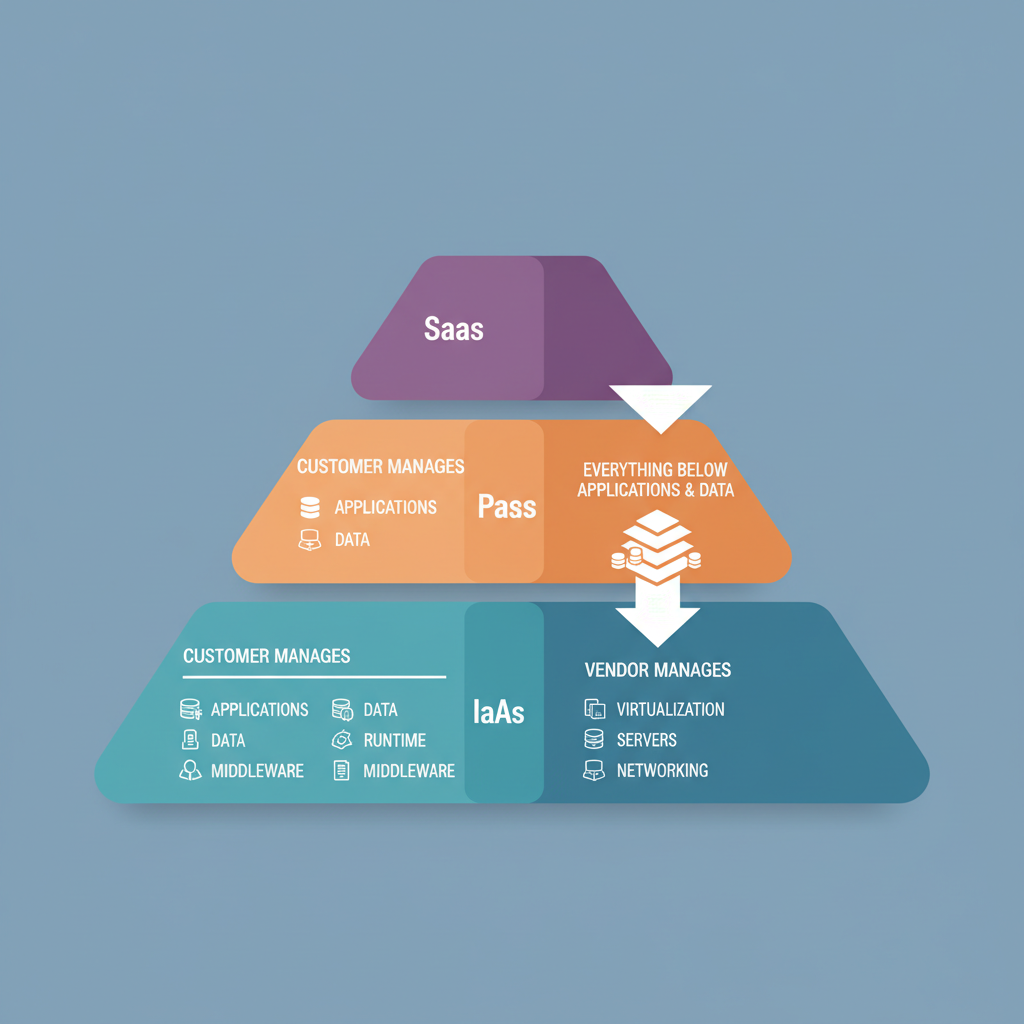
You are responsible for managing operating systems, applications, and data, while the cloud provider manages the underlying physical infrastructure. This makes IaaS ideal for scenarios requiring custom control over computing environments. It is a robust base for many sophisticated IT solutions.
Examples include virtual servers and storage offered by providers like Amazon Web Services (AWS) EC2 or Microsoft Azure Virtual Machines. These infrastructure solutions are pivotal for businesses building custom environments.
#### Platform as a Service (PaaS)
PaaS offers a complete development and deployment environment in the cloud, including servers, storage, networking, middleware, development tools, and database services. This model streamlines the process for developers, allowing them to focus solely on writing code. The provider handles all underlying infrastructure.
Developers can efficiently build, run, and manage applications without the complexity of managing the platform components. PaaS significantly accelerates development cycles and time-to-market. It is an excellent choice for businesses looking for streamlined software solutions.
Common examples include AWS Elastic Beanstalk, Google App Engine, and Microsoft Azure App Service. These platform solutions are instrumental for agile development teams.
A diagram showing the three cloud service models (IaaS, PaaS, SaaS) stacked on top of each other, with each layer illustrating what the customer manages and what the vendor manages. IaaS shows the customer manages applications, data, runtime, OS, middleware, while the vendor manages virtualization, servers, storage, networking. PaaS shows the customer manages applications and data, with the vendor managing everything below. SaaS shows the vendor manages everything.
#### Software as a Service (SaaS)
SaaS delivers fully functional applications over the internet, managed entirely by a third-party provider. Users access the software via a web browser or a dedicated client application, eliminating the need for local installation or maintenance. This is the most common form of cloud solution encountered by end-users.
This model provides immediate access to powerful business solutions without the overhead of software management. SaaS applications are typically subscription-based, offering predictable costs. They are designed for ease of use and broad accessibility.
Examples range from popular productivity suites like Microsoft 365 and Google Workspace to customer relationship management (CRM) systems like Salesforce. These software solutions revolutionize how businesses operate daily.
Key Benefits of Adopting cloud solutions
The transition to cloud solutions offers a multitude of advantages that can significantly impact an organization’s bottom line and operational efficiency. These benefits extend across various aspects of business, from financial management to innovation. Embracing the cloud is often a core component of successful digital transformation strategies.
Many organizations find that cloud adoption leads to unforeseen opportunities for growth and market differentiation. It provides a competitive edge in today’s fast-moving economy.
#### Cost Savings and Financial Efficiency
One of the most compelling reasons to adopt cloud solutions is the potential for significant cost savings. By shifting from a capital expenditure (CapEx) model to an operational expenditure (OpEx) model, businesses avoid large upfront investments in hardware and infrastructure. You only pay for the resources you consume.
Maintenance costs, including electricity, cooling, and hardware upgrades, are also dramatically reduced or eliminated. Cloud providers manage the physical infrastructure, allowing your internal IT teams to focus on strategic initiatives rather than routine upkeep. This financial agility is a major draw for many enterprises.
#### Enhanced Scalability and Flexibility
Cloud solutions provide unparalleled scalability, allowing businesses to easily adjust their computing resources up or down based on demand. This elastic capability ensures that applications can handle sudden spikes in traffic without performance degradation. Conversely, resources can be scaled down during off-peak times to optimize costs.
This flexibility supports rapid growth and adapts to changing business needs without requiring extensive planning or hardware procurement. It means your IT solutions can always match your operational requirements. This agility is crucial for modern enterprise solutions.
#### Improved Security and Disaster Recovery
Leading cloud providers invest heavily in robust security measures and state-of-the-art infrastructure, often surpassing the capabilities of individual businesses. They employ expert security teams, implement advanced encryption, and adhere to strict compliance standards. This centralized security expertise benefits all users.
Cloud solutions also inherently offer superior disaster recovery capabilities. Data is often replicated across multiple geographically dispersed data centers, ensuring business continuity even in the event of a localized outage. This resilience minimizes downtime and protects critical data solutions.
#### Increased Accessibility and Collaboration
Cloud-based applications and data can be accessed from anywhere, at any time, on any device with an internet connection. This ubiquitous access fosters greater employee mobility and flexibility. Remote workforces can collaborate seamlessly, enhancing productivity.
This accessibility breaks down geographical barriers, allowing teams to work together efficiently regardless of their physical location. It is a cornerstone of modern collaborative work environments. This contributes significantly to overall business solutions.
#### Focus on Core Business and Innovation
By offloading the management of IT infrastructure to cloud providers, businesses can free up internal resources. This allows IT teams to shift their focus from maintenance tasks to strategic projects that directly contribute to business growth and innovation. They can concentrate on developing new features and improving customer experiences.
This strategic redirection accelerates digital transformation, enabling companies to be more agile and responsive to market changes. It fosters a culture of innovation within the organization. This allows for a deeper focus on developing core business solutions.
Challenges and Considerations for cloud solutions Adoption
While the benefits of cloud solutions are extensive, organizations must also be aware of potential challenges and considerations before fully embracing them. A clear understanding of these aspects ensures a smoother transition and more successful long-term adoption. Proactive planning is essential to mitigate risks.
Addressing these challenges upfront will contribute to a more robust and secure cloud environment. It is about making informed choices to maximize benefits while minimizing potential drawbacks.
#### Security and Compliance Concerns
Despite the advanced security offered by major cloud providers, organizations still bear responsibility for their data in the cloud. The shared responsibility model dictates that while providers secure the “cloud itself,” customers are responsible for security “in the cloud,” including data, applications, and access management. Ensuring data solutions are secure requires diligent management.
Compliance with industry regulations (like GDPR, HIPAA, PCI DSS) can also be complex. Businesses must ensure their cloud configuration and data handling practices meet all necessary legal and regulatory requirements. This often involves careful selection of cloud services and thorough auditing.
#### Vendor Lock-in
A significant concern for some organizations is the potential for vendor lock-in. Once deeply integrated with a specific cloud provider’s ecosystem, migrating data and applications to a different provider can be challenging and costly. This can limit future flexibility and bargaining power.
Careful planning and architecture are needed to design cloud solutions that are portable or utilize open standards. This approach can minimize dependence on a single vendor. It ensures that your enterprise solutions remain adaptable.
#### Cost Management and Optimization
While cloud solutions offer cost savings, managing cloud spend effectively can be complex. Without proper monitoring and optimization, costs can quickly escalate, especially in large-scale deployments. Understanding usage patterns and selecting appropriate service tiers is crucial.
Organizations need robust cost management tools and practices to avoid overspending. This includes optimizing resource utilization, leveraging reserved instances, and consistently reviewing cloud expenditure. Effective IT solutions require vigilant financial oversight.
#### Data Migration and Integration
Migrating existing data and applications to the cloud can be a complex and time-consuming process. Legacy systems may not be directly compatible with cloud environments, requiring re-architecting or specialized tools. Careful planning is essential to avoid disruptions during the migration phase.
Integrating cloud services with existing on-premises systems or other cloud platforms also poses challenges. Ensuring seamless data flow and operational consistency is critical for maintaining business continuity. This integration is vital for comprehensive business solutions.
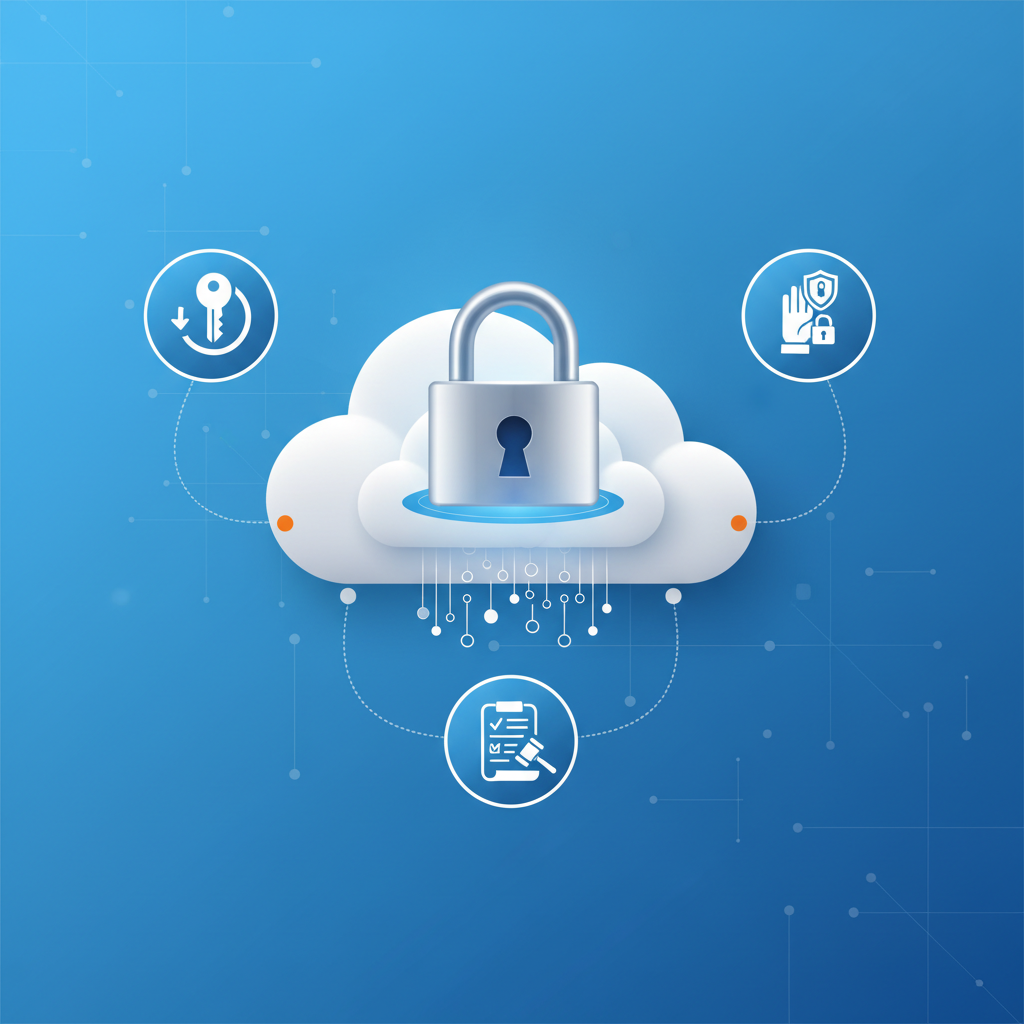
A conceptual diagram illustrating cloud security layers, showing a padlock icon over a series of interconnected cloud shapes, with smaller icons representing data encryption, access control, and compliance regulations surrounding the central cloud infrastructure.
How to Choose the Right cloud solutions for Your Business
Selecting the appropriate cloud solutions involves a strategic assessment of your specific business needs, existing infrastructure, and future goals. This decision-making process should be systematic and well-researched. It impacts everything from daily operations to long-term digital transformation initiatives.
An informed choice ensures that the cloud investment truly supports your organizational objectives. Rushing this process can lead to costly mistakes and inefficiencies.
#### 1. Assess Your Business Needs and Goals
Begin by thoroughly evaluating your current IT environment, applications, data requirements, and strategic objectives. Identify pain points with your existing infrastructure and how cloud solutions could address them. Consider factors like performance, scalability, security, and compliance.
What applications do you need to migrate or build?
What are your data storage and processing requirements?
What compliance regulations must you adhere to?
What is your budget for cloud services?
This initial assessment will help define the scope and type of cloud services best suited for your enterprise solutions. It lays the groundwork for all subsequent decisions.
#### 2. Evaluate Cloud Service Models (IaaS, PaaS, SaaS)
Based on your assessment, determine which cloud service model or combination of models (hybrid cloud) aligns best with your needs.
IaaS offers maximum control for custom environments or migrating complex legacy systems.
PaaS is ideal for accelerating application development and deployment without infrastructure management.
SaaS provides ready-to-use applications for common business functions, minimizing IT overhead.
Many organizations utilize a mix of these models, leveraging the strengths of each for different aspects of their IT solutions. A multi-cloud strategy might also be considered for diversity.
#### 3. Research and Select Cloud Providers
Once you have a clear understanding of your requirements, research potential cloud providers. Major players like AWS, Microsoft Azure, and Google Cloud Platform offer comprehensive portfolios, but specialized providers might be better for niche requirements. Consider factors beyond just price.
Evaluate providers based on:
Reliability and uptime guarantees
Security features and compliance certifications
Scalability options and global presence
Cost structure and pricing models
Support services and documentation
Ecosystem of complementary services and tools
Carefully vetting providers ensures a strong partnership for your digital transformation journey.
#### 4. Plan for Migration and Integration
Developing a detailed migration plan is crucial, outlining the steps for moving applications and data to the cloud. This includes assessing dependencies, establishing migration timelines, and planning for potential downtime. Robust data solutions require meticulous planning.
Consider how your new cloud environment will integrate with existing on-premises systems or other cloud services. API-driven integration strategies can facilitate seamless communication between disparate systems. This step ensures operational continuity.
Implementing and Managing Your cloud solutions
Successfully implementing and managing cloud solutions requires careful planning, ongoing optimization, and a commitment to best practices. This journey doesn’t end with initial deployment; it’s a continuous process of refinement. Effective management is key to realizing the full potential of your IT solutions.
A proactive approach ensures that your cloud environment remains secure, cost-effective, and performance-optimized. It contributes directly to the long-term success of your business solutions.
#### 1. Phased Migration Strategy
Instead of a “big bang” migration, consider a phased approach. Start with less critical applications or workloads to gain experience and refine your migration processes. This reduces risk and allows for continuous learning. A structured rollout ensures stability.
Gradually move more complex systems to the cloud as your team gains expertise and confidence. This iterative process helps identify and address challenges early on. This strategy is essential for complex enterprise solutions.
#### 2. Robust Security and Access Management
Implement strong identity and access management (IAM) policies from day one. Use multi-factor authentication (MFA) for all cloud accounts and apply the principle of least privilege. Regularly audit access permissions to prevent unauthorized access.
Utilize cloud-native security tools and third-party solutions for threat detection, vulnerability management, and data encryption. Ensure all data solutions are encrypted both in transit and at rest. Proactive security measures are paramount.
#### 3. Cost Optimization and Governance
Continuously monitor your cloud spending using the provider’s cost management tools. Identify underutilized resources, optimize configurations, and leverage pricing models like reserved instances or spot instances where appropriate. Set up budgets and alerts to prevent unexpected costs.
Establish clear cloud governance policies, including guidelines for resource provisioning, tagging, and usage. This ensures consistent practices across your organization. Effective governance is vital for sustainable business solutions.
#### 4. Performance Monitoring and Optimization
Implement comprehensive monitoring tools to track the performance of your cloud applications and infrastructure. Monitor key metrics such as CPU usage, memory utilization, network traffic, and application response times. This allows for quick identification of bottlenecks.
Regularly review and optimize your cloud resources to ensure they meet performance requirements efficiently. This might involve adjusting instance types, scaling resources, or refining application code. Continuous optimization improves the overall quality of your software solutions.
#### 5. Employee Training and Skill Development
Invest in training your IT staff and developers on cloud technologies, best practices, and the specifics of your chosen cloud platform. Cloud environments require different skill sets than traditional on-premises infrastructure. Empowering your team is crucial for successful digital transformation.
Continuous learning will ensure your team can effectively manage, secure, and innovate within your cloud environment. This human element is critical for maximizing the value of your platform solutions.
The Future Landscape of cloud solutions
The evolution of cloud solutions is far from over, with new technologies and paradigms constantly emerging. Businesses must stay abreast of these developments to maintain a competitive edge and continue their digital transformation journey. The future promises even greater integration and intelligence.
These advancements will further redefine what is possible with scalable, on-demand computing. They offer exciting prospects for innovation across all industries.
#### Hybrid and Multi-Cloud Strategies
Organizations are increasingly adopting hybrid cloud models, combining public cloud services with private cloud infrastructure. This approach offers the best of both worlds, providing flexibility for certain workloads while keeping sensitive data on-premises. Multi-cloud strategies involve using multiple public cloud providers, enhancing resilience and avoiding vendor lock-in.
These blended strategies offer robust business solutions tailored to specific needs. They optimize for cost, performance, and compliance simultaneously.
#### Edge Computing Integration
Edge computing, which processes data closer to its source rather than sending it to a central cloud data center, is gaining prominence. This reduces latency and bandwidth consumption, particularly crucial for IoT devices and real-time applications. cloud solutions are extending their reach to the “edge” to support these demands.
The synergy between edge and cloud will enable faster insights and more responsive applications. This promises to revolutionize data solutions.
#### AI and Machine Learning in the Cloud
Artificial Intelligence (AI) and Machine Learning (ML) capabilities are becoming integral to cloud platforms. Cloud providers offer powerful AI/ML services that allow businesses to integrate intelligence into their applications without extensive in-house expertise. This democratizes access to advanced analytics.
These services empower organizations to gain deeper insights from their data, automate processes, and create innovative products and services. This is a game-changer for enterprise solutions.
Frequently Asked Questions About cloud solutions
This section addresses some of the most common inquiries regarding cloud solutions, providing concise answers to help clarify key concepts. Understanding these fundamentals is crucial for navigating the cloud landscape effectively.
What is cloud solutions?
cloud solutions refer to computing services delivered over the internet, including servers, storage, databases, networking, software, analytics, and intelligence. Instead of owning your own computing infrastructure or data centers, you can access these services from a cloud provider, paying only for what you use. This model offers scalability and flexibility for various business needs.
How do cloud solutions differ from traditional on-premises IT?
The primary difference lies in ownership and management. With traditional on-premises IT, you own and manage all hardware and software. Cloud solutions, conversely, involve a third-party provider owning and maintaining the infrastructure, which you access via the internet. This shifts capital expenditure to operational expenditure and reduces the burden of IT management.
Is my data secure in cloud solutions?
Leading cloud providers invest massively in security infrastructure, often exceeding the capabilities of individual organizations. They employ advanced encryption, robust access controls, and adhere to strict compliance standards. However, security is a shared responsibility; customers must also configure their cloud environments securely and protect their own data.
What are the main benefits for businesses using cloud solutions?
Businesses gain numerous benefits, including significant cost savings by avoiding upfront hardware investments and only paying for consumed resources. They also benefit from enhanced scalability to handle fluctuating demand, improved disaster recovery capabilities, and greater accessibility for remote work. This allows for a stronger focus on core business innovation.
Can small businesses benefit from cloud solutions?
Absolutely. Small businesses often benefit immensely from cloud solutions because they can access enterprise-grade infrastructure and software without the prohibitive costs associated with maintaining their own IT departments. Cloud services provide a level playing field, allowing smaller firms to leverage powerful IT solutions that were once exclusive to large corporations.
What is a hybrid cloud strategy?
A hybrid cloud strategy combines public cloud services with a private cloud (on-premises or hosted). This approach allows data and applications to move between the two environments, offering greater flexibility and more deployment options. It’s often used for workloads that require specific security or compliance controls to remain in a private environment, while others leverage the public cloud’s scalability.
Conclusion: Embracing the Power of cloud solutions
cloud solutions represent a transformative force in the modern business world, offering unparalleled flexibility, efficiency, and scalability. From reducing operational costs to fostering rapid innovation, their impact is undeniable. Organizations that strategically embrace these solutions are better positioned for success in an increasingly digital landscape.
As technology continues to evolve, the importance of cloud solutions will only grow, integrating with new paradigms like AI, edge computing, and hybrid models. By understanding the different types, carefully weighing the benefits and challenges, and implementing a well-considered strategy, your business can harness the full power of the cloud. This guide provides a solid foundation for your journey towards a more agile, secure, and future-ready enterprise.
MAXIMIZE YOUR CLOUDS
Maximize your cloud’s potential with expert management. Discover custom cloud solutions
✓ Free consultation✓ No commitment required✓ Trusted by experts