Explore the Cost of Managed Cloud Services in 2026
March 5, 2026|12:56 PM
Unlock Your Digital Potential
Whether it’s IT operations, cloud migration, or AI-driven innovation – let’s explore how we can support your success.
Home /
Work /
Blogs /
Explore the Cost of Managed Cloud Services in 2026
Understanding the cost of managed cloud in 2026
Navigating the financial landscape of cloud computing can be complex, especially when considering the nuances of managed services. Understanding the true cost of managed cloud is crucial for businesses looking to optimize their IT expenditure and achieve strategic objectives. This guide aims to demystify the various components that contribute to the overall investment in managed cloud solutions.
Managed cloud services offer significant advantages, offloading the operational burden of infrastructure management from internal IT teams. However, this convenience comes with a financial structure that requires careful examination. We will explore the different elements that make up the total investment, helping you make informed decisions for your organization’s future.
Key Factors Influencing the cost of managed cloud
The expenditure associated with managed cloud services is multifaceted, encompassing more than just the basic infrastructure charges. Several key factors contribute to the overall financial outlay, each demanding close attention during planning and budgeting. A clear understanding of these elements is essential for accurate forecasting.
Considering these factors individually allows businesses to build a comprehensive picture of their expected financial commitment. Ignoring any one aspect can lead to unexpected costs and budget overruns. Proactive analysis is always the best approach when assessing potential investments.
Infrastructure Resource Costs
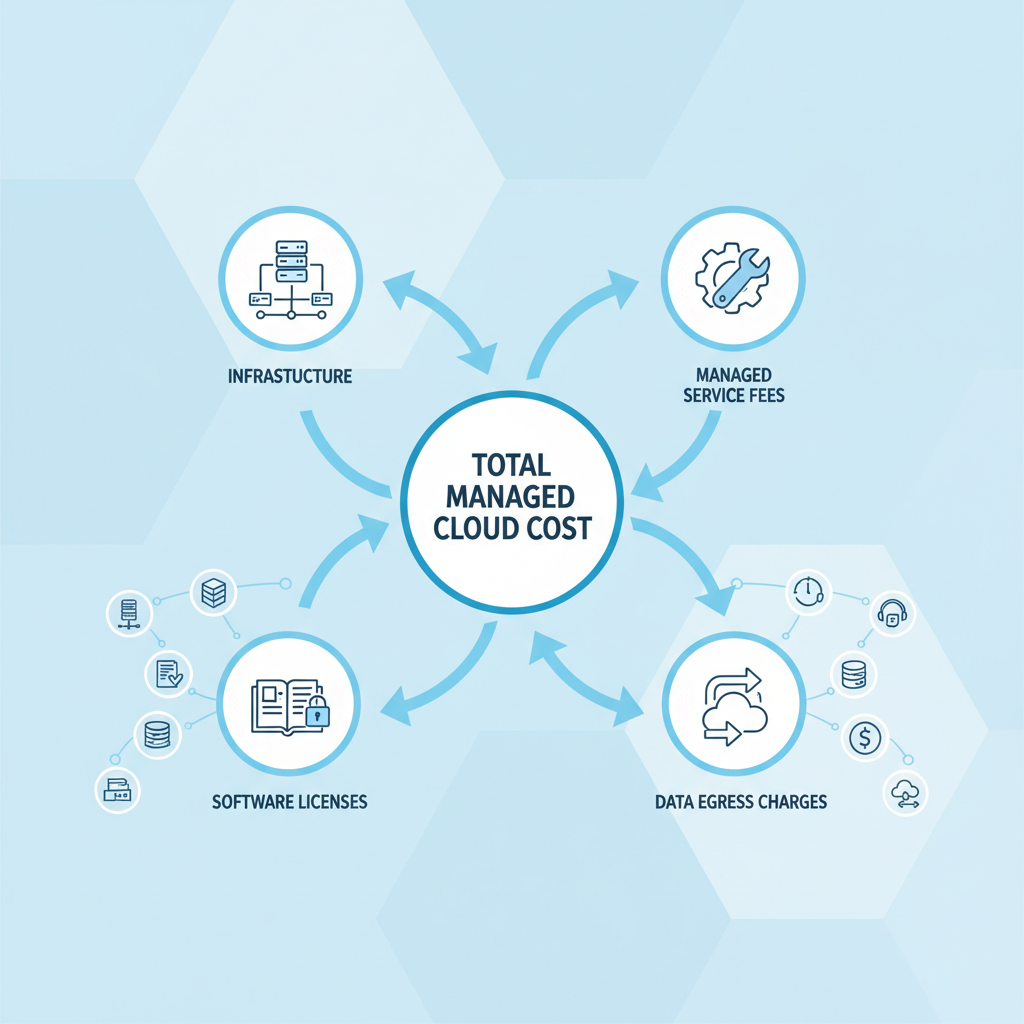
At the core of any cloud deployment are the infrastructure resources themselves. These include the compute power, storage capacity, and network bandwidth consumed by your applications and data. The pricing models for these resources can vary significantly between cloud providers.
Understanding your specific workload requirements is vital for accurately estimating these costs. Over-provisioning resources can lead to unnecessary expenditure, while under-provisioning can impact performance. This balance is a critical aspect of effective budget management.
Managed Service Fees
Beyond the raw infrastructure, managed service fees represent a significant portion of the cost of managed cloud. These fees cover the expertise, tools, and labor provided by your managed service provider (MSP). They ensure the smooth, secure, and efficient operation of your cloud environment.
These services often include proactive monitoring, routine maintenance, security management, and technical support. The scope of these services directly impacts the fee structure, with more comprehensive packages naturally incurring higher costs. Evaluating what’s included is paramount.
Software Licensing and Data Transfer
Software licensing costs can often be overlooked but significantly impact the overall budget. Many enterprise applications, operating systems, and databases require specific licenses, which can be acquired directly or through the MSP. Cloud providers also have their own licensing models for services.
Data transfer, or egress costs, also contributes to the expenditure. While inbound data transfer is often free, moving data out of the cloud environment can incur charges based on volume. Understanding your data flow patterns is crucial for accurately predicting this component of your billing.
A detailed infographic illustrating various components contributing to the total cost of managed cloud, such as infrastructure, managed service fees, software licenses, and data egress charges, with arrows pointing to each element.
Exploring Pricing Models for Managed Cloud Services
Managed cloud providers offer a variety of pricing models designed to suit different business needs and usage patterns. Understanding these models is critical for predicting your future expenditure and ensuring cost optimization. Selecting the right model can lead to significant savings.
Different models offer varying degrees of flexibility and cost predictability. Businesses must carefully evaluate their workloads, growth projections, and financial preferences before committing to a particular structure. This strategic decision directly impacts long-term financial health.
Pay-as-You-Go Model
The pay-as-you-go model is the most flexible and common pricing structure in cloud computing. You only pay for the resources you consume, similar to a utility bill. This model is ideal for dynamic workloads or businesses with unpredictable usage patterns.
While offering flexibility, this model can sometimes lead to fluctuating monthly billing. Careful monitoring and cost management tools are essential to prevent unexpected expenditure spikes. It’s excellent for agility but requires vigilance.
Reserved Instances and Savings Plans
For workloads with consistent and predictable resource needs, reserved instances or savings plans offer significant discounts. By committing to a certain level of usage over a one- or three-year period, businesses can secure lower hourly rates. This reduces the overall cost of managed cloud substantially.
This model provides greater cost predictability and can lead to substantial savings compared to pay-as-you-go. However, it requires a commitment, so accurately forecasting your long-term resource requirements is essential to maximize return on investment (ROI). Early planning is key here.
Tiered Pricing and Hybrid Models
Some providers offer tiered pricing, where costs decrease as your usage volume increases, encouraging higher consumption. Other models include hybrid approaches that combine aspects of pay-as-you-go with reserved capacity, offering a blended solution. These hybrid models are becoming increasingly popular.
Such models can be complex but provide tailored solutions for diverse IT environments. Businesses operating with a mix of stable and burstable workloads often find hybrid models particularly advantageous. Thorough consultation with your MSP can help identify the best fit for your unique requirements.
MAXIMIZE YOUR CLOUDS
Maximize your cloud’s potential with expert management. Discover custom cloud solutions
✓ Free consultation ✓ No commitment required ✓ Trusted by experts
Calculating Total Cost of Ownership (TCO) for Managed Cloud
Calculating the total cost of ownership (TCO) extends beyond merely summing up monthly bills. It involves a holistic view of all direct and indirect costs associated with implementing and maintaining your managed cloud environment. A comprehensive TCO analysis provides a clearer picture of the true financial outlay.
Understanding TCO helps justify the investment, comparing it against alternative IT strategies. It also highlights areas where cost optimization efforts can yield the greatest impact. This meticulous approach is fundamental for sound financial planning and demonstrating ROI.
Direct Costs of Managed Cloud
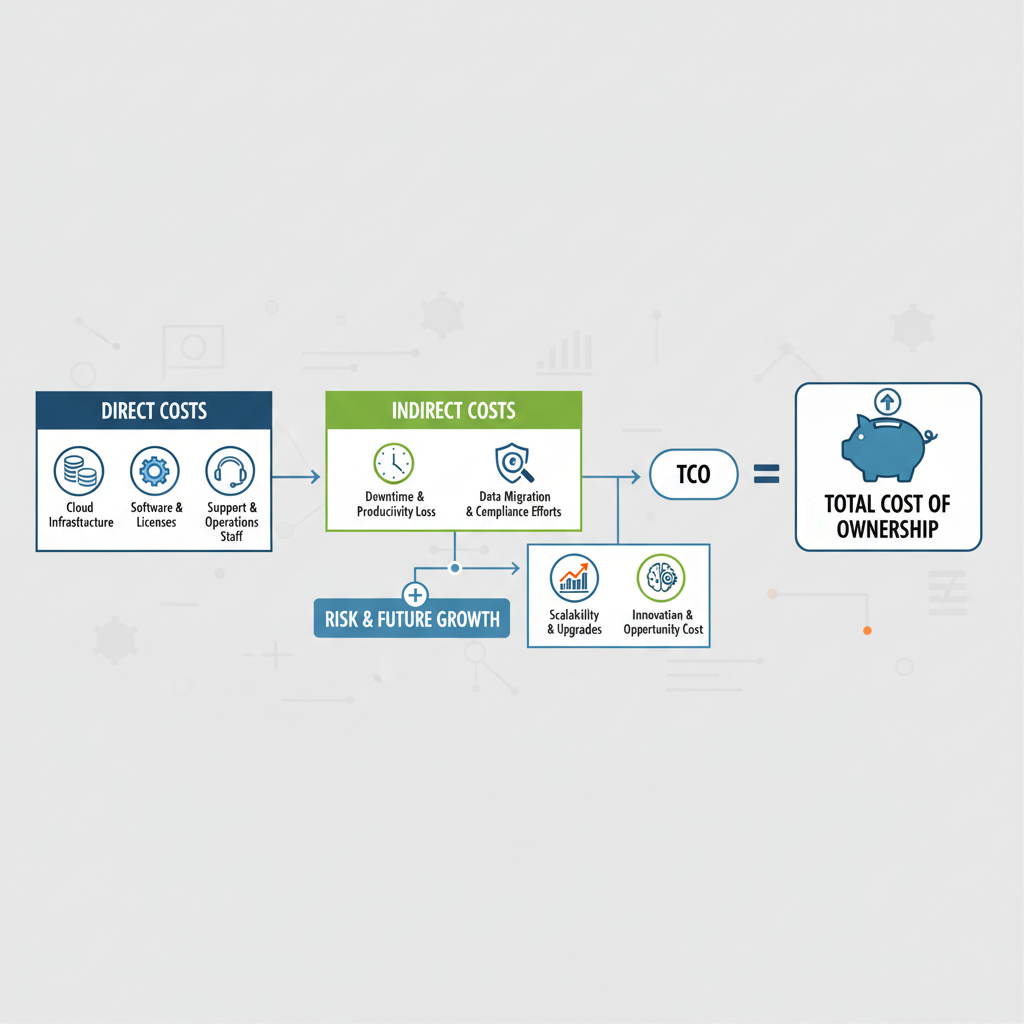
Direct costs are the most straightforward expenses to identify and track. They include the explicit charges for cloud infrastructure (compute, storage, networking), managed service fees, software licenses, and data transfer costs. These appear directly on your billing statements.
Other direct costs might include one-time setup fees, migration services, and any specialized consulting engagements. These upfront expenditures are crucial to factor into your initial budget. Ensure all contractual obligations are clearly defined to avoid surprises.
Indirect and Hidden Costs
Indirect costs are less obvious but equally important components of TCO. These can include the internal staff time spent managing the MSP relationship, training employees on new cloud tools, or developing custom integrations. Even if seemingly minor, these add up over time.
Hidden costs might emerge from vendor lock-in, unexpected compliance requirements, or the cost of potential downtime if SLAs are not met. The expenditure related to security incidents, even when rare, can also be substantial. A thorough risk assessment can help mitigate these.
Step-by-Step TCO Assessment
A structured approach to TCO assessment helps ensure all relevant costs are considered. This methodical evaluation strengthens your budget and long-term financial strategy.
1. Identify all direct cloud service charges: Gather all potential infrastructure, managed service, and licensing fees. 2. Estimate internal labor costs: Account for the time your team spends on cloud-related tasks, including management, governance, and user support. 3. Factor in software and data costs: Include all necessary software licenses, third-party integrations, and anticipated data egress charges. 4. Assess migration and onboarding expenses: Consider one-time costs associated with moving to the managed cloud and initial setup. 5. Calculate potential downtime and risk mitigation costs: Evaluate the financial impact of service interruptions and the cost of maintaining robust security measures. 6. Project future growth and scalability needs: Anticipate how resource demands might change and how that impacts future expenditure. 7. Review the total cost regularly: TCO is not a one-time calculation; it requires ongoing monitoring and adjustment as your cloud environment evolves.
A flowchart illustrating the process of calculating Total Cost of Ownership (TCO) for managed cloud, starting from identifying direct costs, then adding indirect costs, and finally incorporating risk and future growth projections.
Strategies for Cost Optimization in Managed Cloud
Optimizing the cost of managed cloud is an ongoing process that can significantly enhance your return on investment. Proactive strategies and diligent management are essential to ensure you are getting the most value for your expenditure. Small adjustments can lead to substantial savings over time.
Effective cost optimization requires a combination of technical expertise, financial acumen, and a deep understanding of your business needs. It’s not just about cutting costs, but about maximizing efficiency and resource utilization. This translates into smarter budget allocation.
Right-Sizing Resources
One of the most effective ways to reduce cloud expenditure is to right-size your resources. This means matching your compute, storage, and network allocations precisely to your actual workload demands. Eliminating over-provisioned resources is a quick win for cost optimization.
Many organizations inadvertently provision more resources than necessary, leading to wasted budget. Regular monitoring and performance analysis tools can help identify underutilized assets that can be scaled down or eliminated. This ensures every dollar spent contributes to performance.
Leveraging Automation and Reserved Instances
Automation plays a crucial role in managing cloud costs efficiently. Automated shutdown schedules for non-production environments, auto-scaling groups, and policy-driven resource management can prevent unnecessary resource consumption. These tools help maintain optimal usage.
As discussed, committing to reserved instances or savings plans for stable workloads can significantly lower your hourly rates. This strategic financial planning provides cost predictability and reduces the overall billing. It is a powerful tool for long-term budget control.
Monitoring, Analytics, and Governance
Comprehensive monitoring and analytics tools provide deep insights into your cloud usage and spending patterns. These platforms can highlight cost anomalies, identify idle resources, and suggest areas for improvement. Data-driven decisions lead to better cost optimization.
Establishing robust cloud governance policies helps prevent uncontrolled sprawl and ensures adherence to budget guidelines. Regular cost reviews with your MSP and internal teams are vital for maintaining financial discipline. This continuous oversight is key to managing expenditure effectively.
Demonstrating Return on Investment (ROI) of Managed Cloud
Justifying the cost of managed cloud requires demonstrating a clear return on investment (ROI). Beyond direct cost savings, the value often comes from increased efficiency, reduced operational burden, enhanced security, and faster innovation. These intangible benefits are crucial to consider.
Calculating ROI helps stakeholders understand the broader impact of managed cloud on business performance. It shifts the focus from mere expenditure to strategic advantage and long-term value creation. A strong ROI narrative supports continued investment.
Operational Efficiency and Focus
Managed cloud services free up your internal IT teams from routine, time-consuming infrastructure tasks. This allows your valuable personnel to focus on strategic initiatives that directly drive business growth and innovation. The shift in focus contributes significantly to ROI.
Improved operational efficiency means faster deployment times, reduced manual errors, and more reliable systems. These improvements translate into tangible benefits, such as quicker time to market for new products and services. The managed services become an accelerator for your business.
Enhanced Security and Compliance
Expert managed cloud providers bring specialized security expertise and advanced tools that might be costly or impractical for an in-house team to maintain. They ensure your cloud environment is protected against evolving threats and adheres to regulatory compliance standards. This robust security posture prevents costly breaches.
Investing in a managed cloud can significantly reduce the risk and financial impact of security incidents. The peace of mind and mitigated risk represent a substantial, though often indirect, return on your investment. Proactive security is invaluable.
Scalability and Business Agility
The inherent scalability of cloud environments, combined with expert management, allows businesses to quickly adapt to changing market demands. You can scale resources up or down as needed, ensuring optimal performance without over-investing in physical infrastructure. This agility is a competitive advantage.
This flexibility translates into faster response times to market opportunities and challenges, directly contributing to business growth. The ability to innovate and experiment without heavy upfront capital expenditure is a key driver of ROI. Managed cloud facilitates this dynamic environment.
Future Trends in cost of managed cloud (2026 Guide)
The landscape of cloud computing is constantly evolving, and with it, the dynamics of the cost of managed cloud. Looking ahead to 2026, several key trends are expected to shape how businesses approach and manage their cloud expenditure. Staying informed about these trends is crucial for strategic planning.
Anticipating these shifts allows organizations to adapt their budget and operational strategies proactively. Embracing emerging technologies and pricing innovations can lead to greater efficiency and enhanced return on investment. The future promises even more nuanced financial models.
AI/ML for Cost Management
Artificial intelligence and machine learning are increasingly being integrated into cloud cost management platforms. These technologies can analyze vast amounts of usage data to identify patterns, forecast future spending, and recommend precise cost optimization actions. This offers predictive insights.
AI-driven tools can automate resource adjustments, identify idle assets, and even suggest optimal pricing models based on historical usage. This level of intelligent automation will become indispensable for effective cost optimization. It transforms reactive management into proactive strategy.
Rise of Serverless Computing
Serverless computing continues its ascent, promising even finer-grained billing where you pay only for the actual execution time of your code. This model can drastically reduce infrastructure management overhead and potentially lower the overall expenditure for specific workloads. The cost of managed cloud in serverless environments focuses more on application logic.
As serverless architectures become more mature and widely adopted, their impact on cloud pricing and managed service offerings will grow. MSPs will increasingly specialize in managing serverless deployments, providing expertise in function optimization and event-driven architectures. This shift impacts traditional billing structures.
Sustainability and Green Cloud Initiatives
Environmental concerns are influencing cloud strategies, leading to a focus on sustainable and “green” cloud computing. Cloud providers are investing heavily in renewable energy and energy-efficient data centers. This focus might translate into differentiated pricing for greener services.
Businesses might face incentives or pressure to choose providers and services with strong sustainability credentials. While potentially adding a new dimension to cost considerations, it aligns with corporate social responsibility goals and can have long-term reputational benefits. The carbon footprint will be a factor in future budget decisions.
—
Frequently Asked Questions
### What typically comprises the cost of managed cloud?
The cost of managed cloud typically includes infrastructure usage charges (compute, storage, network), managed service fees for monitoring, maintenance, and support, and additional costs like software licensing and data transfer (egress). These components together form the overall expenditure.
### How can businesses reduce their managed cloud expenditure?
Businesses can reduce their expenditure through several strategies, including right-sizing resources to match actual demand, leveraging reserved instances or savings plans for predictable workloads, and implementing robust monitoring and cost optimization tools. Regular review and governance also play a key role.
### What is the difference between direct and indirect costs in managed cloud TCO?
Direct costs are explicit charges like cloud bills and managed service fees that appear on invoices. Indirect costs are less tangible, such as internal staff time for management, training, or potential costs from downtime, which are not directly billed but contribute to the total cost of ownership (TCO).
### Is managed cloud always cheaper than an in-house IT infrastructure?
Managed cloud isn’t always directly cheaper in terms of raw infrastructure cost, but its value often comes from reducing operational burden, enhancing security, improving scalability, and freeing up internal staff for strategic work. A comprehensive total cost of ownership (TCO) analysis, including soft costs and ROI, is necessary for an accurate comparison.
### How do pricing models impact the overall cost of managed cloud?
Different pricing models, such as pay-as-you-go, reserved instances, and tiered pricing, significantly impact the overall cost by offering varying levels of flexibility and discounts. Choosing the right model based on workload predictability and usage patterns is crucial for effective cost optimization and budget management.
—
MAXIMIZE YOUR CLOUDS
Maximize your cloud’s potential with expert management. Discover custom cloud solutions
✓ Free consultation ✓ No commitment required ✓ Trusted by experts
Conclusion
Understanding the cost of managed cloud is far more than just reviewing monthly invoices; it involves a strategic evaluation of infrastructure, services, personnel, and long-term business goals. By delving into pricing models, calculating comprehensive total cost of ownership (TCO), and implementing proactive cost optimization strategies, organizations can ensure their cloud investments yield maximum return on investment (ROI). The managed cloud represents a powerful tool for modern businesses, enabling agility, security, and innovation, but its financial implications demand careful and continuous management.
As we look towards 2026, emerging trends like AI/ML for cost management and the rise of serverless computing will further refine how businesses interact with and budget for their cloud services. Staying informed and adaptable will be key to harnessing the full potential of managed cloud while maintaining fiscal responsibility. By taking a proactive and informed approach, companies can transform their cloud expenditure into a strategic advantage, driving efficiency and growth in an ever-evolving digital landscape.
Johan Carlsson is a cloud architecture specialist and frequent speaker focused on scalable workloads, AI/ML, and IoT innovation. At Opsio, he helps organizations harness cutting-edge technology, automation, and purpose-built services to drive efficiency and achieve sustainable growth. Johan is known for enabling enterprises to gain a competitive advantage by transforming complex technical challenges into powerful, future-ready cloud solutions.