Did you know businesses that fully embrace cloud technology report an average 35% improvement in operational efficiency within the first year? This isn’t just about saving money. It’s about unlocking agility and scale that define market leaders today.
Harnessing this potential requires more than just software. It demands strategic insight at the intersection of complex systems and practical goals. This is where specialized guidance becomes invaluable.
We believe deep technological knowledge should directly translate to better business outcomes. This article serves as your guide to understanding that vital connection.
The core premise is simple yet powerful. Strategic cloud insight is a fundamental driver for efficiency, scalability, and competitive advantage. It moves beyond traditional IT concerns to become a central business function.
We position ourselves as collaborative partners. We understand the challenges leaders face in reducing operational burden while boosting performance. Our approach combines wisdom with supportive, actionable guidance.
The following sections will explore how this expertise transforms operations. We’ll highlight the high demand for professionals who can bridge this gap, a career path marked by strong growth and impact.
The narrative is clear. A shift from rigid, on-premise thinking to agile, cloud-first strategies is no longer optional. It is the bedrock of modern operational excellence.
For every decision-maker aiming to streamline processes and drive growth, this expertise offers a clear path forward. The value lies in turning technological potential into tangible business results.
Key Takeaways
- Cloud adoption can lead to significant, measurable improvements in operational efficiency and agility.
- Strategic guidance is essential to translate complex technology into practical business benefits.
- Cloud strategy is now a core business driver, not just an IT department concern.
- The demand for professionals with this blend of technical and business acumen is growing rapidly.
- Modern operational excellence requires a shift from traditional systems to flexible, cloud-first approaches.
- Informed technological investment is key to reducing operational burden and enhancing performance.
- The ultimate value lies in achieving tangible outcomes that support growth and competitive advantage.
What is a Technical Consultant in the Modern Cloud Era?
The modern cloud era demands a new kind of expert who can seamlessly connect business ambitions with technological capabilities. This professional operates in the field of technology consulting, providing strategic guidance to achieve specific corporate goals.
We define these experts not as isolated IT specialists, but as essential partners. They translate broad objectives into actionable, efficient technology roadmaps.
Bridging Business Goals with Technology Solutions
At its core, this role is about bridging. These consultants analyze a company’s unique processes and challenges. They then design integrated solutions that align software capabilities with strategic aims.
Their key responsibilities form a clear cycle of improvement:
- Assessing Infrastructure: They evaluate current information technology systems to pinpoint inefficiencies and bottlenecks.
- Designing Strategy: They develop a corporate plan for technological adoption, focusing on optimization and growth.
- Configuring Systems: They work with enterprise software platforms like SAP, Workday, and Salesforce. Their job is to configure these complex systems to fit unique workflows, creating a tailored solution.
This ensures that critical software becomes a reliable “single source of truth” for the organization. Proper configuration from the outset prevents future operational headaches and data silos.
From On-Premise Systems to Cloud-First Strategies
The landscape has fundamentally shifted. Legacy, on-premise systems often created rigidity and high capital expense. Modern cloud-first strategies, powered by Software as a Service (SaaS), offer agility, scalability, and predictable operational costs.
Managing this transition is a critical function for today’s consultant. It involves meticulous planning for system integration, customization, and data migration. The goal is always to minimize business disruption while unlocking new potential.
The move to the cloud isn’t just a change of platform; it’s a transformation of how a business operates and scales.
In this new era, the consultant’s role expands beyond the initial setup. It includes ongoing support and continuous optimization of SaaS platforms. This ensures that technology services evolve in lockstep with changing business needs.
Ultimately, this expertise is foundational. It is essential for any business aiming to navigate the complexity of modern information technology and harness its full power.
How a Technical Consultant Leverages Cloud Technology to Enhance Operations
A strategic approach to cloud integration directly targets two core business objectives: reducing overhead and amplifying performance. We see cloud computing not as a destination, but as a powerful set of tools. These tools are expertly applied to redesign operational foundations for agility and intelligence.
The transformation involves moving from reactive maintenance to proactive optimization. It’s about building an environment where technology serves the business seamlessly.
Reducing Operational Burden Through SaaS and Cloud Integration
The most immediate relief comes from adopting Software as a Service (SaaS) models. This shift eliminates the capital expense and ongoing hassle of maintaining physical servers and dedicated IT infrastructure. Companies trade fixed, high costs for scalable, predictable operational expenses.
Our role involves selecting and implementing the right cloud-based software solutions. We focus on creating a unified environment by integrating disparate tools. This consolidation is key to efficiency.
Critical functions are migrated to these integrated platforms:
- Finance and ERP: Streamlining accounting, procurement, and reporting.
- Customer Relationship Management (CRM): Unifying sales, marketing, and customer service data.
- Human Resources: Managing payroll, talent, and performance in one system.
The result is a cohesive digital workspace. It provides universal access and fosters collaboration, breaking down old data silos. This directly reduces IT overhead and simplifies resource management.

Driving Business Performance with Data and Process Optimization
With foundational systems in place, the focus shifts to extracting maximum value. Integrated cloud platforms generate vast amounts of raw information. The next step is turning this data into a strategic asset.
We leverage cloud-native analytics and business intelligence tools. These solutions transform complex datasets into visual dashboards and clear key performance indicators (KPIs). Everyone, from executives to team leads, gains real-time visibility.
In a data-driven culture, information fuels smarter decisions and pinpoints exact areas for improvement.
This analytical approach allows us to map and scrutinize existing processes. We can identify bottlenecks, forecast trends, and model the impact of potential changes. For instance, configuring an inventory management system to prevent overstocking directly protects capital.
Optimizing a CRM to improve sales funnel efficiency accelerates revenue. Each refinement is data-informed and directly tied to enhancing business performance.
The ultimate benefits are substantial and measurable. They include significant cost reduction, accelerated time-to-market for products, and a consistently improved customer experience. This cycle of insight and action enables more informed, confident strategic planning.
In essence, the consultant acts as an operational architect. We use cloud technology as the means to achieve superior business outcomes, building environments that are both lean and powerfully intelligent.
The Core Skillset of an Effective Technical Consultant
Transforming technological potential into operational results requires a specific and multifaceted skillset. We break this down into three indispensable pillars.
Success hinges on deep technical knowledge, sharp business understanding, and proficient people and project skills. The synergy of these areas defines a true advisor.
Technical Expertise: Cloud Platforms and Enterprise Software
Foundational knowledge starts with the major cloud service providers. Mastery of platforms like Amazon Web Services (AWS), Microsoft Azure, and Google Cloud Platform is often essential.
Relevant certifications from these vendors provide formal credibility. They validate an expert’s ability to architect and manage scalable cloud infrastructure.
Equally critical is hands-on experience with core enterprise software. This includes complex systems like SAP, Oracle, Workday, and Salesforce.
Coding proficiency, such as SQL for database management, varies by specialization. A universal requirement, however, is understanding system architecture and integration logic.
This knowledge allows professionals to configure solutions that fit unique workflows. It turns generic software into a tailored operational asset.
Business Acumen and Development Insight
The second pillar moves beyond pure technology. A great advisor must comprehend financial statements, operational KPIs, and industry-specific challenges.
This business acumen is what makes technology recommendations viable and impactful. It connects a software feature directly to a bottom-line result.
Development insight is the proactive application of this understanding. It means not just solving immediate problems but anticipating future needs.
This foresight guides long-term technological strategy. It ensures investments today support growth and agility tomorrow.
Streamlining processes and providing insights to increase productivity are core objectives. This skill set turns data into a strategic roadmap.
Project Management and Client Communication
Excellent project management skills are non-negotiable for delivery. They ensure solutions are implemented on time and within budget.
This involves meticulous task planning, stakeholder coordination, and proactive risk mitigation. Managing resources and cross-team communications is a daily function.
Client communication skills are the vehicle for building trust and ensuring clarity. They bridge the gap between complex concepts and executive understanding.
Clear communication ensures business requirements are fully captured and solutions are explained effectively. It is the linchpin for managing change smoothly.
This combination of problem-solving, adaptability, and relationship management handles inevitable issues. It transforms a project from a simple service engagement into a true partnership.
The ultimate value lies in the fusion of these competencies. Deep technical knowledge provides the tools. Sharp business acumen defines the goal.
Proficient project management and communication execute the plan. Together, they transform a specialist into a trusted advisor capable of driving meaningful business transformation.
Educational Pathways and Foundational Certifications
The journey to becoming a trusted advisor in cloud technology is paved with structured learning and validated expertise. We view this path as a strategic investment, building the depth of knowledge required to solve complex business problems.
For individuals planning their entry or advancement, a clear roadmap is essential. It combines formal academic grounding with targeted professional credentials.
Relevant Degrees: Computer Science, IT, and Related Fields
A strong academic foundation is highly advantageous in this field. The typical pathway includes a bachelor’s degree in disciplines like computer science, information technology, or software engineering.
Related quantitative fields such as engineering or mathematics also provide a solid base. This formal education builds core analytical and problem-solving skills.
Statistical data reinforces this standard. Approximately 66% of professionals in this role hold a bachelor’s degree. An additional 15% have pursued a master’s level education.
This academic training provides the theoretical framework. It is the starting point for understanding complex systems and architectures.
We acknowledge that exceptional, hands-on experience can sometimes supplement formal education. However, a relevant degree remains the most straightforward way to establish foundational credibility and open doors.
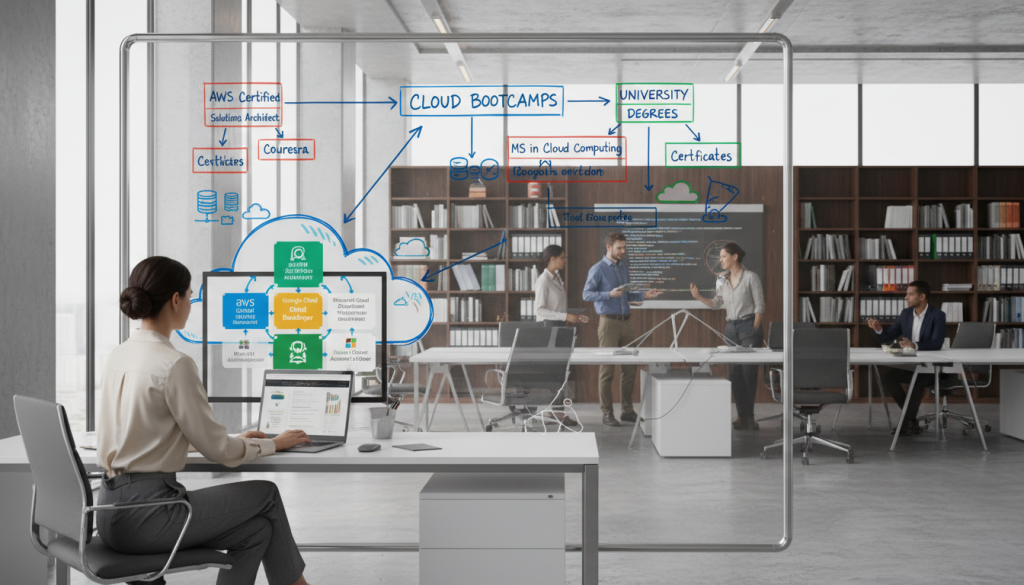
Key Certifications for Credibility
The technology landscape evolves rapidly, making continuous learning non-negotiable. This is where professional certifications become critical resources for specialization and credibility.
These credentials validate specific expertise in platforms and methodologies. They signal to employers and clients a committed, up-to-date skill set.
A strategic approach involves targeting certifications aligned with your chosen specialization. We advise progressing from foundational to expert-level credentials.
High-impact certifications are often grouped into key domains:
Cloud Platforms: Vendor-specific credentials like the AWS Certified Solutions Architect or Microsoft Certified: Azure Solutions Architect Expert are paramount. They demonstrate an ability to design and implement scalable cloud infrastructure.
Project and Service Management: Frameworks like ITIL 4 Foundation certify knowledge of IT service management best practices. The Project Management Professional (PMP) credential is also highly regarded.
Enterprise Software Suites: Certifications for platforms like Salesforce or SAP validate deep, practical knowledge of configuring these complex business systems.
Each certification is more than a checkbox. It represents a concentrated investment in training that builds the practical knowledge to drive real-world solutions.
Together, academic study and professional credentials form a powerful combination. They are the essential building blocks for a successful and impactful career.
Gaining the Crucial Hands-On Experience
The most critical phase of professional development occurs not in the classroom, but on the front lines of real business challenges. We view this hands-on experience as the non-negotiable crucible where theoretical knowledge is forged into practical competency.
It transforms an academic understanding into the applied wisdom clients trust. Building this foundation requires a deliberate and strategic approach from the very start of one’s career.
Starting with Internships and Entry-Level IT Roles
The first practical step is securing immersive internships. These opportunities provide a unique way to learn directly from seasoned veterans.
You gain firsthand insight into consulting workflows and client dynamics. It’s a safe environment to apply academic knowledge to simulated, yet realistic, problems.
Following or concurrent with internships, entry-level IT positions serve as powerful launchpads. Roles like systems analyst, IT support specialist, or junior developer are excellent starting points.
These jobs build foundational troubleshooting skills and a deep understanding of core business processes. Spending several months in such a role teaches you how technology functions in a live organizational context.
Building Expertise Through Real-World Project Work
True expertise is built through participation in real-world projects. This is where you move from learning concepts to delivering solutions.
The project lifecycle offers a complete training ground. It begins with gathering client requirements and progresses through system configuration, rigorous software testing, and final deployment.
Providing post-launch support is equally vital, cementing the understanding of a solution’s long-term impact. In this field, productive time is often measured by a metric called utilization rate.
This tracks the percentage of work hours spent on billable project work. A typical target for a thriving practice is between 80% and 85%.
Your responsibility will grow with experience. You may start by assisting with backend configuration. Over time, you could manage client communications and entire project segments.
We strongly advise seeking diverse projects across different industries and software platforms. This builds a versatile and robust portfolio.
Every project, successful or challenging, is a masterclass in problem-solving and adaptation.
The way forward is clear. Treat every project as a primary learning opportunity. Document your contributions, seek feedback actively, and analyze outcomes.
This proactive approach ensures each job adds substantial value to your professional experience. It prepares you for more complex challenges in the coming months and years.
Essential Tools and Technologies for Today’s Consultant
Operational excellence in consulting now hinges on a curated suite of digital tools designed for coordination, infrastructure, and insight. We view this toolkit as a strategic asset that directly amplifies our effectiveness and the value we deliver.
Mastery of these software and platforms allows us to manage complex engagements seamlessly. It transforms how we plan, build, and analyze solutions for clients.
Project Management and Collaboration Software
Successful delivery starts with rigorous organization. Specialized project management applications are the command center for any engagement.
Tools like Jira, Asana, and Microsoft Project enable us to plan sprints, assign tasks, and track timelines. They provide visibility into resource allocation and milestone progress.
This discipline ensures projects stay on budget and meet deadlines. It turns chaotic workflows into predictable, manageable processes.
Equally vital are collaboration platforms. In a hybrid work world, seamless communication is non-negotiable.
We rely on Slack, Microsoft Teams, and Zoom to maintain constant contact with distributed teams. These systems host discussions, share files, and facilitate quick decision-making.
They break down geographical silos and keep everyone aligned. This creates a unified front, whether our team is across the office or across the globe.
Cloud Computing Services: AWS, Azure, and Google Cloud
The backbone of modern solutions is built on public cloud computing infrastructure. Proficiency with the major providers is a fundamental skill.
We architect systems using Amazon Web Services (AWS), Microsoft Azure, and Google Cloud Platform. Each offers a vast catalog of services.
Core offerings include scalable compute power, secure storage, and managed databases. These services provide the elastic foundation for applications and data.
Cloud platforms turn capital-intensive infrastructure into an agile, operational expense. This shift is central to building scalable and resilient business technology.
Choosing the right provider and services depends on client needs, existing investments, and specific use cases. Our expertise lies in making these strategic selections.
We configure these environments for performance, security, and cost-efficiency. This hands-on work is where strategic plans become tangible computer infrastructure.
Data Analytics and Visualization Platforms
Raw information holds little value without the means to interpret it. This is where data analytics and visualization tools become indispensable.
Platforms like Tableau, Microsoft Power BI, and Looker connect directly to data sources. They transform complex datasets into intuitive dashboards and reports.
These visualizations reveal trends, track KPIs, and highlight areas for improvement. They turn information into actionable business intelligence.
Even tools like Google Analytics provide crucial insights into digital customer behavior. This data analytics capability is key to measuring the impact of our solutions.
We use these platforms to prove value and guide ongoing optimization. A well-designed dashboard empowers clients to make confident, data-driven decisions long after we complete our work.
| Tool Category |
Example Platforms |
Primary Use Case |
Key Benefit |
| Project Management |
Jira, Asana, Microsoft Project |
Planning, task tracking, and timeline management for complex engagements. |
Ensures on-time, on-budget delivery through rigorous organization. |
| Collaboration |
Slack, Microsoft Teams, Zoom |
Seamless communication and file sharing with distributed teams and clients. |
Maintains alignment and speeds up decision-making in hybrid work environments. |
| Cloud Computing Services |
AWS, Microsoft Azure, Google Cloud |
Providing scalable compute, storage, and database infrastructure for solutions. |
Enables agile, cost-effective, and resilient technology foundations. |
| Data Analytics & Visualization |
Tableau, Power BI, Looker |
Transforming raw data into interactive dashboards and actionable business insights. |
Drives informed strategic decisions by making complex information accessible. |
The landscape of technology never stands still. Staying current with emerging trends like AI, machine learning APIs, and low-code platforms is crucial.
Continuous learning ensures we can recommend innovative solutions. It future-proofs our advice and our clients’ investments.
Ultimately, proficiency with this toolkit is not optional. It is the engine of efficiency and the source of deeper, more impactful computer-enabled insight.
We encourage every professional to regularly audit and upgrade their technical toolset. The right software and systems empower you to deliver higher-quality results in less time.
Navigating the Career Landscape and Finding Opportunities
Successfully navigating the professional landscape requires understanding the distinct opportunities across different organizational models. We see three primary pathways for building a sustainable career in this field.
Each offers a unique blend of project variety, specialization depth, and lifestyle. Your choice will shape your long-term growth and the work you do every day.
Exploring Roles in Consulting Firms, Agencies, and In-House Teams
The most visible opportunities are with large global consulting firms. Companies like Accenture, Deloitte, and IBM provide a powerful launchpad.
You gain exposure to diverse industry clients and complex, large-scale projects. This environment accelerates learning and builds a formidable resume quickly.
Boutique or specialized agencies offer a different value proposition. These firms often focus on specific platforms like Salesforce or Workday.
You can develop deep, niche expertise faster. The culture is typically more agile, with closer client relationships and potentially more project ownership.
The third major pathway is going in-house with a client company. Organizations increasingly hire their own cloud experts as system administrators or “Superusers.”
This role focuses on long-term optimization and support of a single technology stack. It often provides greater stability and deeper immersion into one business.
We advise weighing the core trade-offs of each model:
- Large Firms: High project variety and brand prestige, but can involve significant travel and a competitive “up-or-out” culture.
- Boutique Agencies: Deep specialization and a close-knit team, though project scope may be narrower.
- In-House Teams: Strong work-life balance and business context, with less variety in daily challenges.
Career progression typically follows a track from analyst or consultant to manager, director, and partner. Each step requires honing both technical leadership and client relationship skills.
The freelance route is also a viable way for seasoned professionals. Platforms like Upwork can provide initial jobs, but a referral-based business built on a strong network yields the best long-term projects.
Building a Professional Network and Online Presence
In a relationship-driven industry, your network is your net worth. Active networking unlocks hidden job markets and provides crucial peer support.
We recommend a multi-channel approach. Attend major industry conferences and local meetups whenever possible.
Participate actively in online forums like Stack Overflow or platform-specific communities. These spaces are where professionals solve real problems and share knowledge.
An informational interview is one of the most underutilized tools for career advancement. It’s a low-pressure way to learn about a company and make a genuine connection.
Concurrently, you must build a compelling digital footprint. Your online presence acts as a 24/7 personal brand ambassador.
Start with a meticulously optimized LinkedIn profile. Treat it as your primary career homepage, not just a digital resume.
Detail your project work, quantify achievements, and list key skills. Actively engage with content from leaders and companies you admire.
For greater control, consider a professional website or portfolio. Showcase case studies, client testimonials, and your thought leadership.
Sharing insights through articles or posts establishes your expertise. It attracts recruiters and clients who are searching for the services you provide.
Finding specific opportunities requires a targeted strategy. Use specialized job boards beyond the general ones.
Follow and engage with the recruitment teams of your target firms on social media. Often, jobs are posted there first or shared informally.
Set aside dedicated time each week for these activities. Consistent effort compounds over time, turning a broad network into a direct pipeline of opportunities.
Your goal is to be found and remembered. A strategic blend of in-person connection and digital clarity makes that happen.
This proactive navigation empowers you to steer your career with intention. You move from reacting to the market to strategically positioning yourself within it.
Conclusion: Transforming Business with Strategic Cloud Insight
Navigating digital transformation requires a partner who can translate complex systems into clear business advantages. This professional acts as a transformative agent, using strategic cloud insight to solve core challenges.
Our unique value merges deep platform expertise with sharp business acumen. This fusion drives performance and streamlines operational processes.
The journey combines formal education, targeted certifications, and hands-on project experience. It leads to a rewarding career with strong demand and impactful solutions.
For decision-makers, we are essential partners in achieving growth through innovation. For aspiring advisors, we encourage building skills and seeking real-world opportunities.
In an era of rapid change, this strategic guidance is indispensable for sustainable business success.
FAQ
How does a consultant in this field help my business grow?
We help your business grow by aligning your operational goals with modern cloud technology. Our work focuses on implementing solutions that streamline processes, optimize data usage, and reduce your day-to-day IT burden. This allows your team to focus on core business activities and strategic decisions that drive revenue and performance.
What specific skills should I look for when hiring for this role?
You should seek professionals with a balanced skillset. Essential technical expertise includes deep knowledge of major cloud platforms like AWS or Azure, and enterprise software. Equally important are strong business acumen, project management capabilities, and excellent communication skills to ensure projects deliver tangible value and align with your company’s objectives.
What kind of hands-on experience is most valuable for these professionals?
The most valuable experience comes from working on real-world projects. This often begins with internships or entry-level IT roles that provide exposure to system support and development. Progressing to roles where they manage integrations, troubleshoot complex issues, and collaborate directly with stakeholders builds the practical knowledge crucial for advising businesses effectively.
Which certifications add the most credibility in this industry?
Foundational certifications from leading cloud providers, such as AWS Certified Solutions Architect or Microsoft Azure Fundamentals, are highly regarded. Additionally, certifications in project management frameworks and IT service management, like ITIL, demonstrate a professional’s commitment to industry best practices and structured delivery, enhancing their credibility with potential clients and employers.
What tools and platforms are essential for modern business technology projects?
Essential tools span several categories. For collaboration and project management, platforms like Jira or Asana are key. Core to the work are cloud computing services from Amazon Web Services, Google Cloud, and Microsoft Azure. For deriving business insights, proficiency in data analytics and visualization platforms, such as Tableau or Power BI, is increasingly important for informing strategic decisions.
Where are the best career opportunities for experts in cloud and business solutions?
Significant opportunities exist within dedicated consulting firms, digital agencies, and in-house IT teams across various industries. Building a strong professional network through industry events and maintaining a robust online presence on platforms like LinkedIn are excellent strategies for discovering these roles and connecting with companies seeking to transform their operations.
Author
Jacob Stålbro
- Head of Innovation, Opsio
Jacob Stålbro is a seasoned digitalization and transformation leader with over 20 years of experience, specializing in AI-driven innovation. As Head of Innovation and Co-Founder at Opsio, he drives the development of advanced AI, ML, and IoT solutions. Jacob is a sought-after speaker and webinar host known for translating emerging technologies into real business value and future-ready strategies.