


Industrial Vision: Your Questions Answered
Did you know that manufacturing defects cost companies up to $8 million per hour in lost production? Automated inspection technology changes this. We’re here to guide you through everything you need to know about this game-changing technology.
Machine vision systems have changed how businesses check quality. They work in many areas, like pharmaceuticals and cars. These smart cameras spot errors that humans might miss. They scan thousands of products every minute with great accuracy.
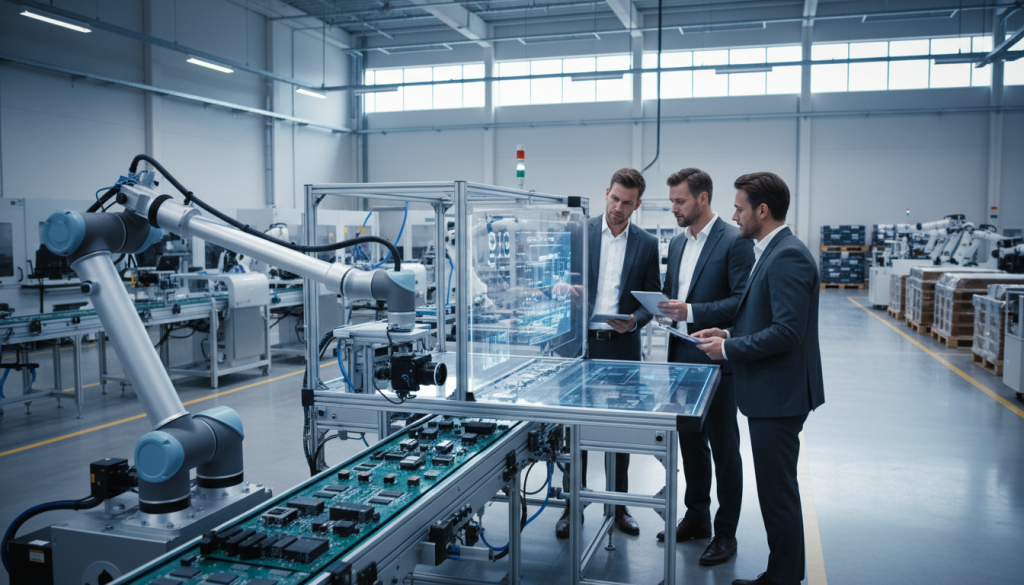
Exploring new technology can be tough. That’s why we’ve made this guide easy to follow. It’s in an easy-to-navigate Q&A format. Whether you’re a plant manager or a quality director, you’ll find helpful answers here.
In this guide, we’ll answer your top questions about industrial vision technology. You’ll learn how these systems work, what parts you need, and how to pick the right one for you. We’ll also talk about how to set them up, keep them running, and the latest trends.
Key Takeaways
- Machine vision systems reduce manufacturing defects and improve quality control across multiple industries
- Automated inspection technology delivers faster, more accurate results than manual inspection methods
- This guide provides practical answers for manufacturers exploring vision technology implementation
- Understanding system components and selection criteria helps businesses make informed investment decisions
- Vision technology applications span pharmaceutical, automotive, medical device, and general manufacturing sectors
What is Industrial Vision?
Machines can now see and understand visual information, helping manufacturers stay ahead in the market. This technology is key in modern production, improving quality and efficiency in many industries.
Automated visual inspection changes how we make things. It combines human skill with machine precision. This means systems can work without getting tired and stay accurate all the time.
Definition and Overview
Industrial vision, also known as machine vision or computer vision for manufacturing, is a tech that captures and analyzes images during production. It uses cameras, sensors, and software to inspect products automatically.
When a product is ready, a sensor takes its picture at the best time. This ensures the image is clear for checking.
Visual recognition technology lets machines decide on product quality and more without humans. It compares images to standards, finds defects, and checks sizes fast.
These systems are like never-ending quality inspectors. They keep checking products perfectly, unlike humans who can get tired or distracted. Industrial vision systems are very precise, spotting tiny defects.
Applications in Various Industries
Many industries use this tech for their own quality control needs. Each one uses machine vision in its own way to meet its specific needs and rules.
Pharmaceutical manufacturing uses it to check tablets and packaging. These systems look for the right shape, color, and sealing to keep patients safe and follow rules.
The car industry uses computer vision for manufacturing on assembly lines. It checks if parts are installed right, looks for paint issues, and makes sure bolts are tightened correctly. This helps avoid expensive recalls and keeps the brand’s good name.
Medical device makers count on vision systems for checking parts. Because of strict rules and the need for perfection, these systems make sure every device is just right before it goes to patients.
Electronics makers use it to check circuit boards and where parts are placed. It finds missing parts, wrong placements, and soldering problems that could cause devices to fail. This is very important as electronics get smaller and smaller.
- Food and beverage industry: Label checks, fill level inspections, and finding contaminants
- Packaging sector: Checking seals, reading barcodes, and verifying print quality
- Aerospace manufacturing: Inspecting critical parts and finding surface defects
- Textile production: Finding fabric flaws and matching patterns
Key Components of Industrial Vision Systems
Knowing what makes up these systems helps manufacturers pick the right ones for their needs. Each part is important for capturing, processing, and using visual info.
The inspection process needs many parts working together. We put these parts together to make systems that give reliable and useful results in tough production settings.
Essential system components include:
- Product positioning: The part being inspected must be in the right spot for consistent image capture
- Trigger sensors: These devices start image capture at the best time, ensuring precision
- Structured lighting systems: Special lighting removes shadows and highlights important features for accurate analysis
- Optical lenses: Good lenses focus images on camera sensors with little distortion
- Digital cameras: Advanced sensors capture images and may do some processing to make features clearer
- Image processors: Powerful computers analyze images against set standards
- Communication devices: These parts share inspection results and trigger actions like accepting or rejecting parts
The camera sensor turns light patterns into data that computers can understand. It might also do some work before sending data to the main processor.
How fast a system can make decisions depends on its processing power. Modern visual recognition technology can quickly analyze complex images, keeping up with fast production lines.
Communication interfaces link vision systems to bigger production systems. We set up these connections to share production data, quality info, and traceability. This helps with ongoing improvement and following rules.
Lighting is a key but often overlooked part. Good lighting is crucial for spotting small defects. We use different lighting methods to make sure features are clear for various tasks.
How Does Industrial Vision Work?
Industrial vision technology captures images and analyzes them to make quality decisions. It uses precise hardware and smart software to check products fast. This ensures quality is checked consistently across many products.
The whole process takes just milliseconds. It starts with detecting a product and ends with a quality decision. Each step is important for a thorough inspection.
Image Acquisition Processes
The journey starts when a product reaches the inspection point. Sensor technology detects the product and triggers the camera. This ensures the image is captured perfectly.
Structured lighting is key for clear images. We set up lighting to remove shadows and glare. This makes defects and features stand out.
Optical lenses focus the light on camera sensors. These sensors capture high-quality images. They also do some processing before sending data to the main processor.
- High-speed cameras for sharp images of fast products
- Programmable lighting for different materials
- Precision optics for focus at various distances
- Environmental protection to keep equipment safe
Advanced vision systems work together to get the best images. They work in microseconds to capture clear images of fast-moving products.
Processing and Analysis Techniques
After capturing images, industrial imaging software analyzes them. It checks the images against rules and standards to decide on quality. This happens fast, without slowing down production.
Traditional tools do basic checks like pattern matching and edge detection. These methods work well in consistent conditions.
Now, systems use artificial intelligence and deep learning too. These advanced tools can spot complex patterns and learn from more examples. This makes them more accurate over time.
We use industrial imaging software that does many checks at once. It can measure size, find defects, read codes, and check assembly in milliseconds. This makes the most of each image.
Modern systems can do a lot of analysis. This includes:
- Dimensional verification to micron-level precision
- Defect detection for scratches and discoloration
- Code reading for barcodes and codes
- Color analysis for appearance and finish
- Assembly verification for correct positioning
Systems send results to other systems and can trigger rejects. They also provide reports for improvement. This feedback helps fix issues right away.
These automated inspection systems work fast, checking many products at once. They are much faster than humans. Their speed, consistency, and accuracy make them key for quality control today.
Benefits of Implementing Industrial Vision
Companies that use vision systems see big benefits. These advantages touch every part of their business, from making products to serving customers. This technology changes how they work.
Investing in vision tech brings gains in three key areas. It improves product quality, making customers happier. It also makes production faster and more precise. Plus, it saves money and keeps sales up.
Improved Quality Control
Quality control imaging changes how factories check for defects. Old ways rely on people who get tired and distracted. Vision systems offer consistent, objective inspection every time.
Today’s optical solutions spot tiny flaws with great accuracy. They find problems that people can’t see, even when they try hard. This means factories catch mistakes before they reach customers.
Using 100% inspection is now more affordable. Instead of checking just some products, vision tech looks at every one. This way, factories catch problems right away, saving a lot of waste.
Systems also keep detailed records of each item checked. This helps with investigations and meeting rules. It’s like having a digital diary for every product.
With quality control imaging, customer complaints go down. Product recalls are rare. And companies avoid big fines for not following rules.
Increased Efficiency and Productivity
Automated inspection works fast without slowing down production. People need time to check products, but vision systems can do it instantly. This keeps things moving smoothly.
Systems give feedback right away, helping teams improve. They get alerts about quality issues fast. This means less downtime and fewer parts thrown away.
With vision tech, factories can make different products easily. Changing what they make is quick, not slow. We help them switch products in minutes, not hours.
Workers get to do more interesting things. They move from boring checks to higher-value activities. This leads to new ideas and a culture of innovation.
Factories can make more without hiring more people. Vision systems check thousands of parts an hour, keeping quality high. This helps businesses grow without getting too complicated.
Cost-Effectiveness
Investing in vision tech saves money in many ways. It cuts down on labor costs as machines do the checking. The cost of the systems is worth it, usually within months.
Waste goes down when defects are caught early. This means less money spent on fixing mistakes. Testing is cheaper too, since vision systems check products as they go.
Using vision tech wisely means better use of resources. Equipment works better, and maintenance costs drop. This is because systems watch for problems before they happen.
There are also intangible benefits:
- Workplace safety improvements by removing operators from hazardous inspection environments
- Enhanced company reputation through technology adoption and quality leadership
- Environmental performance gains through resource optimization and waste reduction
- Cultural transformation that supports continuous improvement and innovation
Energy use goes down too. Smoother production means less time for equipment to sit idle. This saves money and helps the planet.
Protecting the brand is a big benefit that’s hard to measure. Happy customers and a strong market position are key. Vision tech helps keep these valuable assets safe.
Common Applications of Industrial Vision
Automated inspection technologies play a key role in today’s manufacturing. They are used in many industries, solving specific challenges with visual inspection. Knowing how these systems work in real-world settings helps manufacturers find ways to use them.
These technologies handle tasks from precise measurement to quality checks. They work faster and more accurately than humans.
Manufacturing and Assembly Lines
Machine vision systems improve production by doing many tasks at once. They help with location, guidance, and positioning to ensure parts fit right before assembly. They can place parts with accuracy down to 0.0254 millimeters, helping make quick adjustments.
This precision lets robots pick parts without expensive setups. It also cuts down on time needed to switch between products.
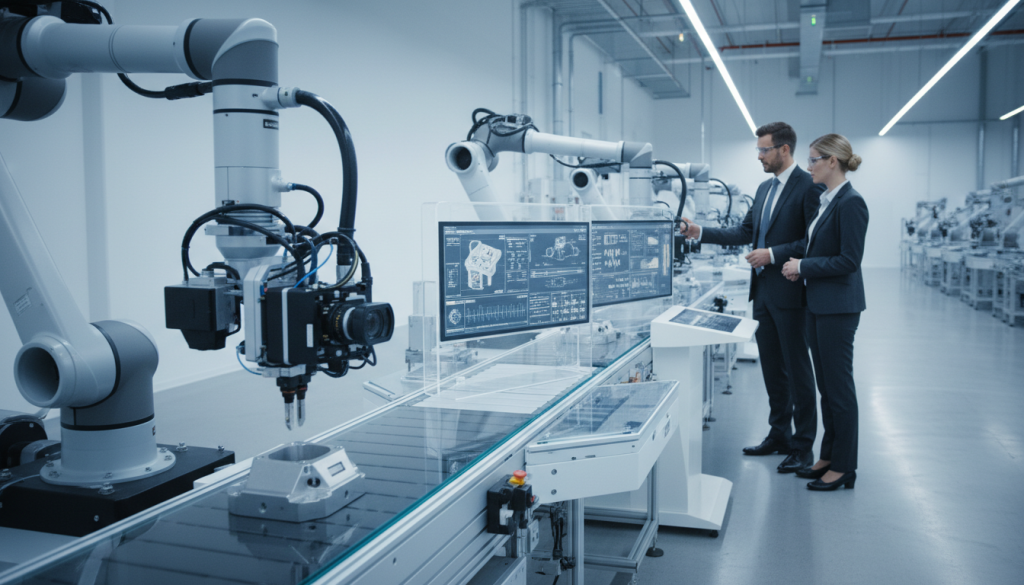
Recognition and identification applications are also key. Automated systems read barcodes, Direct Part Marking (DPM), and identify parts by unique features. They also check if text on labels is correct.
Measuring objects without touching them changes quality control. It saves tools from wear and makes checks faster.
Gauging and measuring tasks check if parts are the right size. These non-contact checks find issues quickly, making changes right away. They can measure many dimensions at once, unlike old methods.
Inspection, detection, and verification are crucial for quality. Machine vision systems check if parts are there, count them, find flaws, and check if products are complete. These checks happen fast, without slowing down production.
These systems also keep records of parts through every step. This helps with tracing products and solving quality problems.
Packaging Inspection
Packaging checks at the end of production are very important. Vision systems check if labels are right, if packages are sealed, and if they’re not damaged. They work fast, checking over 300 packages a minute.
In the pharmaceutical world, inspection is even stricter. Our systems find problems in packaging, keeping patients safe and meeting rules. Every package is checked carefully.
These systems also check expiration dates and look for foreign objects or contaminants. In food and drinks, checking packages is key to safety and how long they last. They look at seal quality, fill levels, and cap placement with great accuracy.
| Application Type | Inspection Speed | Primary Function | Key Industries |
|---|---|---|---|
| Label Verification | 300-500 items/min | Text readability, placement accuracy | Food, beverage, pharmaceutical |
| Seal Integrity | 200-400 items/min | Detect leaks, verify closure quality | Food, beverage, cosmetics |
| Defect Detection | 250-600 items/min | Surface flaws, contamination | Pharmaceutical, electronics, automotive |
| Completeness Check | 300-500 items/min | Verify correct components present | Consumer goods, medical devices |
Semi-automatic systems give operators more power for detailed checks. They mix automated detection with human judgment for complex tasks. This mix boosts both speed and accuracy.
Robotics and Automation
Vision systems and robots work together to make manufacturing more flexible. Robot vision gives robots “eyes” for smart decisions. This teamwork makes production more flexible without needing precise setups.
Flexible picking and placing benefit a lot from vision guidance. Robots with vision can pick parts from bins, find the best grip points, and adjust their approach. They adapt to different products without needing to be reprogrammed.
Optical sorting machines are advanced uses of this teamwork. They inspect, sort, grade, and classify parts with 360-degree analysis. They work up to 600 parts per minute, checking every surface.
Contact lens inspection shows how precise automated inspection can be. Vision-guided robots check lenses from different angles, finding tiny flaws. This method is safe because it doesn’t touch the lenses.
Collaborative robots work safely with people thanks to vision systems. These systems watch the workspace, see if people are there, and adjust the robot’s actions. This lets humans and robots work together in flexible cells.
Real-time data from vision systems helps robots assemble with millimeter precision. This is seen in electronics, cars, and medical devices. Robots make small adjustments based on what they see, fixing tiny issues.
Robots can quickly switch between products because they use vision for guidance. This makes production faster and more flexible. It’s a big advantage in changing markets.
Challenges in Industrial Vision
Understanding the challenges of optical inspection solutions is key for success. These systems offer great value but face environmental, technical, and operational hurdles. Each factory has its own conditions that can affect how well the system works.
Deploying vision systems successfully means spotting challenges early. We work with clients to plan ahead and design systems that perform well under various conditions.
Environmental Factors That Affect System Performance
The environment where industrial vision systems operate greatly affects their reliability and accuracy. Factories often have harsh conditions that can harm equipment if not managed properly.
Temperature extremes are a common challenge. Camera sensors and electronics work best within certain temperature ranges. Too much heat can cause sensors to drift, affecting accuracy.
Cold environments can slow down electronics or cause condensation. We suggest using temperature-controlled enclosures or industrial-grade components for extreme temperatures.
Vibration from heavy machinery or conveyor systems is another big obstacle. Even small vibrations can blur images or shift camera alignment, making inspections less accurate. Robust mounting solutions and vibration-dampening measures are crucial in high-vibration settings.
Dust, moisture, oils, and chemicals can harm image quality and equipment life. Airborne particles can settle on camera lenses, obscuring the view. Corrosive chemicals or moisture can damage sensitive electronics over time.
Protective enclosures with high Ingress Protection (IP) ratings are essential. We usually recommend IP67 or higher for dusty or wet environments, ensuring protection against particles and water.
Environmental protection is not optional in industrial vision—it’s the foundation of system reliability. A camera that cannot withstand its operating environment will never deliver consistent results.
Electromagnetic interference (EMI) from motors or welders can disrupt vision system electronics. Proper shielding, grounding, and cable routing help minimize interference. In severe cases, fiber optic connections replace electrical cables to eliminate EMI vulnerability.
Lighting Conditions and Their Critical Impact
Lighting is crucial for the performance of optical inspection solutions. Even the most advanced systems cannot compensate for poor or inconsistent lighting. We stress that proper lighting design often determines the difference between success and failure.
Inconsistent ambient lighting complicates analysis algorithms. Shadows, reflections, and brightness fluctuations reduce detection reliability. Natural daylight through windows changes throughout the day, creating shifting conditions that confuse vision systems.
This is why structured lighting systems are essential—they provide controlled, repeatable illumination that highlights relevant features while minimizing unwanted shadows and reflections. Structured lighting ensures that the image captured is of optimum quality regardless of external conditions.
Different inspection tasks require specific lighting approaches:
- Bright field lighting illuminates objects directly for general surface inspection and character recognition
- Dark field lighting highlights scratches, surface defects, and edge details by illuminating at shallow angles
- Backlighting creates silhouettes ideal for measuring profiles, detecting holes, and verifying part presence
- Diffuse lighting reduces glare and reflections on shiny or curved surfaces
- Polarized lighting eliminates reflections from glass or glossy materials
Reflective materials like polished metal or glass present particular lighting challenges. Direct lighting creates hot spots that obscure surface details. Transparent or translucent materials require specialized lighting techniques to reveal internal defects or measure dimensions accurately.
The intensity, wavelength, and positioning of light sources must match the specific inspection requirements. We conduct thorough lighting studies during system design to identify the optimal configuration for each application.
| Lighting Challenge | Impact on Inspection | Recommended Solution | Application Examples |
|---|---|---|---|
| Variable Ambient Light | Inconsistent image brightness affects detection thresholds | Enclosed lighting with controlled environment | Assembly verification, label inspection |
| Reflective Surfaces | Hot spots and glare obscure defects | Diffuse dome lighting or polarized illumination | Metal part inspection, glass quality control |
| Deep Features | Shadows hide critical defects in recessed areas | Multi-angle structured lighting | Threaded hole inspection, cavity examination |
| Transparent Materials | Difficult to detect edges and internal defects | Backlighting with dark field accents | Bottle inspection, pharmaceutical containers |
Hardware and Software Limitations
While modern industrial vision technology is incredibly capable, understanding technical constraints is vital. This knowledge helps set realistic expectations and design appropriate systems. We believe being open about limitations leads to stronger, more successful implementations.
Processing speed limitations become apparent in extremely high-speed production environments. Current vision systems process images quickly, but there are physical limits to inspection throughput. Production lines exceeding 500 parts per minute may need multiple camera stations or specialized high-speed equipment.
Resolution trade-offs affect system design decisions. Higher resolution cameras capture more detail, enabling detection of smaller defects. But, increased resolution requires more processing power and time.
A 12-megapixel camera generates four times the data of a 3-megapixel camera, increasing processing requirements. We help clients balance resolution needs against speed requirements and computational capacity.
Field-of-view constraints create another design consideration. Larger inspection areas may sacrifice detail or necessitate multiple cameras. A single camera cannot simultaneously capture a wide area and minute details—optical physics imposes this fundamental limitation.
Applications requiring both wide coverage and fine detail resolution need multi-camera systems or sequential inspection stages. Strategic camera positioning and lens selection optimize coverage while maintaining necessary resolution.
Software challenges in optical inspection solutions include the complexity of programming systems for subtle defects. Teaching a vision system to distinguish acceptable variation from true defects requires extensive testing and algorithm refinement. Some defect types prove easier to detect than others.
AI-based systems need substantial training data representing both acceptable and defective conditions. Rare defect types may lack sufficient examples for robust training. We address this through advanced algorithms and enhanced intelligence that learn from limited data sets.
Algorithm refinement remains an ongoing requirement as products and processes evolve. New product variants, material changes, or process modifications may require retraining or recalibration. We provide extendable processing capabilities that adapt to changing requirements without complete system redesign.
Integration challenges arise when connecting industrial vision systems with existing manufacturing execution systems, programmable logic controllers, and enterprise software. Different communication protocols, data formats, and timing requirements demand careful coordination.
Understanding these hardware and software limitations from the outset enables better system design, realistic implementation timelines, and appropriate resource allocation. We view these constraints not as insurmountable barriers but as design parameters that shape optimal solutions.
How to Choose an Industrial Vision System
Choosing the right industrial vision system is a strategic process. It balances technical capabilities with your specific needs. Manufacturers face many options, from simple smart sensors to complex systems. Making the right choice ensures your investment adds value to your operations.
When selecting, analyze your production environment, inspection goals, and available technologies. We guide clients through this by asking key questions and testing applications. This approach prevents mistakes and ensures your system works well from the start.
Understanding Your Inspection Requirements
Successful system selection starts with clearly defining what you need to accomplish. We help clients identify specific features or defects to detect. Consider what tolerance ranges are acceptable and the inspection speed needed to match production rates.
Product characteristics greatly influence system design. Size, shape, material, surface finish, and color affect system configuration. For example, reflective metal surfaces are different from matte plastic.
Your production environment also impacts system selection. Consider space constraints, environmental conditions, and integration with existing equipment. We also think about operator skill levels to ensure your team can use the technology effectively.
A thorough needs assessment prevents two common mistakes. Over-engineering simple applications or under-specifying for demanding requirements. We’ve seen manufacturers waste resources on complex solutions when simpler ones would suffice. On the other hand, inadequate systems fail to meet quality standards and need expensive upgrades.
Working with experienced vision system providers offers advantages. We test your products in our laboratory to validate proposed solutions. This hands-on approach eliminates guesswork and builds confidence in your investment.
Exploring Available Vision Technologies
The machine vision systems market offers diverse technologies. Understanding these options helps match capabilities to your needs. No single technology fits every situation perfectly.
Smart sensors and smart cameras are self-contained units for simple inspections. They’re cost-effective for checking one specific feature or defect type. They’re easy to deploy and require minimal setup expertise.
PC-based vision systems offer more power and flexibility for complex applications. They handle multi-function inspections, advanced analysis, and integration with enterprise systems. They’re ideal when inspection needs go beyond basic pass-fail decisions.
The choice between 2D and 3D vision technologies depends on what you’re measuring. 2D systems excel at surface inspection, dimensional measurement, and code reading. They capture flat images and analyze patterns, edges, and contrast variations.
3D vision systems measure depth, volume, and complex surface topography. We recommend these for applications requiring understanding object height, detecting volumetric defects, or guiding robots in three-dimensional space. They cost more but offer capabilities impossible with 2D approaches.
Specialized quality control imaging technologies address unique inspection challenges:
- Color vision systems work where color identification or verification is critical to quality
- Hyperspectral imaging identifies material composition beyond visible wavelengths
- X-ray and infrared imaging inspect hidden features inside products or packages
- Artificial intelligence and deep learning excel at complex pattern recognition and adapt to product variations
We help clients understand that technology selection must align with inspection requirements. The most sophisticated technology isn’t always the best solution. Sometimes simpler approaches deliver better results at lower cost.
| Technology Type | Best Applications | Complexity Level | Typical Investment Range |
|---|---|---|---|
| Smart Sensors | Single-feature verification, presence detection, simple measurement | Low | $500 – $3,000 |
| Smart Cameras | Code reading, basic inspection, alignment checking | Low to Medium | $2,000 – $10,000 |
| PC-Based 2D Systems | Multi-point inspection, surface defect detection, dimensional measurement | Medium to High | $15,000 – $75,000 |
| 3D Vision Systems | Volume measurement, robot guidance, complex surface inspection | High | $30,000 – $150,000 |
| AI-Based Systems | Pattern recognition, defect classification, adaptive inspection | High | $50,000 – $500,000 |
Evaluating Investment and Returns
Financial considerations are key in system selection. We help clients understand the full spectrum of investment levels and calculate realistic return on investment projections. Vision system costs vary from hundreds of dollars for simple sensors to hundreds of thousands for complex solutions.
ROI calculation involves identifying all quantifiable savings. Reduced labor costs are a common benefit. Automated inspection frees workers for higher-value tasks.
Decreased scrap and rework save substantial amounts. Catching defects early prevents additional processing of bad parts. Fewer customer returns protect your brand reputation and eliminate expensive warranty claims and product replacements.
Increased production throughput adds revenue potential to the ROI equation. Faster, more reliable inspection often removes bottlenecks that limit output. Some manufacturers find they can increase production without adding shifts or equipment.
We also consider intangible benefits that strengthen the business case. Improved brand protection from consistent quality builds customer loyalty. Better workplace safety results when vision systems identify hazardous conditions. Enhanced competitive positioning follows when you can guarantee quality levels competitors cannot match.
Typical payback periods for well-applied vision technology range from six months to two years. Several factors influence your specific timeline: production volumes, current defect rates, labor costs, and the price of defective products reaching customers.
Even substantial investments typically pay for themselves relatively quickly when properly applied. We’ve seen manufacturers hesitate at six-figure system costs, only to realize the investment returns positive cash flow within the first year. The economic case usually proves strong when both direct and indirect benefits receive proper consideration.
Our expert engineers design, build, and integrate solutions tailored to your application. We maintain an extensive machine vision laboratory that enables rapid testing of your products. Contact us today, and our knowledgeable team will find the best solution for your specific requirements.
Maintenance and Support for Industrial Vision Systems
We know keeping automated inspection accurate is key. Your vision system is a big investment in quality and efficiency. Regular maintenance keeps it working well year after year.
Our approach includes preventive maintenance and expert support. This way, your production lines stay smooth and efficient.
Regular Calibration Processes
Calibration keeps your measurement accuracy high. Without it, even top equipment loses precision over time. Changes in the environment, wear, and aging affect performance.
Set up a calibration schedule that fits your needs. Daily checks are best for critical tasks, while less sensitive ones can have periodic checks. Your routine should include:
- Camera alignment verification to ensure optical components remain properly positioned
- Measurement accuracy confirmation using calibrated reference standards
- Lighting consistency validation to maintain uniform illumination
- Pass-fail threshold checks that adapt to evolving production conditions
Modern software has built-in calibration routines. They guide you step by step and document results for quality systems. We help you find a balance between thoroughness and efficiency.
Preventive maintenance goes hand in hand with calibration. Cleaning optics and checking lighting elements prevent image quality issues. We also check mounting security and cable connections during maintenance visits.
Our engineers handle system integration and commissioning. This lets your team focus on manufacturing. We also verify mounting security and check cable connections during visits.
Troubleshooting Common Issues
When systems don’t work right, we tackle problems systematically. First, we check if the product has changed. Then, we look at environmental factors and system settings. This approach finds the root cause quickly.
Common issues usually have simple fixes:
- Inconsistent results often come from lighting or dirty optics
- False rejects might need tolerance adjustments or algorithm tweaks
- Missed defects might require threshold changes or AI training
- Communication errors usually involve cabling or network setup
We offer training for all levels, backed by a team of experts. This prepares your team to solve problems fast.
Good software has diagnostic tools to help find issues. These tools give clear messages and system status. When tough problems come up, our expert support helps quickly.
Our support includes remote diagnostics and on-site help when needed. We keep detailed records of your system. This support keeps your investment running smoothly.
With preventive maintenance and quick troubleshooting, your vision systems will run reliably. We provide the skills and resources to keep your systems running smoothly and accurately.
Future Trends in Industrial Vision
Technology is advancing vision systems in ways we never thought possible. Manufacturers are getting ready for big changes. The next big thing in inspection will handle tasks that humans do now.
These new technologies are not just ideas. They are already moving from labs to factories. We help manufacturers pick the best technologies for their needs.
Intelligent Systems Transform Quality Control
AI-powered vision systems change how we inspect products. Old systems follow strict rules. New systems learn from examples, not just rules.
Deep learning neural networks learn from images. We train them with good and bad product images. They learn to spot patterns that old systems can’t.
This new way has big benefits. It adapts to different products without needing to be reprogrammed. It can spot small cosmetic flaws that are hard to define.
Computer vision for manufacturing gets better with these smart systems. It can handle products with natural differences. It can also spot complex assembly errors.
We see these smart systems being used more and more:
- Cosmetic defect detection on surfaces with texture or pattern variation
- Classification of defect types to support root cause analysis
- Inspection of food products with natural color and shape differences
- Recognition of assembly completeness in complex multi-component products
Industry 5.0 readiness relies on these smart systems. Modern factories need to be flexible for customization and changes. AI vision systems make this possible while keeping things efficient.
Edge computing brings processing power to the inspection point. This cuts down on delays for quick decisions. Cloud connectivity lets all facilities learn from each other’s improvements.
Camera Hardware Reaches New Capabilities
Improvements in sensors let vision systems see more. Higher resolution cameras spot smaller flaws or inspect bigger areas in one shot. We choose systems that match the best camera features for each job.
Higher frame rates keep up with faster production lines. Cameras now take thousands of pictures per second. This lets them inspect fast processes that were too quick for old systems.
3D imaging technologies add depth information. This shows defects that 2D images miss. Structured light, time-of-flight, and laser triangulation measure surfaces and objects precisely.
These 3D tools check complex surfaces and assemblies. They check if parts are in the right place, measure sealant height, and confirm 3D product assembly.
Multispectral and hyperspectral imaging see beyond what we can see. They use infrared and ultraviolet light to check materials and find contaminants. This is beyond what regular cameras can do.
Smaller cameras fit into tight spaces. Compact processing units save space too. This makes vision systems work in small areas.
Systems now work in tough environments. They are sealed against dust and liquids. They also work in extreme temperatures.
The following table compares new technologies with old ones:
| Technology Type | Primary Advantage | Best Applications | Implementation Complexity |
|---|---|---|---|
| AI-Based Systems | Adaptive learning from examples | Subjective defects, natural variation | Moderate to High |
| 3D Imaging | Dimensional measurement capability | Surface contours, assembly verification | Moderate |
| Hyperspectral Cameras | Material identification | Contamination detection, sorting | High |
| High-Speed Sensors | Fast production line compatibility | Continuous web inspection, packaging | Low to Moderate |
Improved price-performance ratios make advanced tech affordable for small businesses. What used to cost a lot now fits smaller budgets. This opens up automated inspection to more companies.
These tech advances make it cheaper to solve more inspection problems. Tasks that used to need manual checks can now be automated. The future looks bright for quality and cost savings in manufacturing.
Conclusion: The Impact of Industrial Vision on Industry
Manufacturing around the world is changing thanks to industrial vision technology. This change brings better quality, efficiency, and profits to many production settings.
Key Benefits That Drive Results
Visual recognition technology ensures accurate inspections, protecting brands. Production lines work faster, cutting down on waste and rework costs. Workers can focus on more creative tasks, driving innovation.
Quality control gets better with 100% inspection at high speeds. Manufacturers can track products better and adapt to changes easily. Safety also improves as machines handle risky tasks.
Using less waste and resources is another benefit. This technology is now available to all kinds of companies. With lower costs and more AI, now is a great time to consider it.
Partnership in Vision Excellence
We team up with manufacturers to meet their needs. Our engineers create and integrate systems for smooth production. We test these in our lab before they’re used.
We support our systems from start to finish, offering training and help. We help companies create smart factories with flexible quality control. Talk to our experts to see how industrial vision can help your business.
FAQ
What is industrial vision and how does it differ from traditional inspection methods?
Industrial vision, also known as machine vision, uses cameras and software to analyze images of products. It’s different from manual inspection, which relies on human eyes. Machines can “see” and decide on product quality without human help.
This automated method ensures consistent and accurate inspections. It can spot defects as small as 0.0254 millimeters. This is something humans might miss due to fatigue or distraction.
Industrial vision systems inspect 100% of products at high speeds. They provide detailed records for quality and regulatory purposes.
Which industries benefit most from machine vision systems?
Machine vision systems help many manufacturing sectors. Pharmaceutical companies use them for tablet inspection and packaging checks. This ensures dosage accuracy and meets regulatory standards.
Automotive manufacturers employ vision systems for assembly verification and defect detection. Medical device producers rely on them for precision component inspection. Electronics manufacturers use them for circuit board inspection and component placement verification.
Food and beverage companies deploy vision systems for packaging integrity verification. They detect contaminants and confirm proper sealing. Any industry needing consistent quality control or dimensional verification can benefit from this technology.
What are the essential components of an industrial vision system?
An effective industrial vision system has several key components. First, the product must be properly positioned. Trigger sensors detect the product’s presence and activate image capture at the precise moment.
Structured lighting systems provide controlled illumination. This highlights relevant features while eliminating shadows and reflections. Optical lenses focus images onto camera sensors with appropriate magnification and field of view.
Digital cameras capture images and may perform initial pre-processing. Powerful processors analyze images using sophisticated algorithms. Communication devices report results and trigger automated actions when problems are detected.
How does the image acquisition process work in optical inspection solutions?
The image acquisition process in optical inspection solutions is precise. When a product reaches the inspection point, sensors detect its presence and position. This triggers the camera system at exactly the right moment.
Structured lighting illuminates the product, eliminating shadows and highlighting relevant features. Optical lenses focus the image onto camera sensors, which convert it into digital data. Modern sensors may perform initial pre-processing to enhance relevant features.
This entire sequence occurs within milliseconds. It enables inspection at full production speeds. The consistency and precision of image acquisition are fundamental to reliable automated inspection results.
What analysis techniques do AI-powered vision systems use?
AI-powered vision systems use both traditional and advanced analysis techniques. They perform pattern matching, edge detection, blob analysis, and measurement functions. Modern systems incorporate artificial intelligence and deep learning capabilities.
These AI approaches use neural networks trained on images of acceptable and defective products. They recognize complex patterns, adapt to natural product variations, and identify subtle defects. The systems can perform multiple inspection tasks simultaneously.
What quality control improvements can we expect from implementing industrial vision?
Industrial vision systems deliver significant quality control improvements. They provide consistent, objective inspection that eliminates human error. They detect defects as small as 0.0254 millimeters that human inspectors might miss.
These systems enable economically feasible 100% inspection. They catch defects before they reach customers, protecting brand reputation. Vision systems create detailed documentation of every inspected product.
Organizations implementing vision technology typically experience reduced customer complaints and fewer product recalls. They eliminate fines associated with quality failures. The data-driven insights from vision systems support continuous improvement initiatives.
How do automated inspection systems improve manufacturing efficiency and productivity?
Automated inspection systems transform manufacturing efficiency in multiple ways. They operate at full production speeds, eliminating bottlenecks caused by manual inspection processes. Vision systems provide greater flexibility to handle multiple product types without physical retooling.
Systems catch problems immediately, reducing downtime by providing instant feedback. This allows operators to address issues before large quantities of defective products accumulate. Freer workers focus on higher-value activities like process improvement and innovation.
The combination of faster inspection, reduced downtime, increased flexibility, and better resource utilization typically results in productivity improvements of 20-50% or more.
What is the typical return on investment for machine vision systems?
The return on investment for machine vision systems is typically compelling. System costs range from hundreds of dollars for simple smart sensors to hundreds of thousands for complex, fully integrated solutions. Direct cost savings include reduced labor costs and elimination of rework and scrap.
Quantifiable revenue benefits include increased production throughput and reduced customer returns and warranty costs. Most organizations achieve payback periods of 6-24 months. Beyond direct financial returns, intangible benefits contribute significantly.
What specific manufacturing and assembly applications are best suited for computer vision for manufacturing?
Computer vision for manufacturing excels at numerous applications. Location, guidance, and positioning tasks determine part orientation and position to sub-millimeter accuracy. Recognition and identification applications decode 1D and 2D barcodes and read Direct Part Marking (DPM).
Gauging and measuring applications verify dimensional accuracy without physical contact. Inspection, detection, and verification tasks include presence/absence checking and flaw detection. These applications span industries from automotive and aerospace to electronics and medical devices.
How are vision systems used for packaging inspection?
Vision systems provide comprehensive end-of-line packaging inspection capabilities. They verify label placement and readability, confirming correct positioning and print quality. Systems confirm proper package sealing by inspecting seal integrity on bottles and containers.
They detect damaged packaging and ensure correct product quantities. Vision systems verify expiration date printing and lot codes, performing optical character verification. In pharmaceutical and food applications, systems inspect for foreign objects or contaminants.
These automated inspection systems operate at high speeds—inspecting hundreds of packages per minute without slowing production. They provide documentation for quality records and regulatory compliance.
What role does industrial vision play in robotics and automation?
Industrial vision provides essential “eyes” for robotic automation, enabling flexible, adaptive operations. Robot vision enables flexible pick-and-place operations without requiring precisely positioned parts. Vision systems guide assembly robots with real-time positional data.
High-speed robotic sorting systems use vision to inspect and sort parts at speeds up to 600 parts per minute. Vision enables collaborative robots (cobots) to work safely alongside human operators. This integration eliminates costly precision fixtures and enables quick changeovers between different products.
The synergy between visual recognition technology and robotics represents one of the most powerful combinations in modern manufacturing automation.
What environmental challenges affect industrial vision system performance?
Various environmental factors can significantly impact industrial vision system performance. Temperature extremes affect camera and electronic component performance. Structured lighting systems provide controlled, consistent illumination that highlights relevant features while eliminating shadows and reflections—this is often the most critical component for reliable inspection. Optical lenses focus images onto camera sensors with appropriate magnification and field of view. Digital cameras with high-quality sensors capture images and may perform initial pre-processing. Powerful processors analyze images using sophisticated algorithms, comparing them against programmed rules or trained models.
Communication devices report results and trigger automated actions such as part acceptance, rejection, or line stoppage when problems are detected.
How does the image acquisition process work in optical inspection solutions?
The image acquisition process in optical inspection solutions follows a precise sequence designed to capture consistent, high-quality images. When a product reaches the inspection point on a production line, sensors detect its presence and position, triggering the camera system at exactly the right moment. Structured lighting illuminates the product, eliminating shadows and highlighting relevant features regardless of ambient conditions. Optical lenses focus the image onto camera sensors, which convert the visual information into digital data. Modern sensors may perform initial pre-processing to enhance relevant features before sending data to the main processor. This entire sequence typically occurs within milliseconds, enabling inspection at full production speeds. The consistency and precision of image acquisition are fundamental to reliable automated inspection results—variations in timing, lighting, or positioning can compromise accuracy.
What analysis techniques do AI-powered vision systems use?
AI-powered vision systems employ both traditional and advanced analysis techniques to inspect products with remarkable accuracy. Traditional machine vision tools perform pattern matching (comparing images to reference templates), edge detection (identifying boundaries and contours), blob analysis (examining regions based on characteristics like area and shape), and measurement functions (verifying dimensions against tolerance specifications). Modern systems incorporate artificial intelligence and deep learning capabilities that learn from examples rather than following explicitly programmed rules. These AI approaches use neural networks trained on images of acceptable and defective products, developing internal models that recognize complex patterns, adapt to natural product variations, and identify subtle defects that would be difficult to program explicitly. The systems can perform multiple inspection tasks simultaneously—checking dimensions, detecting defects, reading codes, verifying assembly completeness, and confirming proper orientation—all within milliseconds, making real-time quality decisions at production speeds.
What quality control improvements can we expect from implementing industrial vision?
Quality control imaging and industrial vision systems deliver significant measurable improvements. These systems provide consistent, objective inspection that eliminates human error and subjectivity, detecting defects as small as 0.0254 millimeters that human inspectors might miss. They enable economically feasible 100% inspection rather than statistical sampling, catching defects before they reach customers and protecting brand reputation. Vision systems create detailed documentation of every inspected product, generating traceability records that support quality investigations and regulatory compliance requirements. Organizations implementing vision technology typically experience reduced customer complaints, fewer product recalls, and elimination of fines associated with quality failures. The data-driven insights from vision systems also support continuous improvement initiatives by identifying process trends and recurring defect patterns, enabling root cause analysis that prevents problems rather than simply detecting them.
How do automated inspection systems improve manufacturing efficiency and productivity?
Automated inspection systems transform manufacturing efficiency in multiple ways. They operate at full production speeds, eliminating bottlenecks caused by manual inspection processes that can’t keep pace with modern production rates. Vision systems provide greater flexibility to handle multiple product types without physical retooling—software changes enable inspection of different products within seconds. This capability enables increased production volumes and faster changeovers between product runs. Systems catch problems immediately, reducing downtime by providing instant feedback that allows operators to address issues before large quantities of defective products accumulate. Perhaps most significantly, freeing workers from repetitive inspection tasks allows them to focus on higher-value activities like process improvement, problem-solving, and innovation that drive competitive advantage. The combination of faster inspection, reduced downtime, increased flexibility, and better resource utilization typically results in productivity improvements of 20-50% or more.
What is the typical return on investment for machine vision systems?
The return on investment for machine vision systems is typically compelling, though it varies based on application specifics. System costs range from hundreds of dollars for simple smart sensors to hundreds of thousands for complex, fully integrated solutions. Direct cost savings include reduced labor costs (eliminating dedicated inspection personnel or reducing staffing requirements), elimination of rework and scrap (catching defects before further value is added), lower material and packaging waste, and decreased testing expenses. Quantifiable revenue benefits include increased production throughput, reduced customer returns and warranty costs, and avoidance of recall expenses. Most organizations achieve payback periods of 6-24 months depending on production volumes, labor costs, and defect rates. Beyond direct financial returns, intangible benefits contribute significantly: improved workplace safety by removing operators from hazardous environments, enhanced company reputation through quality leadership and technology adoption, better regulatory compliance, and cultural benefits that support Industry 5.0 transformation initiatives.
What specific manufacturing and assembly applications are best suited for computer vision for manufacturing?
Computer vision for manufacturing excels at numerous applications throughout production environments. Location, guidance, and positioning tasks determine part orientation and position to sub-millimeter accuracy, ensuring correct alignment before assembly operations and providing feedback for robotic positioning. Structured lighting systems provide controlled, consistent illumination that highlights relevant features while eliminating shadows and reflections—this is often the most critical component for reliable inspection. Optical lenses focus images onto camera sensors with appropriate magnification and field of view. Digital cameras with high-quality sensors capture images and may perform initial pre-processing. Powerful processors analyze images using sophisticated algorithms, comparing them against programmed rules or trained models.
Communication devices report results and trigger automated actions such as part acceptance, rejection, or line stoppage when problems are detected.
How are vision systems used for packaging inspection?
Vision systems provide comprehensive end-of-line packaging inspection capabilities that protect brand reputation and ensure regulatory compliance. They verify label placement and readability, confirming correct positioning, orientation, and print quality of product labels and regulatory information. Systems confirm proper package sealing by inspecting seal integrity on bottles, pouches, blister packs, and other containers. They detect damaged packaging including torn boxes, dented cans, or compromised seals that could affect product safety. Vision systems ensure correct product quantities by counting items in multi-packs or verifying fill levels in containers. They verify expiration date printing, lot codes, and other critical information, performing optical character verification to ensure dates are correct and legible. In pharmaceutical and food applications, systems inspect for foreign objects or contaminants including metal, plastic, or glass fragments. These automated inspection systems operate at high speeds—inspecting hundreds of packages per minute without slowing production—while providing documentation for quality records and regulatory compliance.
What role does industrial vision play in robotics and automation?
Industrial vision provides essential “eyes” for robotic automation, enabling flexible, adaptive operations that dramatically reduce costs and increase capability. Robot vision enables flexible pick-and-place operations from bins or conveyors without requiring precisely positioned parts or expensive fixtures. Vision systems guide assembly robots with real-time positional data, correcting for part variations and ensuring precise placement regardless of upstream positioning variations. High-speed robotic sorting systems use vision to inspect and sort parts at speeds up to 600 parts per minute with 360-degree inspection, far exceeding human capabilities. Vision enables collaborative robots (cobots) to work safely alongside human operators by detecting their presence and responding appropriately. This integration eliminates costly precision fixtures, enables quick changeovers between different products through software adjustments rather than mechanical changes, and supports lights-out manufacturing where automated cells operate without human supervision. The synergy between visual recognition technology and robotics represents one of the most powerful combinations in modern manufacturing automation.
What environmental challenges affect industrial vision system performance?
Various environmental factors can significantly impact industrial vision system performance and must be addressed during implementation. Temperature extremes affect camera and electronic component performance—systems may require temperature-controlled enclosures or specialized equipment rated for harsh environments. Vibration common in industrial settings can affect image quality and system reliability, requiring robust mounting solutions or vibration-dampening measures. Contamination from dust, moisture, oils, and chemicals can obscure camera lenses or damage equipment, necessitating protective enclosures with appropriate Ingress Protection (IP) ratings—IP67 or higher for washdown environments. Electromagnetic interference from welding equipment, motors, and other electrical devices can affect sensitive electronics, requiring proper shielding, grounding, and cable selection. Successful industrial imaging software deployment requires comprehensive assessment of the complete operating environment and appropriate protective measures. Many manufacturers work with experienced system integrators who understand these challenges and design solutions that operate reliably despite harsh conditions.
Why is lighting so critical for optical inspection solutions?
Lighting represents one of the most critical success factors in optical inspection solutions—proper lighting design often determines whether a vision system succeeds or fails. Inconsistent ambient lighting creates varying image conditions that complicate analysis and reduce reliability. This is why structured lighting systems are essential: they provide controlled, repeatable illumination that highlights relevant features while minimizing shadows and reflections, regardless of ambient conditions. Different applications require different lighting approaches. Bright field lighting (coaxial or diffuse) works well for general surface inspection and code reading. Dark field lighting (low-angle illumination) excels at detecting scratches, surface defects, and texture variations. Backlighting creates silhouettes ideal for measuring profiles, detecting holes, and inspecting transparent containers. Specialized lighting techniques address challenging materials—dome lighting reduces reflections on shiny surfaces, while structured light projection enables 3D measurement. Proper lighting design requires understanding the specific features or defects to be detected and selecting illumination that maximizes contrast between acceptable and unacceptable conditions.
What hardware and software limitations should we be aware of with machine vision systems?
While machine vision systems are powerful, understanding their limitations helps set realistic expectations and design appropriate solutions. Processing speed, though fast by human standards, has limits—extremely high-speed production lines may require multiple cameras or specialized high-speed equipment to maintain throughput. Resolution involves trade-offs: higher resolution provides more detail but requires more processing power and time, potentially limiting inspection speed. Field-of-view constraints mean that inspecting larger areas may sacrifice detail or require multiple cameras with stitched images. Software challenges include the complexity of programming systems for subtle or variable defects, the need for extensive training data in AI-powered vision systems (hundreds or thousands of images representing both acceptable and defective conditions), and ongoing requirements for algorithm refinement as products and processes evolve. Some inspection tasks remain challenging even for advanced systems—highly reflective or transparent materials, extremely low contrast defects, and subjective quality criteria that lack clear specifications. Understanding these limitations during the selection and design phase prevents disappointment and ensures that systems are properly specified for their intended applications.
How do we assess our needs before selecting an industrial vision system?
Successful industrial vision system selection begins with thorough needs assessment. Start by clearly defining inspection requirements: What specific features, defects, or characteristics need detection? What are the acceptable tolerance ranges and pass/fail criteria? What inspection speed is required to match production rates without creating bottlenecks? Document product characteristics including size, shape, material properties, surface finish, and color—all influence system design. Evaluate your production environment: available space for cameras and lighting, environmental conditions (temperature, moisture, contamination, vibration), integration requirements with existing equipment and control systems, and operator skill levels for system operation and maintenance. Consider whether you need simple go/no-go decisions or detailed measurement data, whether inspection must occur in-process or can happen offline, and whether you require full 100% inspection or statistical sampling. Working with experienced vision system providers who can perform application testing in their laboratories using your actual products helps validate that proposed solutions will work reliably before committing to full implementation. This upfront investment in needs assessment prevents costly mistakes.
What different industrial vision technologies should we consider?
Several machine vision technology options exist, each with specific strengths. Smart sensors and smart cameras are self-contained units with integrated optics, lighting, and processing—they’re ideal for simple, single-purpose inspections like presence/absence detection or code reading at relatively low cost. PC-based vision systems offer more processing power, flexibility, and capability for complex, multi-function applications requiring coordination of multiple cameras or integration with other factory systems. 2D vision systems excel at surface inspection, measurement, and code reading, while 3D vision technologies (structured light, laser triangulation, time-of-flight) measure depth, volume, and complex surface topography. Color vision is critical for applications where color verification matters. Hyperspectral imaging analyzes light across many wavelengths for material identification. X-ray or infrared imaging inspects hidden features inside products or packages. AI-powered vision systems using deep learning excel at complex pattern recognition and adapt to product variations with less explicit programming. No single technology fits all applications—the right choice depends on specific inspection requirements, product characteristics, production environment, and budget. Experienced providers can recommend appropriate technologies based on your particular needs.
How should we calculate ROI when considering budget for automated inspection systems?
Calculating ROI for automated inspection systems requires comprehensive analysis of both costs and benefits. Initial investment includes system hardware (cameras, lighting, processors, enclosures), software licenses, integration costs (installation, programming, testing), and training expenses. System costs range from hundreds of dollars for simple sensors to hundreds of thousands for complex integrated solutions. Quantifiable annual savings include direct labor cost reductions (eliminating or redeploying inspection personnel), decreased scrap and rework (catching defects before adding further value), reduced material and packaging waste, fewer customer returns and warranty costs, and increased production throughput (revenue from higher volumes or faster changeovers). Calculate these benefits annually and divide initial investment by annual savings to determine payback period—typically 6-24 months for well-applied systems. Also consider intangible benefits that contribute to overall value: improved brand protection through better quality, enhanced workplace safety, better regulatory compliance reducing risk of fines, and competitive advantages from shorter lead times and greater flexibility. When both tangible and intangible benefits are properly valued, the economic case for quality control imaging investment is usually compelling.
What regular maintenance and calibration do industrial imaging software systems require?
Industrial imaging software systems require routine maintenance and calibration to maintain accuracy and reliability over time. Regular calibration procedures verify camera alignment, confirm measurement accuracy using calibrated standards or known-good reference parts, validate lighting consistency, and check that pass/fail thresholds remain appropriate as production conditions evolve. Calibration frequency varies based on application criticality, environmental conditions, and regulatory requirements—some applications may require daily verification while others need only weekly or monthly checks. Most systems include built-in calibration routines and documentation features that simplify these processes. Preventive maintenance complements calibration: regular cleaning of optical components (camera lenses, lighting windows, and protective windows),