


Contamination Detection: Your Questions Answered
Did you know that product recalls due to contaminants cost U.S. manufacturers over $55 billion annually? A single incident can hurt your brand and make consumers worry about safety. This problem affects companies in many fields, like food and medicine.
Finding threats to your products needs sophisticated testing and quick action. When harmful substances get into your process, it’s not just money lost. Your team must find the problem fast, fix it, and win back trust from customers.
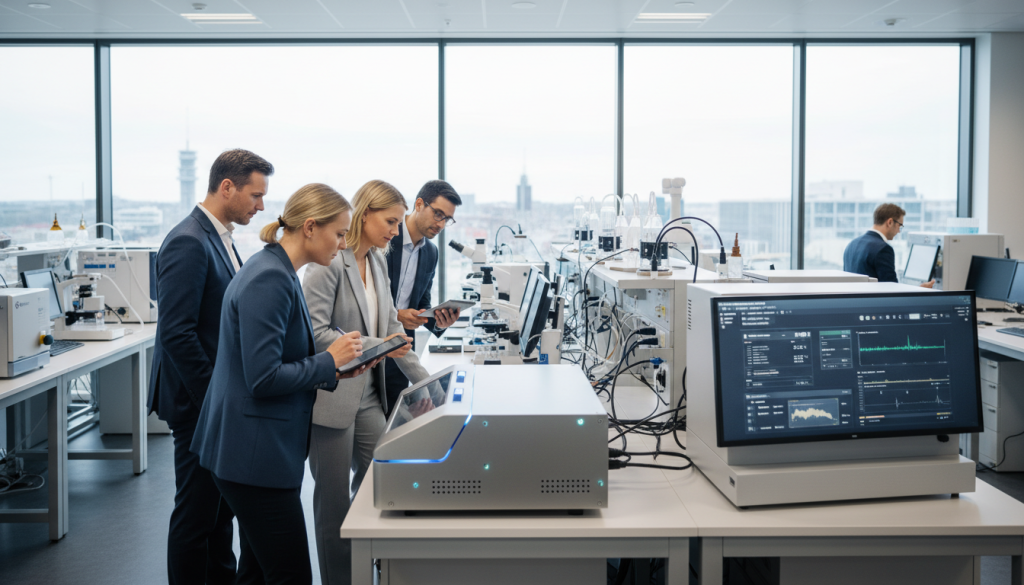
This guide answers your top questions about contamination detection. We’ll cover the basics, advanced tests, and ways to keep your quality control systems strong. You’ll learn from the latest industry rules and real examples.
Whether you’re making products safer, following rules, or keeping your reputation strong, we’ve got your back. We offer expert advice to help you through this tough area.
Key Takeaways
- Product recalls from contaminants cost U.S. manufacturers over $55 billion each year, making early identification essential for business protection
- Effective testing requires immediate response systems that quickly identify sources and implement corrective actions
- Modern analytical techniques combine traditional methods with advanced technology to detect even trace levels of unwanted substances
- Comprehensive quality control systems protect product safety, ensure regulatory compliance, and safeguard brand reputation simultaneously
- This guide provides actionable strategies based on current industry standards and real-world applications across multiple sectors
What is Contamination Detection?
Understanding contamination detection means knowing what we protect against. Manufacturers and quality professionals face daily challenges to keep products pure. Finding unwanted substances is key to our quality work.
Contamination detection is about finding and measuring unwanted materials in products. It uses many methods to catch problems early. This way, we ensure products are safe and work well.
Understanding What Contamination Means
Contamination is any unwanted material in a product or environment. It surprises even experienced teams. That’s why we need strong contaminant identification systems.
Contamination can be many things, like dust, fibers, or stains. It can also be metal pieces, chemicals, or residues. These unwanted substances can come from many places.
Contamination can come from unexpected places. A single production run might find many types of contamination. This makes it crucial to have good monitoring and trained people.
Why Industries Prioritize Contamination Control
Contamination detection is vital for quality assurance in many industries. Each sector has its own contamination challenges. These challenges can harm product safety, performance, and reputation.
Different sectors face unique risks. The chemical industry worries about trace impurities. Flexible electronics manufacturing fears dust that can cause failures.
The cosmetics industry is concerned about safety and looks. Food packaging companies worry about health and rules. Pharmaceutical makers focus on sterility and purity for patient safety.
Petroleum processing is concerned about fuel quality and the environment. Each sector needs its own way to detect contamination.
| Industry Sector | Primary Contamination Risks | Critical Quality Concerns | Detection Priority Level |
|---|---|---|---|
| Pharmaceuticals | Microbial contaminants, particulates, cross-contamination | Patient safety, sterility assurance, regulatory compliance | Critical |
| Food Packaging | Physical debris, chemical migration, biological hazards | Consumer health, shelf life, brand protection | Critical |
| Chemical Manufacturing | Trace impurities, reaction by-products, catalyst residues | Product purity, reaction consistency, yield optimization | High |
| Flexible Electronics | Dust particles, fibers, organic residues | Device functionality, performance reliability, defect prevention | High |
| Cosmetics | Microbial growth, color variation, foreign particles | Safety compliance, aesthetic quality, consumer confidence | Moderate to High |
Good contamination detection is key for quality, reputation, and trust. It prevents recalls, legal issues, and brand damage. The cost of contamination is high, affecting more than just product quality.
We use detailed detection systems to prevent problems. Finding contaminants early helps us fix issues and keep quality high. This meets or beats industry standards.
Types of Contamination
Contamination can come from many places in industrial settings. It can be in the form of particles, fibers, or even gels. We break down these threats into three main types to help companies fight them better.
Each type needs its own way of being checked and stopped. Knowing this helps quality teams keep products safe during making.
Foreign Objects and Solid Matter
Physical contaminants are solid things that can harm products and people. These include things like dust, hair, and even tiny metal pieces.
Many things can cause these problems. Worn-out equipment, packaging, and even the air we breathe can all be sources. People can also accidentally add things like hair or skin cells.
There are different ways to find these solid contaminants. We can see big ones with our eyes. For tiny ones, we use filters and tools like X-rays and metal detectors.
Unwanted Chemical Substances
Chemical contamination happens when unwanted substances get into products. These can change how products work or even make them unsafe.
We watch for many kinds of chemicals in products. Things like metals from old equipment or leftover solvents from making products can be problems. Even things like pesticides or chemicals from the air can get in.
Special tools are needed to find these chemicals. Things like HPLC and GC-MS help us spot them. These tools can find tiny amounts of contaminants.
Living Organisms and Their By-Products
Biological contamination is about living things or what they leave behind. It’s a big deal because these can grow fast and spread quickly.
Bacterial contamination is a big worry in food, medicine, and beauty products. Bacteria like Salmonella can make people very sick. We also check for molds, yeasts, viruses, and parasites.
Testing for pathogen screening is very important. It helps keep people safe from getting sick. If a product is contaminated, it can cause a big problem.
We use special tests to find and count these living threats. We can grow them in a lab or use quick tests like PCR. Pathogen screening uses many methods to keep products safe.
We also check the environment to find where contamination comes from. This helps us stop problems before they start. It keeps both consumers and companies safe.
Methods of Contamination Detection
We use many ways to find and fix contamination problems quickly. Our experts are skilled in finding and fixing contamination issues. They do this by carefully checking risks and doing detailed investigations. This helps keep products safe in many industries.
Effective contamination detection comes from using visual, chemical, and microbiological techniques together. Each method has its own strengths and is used for different types of threats. From simple checks to detailed lab tests, we make sure to examine everything carefully.
First-Line Detection Through Visual Assessment
Visual checks are the first step in finding contamination. Trained people look closely at products, materials, and places where things are made. They use their eyes and tools to spot any problems early on.
Our checks look for things like:
- Discoloration or unusual color changes in products
- Foreign particles or materials on surfaces
- Surface irregularities or textural changes
- Packaging defects or seal compromises
- Physical damage or structural abnormalities
Using the right light and tools helps make visual checks better. We have set rules for checking things to make sure everyone does it the same way. But, we know that visual checks can’t find everything, like tiny or invisible stuff.
Advanced Chemical Analysis Techniques
Chemical tests help us find and measure tiny amounts of contaminants. These tests can spot things that can’t be seen with the naked eye. We use special tools to figure out what the contaminants are and where they come from.
Our chemical testing tools include:
- Spectroscopy methods like infrared, UV-visible, and mass spectrometry for identifying molecules
- Chromatography techniques such as HPLC and GC to separate and count chemical parts
- Microscopy analysis for looking at structures and particles
- Elemental analysis to find inorganic contaminants and heavy metals
Spectroscopy gives us chemical fingerprints that show what contaminants are. These tools analyze how substances react with light to create unique patterns. We can find contamination even in tiny amounts.
Chemical testing can give us answers fast, in hours, not days. This quick info helps us act fast when contamination happens. We use quick tests for a first look and more detailed tests to confirm what we find.
Microbiological Detection and Analysis
Microbiological tests find and count microorganisms that can cause contamination. These tests spot bacteria, fungi, and viruses before they become a problem. We use both old and new methods to keep an eye on microbes.
Culture-based methods are key in testing for microbes. We take samples carefully and grow them on special media. After a few days, we count and identify the microbes.
But, these traditional methods can be slow and miss some microbes. That’s why we also use quick tests:
- ATP bioluminescence testing finds microbes in minutes by measuring their energy
- PCR and molecular techniques find specific genetic sequences of microbes
- Immunoassays use antibodies to detect certain pathogens
- Flow cytometry quickly counts and identifies individual microbes
We also have special tests for certain pathogens in specific places. In food, we look for Salmonella, Listeria, and E. coli. In medicine, we check for sterility and endotoxins. Each test needs the right way to take samples and know how much to look for.
Using both old and new microbiological tests gives us a good balance. Old methods give us detailed info, while new ones help us act fast. This way, we keep people safe and follow the rules.
Technologies Used in Contamination Detection
New technologies have changed how we find and deal with contamination threats. These tools help spot dangers faster and cut down on mistakes and costs. From advanced sensors to automated systems, these technologies keep manufacturing safe.
The way quality control systems use technology has improved a lot. These advancements make it easier to keep an eye on important factors all the time. Together, hardware and software create a strong defense against contamination risks.
Advanced Sensor Technologies and Alert Mechanisms
Modern sensors are key to finding contamination. They watch things like turbidity, conductivity, pH levels, temperature, and particle counts very closely. Optical sensors use light to find particles and changes in liquid clarity that show contamination.
Electrochemical sensors check for chemical changes in places where things are made. They find changes in ion levels and chemical makeup that mean there are unwanted substances. Biosensors are a big step forward in finding microbes, using biological parts to spot specific pathogens or microbial activity quickly.
Particle counters are very important in cleanrooms and places where things are made without germs. They count particles in the air and liquids. If there are too many particles, alarms go off, and people can quickly fix the problem.
We use these sensors all over production lines and in systems that watch the environment. They keep an eye on things all the time, catching contamination early. This way, we can stop bad products before they get too far.
Comprehensive Automated Monitoring Platforms
Automated systems are the next big thing in finding contamination. These systems use many technologies together for smooth monitoring. Inline sampling systems take samples right from the process without stopping production, keeping everything clean.
When we add things like peristaltic pumps and QualiTru ports, we can get clean samples. This helps us find microbes quickly and keep the product safe. It lets us fix problems right away, which helps avoid recalls and keeps things safe.
Aseptic sampling devices and robotic systems help collect samples without getting things dirty. These systems make sure we get the same results every time. They help avoid mistakes that happen with manual methods.
Systems that watch the environment keep an eye on things like particle counts, temperature, and humidity. They record data for analysis and to show we follow rules. This helps us make sure our processes are good and follow the law.
These quality control systems let us act fast when we find contamination. They use sampling, analysis, and data management to keep products safe from start to finish.
Mobile Technology for Field-Based Detection
Smartphone and tablet apps have made it easier to check for contamination. These apps give quality control tools to people in the field. They can take pictures and analyze them right away.
Apps replace paper with digital checklists and procedures. They let people record what they see and send it to a central place right away. This helps make decisions faster and keeps records for rules.
Cloud-based platforms help solve problems together, no matter where people are. Quality managers get alerts about contamination right away. These apps make it faster to respond and improve how we manage quality.
Mobile apps change how we manage quality. They let people access data and advice from anywhere. This helps us always get better and makes our quality systems work better.
| Technology Type | Primary Application | Detection Speed | Key Advantages |
|---|---|---|---|
| Optical Sensors | Turbidity and particle monitoring | Real-time (seconds) | Continuous monitoring, non-invasive, instant alerts |
| Biosensors | Microbial contamination detection | Minutes to hours | High specificity, pathogen identification, early warning |
| Inline Sampling Systems | Sterile sample collection | Real-time collection | No production interruption, representative samples, reduced contamination risk |
| Mobile Applications | Field inspections and data collection | Immediate documentation | Accessibility, real-time reporting, cloud integration, collaborative tools |
Regulatory Standards and Compliance
Worldwide, regulatory agencies have set strict standards for contamination detection in various industries. These rules help organizations create strong systems to protect public health and ensure product quality. It’s crucial to understand these rules to effectively control contamination.
Following these standards shows an organization’s dedication to safety and quality. Companies must keep up with changing rules to keep their licenses and access to markets. These rules come from federal, state, and international sources, often working together.
FDA Guidelines for Contamination Control
The U.S. Food and Drug Administration sets tough rules for detecting contamination in food, drinks, and medicines. FDA regulations require validated methods for checking product safety from start to finish. These guidelines are key for controlling contamination in regulated industries.
QualiTru’s aseptic sampling systems meet FDA standards. They are mentioned in Section 6 of the FDA’s Grade “A” Pasteurized Milk Ordinance (PMO) as approved for collecting samples from milk tanks and silos. This shows the systems’ effectiveness in contamination detection.
Current Good Manufacturing Practice (cGMP) regulations set minimum standards for preventing and detecting contamination in medicine making. These rules need documented steps, trained staff, and regular checks to ensure following the rules. Companies must have environmental monitoring to catch contamination before it affects product quality.
The Food Safety Modernization Act (FSMA) changed how we think about food safety. It focuses on preventing contamination by analyzing risks and using preventive controls. FSMA asks food facilities to create detailed food safety plans that include how to detect contamination.
FDA expects strict environmental monitoring in aseptic processing. We use cleaning validation to check if cleaning programs work. Strategies for controlling pathogens must include both monitoring the environment and testing finished products to catch all contamination.
EPA Regulations for Environmental Protection
The Environmental Protection Agency sets standards for water, soil, and air quality. EPA regulations set limits for contaminants in drinking water to keep people safe. We use these standards to guide our environmental monitoring in different industries.
EPA-approved testing methods ensure reliable results in contamination detection. Companies doing environmental monitoring must follow set procedures for accurate data. These methods are tested to make sure they work well for specific contaminants.
Industrial sites must follow permits that outline how often to test and what levels are okay. EPA rules require reporting contamination incidents that could harm health or the environment. Not following these rules can lead to big penalties.
Testing for environmental monitoring of industrial discharges protects waterways and communities. We do thorough sampling to get good data during discharge cycles. Regular monitoring helps spot contamination trends early.
EPA encourages preventing contamination. Environmental monitoring data helps improve and reduce risks. This approach fits with modern quality management, focusing on early detection and action.
ISO Standards for Quality Management
International Organization for Standardization (ISO) standards are recognized worldwide for contamination control. These standards outline protocols, methods, and criteria for contamination detection, making international trade easier. We value ISO standards for their systematic approach to quality and risk.
ISO 14644 standards for cleanroom classification and monitoring define requirements for controlled environments. These standards specify how to count particles, how often to monitor, and what cleanliness levels are needed. Companies making sensitive products rely on ISO 14644 for the right environment.
ISO 22000 sets rules for food safety management systems, including contamination detection throughout production. This standard requires designing effective strategies based on scientific risk assessment. We use risk management to understand processes and apply preventive measures.
ISO 13485 focuses on quality management for medical devices, with specific rules for contamination control. This standard requires validated sterilization and environmental monitoring in manufacturing areas. Contamination detection programs must show they work through regular testing and verification.
Annex 1 of EU GMP guidelines requires a scientifically based contamination control strategy (CCS). This approach matches ISO standards, focusing on systematic risk evaluation and control. It’s about understanding the process and managing risks.
ISO standards create common requirements for international operations. Getting certified to ISO standards shows a commitment to quality and contamination control best practices. We use these standards in our quality management systems for comprehensive contamination detection.
| Regulatory Body | Primary Focus Area | Key Standards | Contamination Detection Requirements |
|---|---|---|---|
| FDA | Food, Drug, and Pharmaceutical Safety | cGMP, FSMA, PMO Section 6 | Validated methods, environmental monitoring, pathogen control, aseptic processing verification |
| EPA | Environmental Protection | MCLs, Discharge Permits, Testing Methods | Maximum contaminant levels, EPA-approved testing methods, regular environmental monitoring |
| ISO | International Quality Standards | ISO 14644, ISO 22000, ISO 13485 | Risk-based contamination control strategy, cleanroom monitoring, food safety management |
Understanding how different regulatory frameworks work together is beneficial. FDA guidelines often reference ISO standards for specific technical needs. EPA rules might match international standards for environmental monitoring methods.
Staying compliant requires ongoing effort in training, equipment, and documentation. We suggest setting up teams to watch for regulatory changes and update contamination detection programs. Being proactive in compliance management avoids costly fines and protects a company’s reputation.
The Role of Contamination Detection in Food Safety
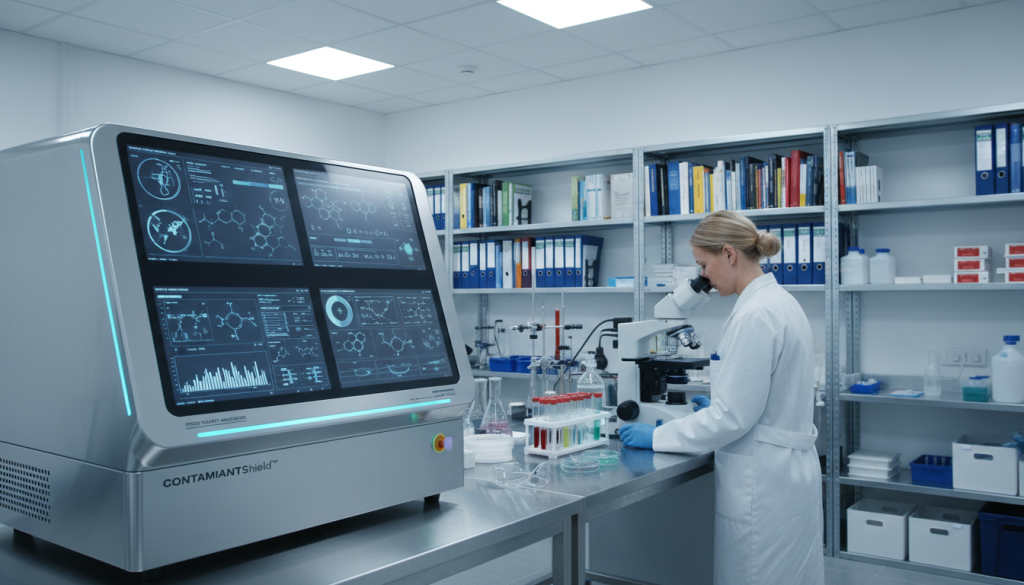
Contamination detection in food production is more than just following rules. It shows our dedication to keeping consumers safe and our brand’s integrity. Finding and stopping microbial contamination is key to keeping liquid foods and drinks safe. This also helps protect your brand’s reputation.
Effective monitoring is crucial for consumer safety. Food production facilities must find and remove hazards before products hit the shelves. This way, we can quickly respond to any threats in the production chain.
Protecting Consumers Through Early Detection
Bacterial contamination leads to millions of foodborne illnesses in the U.S. each year. These illnesses can range from mild stomach issues to serious health problems. It’s important to stay alert against these dangers.
Common pathogens include Salmonella, Listeria monocytogenes, E. coli O157:H7, Campylobacter, and Norovirus. Salmonella is a top cause of food poisoning. Listeria monocytogenes is a big risk in ready-to-eat foods and can cause severe infections.
E. coli O157:H7 can lead to kidney failure. Campylobacter often contaminates poultry and causes stomach issues. Norovirus spreads quickly through food and surfaces.
We need to check for contamination at many points in production. We test raw materials and finished products. This way, we catch any contamination chances.
Inline sampling gives us quick, real-time ways to spot contamination risks. It helps us control the process. This technology lets us stop contaminated products before they reach consumers. Quick detection is key to stopping unsafe products.
Fast detection methods give results in a day or two. This is much faster than old methods that took days. Faster results mean we can act quicker to stop contaminated products.
Foodborne illness outbreaks can harm consumers, lead to fines, costly recalls, lawsuits, and damage your brand. It’s a big deal.
Preventing contamination is crucial for business. A single outbreak can ruin years of work and trust. We must not cut corners on detection.
Systematic Approaches to Risk Reduction
We need to manage risks in a systematic way. We create detailed programs to find and fix vulnerabilities. Inline sampling lets us monitor products and microbes in real-time.
Inline sampling helps us in several ways:
- Identify contamination sources by finding where contaminants come in
- Implement targeted cleaning by focusing on dirty spots
- Monitor remediation effectiveness to see if cleaning works
- Prevent recurrence by catching problems early and fixing them fast
Modern risk management uses Hazard Analysis and Critical Control Points (HACCP) as a base. This method sets key points where we must control contamination. We set limits for each point.
HACCP needs clear monitoring steps and actions when limits are broken. This method keeps food safety consistent across shifts. Everyone knows their role in keeping food safe.
| Risk Management Component | Purpose | Detection Method | Response Time |
|---|---|---|---|
| Environmental Monitoring | Find contamination spots in production areas | Surface swabs and air sampling | 24-48 hours |
| Inline Sampling | Check product condition in real-time | Automated sensors and quick tests | Same-day results |
| Critical Control Points | Stop hazards at key stages | Continuous monitoring with alarms | Immediate alerts |
| Finished Product Testing | Final check before distribution | Lab tests | 24-72 hours |
We also check the environment regularly. This helps find contamination spots before they affect products. Keeping workers clean also helps prevent contamination.
We also check our suppliers. Ingredients from them can affect our products. Being able to track where ingredients come from helps us find problems fast.
This approach has many layers to stop contamination. If one layer fails, others can catch problems. We focus on preventing issues to keep people safe and our business running.
Investing in good contamination detection systems saves money in the long run. It avoids recalls and keeps our brand safe. We see these systems as essential, not extra costs. Keeping consumers’ trust is our top priority.
Contamination Detection in Pharmaceuticals
In pharmaceutical production, finding contamination is key to making safe medicines. Even a small amount of impurity can harm patients. We use advanced methods to find and prevent contamination at every step.
Worldwide, strict rules are in place to control contamination. These rules cover everything from how facilities are built to how products are tested. Since medicines go straight into our bodies, the stakes are very high.
Ensuring Product Quality
Pharmaceutical contamination isn’t just about germs. It also includes other harmful substances. We have to find and remove all kinds of contaminants to ensure product safety.
The FDA and European Medicines Agency require detailed quality systems. These systems must validate every test method used. Without this, we can’t trust the results to keep patients safe.
The EU GMP Guidelines set the standard for controlling contamination. They require a solid plan to prevent contamination. This plan is based on science and risk management.
Routine monitoring of cleanrooms, clean air equipment and personnel should be performed in operation throughout all critical stages, including equipment set-up.
Grade A zones need the most careful monitoring. We watch for particles during all critical steps, including setting up equipment. This way, we catch contamination early.
The International Council for Harmonisation sets limits for impurities. These limits depend on how often a patient takes the medicine. A small amount in a daily medication might be too much for a long-term one.
Advanced tools like HPLC, GC-MS, and spectroscopy are key in quality control. They can find impurities at very low levels. But, their reliability depends on thorough validation studies.
| Analytical Technique | Contaminant Types Detected | Sensitivity Range | Primary Application |
|---|---|---|---|
| HPLC | Chemical impurities, degradation products | 0.01-0.1% of active ingredient | Drug substance purity analysis |
| GC-MS | Volatile organic compounds, residual solvents | Parts per million (ppm) | Solvent residue quantification |
| LAL Testing | Bacterial endotoxins | 0.005-0.5 EU/mL | Injectable product safety |
| ICP-MS | Elemental impurities, heavy metals | Parts per billion (ppb) | Trace metal contamination |
Environmental monitoring is always on in pharmaceutical facilities. We check for contamination even when production stops. This way, we catch any issues before they affect products.
Validating Sterility
Sterile products are the highest risk because they bypass our body’s defenses. We use special microbial testing to check for any living germs. This includes injectables, ophthalmics, and implantable devices.
Sterility tests take 14 days to ensure no germs are present. This long time is needed to catch even slow-growing germs. Only then can we confirm the product is sterile.
Traditional microbial testing methods are accurate but take time. This delay has led to the use of faster methods. Techniques like ATP detection, flow cytometry, and PCR can give results in hours, not weeks.
Media fill studies are the ultimate test of aseptic processing. They use sterile media to simulate real manufacturing. Any contamination found means the process needs improvement.
The move to faster methods doesn’t replace traditional microbial testing. Instead, it’s used alongside it for quicker results. But, these new methods must be validated to meet strict standards.
Controlling contamination requires a multi-layered approach. We use everything from facility design to rigorous testing. This way, we ensure products are safe.
Personnel are both a risk and a key control in pharmaceuticals. They can carry germs even when fully dressed. We train them well to prevent contamination and regularly check their skills.
The goal is to keep sterile products safe from germs. This means finding and removing contaminants during production and ensuring packaging keeps products sterile. Checking packaging integrity is the final step to protect patients.
Applications in Environmental Monitoring
We protect natural environments and communities through environmental monitoring programs. Our methods assess water, soil, and ecosystems where pollution is a risk. These efforts safeguard the resources communities rely on daily.
We detect contaminants at trace and ultra-trace levels in various samples. Our labs handle many types of samples to quickly identify contamination. This helps make effective remediation decisions.
Water Quality Testing
Effective environmental monitoring starts with water quality testing. We test drinking water, surface water, groundwater, and wastewater. This protects human health and aquatic ecosystems.
Chemical contaminants are a big risk to water safety. We find pollutants like heavy metals, industrial chemicals, pesticides, and pharmaceuticals. Advanced methods help us detect these threats.
- Heavy metals like lead, mercury, arsenic, and cadmium
- Industrial chemicals from manufacturing and waste disposal
- Pesticides and herbicides from agricultural runoff
- Pharmaceuticals from wastewater treatment facilities
- PFAS compounds that resist breakdown
Microbiological testing keeps water safe from diseases. We find bacteria, parasites, and viruses that can cause illness. This testing is crucial for public health.
Water testing labs can find contaminants at very low levels. This quick detection helps fix problems fast. It prevents health crises and saves money.
The Safe Drinking Water Act sets rules for public water supplies. Utilities must test for many contaminants and report results. We help them stay compliant with accurate testing.
Inline sampling systems detect contamination in real-time. They let operators adjust treatment right away. This keeps water safe for everyone.
Environmental monitoring tracks pollution in natural water bodies. We watch for pollution from farms, factories, and cities. This protects water for swimming, boating, and fishing.
Soil Contamination Assessment
Soil contamination assessment finds pollutants in soil and sediment. We look for pollution from old industrial sites, spills, and chemicals. This helps plan how to clean up and protect people.
Our labs test soil for many pollutants. We find heavy metals, petroleum, and pesticides. Special methods are needed because soil can be complex.
What we find guides how to clean up contaminated sites. We decide if soil can stay, needs treatment, or must be removed. This balances health, cost, and land use.
Environmental monitoring programs set a baseline for contaminated sites. We track how pollution changes over time. This shows if cleanup is working.
Pathogen screening in soil finds disease risks. We look for bacteria, parasites, and viruses. This keeps people safe by managing risks.
Assessing contamination helps manage land better. We find pollution sources and track cleanup. This makes land safe for farming, homes, and wildlife.
Challenges in Contamination Detection
Every organization faces barriers in contamination control. These barriers test the limits of current detection methods. Maintaining effective contamination detection programs requires tackling obstacles in technical, operational, and strategic areas.
The unpredictable nature of contamination makes threats hard to anticipate. This creates scenarios that even the most prepared organizations find challenging.
We know that time is critical in contamination situations. Our approach focuses on rapid response and lasting solutions. We support clients through contamination control and decontamination in various sectors and markets. But, we must acknowledge and address the fundamental challenges that impact detection effectiveness.
Recognizing Emerging Hazards
The landscape of contamination threats is always changing. New hazards emerge that established detection protocols may not address. Contaminant identification becomes more complex as new substances enter environments and supply chains.
Traditional monitoring programs may fail to detect these new threats. This is because they were designed for known contaminants.
Several categories of emerging contaminants now challenge conventional detection approaches. These include:
- Novel chemical entities from new manufacturing processes that lack established analytical standards
- Microplastics recognized as widespread environmental contaminants affecting multiple industries
- Antibiotic-resistant bacteria that pose increased health risks and require specialized detection methods
- Nanomaterials whose small size and unique properties create new contamination pathways
- PFAS compounds that persist in environments and accumulate in organisms over time
Identifying these new hazards requires ongoing surveillance and proactive research. We emphasize collaboration with regulatory agencies, research institutions, and industry groups to stay informed about emerging threats. This network approach helps organizations anticipate potential contamination issues before they impact operations.
“The greatest challenge in contamination detection is not finding what you’re looking for, but discovering what you didn’t know to look for.”
Global supply chains add complexity to contaminant identification efforts. Ingredients and materials may be exposed to contaminants that don’t exist in domestic production environments. We advocate for risk assessment processes that systematically evaluate potential contamination sources, even those considered unlikely, ensuring detection capabilities evolve alongside changing manufacturing landscapes.
Developing and validating detection methods for contaminants without established reference materials presents significant technical challenges. Laboratories must adapt existing techniques or develop entirely new approaches. This requires substantial investment in method development, validation studies, and staff training to maintain detection capabilities for emerging hazards.
Technical and Operational Constraints
Despite advanced capabilities, current contamination detection technologies face inherent practical limitations. These limitations affect how organizations design and implement testing programs. Understanding these limitations helps establish realistic expectations and develop compensatory strategies.
Key technological limitations include:
- Sensitivity thresholds below which instruments cannot reliably quantify contaminants
- Matrix effects where complex sample compositions interfere with analytical measurements
- Detection time requirements that delay corrective actions, with traditional microbiological methods requiring days for results
- Cost constraints limiting testing frequency or the breadth of contaminants monitored
- Specificity challenges where structurally similar compounds prove difficult to distinguish
Laboratories must balance comprehensive contamination detection against practical considerations. Sample throughput, analytical costs, and turnaround time requirements all influence testing strategies. We recognize that perfect detection remains aspirational rather than achievable with current technology, requiring organizations to prioritize based on risk assessment.
Strategic monitoring approaches focus resources on the most likely or highest-risk contaminants. This targeted strategy acknowledges technological limitations while maximizing detection effectiveness for threats that pose the greatest danger. We implement layered detection strategies that use complementary approaches to compensate for individual technology limitations.
Method development continues advancing, pushing detection limits lower and reducing analysis times. These improvements require ongoing investment in equipment, training, and validation. Organizations must weigh the benefits of enhanced detection capabilities against implementation costs and operational disruptions during technology transitions.
The specificity challenge deserves particular attention in contaminant identification efforts. When multiple compounds share similar chemical structures or properties, distinguishing between them requires sophisticated analytical techniques. This becomes problematic when differentiating between harmless substances and dangerous contaminants that appear similar to detection instruments.
We specialize in helping organizations navigate these technological limitations through customized solutions. By understanding both the capabilities and constraints of available technologies, we design monitoring programs that deliver practical, effective contamination detection within realistic budgets and timeframes.
Future Trends in Contamination Detection
We are on the brink of a new era in finding contamination. Artificial intelligence and advanced sensors will make monitoring smarter. These new technologies will change how we spot, stop, and deal with contamination threats. They will give us quicker, more accurate results and better protection everywhere.
New technologies will bring together many breakthroughs into one system. These systems will watch over things all the time, not just when we check. Our labs have experts who use many advanced tests to help you solve problems.
This change is a big move from fixing problems after they happen to stopping them before they start. Companies will find contamination threats before they happen. This mix of predicting and watching in real-time will give us better protection than ever before.
Artificial Intelligence Transforms Detection Capabilities
Artificial intelligence is changing how we look at data and find patterns in contamination detection. Machine learning algorithms quickly and accurately go through huge amounts of data from monitoring systems. They find trends and oddities that people might miss.
AI can predict contamination events before they happen. This lets companies take steps to prevent problems instead of just fixing them. This shift from reacting to predicting is a huge step forward in safety.
AI helps find the best places and times to check for contamination. It uses computer vision to look at pictures and find defects or contaminants better than people. These systems work all the time, never getting tired.
AI systems can use data from many places at once. They look at sensor data, lab results, and more. This gives a full picture of risks and helps find problems before they start.
AI can also predict when equipment might cause contamination. It helps labs understand new information and updates on contamination. This keeps detection programs up to date with the latest threats and best practices.
Next-Generation Sensor Technologies
New sensing methods will make finding contamination faster and better. Nanosensors use special materials to find tiny amounts of contaminants. They can spot things that regular tools can’t.
Biosensors use special parts like enzymes to find specific contaminants. This makes them very good at finding what they’re looking for. Optical sensors use light to analyze things without damaging them. They can do this in real-time.
Wireless sensors spread out to cover more areas. They send data to a central place. This gives a full view of what’s happening and alerts to any problems right away.
Lab-on-a-chip technology makes small devices that can test things on the spot. This means no waiting for lab results. Now, answers come in minutes, not hours or days.
Putting sensors and AI together makes systems that can solve problems on their own. This is a big change in how we detect contamination. Future systems will be like smart guards that always watch over product quality and safety.
| Technology Category | Current Capabilities | Emerging Innovations | Expected Impact |
|---|---|---|---|
| Detection Speed | Hours to days for laboratory analysis | Real-time or minutes with portable devices | Immediate response to contamination events |
| Sensitivity Levels | Parts per million detection limits | Parts per billion with nanosensors | Earlier identification of trace contaminants |
| Data Analysis | Manual review by trained personnel | AI-powered pattern recognition and prediction | Proactive prevention of contamination incidents |
| Monitoring Coverage | Periodic sampling at selected locations | Continuous wireless sensor networks | Complete visibility across operations |
These new technologies will change how we ensure quality and safety. The mix of AI, better sensors, and data systems is amazing. We think these changes will become common in the next ten years. They will raise safety levels in all industries that need to find contamination.
Best Practices for Effective Contamination Detection
Creating strong contamination detection programs needs more than just the right tools. It requires careful planning, trained staff, and clear steps. We offer tips for setting up and keeping effective programs that give reliable results. The key to success is mixing human skill with detailed processes that fit well into quality control systems.
Top organizations in contamination prevention focus on two main things. They invest a lot in training their staff. They also have strict rules for all detection work.
Building Expertise Through Regular Training and Certification
Technology and methods are only as good as the people using them. We stress the importance of training that teaches staff about the risks in their area. This knowledge is the base for good prevention.
Training should cover key skills. Staff need to learn how to take samples without contaminating them. They must also know how to use detection tools and understand the results. Response procedures for finding contamination need to be clear to stop problems from getting worse.
Start with basic training and then keep it up with regular updates. These updates are key when new tech, methods, or rules come along. The world of contamination is always changing, and staff need to keep up.
Getting certified is a big plus for quality assurance people, lab analysts, and food safety managers. Certs like Certified Quality Auditor (CQA) show you know quality systems well. The Preventive Controls Qualified Individual (PCQI) cert proves you’re good at food safety planning. Microbiology certs show you know how to test for microbes.
Keeping records of training is crucial. These records show staff are ready to do their job. They meet both internal quality checks and outside rules.
Training staff to do more than one job makes your team stronger. When key people are out, others can keep up the work. This means contamination is less likely to slip through unnoticed.
Creating Consistency Through Standard Operating Procedures
Standard Operating Procedures (SOPs) are key to consistent contamination detection. We write down every part of monitoring to avoid confusion and keep things the same.
Good SOPs cover many things. They say how often and where to take samples, based on risk. They also explain how to collect samples to get the same results every time. Keeping samples safe from start to finish is also part of the plan.
Lab methods need clear steps for staff to follow exactly. It’s important to know what to do when problems are found and how to keep records. This makes sure everything is done right and meets rules.
| SOP Component | Purpose | Review Frequency | Key Stakeholders |
|---|---|---|---|
| Sampling Protocols | Define collection points, timing, and techniques for representative samples | Annually or when processes change | Quality Assurance, Production, Laboratory |
| Analytical Methods | Provide detailed testing procedures with acceptance criteria | Biennially or with method updates | Laboratory Managers, Microbiologists, QC Personnel |
| Corrective Actions | Establish response procedures when contamination is detected | Annually or after incidents | Quality Assurance, Operations, Regulatory Affairs |
| Documentation Requirements | Specify record-keeping for compliance and traceability | Annually or with regulatory changes | Quality Assurance, Regulatory Compliance, Management |
SOPs should be detailed but not too strict. They should guide staff but also allow for smart decisions. Finding the right balance is key.
SOPs go through different stages. First, they’re based on risk and rules. Then, they’re tested to make sure they work. After that, they’re updated to keep up with changes.
Keeping track of SOP versions is important. It makes sure everyone uses the latest version. This avoids confusion and keeps procedures up to date.
We suggest specific practices for maintaining detection effectiveness over time. Check environmental monitoring data yearly for new or common contaminants. You might need to test against new microbes found during this check.
Every 5-7 years, review all test data carefully. See if new studies are needed. New surfaces or lower results than expected might mean you need to test again. Many new microbes could mean contamination patterns are changing.
Using SOPs makes contamination detection a reliable part of quality control systems. It gives consistent results and builds trust. It also makes training easier and helps follow rules.
Well-made SOPs show you’re serious about keeping products safe. They’re key during audits, inspections, and after contamination events. They prove your commitment to safety through careful monitoring.
Conclusion: The Importance of Vigilance in Contamination Detection
Contamination detection is a constant threat in many industries. It affects food, pharmaceuticals, and consumer products. To stay safe, we need to use many methods and technologies. We also need strong quality control and trained staff.
When contamination happens, time is very important. That’s why we focus on quick solutions and support. Our labs use advanced techniques to help many industries and products.
Investing in finding contamination can save a lot of money. It prevents recalls, fines, and damage to brands. This effort helps everyone: consumers, regulators, and workers.
It’s important to check your detection methods often. Update your equipment and train your staff. Create a culture where safety concerns are taken seriously. Work with labs for expert help when needed.
By focusing on food safety and contamination detection, we make our supply chains stronger. This effort is not just about following rules. It’s about keeping people safe and businesses thriving.
FAQ
What exactly is contamination detection and why is it important?
Contamination detection is finding and measuring unwanted substances in products or environments. It’s key in many industries because contamination can harm product safety and quality. It’s also important for protecting consumers.
What are the main types of contamination we should be monitoring?
There are three main types of contamination. Physical contamination includes things like dust and metal pieces. Chemical contamination involves unwanted chemicals that can change a product’s makeup. Biological contamination includes harmful bacteria and viruses.
What methods are available for detecting contamination?
We use several methods to detect contamination. Visual inspection is the first step, where we look for obvious signs of contamination. Chemical testing uses advanced techniques to find chemical contaminants. Microbiological testing helps find harmful bacteria and viruses.
How have technologies advanced contamination detection capabilities?
New technologies have greatly improved contamination detection. Sensors and alarms monitor things in real-time. Automated systems use many technologies together for better monitoring. Mobile applications make it easier to check for contamination on the go.
What regulatory standards govern contamination detection practices?
Many rules guide contamination detection. FDA guidelines cover food, beverages, and pharmaceuticals. EPA regulations set limits for water quality. ISO standards provide global guidelines for cleanrooms and more.
How does contamination detection protect food safety?
Finding microbial contamination is key to keeping food safe. Bacteria like Salmonella can cause serious illnesses. We use inline sampling and rapid tests to catch contamination early.
What are the specific contamination detection requirements for pharmaceuticals?
Pharmaceuticals need strict contamination control. This includes checking for bacteria, particles, and chemicals. Cleanrooms and sterility testing are crucial for safety.
How is contamination detection applied in environmental monitoring?
We monitor the environment for contamination. This includes testing water and soil. It helps protect ecosystems and public health.
What are the biggest challenges in contamination detection today?
Finding new contaminants and technology limits are big challenges. New substances and technologies make detection harder. We use rapid methods and layered strategies to overcome these challenges.
What future trends will transform contamination detection?
New technologies will change contamination detection. Advances in AI and machine learning will analyze data better. Enhanced sensing techniques will detect contaminants at lower levels.
What should we do when contamination is detected?
Act fast when contamination is found. Isolate products and investigate the source. Take corrective actions and document everything for compliance.
How often should contamination detection be performed?
Detection frequency depends on risk and regulations. High-risk areas need frequent monitoring. Regular testing is also important.
What qualifications should personnel performing contamination detection have?
Detection requires trained staff. Laboratory analysts need chemistry or microbiology backgrounds. Quality assurance personnel should have certifications. Training is key for reliable results.
How do we validate that our contamination detection methods are working properly?
Validation is crucial for method effectiveness. It includes testing for accuracy and precision. Regular checks ensure methods work as intended.
What should we do when contamination is detected?
Act fast when contamination is found. Isolate products and investigate the source. Take corrective actions and document everything for compliance.
How often should contamination detection be performed?
Detection frequency depends on risk and regulations. High-risk areas need frequent monitoring. Regular testing is also important.
What qualifications should personnel performing contamination detection have?
Detection requires trained staff. Laboratory analysts need chemistry or microbiology backgrounds. Quality assurance personnel should have certifications. Training is key for reliable results.
How do we validate that our contamination detection methods are working properly?
Validation is crucial for method effectiveness. It includes testing for accuracy and precision. Regular checks ensure methods work as intended.
What should we do when contamination is detected?
Act fast when contamination is found. Isolate products and investigate the source. Take corrective actions and document everything for compliance.
How often should contamination detection be performed?
Detection frequency depends on risk and regulations. High-risk areas need frequent monitoring. Regular testing is also important.
What qualifications should personnel performing contamination detection have?
Detection requires trained staff. Laboratory analysts need chemistry or microbiology backgrounds. Quality assurance personnel should have certifications. Training is key for reliable results.
How do we validate that our contamination detection methods are working properly?
Validation is crucial for method effectiveness. It includes testing for accuracy and precision. Regular checks ensure methods work as intended.
What should we do when contamination is detected?
Act fast when contamination is found. Isolate products and investigate the source. Take corrective actions and document everything for compliance.
How often should contamination detection be performed?
Detection frequency depends on risk and regulations. High-risk areas need frequent monitoring. Regular testing is also important.
What qualifications should personnel performing contamination detection have?
Detection requires trained staff. Laboratory analysts need chemistry or microbiology backgrounds. Quality assurance personnel should have certifications. Training is key for reliable results.
How do we validate that our contamination detection methods are working properly?
Validation is crucial for method effectiveness. It includes testing for accuracy and precision. Regular checks ensure methods work as intended.
What should we do when contamination is detected?
Act fast when contamination is found. Isolate products and investigate the source. Take corrective actions and document everything for compliance.
How often should contamination detection be performed?
Detection frequency depends on risk and regulations. High-risk areas need frequent monitoring. Regular testing is also important.
What qualifications should personnel performing contamination detection have?
Detection requires trained staff. Laboratory analysts need chemistry or microbiology backgrounds. Quality assurance personnel should have certifications. Training is key for reliable results.
How do we validate that our contamination detection methods are working properly?
Validation is crucial for method effectiveness. It includes testing for accuracy and precision. Regular checks ensure methods work as intended.
What should we do when contamination is detected?
Act fast when contamination is found. Isolate products and investigate the source. Take corrective actions and document everything for compliance.
How often should contamination detection be performed?
Detection frequency depends on risk and regulations. High-risk areas need frequent monitoring. Regular testing is also important.
What qualifications should personnel performing contamination detection have?
Detection requires trained staff. Laboratory analysts need chemistry or microbiology backgrounds. Quality assurance personnel should have certifications. Training is key for reliable results.
How do we validate that our contamination detection methods are working properly?
Validation is crucial for method effectiveness. It includes testing for accuracy and precision. Regular checks ensure methods work as intended.
What should we do when contamination is detected?
Act fast when contamination is found. Isolate products and investigate the source. Take corrective actions and document everything for compliance.
How often should contamination detection be performed?
Detection frequency depends on risk and regulations. High-risk areas need frequent monitoring. Regular testing is also important.
What qualifications should personnel performing contamination detection have?
Detection requires trained staff. Laboratory analysts need chemistry or microbiology backgrounds. Quality assurance personnel should have certifications. Training is key for reliable results.
How do we validate that our contamination detection methods are working properly?
Validation is crucial for method effectiveness. It includes testing for accuracy and precision. Regular checks ensure methods work as intended.
What should we do when contamination is detected?
Act fast when contamination is found. Isolate products and investigate the source. Take corrective actions and document everything for compliance.
How often should contamination detection be performed?
Detection frequency depends on risk and regulations. High-risk areas need frequent monitoring. Regular testing is also important.
What qualifications should personnel performing contamination detection have?
Detection requires trained staff. Laboratory analysts need chemistry or microbiology backgrounds. Quality assurance personnel should have certifications. Training is key for reliable results.
How do we validate that our contamination detection methods are working properly?
Validation is crucial for method effectiveness. It includes testing for accuracy and precision. Regular checks ensure methods work as intended.
What should we do when contamination is detected?
Act fast when contamination is found. Isolate products and investigate the source. Take corrective actions and document everything for compliance.
How often should contamination detection be performed?
Detection frequency depends on risk and regulations. High-risk areas need frequent monitoring. Regular testing is also important.
What qualifications should personnel performing contamination detection have?
Detection requires trained staff. Laboratory analysts need chemistry or microbiology backgrounds. Quality assurance personnel should have certifications. Training is key for reliable results.
How do we validate that our contamination detection methods are working properly?
Validation is crucial for method effectiveness. It includes testing for accuracy and precision. Regular checks ensure methods work as intended.
What should we do when contamination is detected?
Act fast when contamination is found. Isolate products and investigate the source. Take corrective actions and document everything for compliance.
How often should contamination detection be performed?
Detection frequency depends on risk and regulations. High-risk areas need frequent monitoring. Regular testing is also important.
What qualifications should personnel performing contamination detection have?
Detection requires trained staff. Laboratory analysts need chemistry or microbiology backgrounds. Quality assurance personnel should have certifications. Training is key for reliable results.
How do we validate that our contamination detection methods are working properly?
Validation is crucial for method effectiveness. It includes testing for accuracy and precision. Regular checks ensure methods work as intended.
What should we do when contamination is detected?
Act fast when contamination is found. Isolate products and investigate the source. Take corrective actions and document everything for compliance.
How often should contamination detection be performed?
Detection frequency depends on risk and regulations. High-risk areas need frequent monitoring. Regular testing is also important.
What qualifications should personnel performing contamination detection have?
Detection requires trained staff. Laboratory analysts need chemistry or microbiology backgrounds. Quality assurance personnel should have certifications. Training is key for reliable results.
How do we validate that our contamination detection methods are working properly?
Validation is crucial for method effectiveness. It includes testing for accuracy and precision. Regular checks ensure methods work as intended.
What should we do when contamination is detected?
Act fast when contamination is found. Isolate products and investigate the source. Take corrective actions and document everything for compliance.
How often should contamination detection be performed?
Detection frequency depends on risk and regulations. High-risk areas need frequent monitoring. Regular testing is also important.
What qualifications should personnel performing contamination detection have?
Detection requires trained staff. Laboratory analysts need chemistry or microbiology backgrounds. Quality assurance personnel should have certifications. Training is key for reliable results.
How do we validate that our contamination detection methods are working properly?
Validation is crucial for method effectiveness. It includes testing for accuracy and precision. Regular checks ensure methods work as intended.
What should we do when contamination is detected?
Act fast when contamination is found. Isolate products and investigate the source. Take corrective actions and document everything for compliance.
How often should contamination detection be performed?
Detection frequency depends on risk and regulations. High-risk areas need frequent monitoring. Regular testing is also important.
What qualifications should personnel performing contamination detection have?
Detection requires trained staff. Laboratory analysts need chemistry or microbiology backgrounds. Quality assurance personnel should have certifications. Training is key for reliable results.
How do we validate that our contamination detection methods are working properly?
Validation is crucial for method effectiveness. It includes testing for accuracy and precision. Regular checks ensure methods work as intended.
What should we do when contamination is detected?
Act fast when contamination is found. Isolate products and investigate the source. Take corrective actions and document everything for compliance.
How often should contamination detection be performed?
Detection frequency depends on risk and regulations. High-risk areas need frequent monitoring. Regular testing is also important.
What qualifications should personnel performing contamination detection have?
Detection requires trained staff. Laboratory analysts need chemistry or microbiology backgrounds. Quality assurance personnel should have certifications. Training is key for reliable results.
How do we validate that our contamination detection methods are working properly?
Validation is crucial for method effectiveness. It includes testing for accuracy and precision. Regular checks ensure methods work as intended.
What should we do when contamination is detected?
Act fast when contamination is found. Isolate products and investigate the source. Take corrective actions and document everything for compliance.
How often should contamination detection be performed?
Detection frequency depends on risk and regulations. High-risk areas need frequent monitoring. Regular testing is also important.
What qualifications should personnel performing contamination detection have?
Detection requires trained staff. Laboratory analysts need chemistry or microbiology backgrounds. Quality assurance personnel should have certifications. Training is key for reliable results.
How do we validate that our contamination detection methods are working properly?
Validation is crucial for method effectiveness. It includes testing for accuracy and precision. Regular checks ensure methods work as intended.
What should we do when contamination is detected?
Act fast when contamination is found. Isolate products and investigate the source. Take corrective actions and document everything for compliance.
How often should contamination detection be performed?
Detection frequency depends on risk and regulations. High-risk areas need frequent monitoring. Regular testing is also important.
What qualifications should personnel performing contamination detection have?
Detection requires trained staff. Laboratory analysts need chemistry or microbiology backgrounds. Quality assurance personnel should have certifications. Training is key for reliable results.
How do we validate that our contamination detection methods are working properly?
Validation is crucial for method effectiveness. It includes testing for accuracy and precision. Regular checks ensure methods work as intended.
What should we do when contamination is detected?
Act fast when contamination is found. Isolate products and investigate the source. Take corrective actions and document everything for compliance.
How often should contamination detection be performed?
Detection frequency depends on risk and regulations. High-risk areas need frequent monitoring. Regular testing is also important.
What qualifications should personnel performing contamination detection have?
Detection requires trained staff. Laboratory analysts need chemistry or microbiology backgrounds. Quality assurance personnel should have certifications. Training is key for reliable results.
How do we validate that our contamination detection methods are working properly?
Validation is crucial for method effectiveness. It includes testing for accuracy and precision. Regular checks ensure methods work as intended.
What should we do when contamination is detected?
Act fast when contamination is found. Isolate products and investigate the source. Take corrective actions and document everything for compliance.
How often should contamination detection be performed?
Detection frequency depends on risk and regulations. High-risk areas need frequent monitoring. Regular testing is also important.
What qualifications should personnel performing contamination detection have?
Detection requires trained staff. Laboratory analysts need chemistry or microbiology backgrounds. Quality assurance personnel should have certifications. Training is key for reliable results.
How do we validate that our contamination detection methods are working properly?
Validation is crucial for method effectiveness. It includes testing for accuracy and precision. Regular checks ensure methods work as intended.
What should we do when contamination is detected?
Act fast when contamination is found. Isolate products and investigate the source. Take corrective actions and document everything for compliance.
How often should contamination detection be performed?
Detection frequency depends on risk and regulations. High-risk areas need frequent monitoring. Regular testing is also important.
What qualifications should personnel performing contamination detection have?
Detection requires trained staff. Laboratory analysts need chemistry or microbiology backgrounds. Quality assurance personnel should have certifications. Training is key for reliable results.
How do we validate that our contamination detection methods are working properly?
Validation is crucial for method effectiveness. It includes testing for accuracy and precision. Regular checks ensure methods work as intended.
What should we do when contamination is detected?
Act fast when contamination is found. Isolate products and investigate the source. Take corrective actions and document everything for compliance.
How often should contamination detection be performed?
Detection frequency depends on risk and regulations. High-risk areas need frequent monitoring. Regular testing is also important.
What qualifications should personnel performing contamination detection have?
Detection requires trained staff. Laboratory analysts need chemistry or microbiology backgrounds. Quality assurance personnel should have certifications. Training is key for reliable results.
How do we validate that our contamination detection methods are working properly?
Validation is crucial for method effectiveness. It includes testing for accuracy and precision. Regular checks ensure methods work as intended.
What should we do when contamination is detected?
Act fast when contamination is found. Isolate products and investigate the source. Take corrective actions and document everything for compliance.
How often should contamination detection be performed?
Detection frequency depends on risk and regulations. High-risk areas need frequent monitoring. Regular testing is also important.
What qualifications should personnel performing contamination detection have?
Detection requires trained staff. Laboratory analysts need chemistry or microbiology backgrounds. Quality assurance personnel should have certifications. Training is key for reliable results.
How do we validate that our contamination detection methods are working properly?
Validation is crucial for method effectiveness. It includes testing for accuracy and precision. Regular checks ensure methods work as intended.
What should we do when contamination is detected?
Act fast when contamination is found. Isolate products and investigate the source. Take corrective actions and document everything for compliance.
How often should contamination detection be performed?
Detection frequency depends on risk and regulations. High-risk areas need frequent monitoring. Regular testing is also important.
What qualifications should personnel performing contamination detection have?
Detection requires trained staff. Laboratory analysts need chemistry or microbiology backgrounds. Quality assurance personnel should have certifications. Training is key for reliable results.
How do we validate that our contamination detection methods are working properly?
Validation is crucial for method effectiveness. It includes testing for accuracy and precision. Regular checks ensure methods work as intended.
What should we do when contamination is detected?
Act fast when contamination is found. Isolate products and investigate the source. Take corrective actions and document everything for compliance.
How often should contamination detection be performed?
Detection frequency depends on risk and regulations. High-risk areas need frequent monitoring. Regular testing is also important.
What qualifications should personnel performing contamination detection have?
Detection requires trained staff. Laboratory analysts need chemistry or microbiology backgrounds. Quality assurance personnel should have certifications. Training is key for reliable results.
How do we validate that our contamination detection methods are working properly?
Validation is crucial for method effectiveness. It includes testing for accuracy and precision. Regular checks ensure methods work as intended.
What should we do when contamination is detected?
Act fast when contamination is found. Isolate products and investigate the source. Take corrective actions and document everything for compliance.
How often should contamination detection be performed?
Detection frequency depends on risk and regulations. High-risk areas need frequent monitoring. Regular testing is also important.
What qualifications should personnel performing contamination detection have?
Detection requires trained staff. Laboratory analysts need chemistry or microbiology backgrounds. Quality assurance personnel should have certifications. Training is key for reliable results.
How do we validate that our contamination detection methods are working properly?
Validation is crucial for method effectiveness. It includes testing for accuracy and precision. Regular checks ensure methods work as intended.
What should we do when contamination is detected?
Act fast when contamination is found. Isolate products and investigate the source. Take corrective actions and document everything for compliance.
How often should contamination detection be performed?
Detection frequency depends on risk and regulations. High-risk areas need frequent monitoring. Regular testing is also important.
What qualifications should personnel performing contamination detection have?
Detection requires trained staff. Laboratory analysts need chemistry or microbiology backgrounds. Quality assurance personnel should have certifications. Training is key for reliable results.
How do we validate that our contamination detection methods are working properly?
Validation is crucial for method effectiveness. It includes testing for accuracy and precision. Regular checks ensure methods work as intended.
What should we do when contamination is detected?
Act fast when contamination is found. Isolate products and investigate the source. Take corrective actions and document everything for compliance.
How often should contamination detection be performed?
Detection frequency depends on risk and regulations. High-risk areas need frequent monitoring. Regular testing is also important.
What qualifications should personnel performing contamination detection have?
Detection requires