


Corrosion Detection: Your Questions Answered
Did you know that metal deterioration costs the U.S. economy over $276 billion annually? This huge figure is about 3.1% of the nation’s GDP. It affects many areas, like oil and gas pipelines, bridges, and factories.
We know how tough it can be. Stopping big failures starts with finding weak spots early. The choice between regular upkeep and sudden shutdowns often depends on spotting hidden dangers on time.
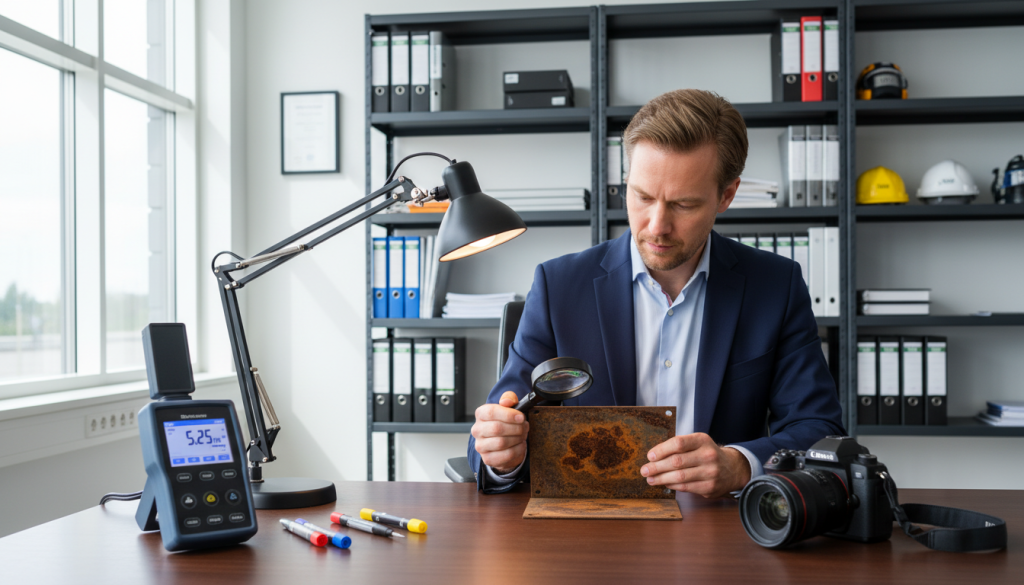
Effective corrosion detection is key for safety and saving money. We’ve put together this detailed guide to answer your top questions about metal decay in different fields.
In this guide, we’ll cover practical issues like testing methods and new tech. Whether you’re checking old structures or setting up new monitoring systems, you’ll get useful tips here.
Our main aim is to help you keep your assets safe and running smoothly. We’ll look at everything from simple ideas to complex asset integrity programs. This will give you the info you need to make smart choices about your facilities.
Key Takeaways
- Metal deterioration costs the United States over $276 billion each year, making early detection critical for economic protection
- Timely identification of material weakness prevents catastrophic failures and reduces emergency shutdown expenses
- Multiple testing methods and advanced technologies are available to suit different industry applications and infrastructure types
- Comprehensive condition assessment programs combine safety measures with significant cost-saving benefits
- Engineers and maintenance managers need practical, actionable guidance for implementing effective monitoring systems
- Asset integrity programs require understanding both basic concepts and sophisticated detection technologies
What is Corrosion Detection?
Corrosion detection is key to spotting metal damage before it’s too late. We use special methods and tools to find metal problems early. This helps keep equipment safe and extends the life of important assets.
It’s not just about finding rust on the surface. We look for hidden corrosion under coatings and insulation. By analyzing metal, we can see how bad the damage is and predict future problems.
The Science Behind Corrosion
Corrosion is an electrochemical process where metals try to get back to a stable state. They react with their surroundings, forming compounds like oxides. This happens because metals are in a high-energy state.
For corrosion to happen, you need a metal, moisture, and oxygen. When these come together, electrons move, causing damage.
Rust identification is about iron oxide on iron and steel. But other metals react differently:
- Aluminum forms a protective layer that slows corrosion
- Copper gets a green patina over time
- Zinc creates a white coating
- Stainless steel can still experience corrosion
Corrosion is a diffusion process at metal surfaces. Ions move through tiny paths, spreading damage. This is why coatings help prevent corrosion.
Importance of Early Detection
Finding corrosion early is very beneficial. It changes maintenance from reactive to proactive. Regular checks can save a lot of money.
Cost savings are a big advantage. Early detection means small fixes instead of big replacements. A small fix is cheaper than replacing a whole part. This saves money and reduces downtime.
Safety is another reason to detect corrosion early. Corroded equipment can cause accidents and harm people. We’ve seen big problems from undetected corrosion in important structures.
Early detection has many benefits:
- Planned maintenance scheduling: Allows for repairs during planned shutdowns
- Extended asset lifespan: Helps equipment last longer
- Regulatory compliance: Meets mandatory inspection rules
- Insurance benefits: Can lower insurance costs
- Performance optimization: Keeps equipment running well
Choosing proactive corrosion detection can make a big difference. It helps avoid high repair costs. We recommend regular inspections to catch problems early.
Common Methods of Corrosion Detection
Finding corrosion early needs a mix of old and new ways to check. We use many NDT techniques to check metal structures and find damage before it’s too late. Each method has its own strengths based on the place, material, and how easy it is to get to.
Visual Inspection Techniques
Looking at things with our eyes is the first step in finding corrosion. We look at surfaces to see signs of rust, pitting, color changes, or coating damage. This method is good for spotting surface damage but can’t find hidden corrosion under coatings or insulation.
Standards help us measure what we see during visual checks. ASTM D610 helps us rate rust on painted steel. ASTM D714 sets rules for checking blistering on coated things, making sure everyone measures the same way.
New tech has made looking at things better. We use borescopes to see inside without taking things apart. Drones with cameras let us safely check tall places, bridges, and offshore spots.
Artificial intelligence has changed how we look at pictures. AI image analysis systems spot early signs of damage that people might miss. They compare pictures now to pictures from before to see changes and predict future damage.
Ultrasonic Testing
Ultrasonic testing checks how thick materials are and finds corrosion inside. We send sound waves through metal and measure how long it takes for them to bounce back. Changes in thickness mean material loss from corrosion.
Research showed ultrasonic methods can find corrosion under coatings without removing the surface. The CMQ Centre de Métallurgie tested using sound and electricity together. This method found hidden damage while keeping the coating safe.
This method is very precise for measuring thickness. But, it needs the surface to be ready and use special agents for sound to travel well. It works best on smooth surfaces and might struggle with rough or corroded ones.
New technology, like phased array systems, gives detailed pictures of corrosion. These systems scan big areas fast and show three-dimensional maps of damage.
Electrochemical Methods
Electrochemical methods check the electrical properties of metals to see if they are corroding. We measure the difference in electrical potential between a metal and a reference electrode to find out corrosion activity levels and risks.
These systems give real-time data on corrosion rates. Unlike regular checks that show a snapshot, these sensors keep track of changes all the time. This is very useful for important places where sudden failures could be dangerous.
Electrochemical monitoring changes how we manage corrosion from just fixing things to planning ahead. It helps us schedule checks better and avoid unexpected failures.
We use these systems to guess how long equipment will last. By watching corrosion rates, we figure out how long something can keep working before it needs to be replaced or fixed. This helps plan maintenance better and use resources wisely.
Electrochemical methods work in many places. We put permanent sensors in pipelines, tanks, marine structures, and concrete to watch corrosion all the time. The data goes to a central system that warns when corrosion gets too high.
| Detection Method | Primary Application | Key Advantage | Main Limitation |
|---|---|---|---|
| Visual Inspection | Surface corrosion assessment | Low cost and immediate results | Cannot detect hidden damage |
| Ultrasonic Testing | Wall thickness measurement | Accurate internal corrosion detection | Requires surface preparation |
| Electrochemical Methods | Continuous corrosion monitoring | Real-time data and rate measurement | Higher installation complexity |
| Magnetic Flux Technology | Large area pipeline screening | Rapid inspection without coating removal | Limited to ferromagnetic materials |
Benefits of Corrosion Detection
Corrosion detection is key for companies looking to stay ahead. It’s not just about keeping things running smoothly. The Canadian Defence project shows how it can reduce corrosion’s impact and make maintenance better.
By detecting all types of corrosion, we can plan repairs better. This leads to smarter decisions about our assets. It’s all about making the most of what we have.
Financial Returns Through Early Intervention
Spotting corrosion early saves a lot of money. It means we can fix things before they break down completely. This avoids costly repairs and keeps operations running smoothly.
Maritime and oil and gas sectors have seen big benefits. They’ve extended the life of their assets and cut down on unexpected failures. This is thanks to regular checks for corrosion.
By fixing problems early, we save a lot. A small fix is much cheaper than replacing a whole part. This way, we use resources wisely and avoid waste.
Companies that invest in corrosion detection see quick returns. They save on repairs, plan maintenance better, and their assets last longer. It’s a smart financial move.
Protecting People and Assets
Structural integrity monitoring is vital for safety. Corrosion can cause big problems like pipeline breaks and building collapses. These can hurt people and the environment.
Early detection lets us fix problems before they become serious. This stops accidents and keeps people safe. It’s a big change in how we manage risks.
Companies that check for corrosion regularly have better safety records. They face fewer fines, lower insurance costs, and less risk. It also helps their reputation.
The human cost of corrosion failures is huge. Every accident we prevent saves lives. By focusing on corrosion detection, we show we care about our workers. This makes our company a better place to work.
Industries That Rely on Corrosion Detection
Many industries, like energy production and public infrastructure, use corrosion detection. They face different challenges with material degradation. Each has its own way to monitor and prevent corrosion.
Corrosion costs billions of dollars in assets every year. Early detection helps avoid shutdowns, extends equipment life, and keeps things safe. Seeing how industries use these technologies is key to learning best practices and new trends.
Oil and Gas
The oil and gas sector uses a lot of corrosion detection technology. Pipeline inspection systems are crucial for these efforts. Thousands of miles of pipelines carry oil, gas, and refined products under high pressure.
Many corrosion detection technologies started with pipeline inspection. They’ve been adapted for other industries too. The Royal Canadian Navy says most technologies were first used in the oil and gas industry, mainly for pipelines.
Offshore platforms face harsh environments that speed up corrosion. Saltwater, hydrogen sulfide, and extreme weather are big threats. Refineries and storage facilities need constant monitoring to avoid leaks and environmental harm.
These assets are critical and need regular checks and real-time monitoring. Failures can cause big environmental damage and financial losses. Early detection protects communities and the environment.
Manufacturing
Production facilities across many sectors rely on corrosion detection. Power plants, chemical processors, and general manufacturing face material degradation. Process vessels, heat exchangers, and boilers are at risk of corrosion.
Equipment integrity is key for product quality and efficiency. Structural supports and containment systems must stay strong. Facilities use scheduled inspections and continuous monitoring based on equipment importance.
Chemical manufacturing faces unique challenges due to aggressive substances. Mining deals with abrasive materials and moisture. Cement production facilities face high temperatures and chemical reactions that stress equipment.
The following table shows how different manufacturing sectors use corrosion detection:
| Manufacturing Sector | Primary Equipment Monitored | Common Corrosion Threats | Detection Frequency |
|---|---|---|---|
| Power Generation | Boilers, turbines, cooling systems | High temperature oxidation, water chemistry | Quarterly to annual |
| Chemical Processing | Reactors, storage tanks, piping | Acid exposure, stress corrosion cracking | Monthly to quarterly |
| Mining Operations | Processing equipment, conveyors, structural steel | Moisture, abrasive materials, sulfur compounds | Semi-annual |
| Cement Production | Kilns, preheaters, conveyance systems | High temperature, alkali exposure | Annual |
Infrastructure Maintenance
Corrosion detection is vital for public infrastructure. Bridges, buildings, and transportation systems need regular checks for safety. Municipalities focus maintenance on high-risk areas.
Water and sewer systems face unique corrosion challenges. Underground pipes deteriorate slowly, often without signs. Early detection prevents water quality issues and major failures. Transportation departments check highway structures, tunnels, and rail systems.
The maritime industry heavily relies on corrosion detection for ships and ports. The Royal Canadian Navy tested detection technologies on vessels. This shows how military and commercial shipping tackle corrosion in harsh marine environments.
Port infrastructure, like piers and docks, is exposed to saltwater. Specialized inspection methods are needed. Corrosion detection helps extend the life of these assets and prevent collapses that disrupt commerce.
Building maintenance managers include corrosion assessments in their preventive plans. They check reinforced concrete, metal roofing, and mechanical equipment regularly. Investing in detection technology saves money and extends asset life.
Tools and Technologies for Corrosion Detection
Today, we use advanced sensors and software to find corrosion early. This mix of technology helps us manage assets better. It’s a big change from what was available just 10 years ago.
Tests in Canada showed new ways to find corrosion. Nine companies showed off their tech. It’s a big step forward in NDT techniques and checking for corrosion.
Sensor Technologies Revolutionizing Detection
Advanced sensors are key in finding corrosion. They see and hear things we can’t. These tools use different ways to find corrosion, depending on the situation.
Electromagnetic sensors are great for checking things covered up. Companies like Allied Scientific Pro and Avestec Technologies use them. They find problems without needing to see the surface.
Magnetic flux leakage is another big step. Eddyfi Technologies uses it to find problems in metal. InpecTerra Inc also uses it, mainly for checking pipelines.
Ultrasonic sensors measure thickness very well. They’re key for finding corrosion inside. CMQ Centre de Métallurgie uses them with other methods for a full check.
New tech is making things even better. MLVX Technologies Inc uses hyperspectral imaging to find corrosion. Visiooimage Inc uses infrared thermography sensors to find problems under surfaces.
Crawford Technologies uses a different method. It checks structures by tapping them and listening to the sound. This is good for finding problems in composite materials and coatings.
Electrochemical sensors watch corrosion in real time. They measure electrical signals to see how fast corrosion is happening. This helps catch problems early.
Software Platforms Driving Intelligence
Software is just as important as sensors in finding corrosion. It makes sense of all the data from sensors. This helps make better decisions about maintenance.
AI-enabled corrosion detection systems are leading the way. Qii.AI uses machine learning to look at pictures and thermal images from drones. It can check a lot of pictures fast, saving a lot of time.
Using many NDT techniques together helps get a full picture of how things are. These systems use data from different sensors to create detailed reports. We can see the whole picture, not just bits and pieces.
Software can predict when things might go wrong. It looks at past data and other factors to forecast corrosion. This helps plan maintenance better, keeping things running longer and saving time.
Robots with sensors can check things on their own. They move around, collecting data and analyzing it. This makes sure the data is consistent and accurate.
Tools make it easy to understand complex data. Dashboards show how bad corrosion is, making it easy to decide what to do next. This helps teams focus on the most important repairs.
Cloud-based systems let people check on things from anywhere. It’s easier to keep an eye on many places at once. This means problems can be fixed quickly, keeping everything running smoothly.
How Often Should Corrosion Detection Be Conducted?
The frequency of corrosion detection varies a lot. It depends on the asset type, environment, and how it’s used. Finding the right inspection schedule is key. It balances safety, efficiency, and budget.
There’s no one-size-fits-all answer to how often to inspect. Corrosion moves at different speeds in different places. What works for one place won’t work for another. We make decisions based on data and the specific situation.
Environmental and Operational Variables
Several factors decide how often to check for corrosion. Environmental exposure is a big one. It affects how fast corrosion happens.
Things near saltwater need more checks than dry places. Salt and humidity speed up corrosion. Temperature changes also stress materials and make them wear down faster.
Being near chemicals makes things corrode faster. We watch equipment that handles acids or bases more closely. Pollution adds to the corrosive mix, needing more checks.
Asset criticality also matters. Important equipment needs more checks than less critical parts. A pipeline with dangerous stuff is different from a decorative part.
Older equipment and those with past corrosion issues need more checks. We watch them until we see they’re safe.
How things are used also matters. High pressure and heat make things wear down faster. This is true for things that work hard or get very hot.
Lab tests can’t predict real-world corrosion. Outdoor conditions are too different. This means we can’t have a single rule for everyone.
Rules from government and industry groups set minimum check times. But, it’s often better to check more often than the rules say. This keeps things safer.
Strategic Scheduling Approaches
We use a risk-based approach to decide when to check. This means we focus on the most important things first. It’s a smart way to use our resources.
First, we do a full check to see where we start. Then, we check again based on how fast corrosion is moving. This helps us keep track of changes.
The table below gives some general ideas for how often to check. It’s based on common situations:
| Asset Environment | Risk Level | Typical Inspection Interval | Monitoring Approach |
|---|---|---|---|
| Marine/Offshore | High | 3-6 months | Continuous sensors plus periodic visual |
| Chemical Processing | High to Critical | 6-12 months | Quarterly ultrasonic testing |
| Indoor Manufacturing | Medium | 12-24 months | Annual comprehensive inspection |
| Controlled Environment | Low | 24-36 months | Biennial visual assessment |
Using sensors to watch things in real-time helps a lot. It catches problems before they get worse. This way, we can act fast instead of waiting for the next check.
We adjust how often we check based on what we find. If we see corrosion, we check more often. If things stay the same, we might check less.
Keeping good records is important. It helps us make better plans for the future. It also helps us spot trends we might miss.
Working with asset management systems helps us stay on track. We plan checks with maintenance to save time and avoid downtime.
Investing in regular checks pays off in the long run. It helps things last longer and avoids big problems. While it costs more upfront, it saves money and time in the long run.
Case Studies in Corrosion Detection
We can learn a lot from industries that have successfully implemented corrosion detection programs. Real-world examples show how different sectors tackle unique challenges. They also highlight the importance of using the latest inspection technologies.
Looking at aerospace and maritime industries, we see effective detection methods. These methods improve safety and operations. They also show the need to adapt technologies to specific environments and needs.
Advanced Detection Programs in the Aerospace Sector
The aerospace industry leads in corrosion detection due to safety needs. Aircraft structures face extreme conditions like high altitudes and humidity. Salt spray from coastal operations adds to the corrosive risk.
Top aerospace companies use a mix of inspection methods. They combine visual checks with advanced NDT like eddy current testing. This ensures no corrosion is missed.
Early corrosion detection in aircraft has been a game-changer. It prevents major failures and extends aircraft life. Airlines save on maintenance costs while keeping safety high.
The aerospace sector’s strict approach has influenced other fields. It has set standards for inspection protocols and quality management. It also emphasizes the need for trained personnel and technology validation.
- Standardized inspection protocols for consistent quality
- Comprehensive documentation requirements for traceability
- Quality management systems that integrate detection into maintenance
- Training certifications for inspection staff
- Technology validation processes before new methods are used
Effective structural integrity monitoring needs a systematic approach. The aerospace model shows that technology must be backed by procedures and trained staff.
Maritime Industry Innovations and Challenges
The Canadian Defence IDEaS Corrosion Detection in Ships (CDIS) Sandbox project offers insights into maritime corrosion detection challenges. Held in Spring 2022 in Halifax, Nova Scotia, it brought together innovators and Royal Canadian Navy end-users.
The project involved 9 companies and 16 specialists from Defence Research and Development Canada (DRDC) and Department of National Defence/Canadian Armed Forces (DND/CAF). They tested detection technologies on test panels and real naval vessels.
Demonstrations on HMCS GOOSE BAY and HMCS GLACE BAY showed unique marine challenges. Technologies meant for oil and gas faced hurdles in naval use. Corrosion often hides under paint and insulation.
The project tested various scenarios that naval inspectors face:
- Baseline calibrations on test panels for accuracy
- Unrestricted deck area inspections
- Restricted deck areas with limited access
- Dry hull inspections during maintenance
- Wet hull inspections while vessels are in water
- Ship structures with complex geometries
- Equipment mount areas prone to crevice corrosion
- Penetration points where different materials meet
This testing showed both strengths and weaknesses of current corrosion detection technologies. Marine environments require specialized solutions. The project highlighted the need for equipment that works in confined, wet spaces and around complex structures.
The CDIS Sandbox showed the value of collaboration between end-users and technology providers. Feedback from naval personnel helped developers create practical solutions. This partnership ensures solutions meet real-world needs.
The maritime case study stresses the importance of dialogue between technology developers and users. Understanding specific environments leads to better solutions and strategies across industries.
Challenges in Corrosion Detection
Companies setting up corrosion detection programs soon find that real-world challenges are bigger than expected. These challenges come from both unpredictable environmental conditions and the limits of technology. Knowing these challenges helps us set more realistic goals and find ways to deal with real-world problems.
The gap between how things work in labs and in the field is a big problem. We need to understand these limits and find ways to protect important assets despite them.
How Environmental Conditions Complicate Detection
Outdoor conditions can change a lot, affecting how fast corrosion happens and how well we can find it. We can’t control the weather like we can in labs. Marine environments are very tough because of salt, humidity, and temperature changes that speed up corrosion and make it hard to inspect.
Being near the water adds extra challenges. Salt, wet and dry cycles, and changing weather make it hard to test like we do in labs. These factors mix in ways labs can’t match.
Industrial settings have their own set of challenges. Chemicals, high temperatures, and corrosive air make corrosion happen fast and unpredictably. We need special knowledge and methods to deal with these issues.
Where you are affects how things corrode. Being near factories, having different seasons, and pollution levels all play a part. Smog, acid rain, and dust in the air cause corrosion that changes a lot from place to place.
Getting to where corrosion happens can be hard. It often occurs in places that are hard to reach:
- Small, hard-to-get-into spaces
- High places that need special gear
- Underwater parts that need diving
- Areas under insulation or protective coatings
- Inside closed systems
Labs use controlled chambers, pure chemicals, and set temperatures and humidity. But real-world items face changing conditions that make it hard to predict how long they’ll last.
Where Current Technologies Fall Short
Technologies that work well in labs can struggle in the real world. Canadian Defence sandbox testing showed this. Methods that worked for things like pipeline checks didn’t work as well on complex structures like ships in the sea.
Testing in the CDIS Sandbox showed the challenges of marine environments. Real ship conditions showed that detection technologies that worked in labs didn’t work as well in the field. This shows how important it is to test in real-world settings before using them widely.
Many detection methods need to remove coatings or prepare surfaces before they can work. This is time-consuming and expensive. We have to balance the need to check things thoroughly with the cost of preparation.
Technology can’t cover everything. Some methods are great for finding certain types of corrosion but miss others. For example, some methods are good for general corrosion but not for pitting or stress corrosion. We need different methods to get a full picture.
Telling if corrosion is still happening or if it’s stopped is hard. Some inspections and sensors can’t tell the difference. This makes it hard to decide what needs attention right away.
It’s hard to say how long something will last based on detection data alone. We can see that corrosion is happening and how bad it is, but predicting lifespan is tricky. It takes engineering know-how and considering more than just measurements.
Inspection costs and time limits mean we can’t check everything equally. We have to decide which parts to inspect closely and which to check less often. This approach accepts some uncertainty but makes programs workable.
Understanding data from advanced detection technologies is hard. These technologies create complex data that needs special skills to interpret. Getting it wrong can lead to spending too much on maintenance or missing important problems.
Future Trends in Corrosion Detection
We are on the edge of a big change in how we monitor corrosion. Artificial intelligence and smart sensors are coming together. This will help protect assets better and save money on maintenance.
New technologies are combining in ways we couldn’t imagine before. Advanced sensing, autonomous platforms, and smart analysis are making detection much better.
Cutting-Edge Detection Methods
Hyperspectral imaging is a big step forward in rust identification. These sensors look at many wavelengths and find corrosion that’s invisible to the naked eye. Companies like MLVX Technologies show how this tech can catch problems early.
These systems can see corrosion under coatings and through layers. This means less guesswork for inspectors.
Electromagnetic and magnetic flux sensors are getting better. They can find small defects in thick coatings. These sensors give exact measurements for planning maintenance.
Quantum sensing is on the horizon. It could detect tiny changes in materials. This could lead to predictive corrosion monitoring systems that act before damage starts.
Drone-mounted sensors are changing how we inspect big structures. Qii.AI uses drones to collect data quickly and safely. This cuts down on time and risk.
Robots are now doing inspections on their own. They move around structures and gather data. Companies like Avestec Technologies are making these robots. They save money and make inspections more consistent.
Handheld devices are bringing lab-quality analysis to the field. These devices combine different detection methods in one. They give quick results and make advanced inspection easier for everyone.
Intelligent Networks and Predictive Analytics
Artificial intelligence and IoT are making corrosion monitoring systems smarter. They’re moving from just checking things to always watching. This is a big change since preventive maintenance started.
AI can look at thousands of images from drones or robots. It spots corrosion as well as humans and saves time. It catches things that humans might miss, even when they’re tired.
Machine learning predicts how corrosion will spread. It tells us when to fix things based on real data. The more it learns, the better it gets.
IoT sensors send real-time data from all over. Cloud platforms put it all together. This lets teams see everything from anywhere and fix problems fast.
AI looks at all kinds of data to understand asset health. It gives advice on when to do maintenance. This makes maintenance more effective and saves money.
These smart corrosion monitoring systems are changing maintenance. Instead of doing things by schedule, we do them when needed. This makes things work better and costs less.
The mix of new detection tech and AI is amazing. We’re seeing huge progress. And it’s only going to get better as these technologies grow.
How to Choose a Corrosion Detection Service
Finding a reliable corrosion detection partner is more than just looking at prices. The right service is an important part of your asset care plan. They give you accurate checks that protect your investments and keep things running safely.
When picking corrosion detection services, you face many choices. Different methods and providers have their own strengths and weaknesses. Choosing poorly can lead to missed dangers, extra costs, or incomplete data that doesn’t help with maintenance.
We help you find the key differences between top-notch service providers and those that just meet the basics. This way, you can build partnerships that add real value to your asset management strategy.
Key Considerations
What you need for your application should guide your choice of technology. Pipeline inspection is different from checking structural steel or vessel hulls. It’s best to match the detection method to your asset’s unique needs.
How easy it is to get to your asset affects which NDT techniques work best. Special gear is needed for tight spots, while underwater or high places require specific tools. This ensures safe and effective checks.
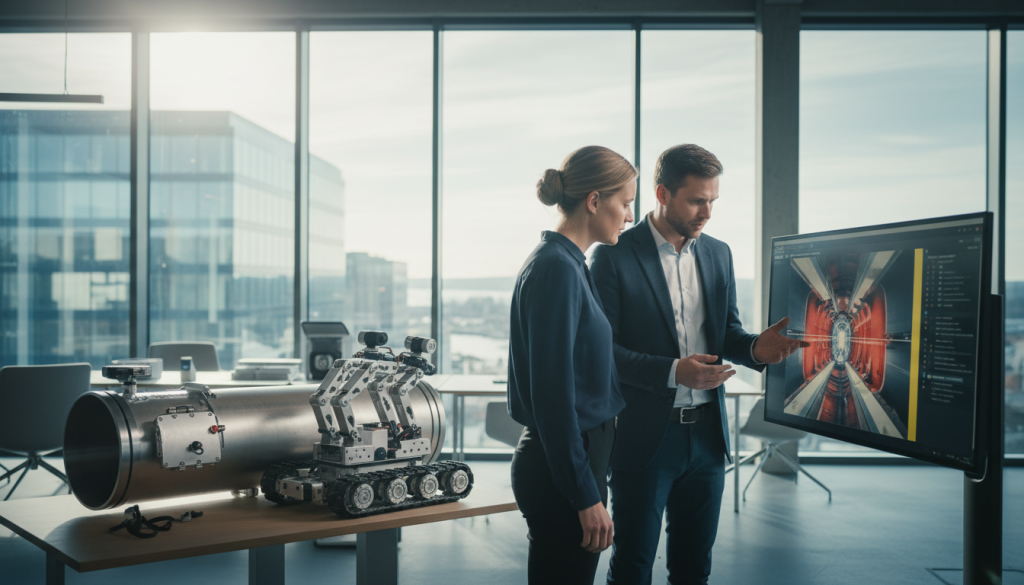
There’s a trade-off between how fast you can inspect and how detailed the data is. Quick checks cover a lot but might need more detailed NDT techniques for specific concerns. A layered approach often works best.
The level of detail needed in detection depends on how critical the asset is. Critical parts need more precision than less important ones. We consider these needs based on potential failure risks and legal rules for your field.
Costs affect both the technology you choose and how often you inspect. But, we stress that cost must be balanced against the risks of not finding corrosion. A thorough failure analysis shows that good inspections are cheaper than dealing with equipment failures or safety issues.
Non-destructive methods save coatings and avoid damage. This cuts down on costs by avoiding the need for repairs after destructive tests. We suggest using non-destructive methods whenever they can give the needed data quality.
It’s important to know what kind of inspection schedule you need. Do you want one-time checks, regular inspections, or ongoing monitoring? Your asset management plan should decide this before looking at providers.
Service providers offer different kinds of data. Some give raw data, while others provide analyzed reports with maintenance tips. Make sure you know what kind of data you need before choosing a provider.
Evaluating Service Providers
Experience in your industry is crucial when picking corrosion detection partners. Providers with a track record in your field know the specific challenges you face. They understand the unique failure modes, rules, and operational issues that generalists might miss.
Technical abilities are key. Look for providers with a wide range of NDT techniques and up-to-date equipment. Providers who invest in new tech show they’re committed to giving you the best results.
Qualified staff are the backbone of reliable corrosion detection services. Check if inspectors are certified, if they keep up with training, and their experience. We verify that providers have certified staff and share their qualifications openly.
What others say about a provider can tell you a lot. Look at references, case studies, and their reputation in the industry. We suggest talking to several references to see if the provider is consistent and reliable.
Providers that offer a full range of services add more value than those that just inspect. Companies that handle everything from initial checks to maintenance recommendations make managing vendors easier. This integrated approach ensures a smooth corrosion management process.
Good communication and quick service are signs of a top provider. We value partners who work with you to create inspection plans, not just follow them. This collaborative approach often finds ways to improve results and efficiency.
When evaluating proposals, make sure you understand what the costs cover. Pipeline inspection prices should include the area covered, methods used, what reports you’ll get, and when. We look for clear upfront costs to avoid surprises later.
| Evaluation Criteria | What to Assess | Red Flags | Ideal Indicators |
|---|---|---|---|
| Industry Experience | Years in your sector, similar project portfolio, regulatory knowledge | Vague references, no sector-specific examples, unfamiliarity with standards | Documented case studies, industry certifications, client references in your sector |
| Technical Capabilities | Range of NDT techniques, equipment age, technology investment | Limited methods, outdated equipment, no emerging technology adoption | Multiple complementary techniques, recent equipment upgrades, innovation track record |
| Personnel Qualifications | Inspector certifications, training programs, experience levels | No certifications mentioned, high turnover, minimal training documentation | ASNT/PCN certifications, ongoing training programs, experienced senior staff |
| Service Comprehensiveness | Full-cycle capabilities, data analysis depth, reporting quality | Inspection-only services, raw data delivery, generic reports | Integrated services, detailed analysis, actionable maintenance recommendations |
The choice of a corrosion detection service is key to your corrosion management success. We encourage you to spend enough time on this decision. The right partner will give you accurate data, useful insights, and confidence in your asset integrity decisions for years to come.
Conclusion: The Importance of Corrosion Detection
We’ve looked into the key parts of corrosion detection in this guide. We’ve covered the science of decay and the use of advanced monitoring tools. Each part is crucial for protecting assets and keeping operations safe.
Investing in detailed detection programs brings big benefits. It means your equipment lasts longer and fails less often.
Protecting Assets Through Strategic Planning
Corrosion is a big problem for metal structures and equipment. But, ignoring it can lead to even bigger issues. Companies that focus on preventive maintenance can control when and how they deal with corrosion.
Top companies in oil and gas, aerospace, and maritime show the value of monitoring structural integrity. These efforts cut down on costs and improve safety. The tools we talked about help find corrosion quickly, reducing downtime.
Taking Action on Inspection Programs
It’s time to check your corrosion management plans. If you don’t have a system, start with a baseline assessment. This shows where you stand and where you need to focus.
Work with experts to create a risk-based inspection plan. Regular checks with the right tools can stop failures and keep assets running well. The key to reliable operations is early detection and regular monitoring, tailored to your needs.
FAQ
What exactly is corrosion detection and why is it important?
Corrosion detection is finding metal damage before it’s too late. We use special tests to find hidden damage. This helps us fix problems before they get worse.
Early detection saves money and keeps people safe. It also helps extend the life of important assets.
How does corrosion differ from rust?
Rust is a type of corrosion that affects iron and steel. Corrosion is a broader process that affects all metals. It happens when metals react with oxygen and moisture.
Each metal forms different compounds when it corrodes. Knowing this helps us choose the right detection methods.
What are the most common methods used for corrosion detection?
We use several methods to find corrosion. Visual checks are the simplest way. But we also use more advanced techniques like ultrasonic testing and electrochemical methods.
Other methods include magnetic flux leakage and infrared thermography. These help us find hidden damage without damaging the surface.
Can corrosion be detected before it becomes visible to the naked eye?
Yes, we can find corrosion before it’s visible. Ultrasonic testing can find damage under coatings. Electrochemical sensors can spot corrosion early.
Hyperspectral imaging and infrared thermography also help. These technologies let us catch problems before they cause damage.
What cost savings can organizations expect from implementing corrosion detection programs?
Detection programs save a lot of money. They help avoid expensive repairs and replacements. This saves time and money in the long run.
They also help prevent accidents. This keeps people safe and reduces legal risks.
How does corrosion detection improve safety?
Detection programs help prevent accidents. They find weak spots before they become serious. This keeps people and assets safe.
Industries with good detection programs are safer. They also meet regulations better. This protects their reputation and reduces legal risks.
Which industries depend most heavily on corrosion detection?
Many industries rely on corrosion detection. The oil and gas sector uses it a lot for pipeline checks. Manufacturing also uses it to keep equipment safe.
Infrastructure and maritime industries also depend on it. Aerospace has been at the forefront of developing new detection methods.
What advanced sensor technologies are available for corrosion detection today?
Today, we have many advanced sensors for detecting corrosion. Electromagnetic sensors can find damage under coatings. Magnetic flux leakage is great for pipeline checks.
Ultrasonic sensors measure wall thickness. Hyperspectral imaging finds corrosion invisible to the naked eye. Infrared thermography detects hidden moisture and damage.
How frequently should corrosion inspections be conducted?
Inspection frequency depends on many factors. Environmental conditions and asset criticality are key. Older assets or those in harsh environments need more checks.
It’s best to use a risk-based approach. This means checking more often where failure would be more serious. Adjust frequencies based on what you find.
What did the Canadian Defence maritime corrosion detection project reveal?
The Canadian Defence project tested nine detection technologies on naval vessels. It showed that pipeline technologies face challenges in marine environments. Finding corrosion under coatings is hard.
The project tested different scenarios. It found that detecting corrosion under paint and insulation is complex. This informs how we improve detection methods.
What are the main limitations of current corrosion detection technologies?
Current technologies have limitations. Some miss certain types of corrosion. Removing coatings for inspection is expensive and destructive.
Lab tests can’t perfectly predict real-world performance. Real-world conditions are too complex. This means we need to inspect assets regularly.
How is artificial intelligence changing corrosion detection?
AI is transforming corrosion detection. Machine learning can analyze thousands of images quickly. It can identify corrosion accurately and efficiently.
AI predicts corrosion rates and suggests when to intervene. It integrates data from various sources. This helps manage asset health better.
What emerging technologies will shape the future of corrosion detection?
New technologies will improve detection. Hyperspectral imaging can spot rust before it’s visible. Advances in sensors will detect smaller defects.
Drone-mounted sensors and robotic inspections will make inspections faster and cheaper. IoT sensors provide real-time data. These technologies will enhance our ability to detect corrosion.
Can corrosion detection work through paint and coatings?
Yes, many NDT techniques can find corrosion under coatings. Ultrasonic testing and electromagnetic sensors work well. Infrared thermography detects hidden damage.
Hyperspectral imaging can identify chemical changes. These methods allow us to assess condition without damaging the surface.
What should organizations consider when choosing corrosion detection services?
Choosing the right service requires careful consideration. Match the technology to your needs. Consider accessibility and the environment.
Balance speed and data quality. Think about asset criticality and safety. Compare costs and benefits. Choose a provider with experience and a comprehensive approach.
How does environmental exposure affect corrosion rates and detection needs?
Environmental conditions greatly affect corrosion. Marine and industrial environments are harsh. They speed up corrosion and make inspections harder.
Real-world conditions are complex. This makes lab tests less reliable. Adjust inspection frequencies based on actual conditions.
What is the difference between corrosion detection and corrosion monitoring?
Detection and monitoring are different. Detection involves regular inspections. Monitoring uses sensors to track corrosion continuously.
Combining both is often best. Continuous monitoring for critical assets and regular checks for others. This balances coverage and cost.
How can organizations get started with corrosion detection if they currently have no program?
Start with baseline assessments. Inventory assets at risk and prioritize them. Engage experts for initial inspections.
Document findings and develop a plan. Begin with critical assets or those in harsh environments. Training staff is also important. Remember, starting a program requires an initial investment but offers long-term benefits.