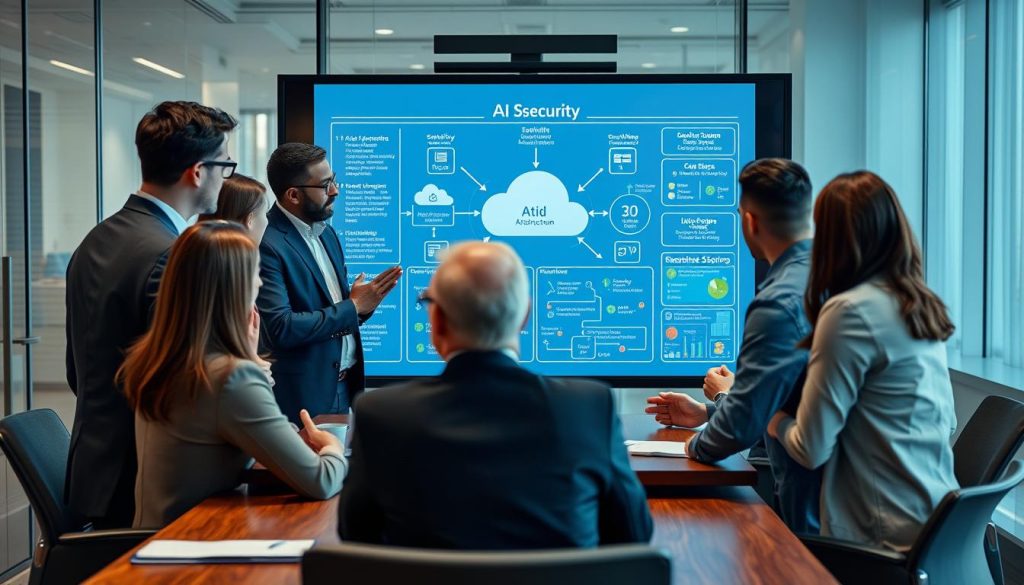
The convergence of artificial intelligence and cloud security is transforming how organizations detect threats, respond to incidents, and protect sensitive data. As cloud environments grow increasingly complex and dynamic, traditional security approaches struggle to keep pace with sophisticated attacks and expanding attack surfaces. AI in cloud security offers a powerful solution—enabling automated detection, intelligent response, and predictive defense at scale. This article explores how security architects, cloud engineers, and CISOs can effectively implement AI-driven security strategies to strengthen their cloud protection posture.
Understanding AI in Cloud Security: Definitions and Core Technologies
“AI in cloud security” refers to the application of artificial intelligence, machine learning, and related technologies to protect cloud infrastructure, platforms, and applications. This approach leverages computational intelligence to analyze vast amounts of data, identify patterns, detect anomalies, and automate responses—capabilities that are increasingly essential as cloud environments grow more complex and threats become more sophisticated.
Core Technologies Powering AI-Driven Cloud Security
Machine Learning
Machine learning models analyze cloud telemetry to establish baselines, detect anomalies, and classify potential threats. These models can process vast amounts of data from logs, network flows, and user activities to identify patterns that would be impossible for human analysts to detect manually.
Deep Learning
Neural networks process complex signals such as sequence modeling of logs or network flows, enabling more sophisticated pattern recognition. Deep learning excels at identifying subtle indicators of compromise across multi-dimensional data sets.
Behavioral Analytics
By establishing baselines of normal user and workload behavior, AI can detect deviations that may indicate compromise. This approach is particularly effective for identifying insider threats and credential misuse that traditional signature-based systems often miss.
Reinforcement Learning
These systems optimize response actions over time, learning from outcomes to improve future decisions. Reinforcement learning is especially valuable for playbook prioritization and automated incident response.
AI-enhanced threat detection augments rules—it does not replace human judgment. Explainability and validation remain essential components of effective security operations.
AI-Driven Security Solutions and Capabilities
The integration of AI into cloud security has enabled a new generation of solutions that can detect, analyze, and respond to threats with unprecedented speed and accuracy. These capabilities span across identity management, data protection, runtime security, and compliance—addressing the full spectrum of cloud security challenges.
Key Use Cases for AI in Cloud Security
Adaptive IAM
AI models assess authentication context (device, location, behavior) to enable adaptive access controls and step-up MFA when suspicious patterns are detected. This dynamic approach significantly reduces the risk of credential compromise.
Data Protection
AI-based content inspection and classification automatically identify sensitive data such as PII and intellectual property, enabling more effective DLP and encryption policies without manual tagging.
Runtime Security
Anomaly detection on container metrics, syscall analysis, and model-based threat scoring protect cloud workloads from attacks in real-time, identifying malicious behavior that signature-based approaches would miss.
Cloud Security Posture Management
AI enhances CSPM with automated drift detection and IaC policy checks, using risk prioritization to focus remediation efforts on the most critical misconfigurations.
Extended Detection and Response
XDR platforms use AI to correlate endpoint, identity, and cloud telemetry, producing prioritized incidents that reduce alert fatigue and accelerate response times.
Fraud and Abuse Prevention
ML models detect atypical billing patterns, account takeover attempts, and API abuse, protecting cloud resources from financial and operational exploitation.
Accelerate Your AI Security Journey
Download our comprehensive implementation guide to learn how leading organizations are deploying AI-driven cloud security solutions to reduce risk and improve operational efficiency.
Download Implementation Guide
Cloud Security Automation with AI: Orchestration and Response
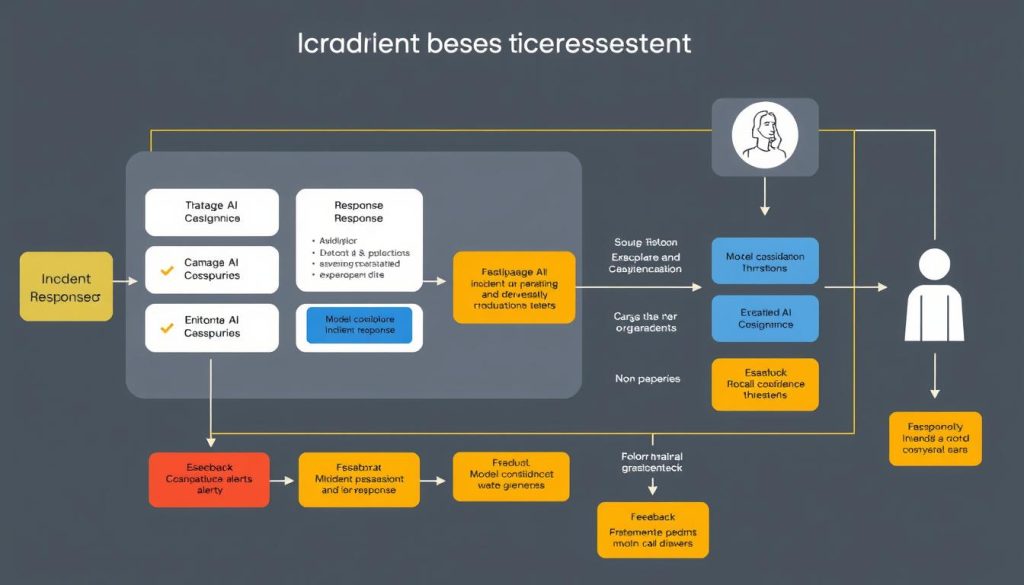
AI accelerates automation across the security lifecycle, from detection to remediation. By combining machine intelligence with orchestration capabilities, organizations can significantly reduce mean time to detect (MTTD) and mean time to respond (MTTR) while maintaining appropriate human oversight.
The Automation Lifecycle
| Stage |
AI Contribution |
Business Impact |
| Prioritization |
ML ranks alerts by risk and potential impact, reducing analyst triage time |
40-60% reduction in alert investigation time |
| Orchestration |
SOAR platforms trigger containment actions based on model-enriched alerts |
Reduced MTTR from hours to minutes |
| Policy Enforcement |
Systems integrate with IaC pipelines to auto-remediate misconfigurations |
70-90% reduction in high-risk exposures |
| Continuous Improvement |
Models learn from outcomes to improve future detection and response |
Ongoing reduction in false positives and missed detections |
Example: AI-Enhanced SOC Playbook
Alert: Suspicious API access pattern detected (model_score: 0.92)
Enrichment: Confirm asset owner and recent IAM actions
Decision:
– If model_score >= 0.9 and asset risk high -> quarantine workload, revoke session tokens, create incident
– If 0.7 human analyst review within 30 min
– Else -> monitor and add to watchlist
Building a Modern Cloud Security Strategy with AI
Implementing AI in cloud security requires thoughtful planning, governance, and integration with existing processes. Organizations must balance automation benefits with appropriate controls, explainability, and human oversight to ensure responsible and effective deployment.
Designing for Automation: Integration and Workflow
Start Small, Scale Strategically
Begin with focused automation pilots that address specific pain points, such as misconfiguration remediation or credential abuse detection. Measure impact, refine approaches, and expand based on proven value.
Embed AI Outputs into Existing Workflows
Integrate AI insights into familiar tools and processes—ticketing systems, chatops, SOC dashboards—rather than creating separate operational silos that require context switching.
Ensure Telemetry Completeness
Effective AI models require comprehensive data sources, including cloud provider logs, VPC flow logs, identity events, and application telemetry. Identify and address gaps in visibility before scaling AI initiatives.
Build Feedback Loops
Implement mechanisms to capture analyst decisions and outcomes, feeding this data back into models to improve accuracy and reduce false positives over time.
Governance and Compliance Considerations
Governance Best Practices
- Implement model versioning and change management
- Document decision logic and feature importance
- Establish human review thresholds for high-impact actions
- Create rollback mechanisms for model updates
- Maintain audit trails of model decisions
Common Governance Pitfalls
- Insufficient explainability for security decisions
- Lack of oversight for automated remediation
- Inadequate testing before model deployment
- Missing documentation for compliance audits
- Failure to map AI controls to regulatory frameworks
“Trust but verify”—governance must balance automation with human oversight, especially where remediation could impact production systems.
Cloud Security Best Practices with AI
Successful implementation of AI in cloud security requires operational discipline, secure model deployment, and integration with existing security processes. These best practices help organizations maximize the value of AI while managing associated risks.
Operational Excellence
- Implement human-in-the-loop workflows for uncertain or high-impact actions, ensuring appropriate oversight while still benefiting from automation.
- Tune alerts with feedback loops by feeding analyst decisions back to models, reducing false positives and improving detection accuracy over time.
- Perform continuous validation by testing models against labeled test sets and synthetic attack traffic to ensure ongoing effectiveness.
- Maintain comprehensive asset inventory and identity mapping to provide essential context for AI-driven detection and response.
- Implement graduated automation that starts with alerting, progresses to recommendation, and culminates in automated response for well-understood scenarios.
Secure Model Deployment
Data Hygiene
Remove sensitive data from training sets where possible and apply data minimization principles. Implement encryption and access controls for model training data to prevent exposure.
Model Risk Management
Define acceptance criteria, test for drift, and maintain rollback plans for model updates. Establish version control and change management processes for AI components.
Adversarial Resilience
Conduct red-team exercises focused on model evasion and harden models through adversarial training. Test models against emerging attack techniques to identify weaknesses.
Integration with Incident Response
Updating SOC Playbooks for AI Integration
- Include model confidence thresholds in decision criteria
- Add enrichment steps that leverage AI-generated context
- Automate low-risk containment actions with appropriate guardrails
- Require analyst approval for high-risk remediation steps
- Incorporate feedback mechanisms to improve model performance
Measuring Impact and ROI of AI in Cloud Security
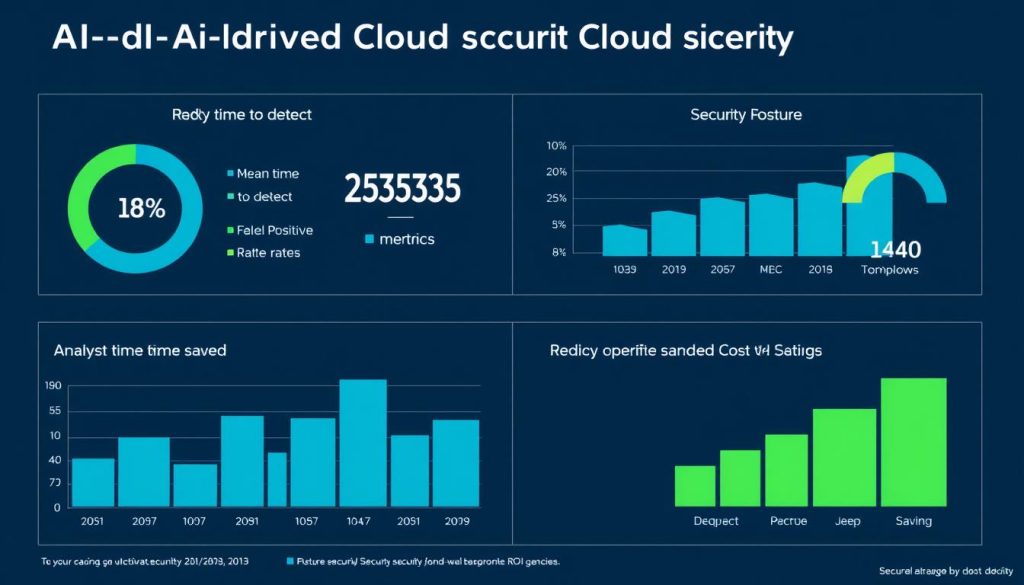
Demonstrating the value of AI investments in cloud security requires clear metrics, thoughtful analysis, and effective communication with stakeholders. By quantifying both security improvements and business benefits, security leaders can build support for ongoing AI initiatives.
Key Metrics and KPIs
| Metric Category |
Specific Measurements |
Target Improvements |
| Detection Efficiency |
Mean Time to Detect (MTTD)
False Positive Rate
Coverage of MITRE ATT&CK framework |
50-70% reduction in MTTD
40-60% reduction in false positives
20-30% increase in coverage |
| Response Effectiveness |
Mean Time to Respond (MTTR)
Automated remediation rate
Incident containment time |
60-80% reduction in MTTR
30-50% increase in automation
40-60% faster containment |
| Operational Efficiency |
Analyst time saved
Alert investigation time
Manual remediation efforts |
20-40 hours/week per analyst
50-70% reduction in investigation time
60-80% reduction in manual remediation |
| Business Impact |
Breach likelihood reduction
Compliance posture improvement
Mean downtime avoided |
30-50% reduced breach likelihood
40-60% faster compliance validation
4-8 hours of downtime avoided per incident |
Cost-Benefit Analysis
Cost Drivers Reduced by AI
- Manual alert triage and investigation
- Delayed detection and extended exposure
- Incident response personnel requirements
- Compliance validation and reporting
- Breach recovery and remediation
Investment Areas
- Model development and integration
- Telemetry storage and processing
- Staff training and skill development
- Governance and compliance frameworks
- Ongoing model maintenance
According to IBM’s 2023 Cost of a Data Breach Report, organizations with extensive AI and automation in security saved an average of $1.76 million per breach compared to those without such capabilities.
Source: IBM Security
Communicating Value to Stakeholders
- Start with high-visibility pilots that demonstrate measurable outcomes, such as reducing high-priority misconfigurations or accelerating incident response.
- Report both security and business metrics, connecting security improvements to business outcomes like reduced downtime, faster time-to-market, and improved customer trust.
- Use before/after dashboards to visually demonstrate improvements in key metrics, making the impact of AI investments immediately apparent to non-technical stakeholders.
- Calculate cost avoidance by estimating the financial impact of prevented incidents, reduced manual effort, and improved compliance posture.
- Share success stories that highlight specific incidents where AI-driven detection or response prevented significant business impact.
The Future of AI in Cloud Security
As AI technologies continue to evolve, their impact on cloud security will grow increasingly profound. Understanding emerging trends and preparing for future developments helps organizations stay ahead of both threats and opportunities in this rapidly changing landscape.
Emerging Trends
Automation at Scale
Policy-as-code combined with AI-driven remediation will expand, reducing the time between detection and containment from hours to seconds. Automated security guardrails will increasingly shift left into development pipelines.
Generative AI
Large language models will assist analysts with investigation summaries, attack mapping, and suggested playbooks—increasing efficiency if properly governed. Generative AI will also enhance threat intelligence and vulnerability research.
Predictive Defense
Advanced models will identify risky configurations and potential attack paths before exploitation, enabling truly proactive security. Digital twins will simulate attacks against cloud environments to identify weaknesses.
Potential Risks and Ethical Considerations
Key Risks to Address
- Over-automation: Incorrect automated actions could disrupt critical services if implemented without appropriate safeguards.
- Bias and fairness: Models trained on historical data may under-detect novel behaviors from underrepresented user groups.
- Privacy concerns: Training on sensitive telemetry requires careful handling and legal oversight to prevent data protection issues.
- Adversarial attacks: Attackers may develop techniques to manipulate AI systems or use generative AI to craft more sophisticated attacks.
Preparing Your Organization
- Invest in skills development for security teams, focusing on data science fundamentals, ML lifecycle management, and model governance.
- Enhance observability infrastructure to ensure comprehensive telemetry collection, processing, and retention for AI training and operations.
- Establish AI governance frameworks aligned with the NIST AI Risk Management Framework to ensure responsible, transparent use of AI in security.
- Cultivate a security culture that embraces automation while maintaining appropriate human oversight and critical thinking.
- Participate in industry collaborations to share insights, best practices, and threat intelligence related to AI security applications.
Conclusion: Balancing Innovation with Responsible AI-Driven Security
AI is transforming cloud security from rule-bound detection to adaptive, scalable protection. When applied thoughtfully, AI-driven security solutions accelerate detection, reduce noise, and automate repetitive tasks—enabling security teams to focus on strategic threats and resilience building.
The journey toward AI-enhanced cloud security is not about replacing human expertise but amplifying it. By starting with focused use cases, measuring impact, governing rigorously, and scaling responsibly, organizations can realize significant security improvements while managing the inherent risks of automation.
Adopting AI in cloud security requires balancing innovation with responsibility. The most successful implementations combine powerful automation with thoughtful governance and human oversight.
Next Steps for Your Organization
- Launch a focused AI pilot project targeting a specific security pain point, such as misconfiguration remediation or credential abuse detection.
- Instrument your telemetry collection to ensure comprehensive data for model training and operation.
- Establish governance guidelines for AI use in security, including explainability requirements and human oversight thresholds.
- Develop metrics to measure the impact of AI initiatives on both security posture and operational efficiency.
- Present a 90-day ROI assessment to stakeholders to build support for expanded AI security investments.
By embracing AI technologies while maintaining a commitment to responsible implementation, organizations can significantly enhance their cloud security posture—detecting threats faster, responding more effectively, and protecting sensitive data more comprehensively in an increasingly complex threat landscape.