The race for higher quality, lower costs, and faster time-to-market is relentless in today’s competitive landscape. For manufacturers, pharmaceutical companies, and software teams, the integration of AI in quality control is no longer a futuristic option—it’s a strategic imperative. This guide explains how AI enhances quality control processes, showcases real-world examples, and provides a practical roadmap to implement AI-driven quality control systems that deliver measurable ROI.
Core AI Capabilities That Transform Quality Control
Artificial intelligence brings several powerful capabilities to quality control processes, fundamentally changing how manufacturers detect defects and maintain product standards. Understanding these core technologies helps organizations identify the most valuable implementation opportunities.
Computer Vision and Automated Inspection
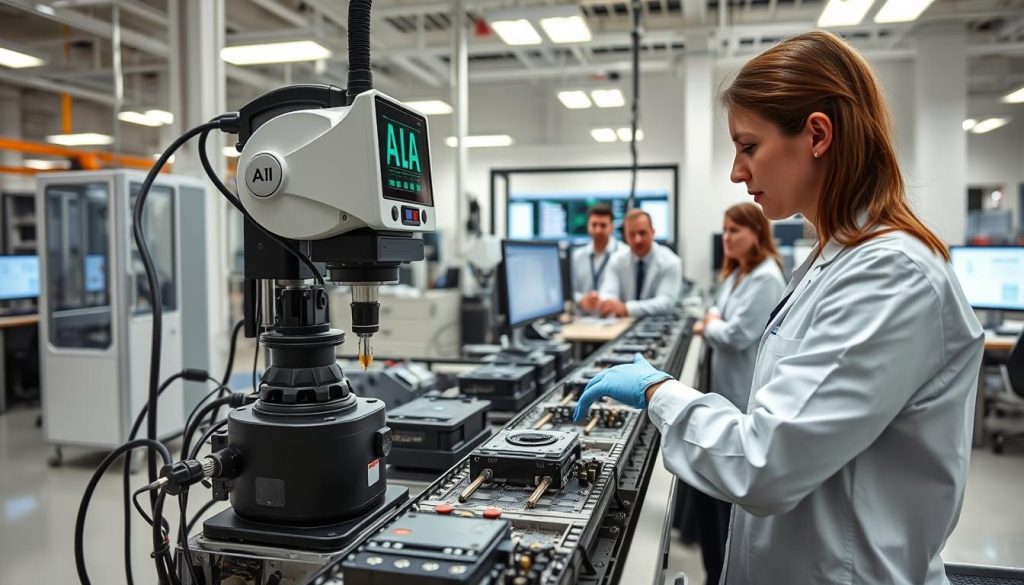
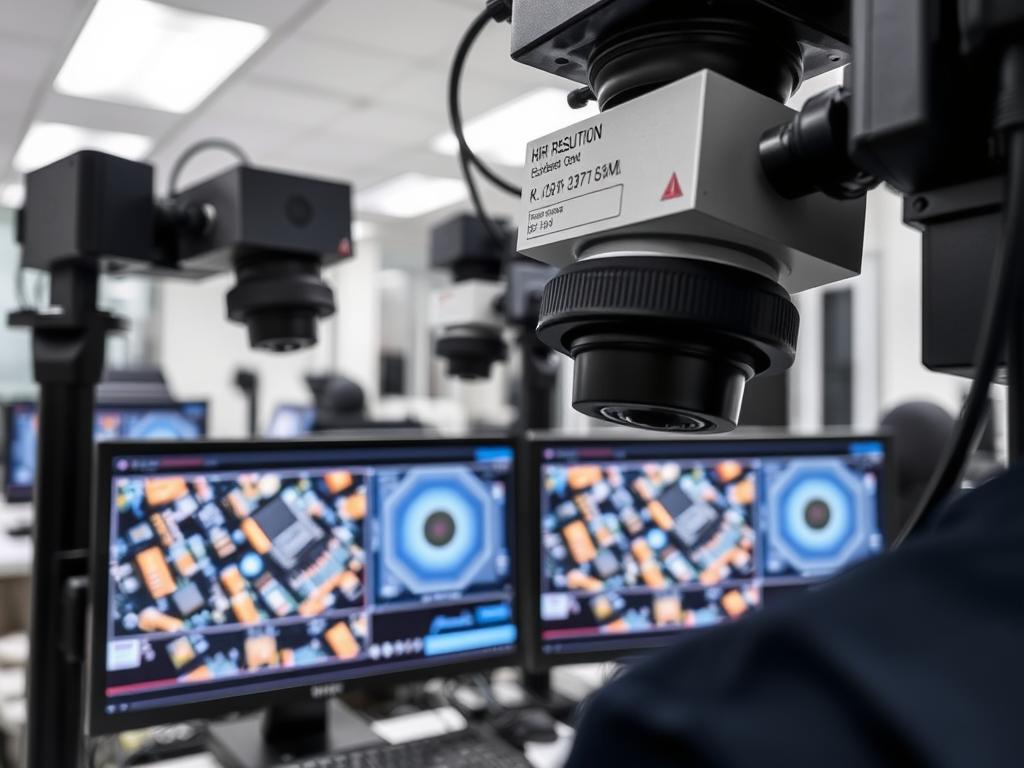
Computer vision systems use convolutional neural networks (CNNs) and deep learning to analyze images or video of products and processes with unprecedented accuracy. These systems can detect surface defects, verify assembly completeness, and inspect packaging at production speeds that far exceed human capabilities.
Industry data shows defect detection accuracy improving from approximately 70% with manual inspection to over 95% with well-tuned AI vision systems. This translates to fewer defective products reaching customers and reduced warranty claims.
Predictive Analytics and Anomaly Detection
AI excels at analyzing historical process data, sensor telemetry, and test results to forecast quality issues before they occur. These predictive capabilities enable:
- Early detection of process drift before defects appear
- Condition-based maintenance to prevent equipment-related quality issues
- Root cause analysis that identifies systemic quality problems
- Optimization of process parameters to maximize yield
Continuous Learning and Process Optimization
Unlike traditional quality systems, AI models improve over time through continuous learning. As more data is collected and feedback is incorporated, these systems become increasingly accurate and valuable. This creates a virtuous cycle where quality improvements generate richer datasets that further enhance model performance.
Measurable Benefits of AI in Quality Control
Organizations implement AI for quality control because it delivers concrete business value across multiple dimensions. Understanding these benefits helps build compelling business cases for AI adoption.
Improved Defect Detection
AI vision systems typically achieve 95%+ detection accuracy compared to 70-80% for manual inspection. One electronics manufacturer reported a 60% reduction in customer-reported defects within the first year of deployment.
Increased Throughput
Automated inspection at production speeds eliminates quality bottlenecks. Manufacturers report 15-30% throughput improvements by replacing manual inspection with AI-powered systems.
Reduced Costs
Lower rework, scrap, and warranty costs typically deliver ROI within 12-24 months. Predictive maintenance reduces quality-related downtime by 20-30% in most manufacturing environments.
Regulatory Compliance and Traceability
For regulated industries like pharmaceuticals and medical devices, AI systems provide consistent decision-making and comprehensive audit trails. This improves compliance outcomes by:
- Documenting inspection decisions with timestamps and confidence scores
- Maintaining version control for models and algorithms
- Providing evidence of consistent quality gate enforcement
- Enabling faster regulatory submissions with complete data packages
Stay Updated on AI Quality Control Innovations
Subscribe to our newsletter for the latest insights, case studies, and implementation tips delivered directly to your inbox.
Subscribe to Updates
Real-World Examples of AI in Quality Assurance
Examining successful implementations provides valuable insights into practical applications and realistic outcomes across different industries.
Manufacturing: Vision-Based Inspection
A consumer electronics manufacturer implemented an AI vision system across multiple SMT (surface-mount technology) lines to detect solder defects and component placement issues. The system analyzes high-resolution images in real-time, identifying defects that human inspectors frequently missed.
Results achieved:
- 90% reduction in manual inspection time
- 50% decrease in field returns related to assembly defects
- Successful deployment across five production facilities within two years
Key success factors included high-quality labeled training data, integration with existing manufacturing execution systems, and comprehensive operator training.
Pharmaceutical: Predictive Quality Models
A pharmaceutical manufacturer implemented predictive models to analyze process data from batch production. The system monitors critical process parameters and predicts quality deviations before batch completion, enabling early intervention.
Key outcomes:
- 30% reduction in batch rejections
- Faster lot release times with enhanced compliance documentation
- More efficient root cause analysis during investigations
Software Development: Automated Testing
A software company implemented AI-powered test generation and failure analysis to improve quality assurance efficiency. The system automatically creates test cases, identifies flaky tests, and prioritizes defect fixes based on predicted customer impact.
Results included:
- 40% reduction in test maintenance effort
- 25% decrease in pre-release defects
- Faster time-to-fix with automated prioritization
Overcoming Implementation Challenges
While the benefits of AI in quality control are compelling, organizations must address several common challenges to ensure successful implementation.
Data Quality and Availability
AI models require high-quality, representative data to perform effectively. Many organizations struggle with data that is incomplete, inconsistent, or insufficient for training robust models.
Practical Solutions:
- Conduct a data quality assessment before implementation
- Implement structured data collection processes
- Use synthetic data augmentation for rare defect classes
- Start with human-in-the-loop workflows to build labeled datasets
Integration with Legacy Systems
Many manufacturing environments rely on older equipment and systems that weren’t designed for AI integration. This can create technical barriers and resistance to change.
Effective approaches include:
- Define clear integration points using standard protocols (APIs, OPC-UA)
- Implement middleware solutions where direct integration isn’t possible
- Start with standalone systems that provide value without deep integration
- Create a phased integration roadmap aligned with equipment upgrade cycles
Workforce Adaptation and Change Management
Successful AI implementation requires workforce buy-in and adaptation. Quality control staff may fear job displacement or lack confidence in AI-driven decisions.
Effective strategies include:
- Involve operators and quality staff from the beginning of the project
- Provide comprehensive training on AI capabilities and limitations
- Position AI as an assistant that enhances human capabilities
- Create clear escalation paths for handling AI uncertainty
Practical Implementation Roadmap
A structured approach to AI implementation reduces risk and accelerates time-to-value. This roadmap provides a proven framework for successful quality control AI projects.
Phase 1: Assessment and Planning
- Conduct a readiness assessment covering data availability, process maturity, and technical infrastructure
- Identify high-impact use cases with clear ROI potential
- Define success metrics and KPIs for pilot projects
- Develop a data collection and labeling strategy
- Determine build vs. buy approach based on internal capabilities
Phase 2: Pilot Implementation
Start with a focused pilot to validate assumptions and build organizational confidence. Effective pilot projects typically include:
- Select a single production line or process with high defect impact
- Implement data collection infrastructure if not already in place
- Deploy initial models with human-in-the-loop verification
- Measure performance against baseline metrics
- Refine models based on feedback and edge cases
Phase 3: Scaling and Integration
Once the pilot demonstrates value, expand deployment while establishing sustainable practices:
- Develop a model governance framework for version control and validation
- Implement monitoring systems to detect model drift and performance issues
- Create standardized integration patterns for deployment across sites
- Establish continuous improvement processes for ongoing model refinement
- Build internal capabilities through training and knowledge transfer
| Implementation Phase |
Typical Timeline |
Key Deliverables |
Success Indicators |
| Assessment & Planning |
4-8 weeks |
Readiness assessment, Use case prioritization, Data strategy |
Clear business case, Stakeholder alignment, Data availability confirmed |
| Pilot Implementation |
3-6 months |
Working model, Integration with one process, Initial performance metrics |
Defect detection improvement, Positive ROI indicators, Operator acceptance |
| Scaling & Integration |
6-18 months |
Multi-site deployment, Governance framework, Continuous improvement process |
Consistent performance across sites, Sustainable operations, Measurable business impact |
Taking the Next Step in AI-Powered Quality Control
The integration of AI in quality control represents a transformative opportunity for manufacturers, pharmaceutical companies, and software teams. Organizations that successfully implement AI-driven quality systems gain significant competitive advantages through improved defect detection, increased throughput, reduced costs, and enhanced compliance.
While implementation challenges exist, a structured approach focused on data quality, integration, and change management can mitigate risks and accelerate time-to-value. The practical roadmap outlined in this guide provides a proven framework for successful AI quality projects, from initial assessment through enterprise-wide deployment.
Ready to Transform Your Quality Control Process?
Our team of AI implementation experts can help you assess your readiness, identify high-impact use cases, and develop a customized roadmap for integrating AI into your quality control processes.
Schedule a Consultation
For more information on AI implementation strategies and industry-specific applications, explore these valuable resources: