
Benefits and Challenges of IT Outsourcing

December 3, 2025|6:16 PM
Unlock Your Digital Potential
Whether it’s IT operations, cloud migration, or AI-driven innovation – let’s explore how we can support your success.
December 3, 2025|6:16 PM
Whether it’s IT operations, cloud migration, or AI-driven innovation – let’s explore how we can support your success.
In today’s fast-paced digital world, IT outsourcing has become a strategic choice for many businesses. It involves hiring external companies to manage IT functions. This approach offers numerous benefits, but also presents challenges.
Outsourcing IT services can lead to significant cost savings. It allows companies to access a global talent pool. This can enhance efficiency and innovation.
However, IT outsourcing is not without its hurdles. Communication barriers and cultural differences can pose challenges. Data security and privacy are also major concerns.
Choosing the right IT outsourcing partner is crucial. It requires careful evaluation and strategic planning. Businesses must weigh the pros and cons.
This article explores the benefits and challenges of IT outsourcing. It aims to guide businesses in making informed decisions.
IT outsourcing can reduce costs, provide scalable access to specialized global talent, and let companies focus on core activities with greater agility. Key risks include communication and cultural gaps, data security and privacy exposures, and the complexity of vendor selection and performance management. Success depends on choosing an aligned partner, setting clear objectives and KPIs with ongoing communication, and enforcing strong security and compliance. Trends such as AI and automation, cloud expansion, and heightened security focus are reshaping outsourcing strategies.
Summary
IT outsourcing can deliver cost savings, access to specialized global talent, scalability, and a stronger focus on core activities, but it introduces challenges such as communication and cultural gaps, data security and privacy risks, and vendor management complexity. Success depends on selecting the right partner, aligning goals and expectations, setting clear KPIs with ongoing communication, and enforcing strong security and compliance standards. Emerging trends—AI and automation, cloud expansion, and heightened security focus—are reshaping the landscape and favor flexible, innovative partnerships.
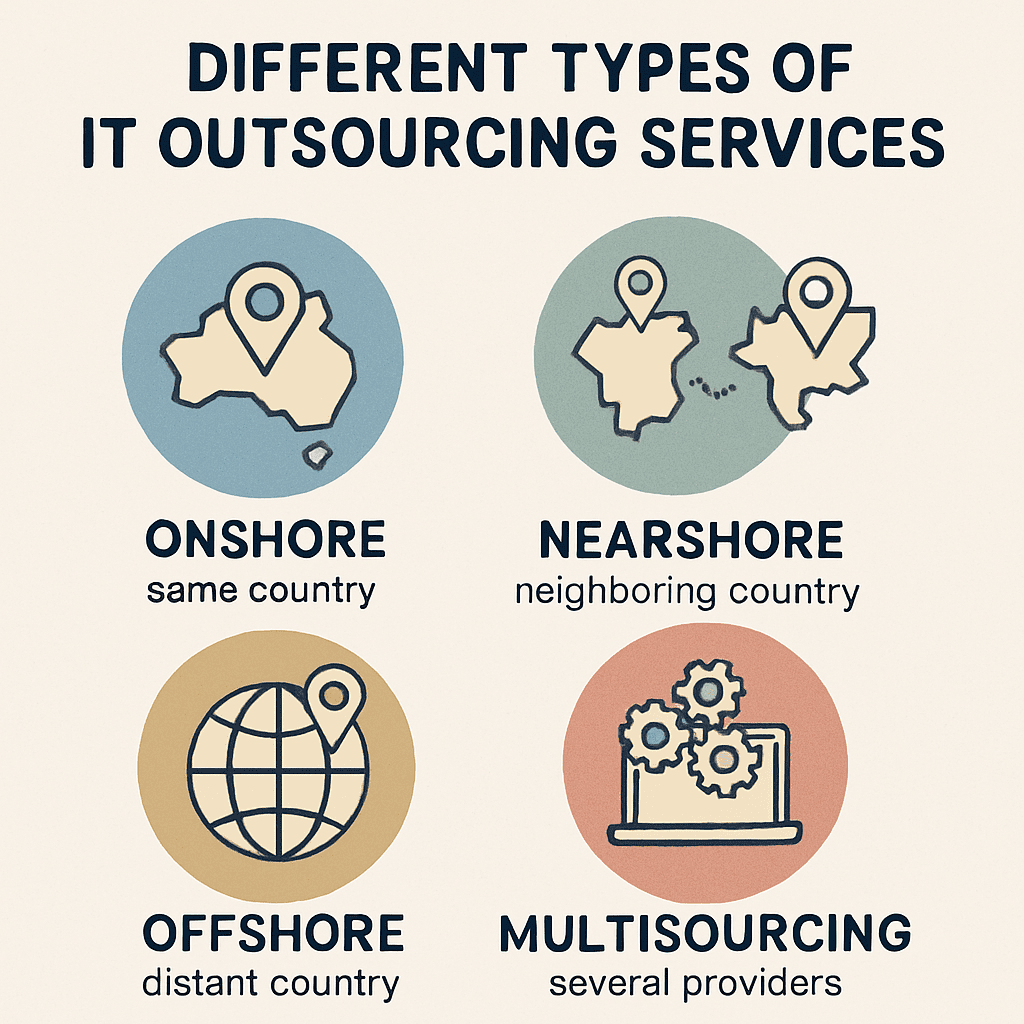
IT outsourcing involves delegating IT tasks to third-party service providers. Companies engage external firms to handle specific IT functions. This practice allows businesses to focus on their core operations.
A range of services can be outsourced. It includes software development, technical support, and infrastructure management. Outsourcing can be a tactical decision to optimize resources.
Companies choose to outsource for various reasons. Cost-effectiveness, access to specialized expertise, and improved efficiency are common motivators. Outsourcing helps companies stay competitive and agile.
In today’s globalized economy, IT outsourcing is prevalent. It’s a strategic tool for businesses of all sizes. Companies look to outsourcing for flexibility and scalability.
Common IT Outsourcing Services:
IT outsourcing offers various services tailored to diverse business needs. Each service addresses specific aspects of IT management and operation. Companies select services depending on their strategic goals.
Common IT Outsourcing Services Include:
Software development is a major area in IT outsourcing. Companies often lack in-house expertise for building complex software systems. Outsourcing enables access to skilled developers.
Infrastructure management is another critical service. It involves managing servers, networks, and hardware. It relieves companies from the complexities of IT infrastructure.
Technical support encompasses help desk services and troubleshooting. Outsourcing ensures continuous support and problem resolution. This service improves customer satisfaction and operational efficiency.
Cloud services outsourcing involves managing online storage and applications. Outsourcing cloud services can boost scalability and flexibility. It allows businesses to adapt rapidly to market changes.
Data analytics services are increasingly outsourced. These services provide insights for informed decision-making. Outsourcing analytics helps businesses derive value from data efficiently.
Outsourcing IT services offers several advantages to businesses. These benefits can enhance both operational efficiency and strategic goals. By outsourcing, companies can leverage external skills and resources effectively.

Outsourcing can lead to significant cost savings. Businesses avoid the high costs of in-house IT departments. This financial benefit is a strong motivator for many companies.
Additional Benefits Include:
Companies also gain access to global expertise. This broadens their talent pool beyond geographical constraints. It opens doors to innovative solutions not available locally.
IT outsourcing allows for scalability in response to changing demands. Businesses can easily scale IT resources up or down. This provides much-needed flexibility in fluctuating markets.
Finally, outsourcing contributes to business agility. Rapid adaptation to new challenges becomes possible. It empowers companies to stay ahead in competitive environments.
Some Considerations:
Outsourcing requires strategic alignment with company goals. Clear communication ensures project success and long-term value. Businesses must weigh benefits against potential risks in outsourcing IT services.
One of the top reasons companies opt for IT outsourcing is cost reduction. Outsourcing can slash the expenses associated with hiring and training. It also eliminates infrastructure investments.
Having financial flexibility is crucial. It allows companies to reallocate resources where they are most needed. This flexibility fuels innovation and growth.
Cost-Related Advantages:
Outsourcing negates the need for substantial capital expenditure on IT equipment. Instead, businesses convert fixed costs into variable ones. This transformation maximizes efficiency and reduces financial risks.
Outsourcing opens the door to a vast array of global talent. This access brings unique skills and perspectives. These fresh inputs can drive project success.
Firms can tap into regions with abundant IT professionals. This access provides a competitive edge. Companies benefit from the depth of expertise only available through global reach.
Benefits of Global Talent:
A diverse talent pool contributes to innovation. It fosters creative problem-solving and adapts to new situations swiftly. This global perspective can make all the difference in a rapidly changing world.
Outsourcing allows businesses to concentrate on their core competencies. External providers handle routine IT tasks. This focus ensures that internal teams are not distracted.
This shift towards core activities results in enhanced business performance. Organizations can direct their energies where they add the most value. The result is often improved market position and increased revenues.
Core Activity Benefits:
Delegating non-core functions enables businesses to hone their strengths. It streamlines processes and improves overall productivity. Firms can then pursue strategic objectives without interference.
Scalability is a significant advantage of IT outsourcing. Businesses can adjust IT resources quickly to meet demands. This adaptability keeps companies agile in response to market shifts.
Flexibility is crucial for maintaining competitiveness. It allows companies to seize opportunities as they arise. Rapid scalability translates into quicker time-to-market.
Scalability Benefits:
Outsourcing fosters agility by reducing the time and cost needed for expansion. This capacity for quick scaling supports continuous growth. Firms can confidently navigate dynamic business landscapes with agility.
While IT outsourcing has many benefits, it also presents challenges. Companies must navigate these obstacles to ensure success.

Communication barriers can arise due to language differences. Cultural nuances may also complicate interactions. It’s crucial to address these issues early on.
Communication Challenges:
Another hurdle is data security. Transferring sensitive data to third-party vendors poses risks. Ensuring data privacy should be a priority for any outsourcing initiative.
Security Concerns:
Managing vendor relationships requires skill. Companies must set clear performance metrics and expectations. Doing so helps maintain quality and accountability.
Vendor Management Issues:
Choosing the right vendor is crucial. Businesses need thorough due diligence. Selecting partners with a shared vision and cultural fit mitigates potential challenges.
Communication breakdowns are a common outsourcing issue. Language differences can lead to misunderstandings. This miscommunication may result in project delays.
Cultural differences also play a role. Varying work ethics and traditions can cause friction. Awareness and sensitivity can bridge these cultural divides.
Overcoming Barriers:
By implementing strategies to tackle these issues, businesses can foster smoother collaboration. Establishing clear channels of communication helps mitigate potential misunderstandings.
Data security is a paramount concern in IT outsourcing. Transferring information to external vendors invites risks. Breaches can lead to reputational damage and financial loss.
Vendors must meet stringent security standards. Companies must ensure vendor compliance with industry regulations. These measures are essential to safeguard information.
Security Measures:
Privacy concerns also require attention. Maintaining customer trust depends on robust data protection. Implementing comprehensive privacy policies is crucial for maintaining credibility.
Outsourcing agreements should include detailed security protocols. Clearly defined expectations protect both parties from potential liabilities. A proactive approach can minimize data-related risks.
Effective vendor management is key to outsourcing success. Clear contractual agreements set the foundation for productive partnerships. Defining roles and deliverables prevents misunderstandings.
Regular performance evaluations are vital. They ensure vendors meet quality standards and deadlines. Continuous monitoring fosters a cooperative environment.
Vendor Management Strategies:
Building strong vendor relationships requires communication. Open dialogue allows for timely issue resolution and relationship growth. This partnership is essential for achieving desired outcomes.
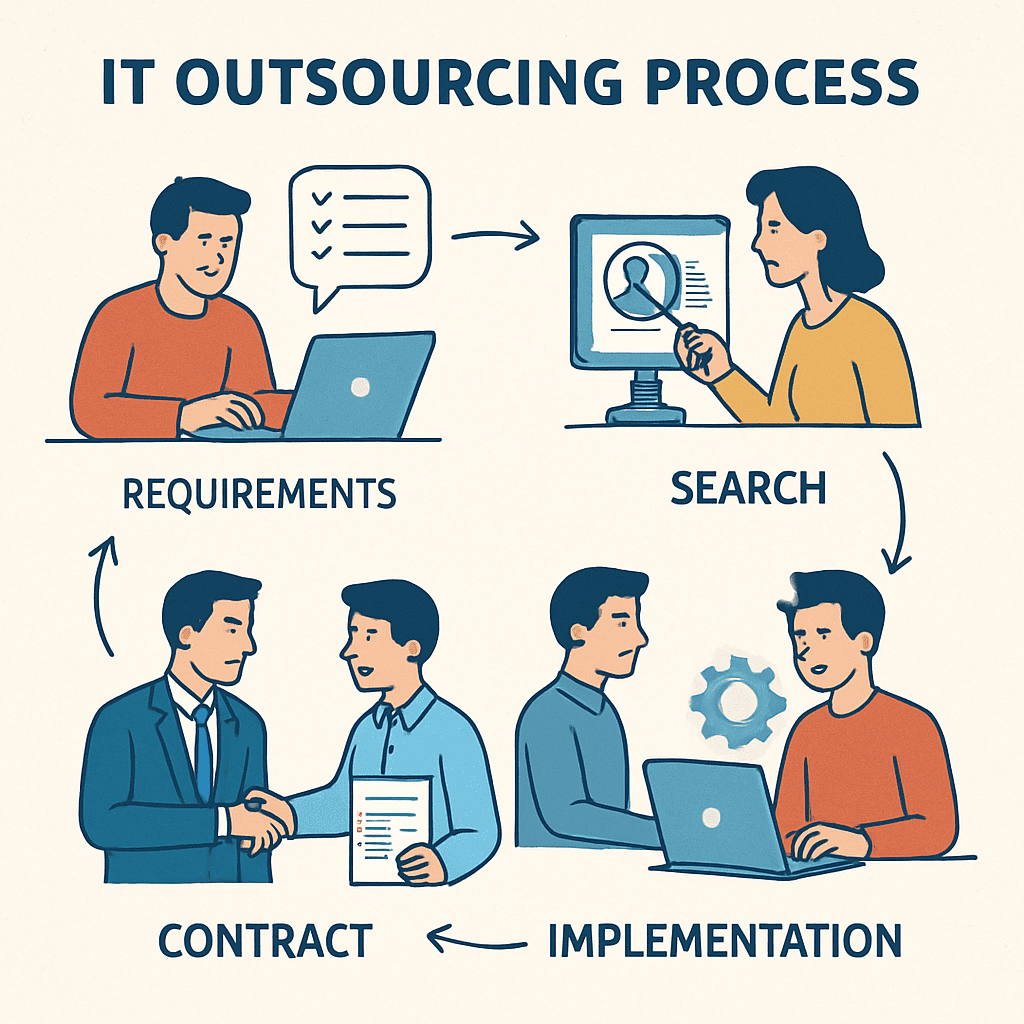
Choosing the right IT outsourcing company is vital for project success. The selection process requires careful assessment and strategic planning.

Begin by evaluating potential vendors’ experience and expertise. Look for companies with a proven track record in your industry. Their past successes can offer insights into their capabilities and reliability.
Key evaluation criteria include:
Beyond technical skills, consider cultural compatibility. A strong alignment in values and vision fosters smoother collaboration. Engage in conversations with potential partners to gauge this fit.
Assessing communication practices and transparency is crucial. Ensure the vendor maintains clear and regular communication channels. This clarity prevents misunderstandings and builds trust throughout the partnership.
Effective IT outsourcing requires planning and strategic execution. Establish clear objectives and expectations from the outset. Clear goals help both parties align and work towards shared success.

Fostering a collaborative partnership is crucial. This means involving your vendor in decision-making processes. Encourage open dialogue and feedback exchange to enhance project outcomes. Collaboration leads to innovative solutions and builds lasting relationships.
To ensure successful IT outsourcing, consider these best practices:
Monitoring progress regularly helps address issues early. Set up frequent check-ins to stay updated on project status. This diligence allows for timely adjustments, ensuring the project remains on track. Consistent oversight guarantees that objectives are met efficiently.
The IT outsourcing landscape is evolving rapidly. Digital transformation and emerging technologies drive changes in demand. Companies seek cutting-edge solutions to stay competitive in the market.
Automation and artificial intelligence are at the forefront of IT outsourcing trends. These technologies enhance efficiency and reduce operational costs. Businesses leverage these advancements to gain a strategic advantage.
Some key trends influencing IT outsourcing include:
Looking forward, outsourcing will continue to expand globally. Companies will prioritize partnerships that offer innovation and flexibility. As a result, IT outsourcing will play a critical role in future business strategies.
IT outsourcing presents significant benefits and challenges. Companies can achieve cost savings and focus on core activities. However, they must navigate potential communication and security issues.
To maximize the benefits, businesses should choose the right outsourcing partners. Clear communication and strategic alignment are essential. By doing so, companies can successfully integrate outsourcing into their operations and achieve their business goals.



Experience power, efficiency, and rapid scaling with Cloud Platforms!