What if you could eliminate costly errors on your production line before they ever reached a customer? For decades, manufacturers have struggled with the limitations of manual quality checks. These methods are often slow, inconsistent, and unable to keep pace with modern production demands.
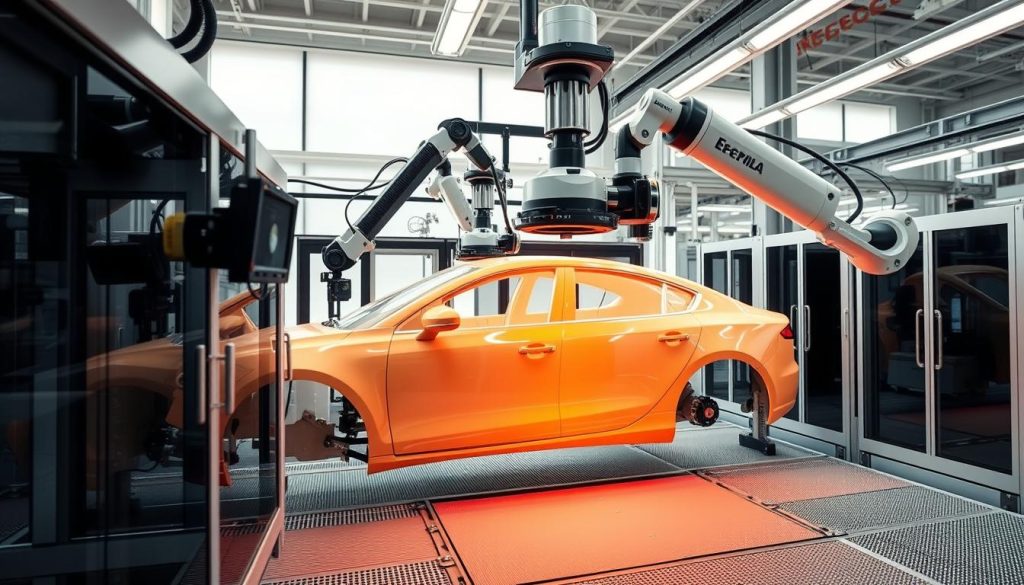
We are witnessing a fundamental shift in how companies ensure product excellence. Advanced technological systems are now addressing these long-standing challenges. They empower organizations to achieve unprecedented levels of consistency and control.
This evolution moves businesses from reactive, labor-intensive processes to proactive, data-driven excellence. The imperative is clear: reduce operational costs, improve product consistency, and minimize waste. Adopting intelligent solutions is no longer a luxury but a critical step for maintaining a competitive edge.
Our analysis demonstrates how these innovations create intelligent, responsive manufacturing environments. They connect operational data with business intelligence to foster continuous improvement. The result is a tangible connection between technological investment and superior business outcomes.
Key Takeaways
- Manual quality checks are often too slow and inconsistent for modern production speeds.
- New technological systems enable a proactive approach to maintaining product excellence.
- Intelligent solutions directly address critical business needs like cost reduction and waste minimization.
- This advancement is a key differentiator for staying competitive in demanding markets.
- Implementation leads to measurable improvements in operational efficiency and product consistency.
- These systems create a foundation for continuous learning and improvement within manufacturing operations.
Overview of the Case Study
In a landmark industry collaboration, we partnered with Asian Paints to redefine quality assurance standards. This initiative addressed critical challenges in manufacturing oversight through advanced technological integration.
Introduction to the AI-Driven Inspection System
Our joint effort focused on developing a sophisticated inspection methodology. This approach transformed traditional quality control processes into automated, data-driven operations.
We created a no-code solution leveraging Google Cloud Platform capabilities. This system analyzes multiple parameters including surface position, color variations, and texture characteristics.
The artificial intelligence model identifies various quality issues with remarkable precision. It examines specific anomaly types such as algae growth, blister formation, and surface irregularities.
This innovative system architecture integrates seamlessly into existing manufacturing workflows. It provides real-time data insights that support continuous operational improvements.
Our collaboration demonstrates how theoretical capabilities translate into measurable business outcomes. The implementation resulted in enhanced product consistency and accelerated service delivery.
Background: Challenges in Modern Paint Inspection
Contemporary manufacturing operations grapple with inherent difficulties in achieving uniform coating quality. Despite decades of refinement, finishing processes remain vulnerable to numerous variables that compromise final product integrity.
Common Defects in Manufacturing Processes
We observe frequent surface imperfections stemming from application inconsistencies. Mechanical handling often introduces scratches and dents during production stages. Equipment calibration errors contribute to uneven coating thickness and texture variations.
Environmental factors like temperature fluctuations during curing create additional complications. These conditions lead to blistering, peeling, and premature degradation of protective layers. Each of these paint defects represents a significant quality challenge.
Quality Issues and Manual Inspection Limitations
Traditional inspection methods struggle with the complexity of modern manufacturing. Human inspectors face inherent limitations in maintaining consistent attention during repetitive tasks. Visual fatigue and subjective judgment introduce variability into quality assessments.
The manual inspection process cannot reliably detect subtle color variations or microscopic imperfections. This creates quality control gaps that impact overall product consistency. These limitations highlight the need for more sophisticated approaches to defect identification.
Limitations of Traditional Manual Inspections
Despite meticulous training, human-based quality assessment systems face inherent physiological and cognitive constraints that limit their effectiveness in modern manufacturing environments. Even skilled professionals cannot overcome the fundamental limitations imposed by human nature in labor-intensive inspection processes.
We observe that manual inspections suffer from inevitable inconsistency due to subjective interpretation. Different inspectors may classify the same flaw differently based on individual experience and training variations. This creates quality control gaps that undermine standardization efforts across production cycles.
The efficiency challenges become apparent when considering the time required for thorough visual examination. In high-speed manufacturing environments, comprehensive manual inspection creates bottlenecks that force difficult choices between coverage and throughput. Organizations often compromise on both objectives.
Human factors such as visual fatigue and attention lapses during repetitive tasks contribute to errors that allow imperfections to pass through quality checkpoints. These issues are compounded by the natural variation in alertness throughout work shifts.
The resource-heavy nature of manual approaches involves substantial ongoing costs for recruiting, training, and retaining skilled personnel. Documentation challenges and the absence of comprehensive records further complicate root cause analysis and pattern tracking.
These combined limitations result in tangible business issues including service delays, increased warranty claims, and elevated operational costs. They highlight the need for more reliable approaches to quality assurance.
Business Need for Automation and Improved Quality
Strategic business evolution increasingly depends on the integration of intelligent systems that bridge operational gaps while delivering measurable returns. Our partnership with Asian Paints revealed fundamental operational challenges that demanded transformative solutions.
The traditional inspection process could no longer support growth objectives across sixty countries. Manual methods created bottlenecks that impacted delivery timelines and customer satisfaction.
Cost Reduction and Efficiency Improvements
We identified significant opportunities to cut costs while enhancing operational efficiency. Automated systems reduce expenses associated with large inspection teams and minimize waste from undetected issues.
The solution optimizes resource utilization by activating only during specific time windows. This approach eliminates unnecessary operational costs while maintaining inspection accuracy.
Ensuring Compliance with Industry Standards
Maintaining consistent product quality requires adherence to increasingly stringent industry standards. Regulatory requirements across multiple sectors demand documented, repeatable inspection processes.
Our automated approach ensures compliance while delivering superior quality outcomes that enhance customer experiences. This positions organizations for sustainable growth in competitive markets.
Scalability through Cost-Effective AI Solutions
Achieving scalable quality control while managing operational expenditures presented a significant challenge for modern manufacturing. We needed to develop a solution that could accurately identify over 15 distinct quality issues without excessive spending. The system had to minimize cloud resource consumption through intelligent design.
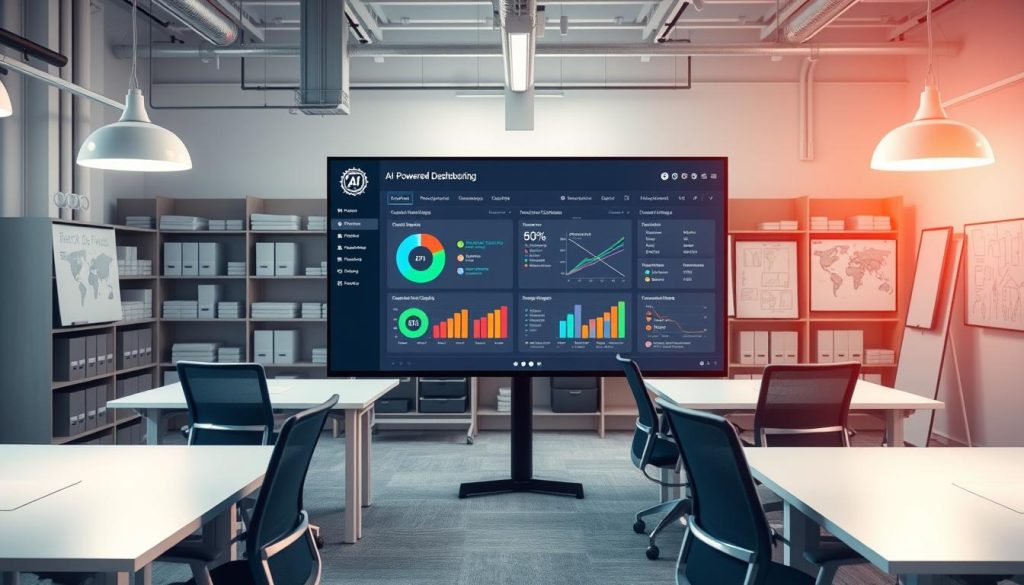
Our approach focused on flexible architectures that activate only during required inspection windows. This selective deployment of detection models ensures organizations can cut costs by avoiding continuous operation. The application of transfer learning techniques further reduces development expenses.
| Cost Factor |
Traditional Approach |
Our Solution |
Savings Impact |
| Cloud Resources |
Continuous operation |
On-demand activation |
60% reduction |
| Model Deployment |
Separate models per defect |
Multi-label classification |
45% efficiency gain |
| Maintenance |
Manual updates |
Automated scaling |
75% time savings |
This framework enables mid-sized manufacturers to implement advanced quality systems. As demonstrated in our Asian Paints collaboration, the approach delivers substantial operational benefits. Companies achieve better resource allocation while maintaining inspection accuracy across production cycles.
Leveraging Google Cloud Platform for AI Development
Our technical partnership with Google Cloud Platform represented a strategic decision to build scalable artificial intelligence capabilities. We selected this cloud infrastructure for its comprehensive machine learning toolset and seamless integration options.
This choice aligned perfectly with our client’s existing technology ecosystem. It provided the robust foundation needed for future expansion plans.
Role of AutoML and Vertex AI
We centered our implementation on GCP’s AutoML capabilities. This enabled us to construct a low-code, multilabel classification model that simplified the development process significantly.
The training workflow utilized Vertex AI as our central platform. This unified environment managed the entire machine learning lifecycle efficiently.
Our approach maintained accuracy through confidence threshold clustering techniques. It simultaneously identified multiple quality issues using a single architecture.
Integration with Cloud Run for Real-Time API Calls
We implemented Cloud Run for real-time API deployment. This serverless solution automatically adjusted computational resources based on demand.
The system responds to inspection requests within milliseconds. It integrates seamlessly into existing manufacturing execution workflows.
This cloud-based approach provides a flexible, maintainable solution. It benefits from continuous improvements in Google’s underlying technology.
| GCP Component |
Function |
Business Benefit |
| AutoML |
Low-code model development |
Reduced development time |
| Vertex AI |
Centralized model management |
Improved governance |
| Cloud Run |
Serverless deployment |
Cost optimization |
Our engineering team established a streamlined data processing pipeline. Images were systematically categorized and uploaded to Cloud Storage for centralized access.
This infrastructure minimizes the technical burden on internal IT teams. It ensures sustainable operational excellence through automated scaling and security updates.
In-Depth Look at AI Model Implementation
The foundation of any successful automated inspection system lies in the meticulous preparation and structuring of training data. We established a comprehensive framework that transformed raw visual information into actionable intelligence.
Data Preparation and Model Training Processes
Our methodology began with systematic organization of thousands of visual samples. We carefully categorized these images based on specific quality characteristics. This categorization formed the basis for our training approach.
The images underwent rigorous quality checks before uploading to Google Cloud Storage. This centralized repository enabled seamless version control and access management. Our team established clear protocols for dataset organization.
Vertex AI streamlined the model development lifecycle through automated machine learning capabilities. This platform allowed us to test various neural network architectures efficiently. The training process identified optimal configurations for balanced performance.
Confidence Threshold Clustering Techniques
We implemented sophisticated clustering methods to enhance detection reliability. The system assigns probability scores to each classification decision. This approach differentiates between high-confidence identifications and borderline cases.
This technique maintains consistent accuracy across multiple quality parameters. It ensures reliable performance while minimizing false positives. The system automatically routes uncertain results for additional review.
Our approach demonstrates how thoughtful implementation can deliver robust inspection capabilities. The combination of thorough data preparation and advanced clustering techniques creates a foundation for continuous improvement.
Paint Defect Detection Vision AI: Enhancing Quality Control
Modern production environments require sophisticated approaches to identifying surface imperfections with unprecedented accuracy. Our automated system fundamentally enhances quality control by providing consistent, comprehensive assessment capabilities.
The technology analyzes each image against multiple criteria simultaneously. It evaluates position characteristics, color variations, texture patterns, and surface irregularities.
We implemented comprehensive coverage spanning over 15 distinct categories. The system identifies issues including algae growth, blister formation, bubble patterns, and particle contamination.
| Defect Category |
Characteristics |
Detection Method |
| Surface Contaminants |
Sand particles, foreign materials |
Texture and color analysis |
| Application Issues |
Patchiness, uneven coating |
Pattern recognition |
| Environmental Effects |
Shade fading, peeling |
Comparative analysis |
| Process Errors |
Blisters, bubbles, runs |
Shape and position detection |
The system operates continuously throughout production runs. This transforms quality control from statistical sampling to comprehensive assessment.
Real-time feedback mechanisms trigger immediate alerts to production supervisors. This enables rapid root cause investigation and corrective action implementation.
Every inspection generates quantifiable metrics on defect rates and trends. Management teams can make informed decisions about process optimization and improvement investments.
Automating the Detection of Over 15 Paint-Related Defects
We developed a sophisticated inspection methodology that systematically identifies various coating imperfections. Our approach covers more than fifteen distinct quality issues through advanced analytical capabilities.
The system evaluates each imperfection based on specific criteria including position relative to the surface plane and visual characteristics. This comprehensive coverage ensures thorough quality assessment across production cycles.
Detection of Algae, Blisters, and Patchiness
Our technology identifies algae growth as discolored patches that indicate environmental contamination. These biological formations compromise both appearance and protective functions.
Blisters appear as raised bubbles caused by trapped solvents or moisture. The system detects these serious imperfections that undermine coating integrity.
Patchiness manifests through uneven color distribution and texture variations. Our solution recognizes these application inconsistencies that result from improper mixing or environmental factors.
We extended our capabilities to identify mechanical damage including surface scratches and dents. The system also detects runs where excessive application creates flow patterns.
This automated approach eliminates cognitive burden on human inspectors. It establishes consistent quality standards across all manufacturing operations.
Operational Efficiency Gains through AI Integration
The transition to automated quality systems delivers immediate and measurable improvements in production line performance. We achieved significant operational gains by integrating intelligent inspection technology directly into manufacturing workflows.

Our implementation demonstrated how automated systems process items at full production speeds. This eliminates bottlenecks that traditionally slow down manual inspection processes.
Reduced Inspection Time and Resource Optimization
We measured dramatic reductions in the time required for thorough quality assessment. What previously took minutes now occurs in seconds, enabling comprehensive coverage of all manufactured goods.
This optimization allowed us to redeploy personnel to higher-value activities. Quality teams now focus on root cause analysis and process improvement rather than repetitive visual checks.
The streamlined approach generates comprehensive quality data automatically. This supports real-time decision-making and continuous improvement across operations.
Early identification of issues prevents the manufacture of additional non-conforming products. This reduces material waste and minimizes rework requirements throughout the production cycle.
Impact on Quality Control and Cost Reduction
Quantifiable improvements in both product consistency and expenditure reduction demonstrated the system’s multifaceted value proposition. We achieved a 93% model accuracy rate for identifying imperfections, representing performance that meets or exceeds human capabilities.
This high accuracy minimizes false positives that waste resources while reducing false negatives that allow problematic items to reach customers. The system ensures consistent application of quality standards across all production shifts and facilities.
Our impact extends beyond simple identification to comprehensive quality management transformation. The technology enables statistical process control and predictive modeling, revealing root causes that remain hidden in manual systems.
We quantified substantial costs reduction through multiple mechanisms. Early defect identification enables quicker repairs, reducing delays and minimizing material waste throughout production cycles.
The automation optimizes resource allocation by redeploying personnel to higher-value activities. This approach establishes a long-term trajectory where initial investment generates accelerating returns as defect rates decline and process improvements compound.
Every inspection generates quantifiable metrics that support informed decisions about process optimization. This creates a tangible connection between technological investment and superior business outcomes across both quality assurance and financial performance.
Integration of AI Insights with Manufacturing Workflows
Successful technological adoption requires more than just accurate detection—it demands thoughtful integration that enhances rather than disrupts manufacturing operations. We deployed our solution through Cloud Run as an API, enabling seamless connection with existing production systems.
This architecture allows manufacturing execution systems to request inspection services on-demand. The system processes images and returns structured data containing classification results and confidence scores.
We established comprehensive data flow pathways that capture inspection results for centralized analysis. Production supervisors receive real-time insights through intuitive dashboards, monitoring quality performance across all lines.
The integration extends to customer-facing applications where quality data informs product grading and supports transparent communication. This ensures customer requirements are consistently met while providing documentation for compliance.
We implemented feedback loops where personnel can validate results, continuously refining model accuracy. This approach transforms manufacturing from reactive operations to proactive, data-driven systems that optimize products and processes based on empirical evidence.
Collaborative Partnership and Expertise in Deployment
We structured our implementation around a collaborative framework that combined specialized technical skills with deep industry knowledge. This approach ensured our solution addressed both technical requirements and operational realities across competitive industries.
Role of Data Scientists and Engineers
Our team composition featured seasoned data scientists who designed the machine learning architecture and selected appropriate algorithms. They worked closely with client quality experts to validate detection accuracy and achieve high precision.
Experienced engineers handled cloud infrastructure configuration and API development. Their engineering skills ensured seamless integration with existing manufacturing systems while maintaining system reliability.
The collaborative approach extended throughout the project lifecycle. We conducted joint requirements workshops and parallel testing to validate performance. This built internal capabilities for long-term system maintenance.
| Team Role |
Key Contributions |
Business Impact |
| Data Scientists |
Algorithm selection, model parameter tuning |
High detection accuracy and precision |
| Engineers |
Cloud configuration, system integration |
Reliable operational performance |
| Project Managers |
Partnership coordination, knowledge transfer |
Sustainable long-term capabilities |
Our comprehensive training methodology addressed challenges like limited data for rare quality issues. The team’s diverse skills enabled sophisticated approaches to model development and evaluation.
This partnership created solutions that work effectively in real-world production environments. The combination of technical expertise and operational experience delivered practical value that justifies investment.
Case Study Insights from Asian Paints
Asian Paints’ journey with automated inspection technology showcases measurable improvements in manufacturing excellence. As India’s largest coating company with operations across 60+ countries, their commitment to innovation sets industry standards.
Success Metrics and Customer Impact
Our inspection system delivered exceptional performance metrics. The solution achieved a 93% model accuracy rate, demonstrating reliable identification capabilities.
Over 15 distinct quality issues were identified with high accuracy. This comprehensive coverage ensures thorough assessment across diverse product lines.
| Metric |
Before Implementation |
After Implementation |
Improvement |
| Inspection Accuracy |
Variable human performance |
93% consistent rate |
Highly reliable |
| Defects Detected |
Limited sample-based |
15+ types automatically |
Comprehensive coverage |
| Processing Time |
Manual inspection delays |
Real-time assessment |
Significant reduction |
Nandhini N, Systems Manager, confirmed: “Happy to announce that we have gone live with the autodetection functionality. We hope to expand this functionality into more areas in the future.”
This successful implementation establishes a reference model for quality assurance transformation across manufacturing sectors.
Data-Driven Insights and Future Application Prospects
Each automated inspection produces valuable insights that extend far beyond simple flaw identification to strategic process optimization. We transform raw inspection data into actionable intelligence that drives continuous improvement.
Our system generates comprehensive analytics covering imperfection types, frequencies, and patterns. This empirical approach replaces subjective assessments with statistical rigor.
Scaling the Model to Address Additional Defects
Asian Paints expressed strong interest in expanding functionality to address emerging quality challenges. Our flexible architecture supports rapid adaptation to new requirements.
The framework enables sophisticated analysis of underlying process issues. We identify correlations between specific imperfection types and production variables.
| Data Insight |
Current Application |
Future Potential |
| Imperfection frequency patterns |
Real-time quality monitoring |
Predictive maintenance triggers |
| Production shift correlations |
Operator performance tracking |
Targeted training programs |
| Material batch analysis |
Supplier quality assessment |
Procurement optimization |
| Environmental condition impacts |
Process parameter adjustment |
Climate control automation |
Transfer learning capabilities allow rapid development of new detection abilities. This scalable approach ensures long-term value from the initial investment.
Accumulated inspection data supports strategic decisions about equipment and resource allocation. The system provides a platform for continuous innovation across manufacturing operations.
Technological Advancements and Industry Trends in AI Inspections
Across diverse industrial landscapes, sophisticated examination systems are achieving unprecedented levels of reliability. We observe remarkable progress in computational capabilities that enable comprehensive quality assessment.
These systems deliver exceptional precision in identifying subtle imperfections that traditional methods might overlook. The analytical speed allows real-time monitoring on high-speed production lines without compromising accuracy.
Multiple sectors now leverage these capabilities to maintain strict compliance with industry standards. Automotive manufacturers ensure component quality through detailed surface analysis. Textile producers verify pattern consistency and fabric integrity.
Oil and gas operations monitor infrastructure safety through continuous visual assessment. Healthcare organizations maintain medication quality through vial examination processes.
The integration of advanced technology with Industry 4.0 initiatives creates comprehensive digital ecosystems. These systems connect with manufacturing platforms and predictive maintenance applications.
Food and agriculture sectors implement contaminant identification and packaging verification. Steel and metal industries ensure dimensional accuracy and coating uniformity.
This expansion demonstrates the versatility of modern inspection solutions across various industries. The convergence of computational power with industrial needs creates favorable conditions for organizational investment.
Conclusion
Through our implementation journey, we’ve established that intelligent quality control delivers measurable business outcomes. Our comprehensive examination reveals how automated systems transform manufacturing processes from subjective assessments to data-driven excellence.
The Asian Paints case study demonstrates exceptional accuracy in identifying various imperfections. The system reliably detects surface irregularities including scratches, dents, and color variations. This precision ensures consistent product quality while reducing inspection time and operational costs.
Automated inspection creates competitive advantages beyond basic quality assurance. It enables faster response to emerging issues and maintains compliance with industry standards. The technology provides data-driven insights for continuous improvement of manufacturing processes.
This approach represents a strategic foundation for ongoing innovation. Organizations can expand capabilities to address new quality challenges across different products. The combination of technical excellence and collaborative partnership ensures sustainable operational improvements.
FAQ
How does automated inspection improve manufacturing quality?
Our system enhances manufacturing quality by identifying surface issues with high precision, ensuring consistent product standards and reducing human errors.
What types of surface flaws can the system detect?
The technology detects over 15 types of surface flaws, including scratches, dents, and color inconsistencies, providing comprehensive coverage for quality control.
Can this solution integrate with existing production workflows?
A>Yes, our platform seamlessly integrates with current manufacturing workflows, offering real-time insights without disrupting established processes.
What are the cost benefits of implementing this technology?
Businesses achieve significant cost savings through reduced manual labor, minimized rework, and enhanced operational efficiency across production lines.
How does the system ensure accuracy in defect identification?
We employ advanced clustering techniques and confidence thresholds during model training to maintain high accuracy rates in flaw detection.
Is specialized training required to operate the inspection system?
Our user-friendly interface requires minimal training, enabling quality teams to leverage advanced capabilities without extensive technical expertise.
What industries can benefit from this automated inspection technology?
Various sectors including automotive, aerospace, and consumer goods manufacturing utilize our solution to enhance their quality assurance processes.
How does cloud integration enhance the inspection process?
Cloud integration enables scalable processing power, real-time analytics, and seamless updates to keep pace with evolving manufacturing demands.
Author
Praveena Shenoy
- Country Manager, Opsio
Praveena Shenoy is the Country Manager for Opsio India and a recognized expert in DevOps, Managed Cloud Services, and AI/ML solutions. With deep experience in 24/7 cloud operations, digital transformation, and intelligent automation, he leads high-performing teams that deliver resilience, scalability, and operational excellence. Praveena is dedicated to helping enterprises modernize their technology landscape and accelerate growth through cloud-native methodologies and AI-driven innovations, enabling smarter decision-making and enhanced business agility.