What if every product leaving your factory could be perfect? Imagine a production line where errors simply don’t exist—where microscopic flaws, assembly mistakes, and quality issues disappear before they can impact your business.
We understand that modern manufacturing faces unprecedented challenges. A single defect can trigger catastrophic consequences, from costly recalls to irreparable brand damage. Traditional quality control methods often catch problems too late, after resources have been wasted and customer trust has been compromised.
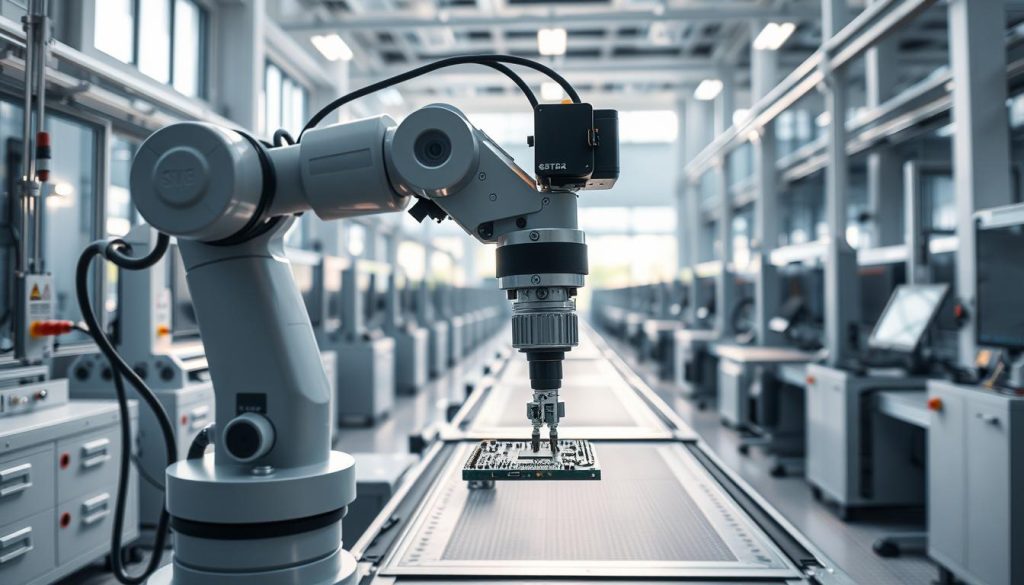
The concept of flawless production has evolved dramatically since its origins in the 1960s. Today, we leverage cutting-edge digital tools to create self-correcting ecosystems that prevent errors at their source. This approach transforms quality from a final checkpoint into an integrated process that saves up to 20% of revenue typically lost to defects.
Our methodology combines advanced imaging systems with artificial intelligence to monitor production in real-time. This enables manufacturers to transition from reactive problem-solving to proactive prevention, ensuring consistent excellence across every shift and every product.
Key Takeaways
- Zero-defect manufacturing aims to eliminate errors throughout the entire production lifecycle
- Modern digital tools enable proactive defect prevention rather than reactive detection
- Manufacturing defects can consume up to 20% of a company’s revenue if unaddressed
- Advanced imaging systems can inspect hundreds of items per minute with exceptional accuracy
- Quality transformation requires both technological implementation and cultural change
- Real-time monitoring helps identify root causes before they impact final product quality
- Consistent standards can be maintained regardless of environmental variables or operator fatigue
Introduction to Zero-Defect Manufacturing in the Modern Era
The journey toward flawless production begins with understanding why traditional inspection methods fall short in modern facilities. We recognize that manual quality checks cannot keep pace with today’s high-volume, complex production environments.
In critical sectors like automotive and aerospace, a single flaw can trigger catastrophic consequences. The financial impact extends beyond immediate repair costs to include warranty claims, regulatory penalties, and lasting brand damage. Preventing issues before they occur becomes the most cost-effective strategy.
The Critical Cost of Manufacturing Defects
Defects create cascading expenses throughout the value chain. Material waste and rework represent only the initial financial burden. Downstream impacts include customer dissatisfaction and potential liability exposure.
We help manufacturers calculate the true cost of quality failures. These calculations often reveal that prevention delivers greater returns than detection. First Time Right performance becomes the ultimate measure of effectiveness.
The Evolution from Manual Inspection to AI-Driven Processes
Traditional methods struggle with human limitations like fatigue and subjective judgment. These constraints create bottlenecks in high-speed production environments. Consistency suffers across shifts and operators.
Modern approaches leverage digital tools to transform quality control. Real-time monitoring identifies root causes before defects manifest. This proactive methodology eliminates rework and unpleasant surprises.
We’ve witnessed how technology enables systematic defect elimination at the source. The transition requires both advanced systems and cultural commitment to prevention over detection.
Leveraging Computer Vision for Zero-Defect Manufacturing
Advanced optical systems combined with machine learning algorithms are redefining quality standards across industrial sectors. We help businesses implement sophisticated imaging technology that operates continuously with precision exceeding human capabilities.
Integrating AI Tools and Real-Time Data Monitoring
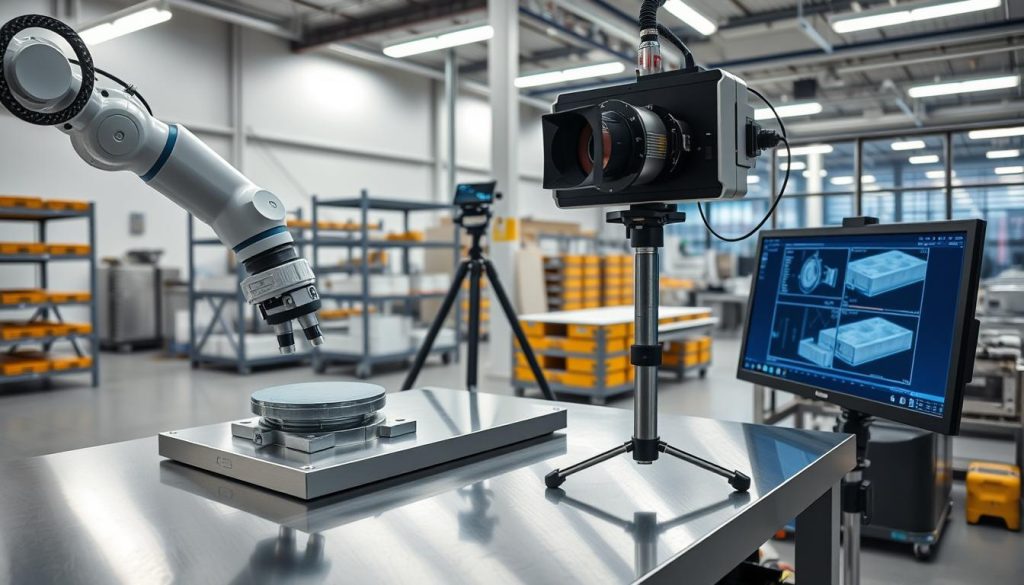
Our approach combines high-resolution industrial cameras with artificial intelligence for comprehensive quality control. These systems capture detailed visual information under varying conditions.
Real-time data monitoring provides unprecedented visibility into production health. We deploy edge computing devices directly on the production line for instant analysis.
This enables immediate pass/fail decisions that prevent defective items from advancing. The technology adapts to new product lines and lighting conditions seamlessly.
Benefits of Automated Visual Inspections
Automated systems deliver consistent results across multiple operational dimensions. They eliminate subjective human judgment variability that can affect quality.
These solutions operate 24/7 without fatigue, maintaining high accuracy rates. They identify microscopic defects invisible to the human eye.
Manufacturers achieve significant cost savings through reduced scrap and rework. The technology supports both immediate quality decisions and long-term optimization.
| Inspection Method |
Accuracy Rate |
Speed |
Consistency |
| Manual Inspection |
85-90% |
40-60 units/minute |
Variable |
| Automated Systems |
>99% |
200-500 units/minute |
High |
| AI-Powered Vision |
>99.5% |
500+ units/minute |
Exceptional |
The integration of these technologies creates a robust framework for quality assurance. We ensure seamless implementation that aligns with existing manufacturing processes.
Optimizing In-House Production Processes with AI
We help businesses refine their internal operations by integrating intelligent systems that anticipate and prevent quality issues. This approach moves beyond simple detection to create a self-correcting production environment.
Our strategy focuses on four key areas. These work together to build a resilient and efficient operation.
Predictive Quality Control Strategies
We deploy machine learning models that analyze real-time process data. These models identify subtle patterns in temperature, humidity, and equipment settings.
This allows for intervention before a defect occurs. Proactive adjustments save valuable time and resources.
Implementing Automated Visual Inspection Systems
Our automated inspection systems provide consistent, high-speed analysis of parts. They identify surface flaws and dimensional inaccuracies with remarkable accuracy.
This ensures only quality products advance down the line. It eliminates the need for costly rework.
We also integrate predictive maintenance and root cause analysis. These tools work together to create a comprehensive quality framework.
| AI Function |
Primary Data Used |
Key Benefit |
| Predictive Quality |
Process Parameters |
Prevents Defects |
| Visual Inspection |
Part Images |
Accelerates Detection |
| Predictive Maintenance |
Machine Sensor Data |
Reduces Downtime |
| Root Cause Analysis |
Production Batch Data |
Identifies Issue Sources |
Enhancing Supply Chain Quality with Intelligent Platforms
The most advanced internal production systems can be compromised by quality issues originating from external suppliers, making intelligent supply chain management essential. We extend quality principles beyond factory walls to create resilient networks where every partner contributes to flawless outcomes.
Data-Driven Supplier Scoring and Analysis
Our approach transforms supplier selection from subjective judgment to objective analysis. We create dynamic scoring systems that evaluate manufacturers based on real performance data.
These systems track delivery reliability, quality metrics, and standards compliance across all projects. This enables procurement decisions grounded in demonstrated capability rather than historical relationships.
Ensuring Transparent and Consistent Process Controls
We implement comprehensive visibility throughout the supply chain. Every manufacturing step receives proper documentation and verification protocols.
This transparency enables rapid identification of quality issues and supports continuous improvement. Our platforms coordinate processes across multiple manufacturers while maintaining uniform standards.
By using AI-driven digital tools, we ensure secondary inspections serve as critical failsafes. This prevents supplier-originated defects from compromising final product quality.
Error-Proofing Production through Advanced Computer Vision
We transform production environments into self-correcting ecosystems where errors cannot progress beyond their point of origin. Our approach integrates poka-yoke principles with sophisticated imaging technology to create manufacturing systems that prevent defects systematically rather than detecting them reactively.
Reducing Rework and Eliminating Waste
True quality improvement occurs when we stop defective items before they accumulate value. Our systems identify issues at the earliest possible stage, preventing the compounding costs of rework and material waste.
Automated detection operates continuously at line speeds of 200-500 inspections per minute. This rapid analysis catches surface imperfections, dimensional inaccuracies, and assembly errors with exceptional accuracy exceeding 95%.
The financial benefits extend beyond direct cost savings to include optimized labor allocation and reduced warranty claims. Early intervention transforms quality control from an expense into a competitive advantage that enhances product reliability.
Scalability and Adaptability in Quality Control
Modern inspection systems demonstrate remarkable flexibility across different production environments. They require minimal retraining when product designs change or new variants enter the line.
This adaptability allows manufacturers to begin with focused implementations on critical processes. Expansion across facilities and product families occurs without the linear cost increases of traditional inspection methods.
We ensure uniform evaluation criteria apply to every part, eliminating the variability inherent in manual processes. Consistent standards maintain product quality across all shifts and locations, supporting sustainable manufacturing through reduced waste.
Emerging Trends and Future Implications of AI in Manufacturing
The technological landscape for industrial quality control is advancing at a remarkable pace. We are entering an era where intelligent systems evolve from reactive tools to proactive partners. This shift promises to redefine operational excellence.
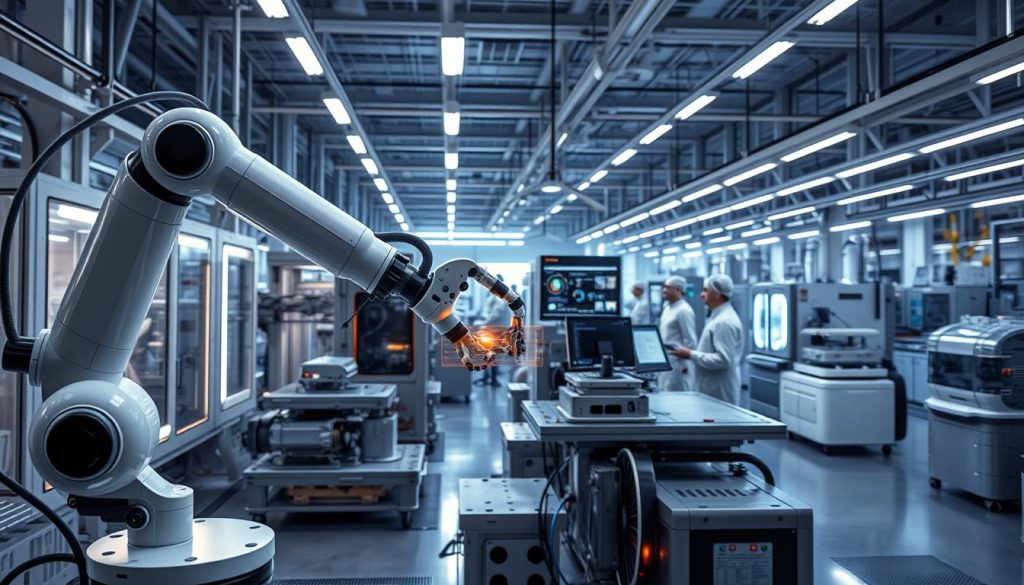
New capabilities are emerging that allow for unprecedented precision and speed. These innovations are set to transform how factories operate and maintain quality.
Edge Computing for Real-Time Decision Making
Processing data directly on the production floor eliminates delays. This approach, known as edge computing, allows for immediate analysis. It reduces dependency on cloud connectivity and bandwidth.
Systems can respond instantly to quality deviations. This immediacy prevents minor issues from becoming major defects. Real-time intervention becomes a practical reality.
Innovative Deep Learning Models for Enhanced Accuracy
Advanced machine learning architectures are achieving new levels of precision. These models require less training data to identify complex patterns. They adapt quickly to new product variations.
This reduces the time and cost to implement new inspection systems. Continuous learning ensures accuracy improves over time.
We integrate these technologies to create robust solutions. The synergy between edge computing and advanced models delivers powerful results.
| Technology Trend |
Primary Impact |
Key Benefit |
Implementation Timeline |
| Edge Computing |
Reduced Latency |
Faster Response |
Immediate |
| Advanced Learning Models |
Higher Accuracy |
Fewer Errors |
6-12 Months |
| IoT Integration |
Holistic Monitoring |
Predictive Insights |
12-18 Months |
| Autonomous Systems |
Self-Optimization |
Continuous Improvement |
18-24 Months |
These trends point toward a future of smarter, more responsive production environments. We help businesses stay ahead by adopting these innovations strategically.
Conclusion
Today’s competitive landscape necessitates a paradigm shift from traditional quality methods to intelligent, data-driven approaches. We’ve demonstrated how advanced imaging technologies combined with artificial intelligence create robust frameworks for operational excellence. This transformation moves beyond simple inspection to build comprehensive ecosystems where quality becomes embedded throughout all processes.
Successful implementation requires strategic planning that addresses both technological and human factors. Our approach ensures seamless integration with existing systems while fostering cultural adoption. Manufacturers who embrace these solutions achieve remarkable gains in efficiency and product quality.
The journey toward operational excellence demands continuous improvement and partnership. We encourage manufacturers to begin with focused implementations that deliver immediate value. By taking this strategic path, businesses can build resilient operations capable of meeting evolving market standards.
FAQ
How does computer vision enhance quality control in manufacturing?
Our systems utilize artificial intelligence to perform automated visual inspections with exceptional accuracy. This technology identifies minute defects and inconsistencies in real-time, ensuring products meet strict quality standards.
What are the primary benefits of implementing automated inspection systems?
Manufacturers gain significant improvements in operational efficiency and product quality. These solutions reduce human error, lower production costs, and enable continuous monitoring throughout the production process.
Can these systems integrate with existing production equipment?
Absolutely. Our intelligent platforms are designed for seamless integration with various machinery and production lines. This compatibility allows for immediate implementation without disrupting current operations.
How does predictive maintenance work with these technologies?
Through continuous data analysis, our models detect patterns that indicate potential equipment issues before they cause defects. This proactive approach minimizes downtime and maintains consistent product quality.
What makes computer vision superior to manual inspection methods?
Unlike manual processes, our AI-driven systems maintain unwavering attention and consistency. They process visual data faster than human capabilities while achieving higher accuracy rates in defect detection.
How scalable are these solutions for different manufacturing environments?
Our technology adapts to various production volumes and product types. Whether for small batches or mass production, the system scales to meet specific operational needs while maintaining inspection standards.
What role does machine learning play in improving defect detection?
Machine learning algorithms continuously analyze new data to refine inspection criteria. This intelligence allows the system to identify emerging defect patterns and adapt to changing production conditions.
How does real-time monitoring impact overall production efficiency?
Immediate feedback enables quick corrections during manufacturing processes. This real-time capability prevents large-scale quality issues and reduces material waste throughout the production line.
Author
Praveena Shenoy
- Country Manager, Opsio
Praveena Shenoy is the Country Manager for Opsio India and a recognized expert in DevOps, Managed Cloud Services, and AI/ML solutions. With deep experience in 24/7 cloud operations, digital transformation, and intelligent automation, he leads high-performing teams that deliver resilience, scalability, and operational excellence. Praveena is dedicated to helping enterprises modernize their technology landscape and accelerate growth through cloud-native methodologies and AI-driven innovations, enabling smarter decision-making and enhanced business agility.