What if the smallest imperfection could compromise your entire production line? In today’s competitive manufacturing landscape, we recognize that meticulous quality control separates industry leaders from the rest.
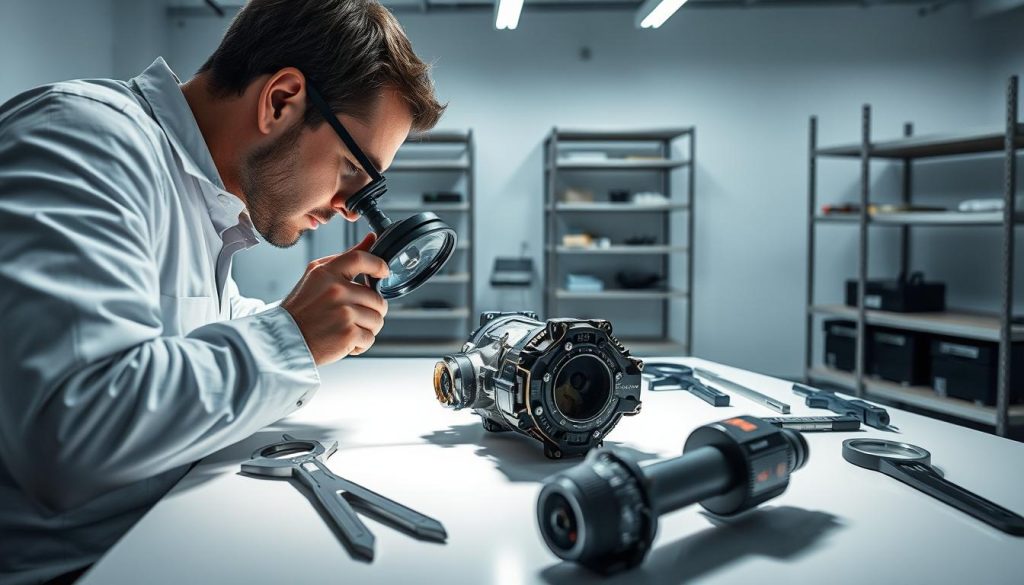
We understand that identifying surface flaws early in the manufacturing process is crucial for maintaining operational excellence. These imperfections, if overlooked, can lead to significant safety concerns and damage brand reputation.
Our approach combines traditional expertise with modern technology to ensure every product meets rigorous standards. We’ve seen how effective inspection protocols can transform production efficiency while reducing costly errors.
By implementing systematic quality assurance methods, manufacturers can achieve remarkable consistency across high-volume operations. This proactive stance on defect prevention ultimately enhances customer satisfaction and protects your investment.
Key Takeaways
- Early detection of surface flaws prevents costly downstream quality issues
- Modern inspection systems balance speed with precision for high-volume production
- Stringent quality protocols protect brand reputation and customer trust
- Systematic approaches reduce manufacturing downtime and operational costs
- Combining technology with human expertise ensures comprehensive quality control
- Proactive defect management aligns with industry regulations and safety requirements
Introduction to Visual Inspection in the Automotive Industry
The journey toward manufacturing excellence begins with a meticulous approach to surface quality assessment across all production stages. We understand that every detail matters when delivering vehicles that meet both regulatory demands and customer expectations.
Overview of Inspection Importance and Industry Standards
In today’s competitive landscape, we recognize that systematic evaluation protocols are essential for maintaining product integrity. These methods serve as the foundation for compliance with rigorous industry benchmarks.
Global standards such as ISO 9001 and IATF 16949 establish clear requirements for dimensional accuracy and surface finish. We help organizations implement these frameworks to ensure consistent adherence to specifications throughout the production cycle.
Our approach emphasizes the critical relationship between thorough assessment and operational safety. By identifying potential issues early, manufacturers can prevent costly recalls and protect their brand reputation.
How Visual Inspection Enhances Quality Assurance
We’ve seen how comprehensive evaluation techniques transform quality management systems. These processes provide immediate feedback that drives continuous improvement across manufacturing operations.
The benefits extend beyond simple defect detection to encompass supplier management and process validation. Our clients achieve remarkable consistency in their output while reducing warranty claims significantly.
Through strategic implementation of assessment protocols, organizations demonstrate their commitment to excellence. This proactive stance supports lean manufacturing principles and zero-defect objectives across the entire production ecosystem.
Understanding Inspection Techniques and Methods
Modern manufacturing requires a strategic approach to defect identification across diverse components. We help organizations navigate the complex landscape of available evaluation methodologies to optimize their quality assurance processes.

Different scenarios demand specific assessment approaches, each with distinct advantages and limitations. Our expertise lies in matching the right technique to each unique production challenge.
Manual Versus Automated Inspection Methods
Traditional manual assessment relies on operator expertise to identify surface imperfections. While flexible for varied sample types, this method introduces variability due to subjective judgment.
Automated systems employ high-resolution cameras and sophisticated image processing software. These systems objectively evaluate parts against predefined criteria, significantly reducing human error.
| Method |
Best For |
Throughput |
Consistency |
| Manual Evaluation |
Low-volume, diverse parts |
Moderate |
Variable |
| Automated Systems |
High-volume production |
High |
Excellent |
| 3D Imaging |
Complex geometries |
Moderate |
High |
| Borescope Tools |
Internal cavities |
Low |
Good |
The Role of 3D Imaging and Microscopy in Detecting Defects
Advanced imaging technologies extend assessment capabilities beyond surface-level observation. Industrial microscopes paired with cameras provide nondestructive detection of microscopic imperfections.
These tools enable detailed analysis of minute cracks and material inconsistencies. They deliver precision evaluation for critical applications where minor flaws could compromise performance.
Exploring Borescope Inspection for Hard-to-Reach Areas
Borescope equipment represents specialized tools for examining inaccessible internal cavities. These optical devices transmit real-time images from locations traditional methods cannot access.
They enable nondestructive observation of deep locations within complex assemblies. This approach allows inspectors of all skill levels to perform comprehensive internal assessments.
Leveraging Automotive Component Visual Inspection for Enhanced Quality Control
Achieving manufacturing consistency requires more than just skilled operators—it demands well-defined processes that eliminate variability across all production stages. We help organizations implement systematic approaches that deliver reliable outcomes.
Integrating Inspection Checklists and Standard Procedures
We advocate for comprehensive checklists as the foundation of effective quality control. These living documents evolve with manufacturing processes and standards. They ensure every characteristic receives proper attention.
Our approach transforms traditional methods into structured, traceable disciplines. Digital tools with step-by-step guidance create unified frameworks across operations.
| Checklist Type |
Application |
Benefits |
Implementation |
| Basic Quality |
Initial screening |
Quick identification |
All personnel |
| Detailed Assessment |
Final approval |
Comprehensive evaluation |
Trained inspectors |
| Digital Platform |
Continuous monitoring |
Real-time feedback |
Integrated systems |
Ensuring Consistency and Reducing Human Error
Structured training programs equip teams with essential skills for accurate defect identification. We focus on practical application and consistent interpretation of results.
Reducing human error remains a critical objective in our quality control methodology. Standardized procedures with visual guides minimize subjective judgment. This systematic visual inspection approach ensures uniform documentation regardless of experience levels.
Technology-enhanced tools provide real-time feedback and automated prompts. These solutions transform subjective processes into data-driven quality assurance systems.
Best Practices for an Optimized Inspection Process
Comprehensive planning transforms routine checks into strategic quality management tools that drive continuous improvement. We help organizations develop systematic frameworks that elevate basic evaluations into powerful defect prevention systems.
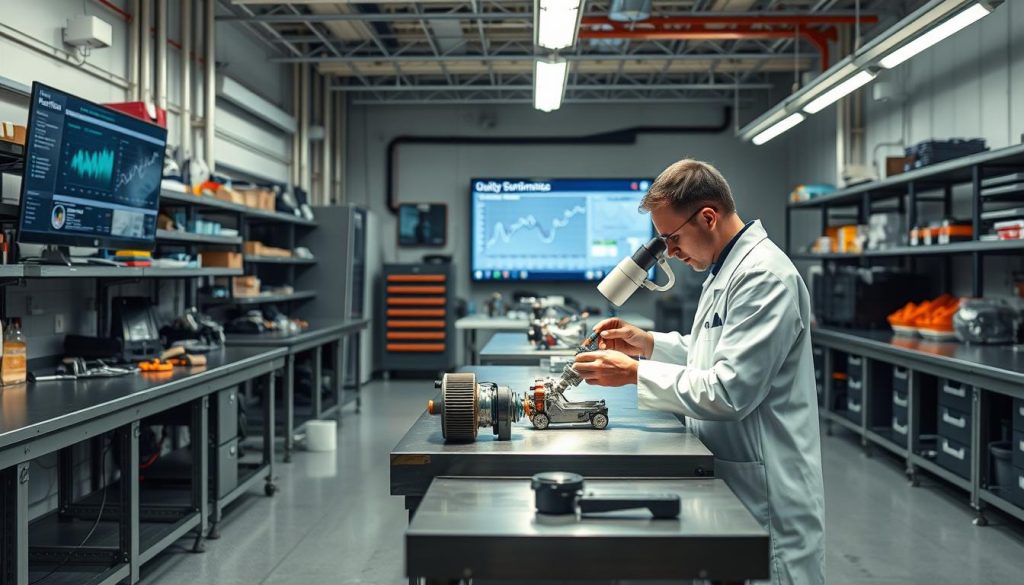
Our approach focuses on creating structured methodologies that balance thoroughness with operational efficiency. This strategic planning ensures every assessment delivers maximum value while minimizing production disruptions.
Developing Comprehensive Inspection Plans
We champion detailed planning that systematically defines evaluation scope and critical quality characteristics. This method establishes clear acceptance criteria and sampling strategies for consistent results.
Risk-based approaches prioritize resources on high-impact defect categories while streamlining lower-risk items. This optimization maximizes quality assurance effectiveness within operational constraints.
Third-party validation introduces unbiased perspectives that enhance overall assessment accuracy. External expertise helps identify overlooked issues and validates internal processes.
| Plan Element |
Implementation Focus |
Quality Impact |
Resource Allocation |
| Scope Definition |
Critical components |
High reliability |
Strategic priority |
| Sampling Strategy |
Risk-based selection |
Balanced coverage |
Efficient distribution |
| Documentation Standards |
Complete traceability |
Continuous improvement |
Moderate investment |
| Audit Frequency |
Regular assessment |
Process validation |
Scheduled reviews |
Regular quality audits systematically evaluate assessment effectiveness and identify procedural gaps. These reviews support continuous improvement and address root causes of quality issues.
Thorough documentation enables traceability and trend analysis that drives sustainable quality outcomes. We emphasize creating environments where excellence becomes a shared organizational commitment.
Integrating Advanced Tools and Technologies>
Today’s quality control landscape demands technological sophistication that transforms traditional assessment methods. We help manufacturers implement cutting-edge systems that deliver unprecedented accuracy while streamlining operations.
Modern approaches leverage intelligent systems that continuously improve through machine learning. These solutions represent a significant advancement beyond manual processes.
Utilizing AI, Machine Vision, and Image Processing
Artificial intelligence integrated with high-resolution cameras creates systems that detect subtle imperfections human eyes might miss. These tools analyze surface characteristics against predefined parameters with objective precision.
Machine learning algorithms enable continuous improvement as systems process more data. This creates increasingly accurate detection capabilities over time.
Robotic arms equipped with vision systems provide flexible assessment solutions for complex geometries. They capture comprehensive data from multiple angles without extensive setup requirements.
Innovative AR Solutions for Real-Time Comparison and Feedback
Augmented reality applications revolutionize how teams verify product specifications. Tablets with AR capabilities overlay digital CAD models directly onto physical items.
This markerless tracking technology eliminates complex setup procedures. Operators simply import design data and begin immediate comparison.
The system automatically registers and tracks manufactured items through the device’s camera. This enables fast, intuitive verification anywhere in the facility.
We’ve seen how these advanced applications create synergistic ecosystems where multiple technologies work together. The result is consistent, data-driven quality assurance that supports continuous performance improvement.
Enhancing Inspection Accuracy with Automation and Data Analysis
The evolution of quality assurance now embraces automated systems that redefine precision in manufacturing operations. We help organizations implement advanced technologies that deliver consistent, reliable results across diverse production environments.
Implementing Camera-Based and Robotic Inspection Systems
High-resolution imaging systems capture detailed data from various angles and hard-to-reach areas. These automated solutions identify surface imperfections with remarkable consistency.
Robotic arms equipped with advanced cameras navigate complex geometries effortlessly. This technology ensures comprehensive coverage of all critical surfaces during the verification process.
Leveraging Data and Software for Continuous Process Improvement
Sophisticated software platforms analyze collected information to identify patterns and trends. This data-driven approach enables proactive quality management throughout the production cycle.
We’ve seen how automated analysis transforms raw data into actionable insights. These systems support ongoing optimization efforts and help prevent future issues.
The integration of automated technologies creates a robust framework for quality excellence. This approach delivers measurable improvements in both accuracy and operational efficiency.
Conclusion
Effective quality management transcends simple compliance, evolving into a strategic advantage that drives customer satisfaction and market leadership. We’ve demonstrated how systematic approaches to defect detection create measurable improvements across manufacturing operations while protecting brand reputation.
The integration of human expertise with advanced technologies represents the future of quality assurance. This balanced approach delivers consistent results while maintaining the flexibility needed for complex production environments.
Looking forward, we encourage organizations to view quality systems as investments in sustainable growth. Properly implemented frameworks not only prevent issues but also enhance overall performance and competitive positioning.
FAQ
What is the primary goal of implementing a visual inspection system in our production process?
The main objective is to enhance quality control and ensure every part meets strict industry standards. By detecting defects like cracks or surface imperfections early, we help prevent safety issues and costly recalls, directly supporting operational efficiency and protecting your brand’s reputation.
How do automated methods compare to manual checks for identifying issues?
Automated systems, utilizing machine vision and high-resolution cameras, offer superior speed, consistency, and accuracy. They significantly reduce human error and can operate continuously, providing more reliable results and comprehensive data analysis compared to traditional manual approaches.
Can these inspection tools effectively examine hard-to-reach areas like internal engine components?
A> Yes, advanced tools such as borescopes and 3D imaging technologies are specifically designed for this challenge. They allow inspectors to visually assess confined spaces without disassembly, ensuring thorough examination of critical areas and maintaining the integrity of the assembly.
What role does software and data play in improving our inspection process over time?
Sophisticated software transforms inspection from a simple pass/fail check into a powerful diagnostic tool. It collects and analyzes performance data, helping identify trends and potential weaknesses in the manufacturing line. This enables continuous process improvement and predictive quality assurance.
Are there solutions to provide real-time guidance to our technicians during inspections?
Absolutely. Innovative Augmented Reality (AR) solutions can overlay digital information, such as CAD models or acceptance criteria, directly onto the physical object. This provides immediate feedback and comparison, speeding up the process and ensuring adherence to procedures.
Author
Praveena Shenoy
- Country Manager, Opsio
Praveena Shenoy is the Country Manager for Opsio India and a recognized expert in DevOps, Managed Cloud Services, and AI/ML solutions. With deep experience in 24/7 cloud operations, digital transformation, and intelligent automation, he leads high-performing teams that deliver resilience, scalability, and operational excellence. Praveena is dedicated to helping enterprises modernize their technology landscape and accelerate growth through cloud-native methodologies and AI-driven innovations, enabling smarter decision-making and enhanced business agility.