Cloud computing has revolutionized how businesses operate, but with this transformation comes a significant challenge: managing and optimizing cloud costs. As organizations migrate more workloads to the cloud, many find themselves facing unpredictable spending, budget overruns, and a lack of financial accountability. This is where FinOps enters the picture – a practice that’s rapidly becoming essential for businesses seeking to maximize their cloud investments.
What is FinOps?
FinOps, short for Financial Operations, is a cloud financial management discipline that brings together technology, finance, and business teams to drive financial accountability and optimize cloud costs. It represents a cultural shift in how organizations approach cloud spending, moving from reactive cost management to proactive financial planning and optimization.
According to the FinOps Foundation, FinOps is “the practice of bringing financial accountability to the variable spend model of the cloud, enabling distributed teams to make business trade-offs between speed, cost, and quality.” Rather than simply cutting costs, FinOps focuses on maximizing business value from cloud investments through informed, data-driven decisions.
The Three Tenets of FinOps
The FinOps framework consists of three core phases that organizations cycle through continuously:
Inform
This phase focuses on visibility and allocation. Teams gain real-time insights into cloud costs, understand spending patterns, and allocate costs to specific business units, products, or teams. This visibility creates the foundation for accountability and informed decision-making.
Optimize
With clear visibility established, teams can identify opportunities for optimization. This includes rightsizing resources, eliminating waste, leveraging reserved instances and savings plans, and implementing architectural improvements to reduce costs without sacrificing performance.
Operate
The operate phase involves continuous improvement through automation, governance, and cultural reinforcement. Teams establish processes to maintain optimization, implement guardrails, and foster a cost-conscious culture across the organization.
Why is FinOps Important?
Cloud spending continues to accelerate, with Gartner forecasting worldwide end-user spending on public cloud services to reach nearly $600 billion in 2023. Yet studies consistently show that organizations struggle to manage these costs effectively. According to industry research, companies estimate that approximately 30% of their cloud spend is wasted, and actual cloud costs frequently exceed budgets by 13-20%.
FinOps addresses these challenges by:
- Creating visibility into who is spending what and why
- Establishing accountability for cloud costs across teams
- Enabling accurate forecasting and budgeting
- Optimizing cloud resources to eliminate waste
- Balancing speed, cost, and quality in cloud operations
- Facilitating collaboration between finance, technology, and business teams
Without FinOps, organizations often find themselves in a reactive cycle of cost surprises, emergency optimizations, and friction between teams. FinOps breaks this cycle by creating a proactive, collaborative approach to cloud financial management.
The Six Core Principles of FinOps
The FinOps Foundation has established six principles that guide effective FinOps implementation. These principles serve as the foundation for building a successful FinOps practice:
1. Team Collaboration
FinOps requires breaking down silos between finance, technology, and business teams. When these groups collaborate effectively, they can balance the competing priorities of speed, cost, and quality. This collaboration enables standardized governance and controls while empowering engineers to make cost-conscious decisions.
2. Ownership and Accountability
In a FinOps culture, everyone takes ownership of their cloud usage. Teams should understand the costs associated with their resources and have the tools to manage those costs effectively. This distributed accountability ensures that those closest to the resources can make informed decisions about usage and optimization.
3. Centralized FinOps Team
While accountability is distributed, a centralized FinOps team should drive the overall strategy, establish best practices, and provide guidance. This team can negotiate with cloud providers, manage commitment-based discounts, and ensure consistent application of FinOps principles across the organization.
4. Timely and Accessible Reporting
Effective FinOps requires real-time visibility into cloud costs. Reports should be accessible to all stakeholders and provide actionable insights that drive decision-making. This visibility enables teams to quickly identify and address cost anomalies or optimization opportunities.
5. Business-Driven Decision Making
FinOps decisions should be driven by business value, not just cost reduction. Teams need to understand the relationship between cloud spending and business outcomes to make informed trade-offs. Sometimes, increased spending is justified if it delivers proportionally greater business value.
6. Leveraging the Variable Cost Model
The cloud’s variable cost model offers unique opportunities for optimization. Organizations should take advantage of this flexibility by rightsizing resources, using commitment-based discounts, implementing auto-scaling, and continuously adapting their cloud usage to match business needs.
How to Implement FinOps in Your Organization
Implementing FinOps is a journey that requires careful planning, stakeholder buy-in, and continuous refinement. Here’s a step-by-step approach to building a successful FinOps practice:

1. Assess Your Current State
Begin by evaluating your organization’s current cloud cost management practices. Identify pain points, gaps in visibility, and areas where costs are unpredictable or unoptimized. This assessment provides a baseline for measuring progress and helps prioritize initial efforts.
2. Build Your FinOps Team
Identify key stakeholders from finance, technology, and business teams to form your FinOps team. This cross-functional group will drive the implementation and ongoing operation of your FinOps practice. Consider designating a FinOps lead who can champion the initiative and coordinate efforts across teams.
3. Establish Visibility and Allocation
Implement tools and processes to gain visibility into cloud costs and allocate them to appropriate teams, projects, or products. This may involve tagging resources, setting up cost allocation rules, and creating dashboards that provide real-time insights into spending patterns.
4. Define Metrics and Goals
Establish key performance indicators (KPIs) that align with your business objectives. These might include cost per customer, unit economics, forecast accuracy, optimization savings, or cloud efficiency metrics. Set realistic goals for improvement and track progress regularly.
5. Implement Optimization Strategies
Based on your visibility and metrics, identify and implement optimization opportunities. Common strategies include:
- Rightsizing underutilized resources
- Implementing auto-scaling for variable workloads
- Leveraging reserved instances and savings plans
- Optimizing storage usage and tiers
- Identifying and eliminating idle or unused resources
- Implementing architectural improvements for cost efficiency
6. Foster a FinOps Culture
FinOps is as much about culture as it is about tools and processes. Educate teams about cloud cost management, celebrate cost optimization wins, and integrate FinOps principles into your development and operations workflows. Make cost a shared responsibility across the organization.
7. Continuously Improve
FinOps is not a one-time project but an ongoing practice. Regularly review your metrics, refine your processes, and adapt to changes in your cloud usage and business needs. The FinOps lifecycle of Inform, Optimize, and Operate should be continuously repeated to drive ongoing improvement.
Key FinOps Stakeholders and Their Roles
Successful FinOps implementation requires involvement from multiple stakeholders across the organization. Each plays a crucial role in driving financial accountability and optimization:

Executives
C-level executives provide strategic direction, allocate resources for FinOps initiatives, and foster a culture of financial accountability. Their support is essential for breaking down organizational silos and ensuring FinOps becomes a priority across teams.
Finance Teams
Finance professionals bring financial expertise to cloud cost management. They help establish budgets, forecasts, and financial governance processes. They also translate technical metrics into business terms that executives can understand and act upon.
Engineering and Operations
Engineers and operations teams implement and maintain cloud resources. In a FinOps model, they take ownership of the costs associated with their resources and make optimization decisions that balance performance, reliability, and cost.
Product Owners
Product owners understand the business requirements and customer needs that drive cloud usage. They help prioritize optimization efforts based on business impact and ensure that cost decisions don’t negatively affect product quality or customer experience.
FinOps Practitioners
Dedicated FinOps practitioners coordinate the overall FinOps practice. They implement tools, establish processes, provide training, and facilitate collaboration between other stakeholders. They serve as the champions and experts for cloud financial management.
Procurement
Procurement teams negotiate contracts with cloud providers, manage commitment-based discounts, and ensure compliance with purchasing policies. Their expertise helps organizations maximize the value of their cloud investments through favorable terms and pricing.
Common FinOps Challenges and How to Overcome Them
While the benefits of FinOps are clear, implementing it successfully can be challenging. Here are some common obstacles organizations face and strategies to overcome them:

Organizational Silos
Challenge: Traditional organizational structures often separate finance, technology, and business teams, making collaboration difficult.
Solution: Create cross-functional FinOps teams with representatives from each department. Establish regular meetings and shared goals to foster collaboration and break down silos.
Lack of Visibility
Challenge: Many organizations struggle to gain comprehensive visibility into their cloud costs, especially in multi-cloud environments.
Solution: Implement cloud cost management tools that provide unified visibility across cloud providers. Establish consistent tagging and allocation practices to ensure costs can be attributed accurately.
Cultural Resistance
Challenge: Engineers may resist cost optimization if they perceive it as limiting their ability to innovate or deliver quality services.
Solution: Frame FinOps as an enabler of innovation, not a constraint. Educate teams on how cost optimization can free up resources for new initiatives and demonstrate how FinOps principles align with engineering best practices.
Complex Pricing Models
Challenge: Cloud provider pricing models are complex and constantly evolving, making it difficult to forecast and optimize costs.
Solution: Invest in training for key team members and leverage tools that can analyze pricing options and recommend optimal purchasing strategies. Consider working with FinOps experts who stay current on cloud pricing developments.
Balancing Speed and Cost
Challenge: Organizations often struggle to balance the need for rapid delivery with cost optimization goals.
Solution: Integrate cost considerations into your development and deployment processes. Implement guardrails that prevent excessive spending without impeding progress, and establish clear criteria for when to prioritize speed over cost.
Measuring Success
Challenge: It can be difficult to measure the success of FinOps initiatives and demonstrate their value to the organization.
Solution: Establish clear KPIs that align with business objectives, and track them consistently. Celebrate and communicate wins, such as cost savings or improved unit economics, to build momentum and demonstrate value.
FinOps vs. Traditional Cloud Cost Management
FinOps represents a significant evolution from traditional approaches to cloud cost management. Understanding these differences helps organizations appreciate the value of adopting FinOps principles:
| Aspect |
Traditional Cost Management |
FinOps Approach |
| Responsibility |
Centralized with finance or IT |
Distributed across teams with centralized guidance |
| Timing |
Reactive, often monthly or quarterly reviews |
Proactive, continuous monitoring and optimization |
| Focus |
Cost reduction |
Value optimization (balancing cost, speed, and quality) |
| Collaboration |
Limited, often siloed |
Cross-functional, collaborative |
| Decision Making |
Top-down, often without technical context |
Informed by both business and technical considerations |
| Tools |
Basic reporting and budgeting |
Advanced analytics, allocation, and optimization |
| Culture |
Cost as a constraint |
Cost as a design consideration |
The FinOps approach recognizes that in the cloud era, financial management must be integrated into day-to-day operations rather than treated as a separate, periodic activity. By embedding cost awareness into technical and business decisions, organizations can achieve greater efficiency without sacrificing innovation or quality.
Essential FinOps Tools and Technologies
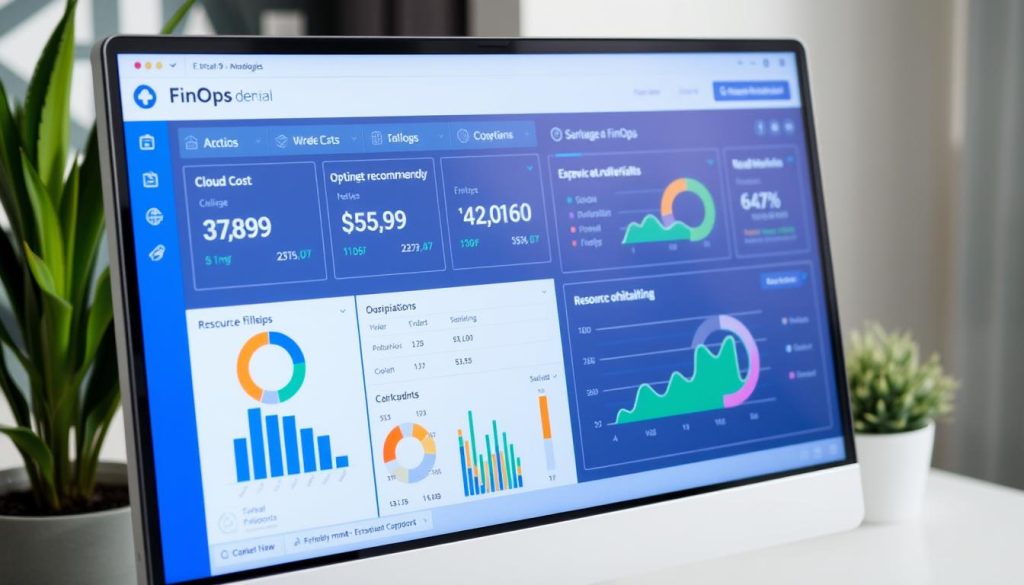
Implementing FinOps requires the right tools to provide visibility, enable optimization, and support collaboration. Here are the key categories of tools that support effective FinOps practices:
Cloud Cost Management Platforms
These comprehensive platforms provide visibility into cloud spending across providers, allocate costs to business units or products, and identify optimization opportunities. They often include features for budgeting, forecasting, anomaly detection, and recommendation engines.
Resource Optimization Tools
These specialized tools focus on specific optimization strategies, such as rightsizing instances, managing reserved capacity, optimizing storage, or identifying idle resources. They may use machine learning to recommend optimal configurations based on workload patterns.
Tagging and Allocation Tools
These tools help organizations implement and enforce tagging policies, automatically tag resources, and allocate shared costs to appropriate teams or projects. They ensure that costs can be accurately attributed to the business activities that generate them.
Financial Integration Tools
These tools connect cloud spending with financial systems, enabling accurate budgeting, forecasting, and chargeback processes. They help translate technical metrics into financial terms that business leaders can understand and act upon.
Collaboration and Workflow Tools
These tools facilitate communication and coordination between FinOps stakeholders. They may include dashboards, notification systems, and workflow automation to streamline the FinOps process and ensure that insights lead to action.
When selecting FinOps tools, consider your organization’s specific needs, cloud providers, scale of operations, and existing technology stack. The right combination of tools can significantly accelerate your FinOps journey and maximize the value you derive from your cloud investments.
Measuring the Benefits of FinOps
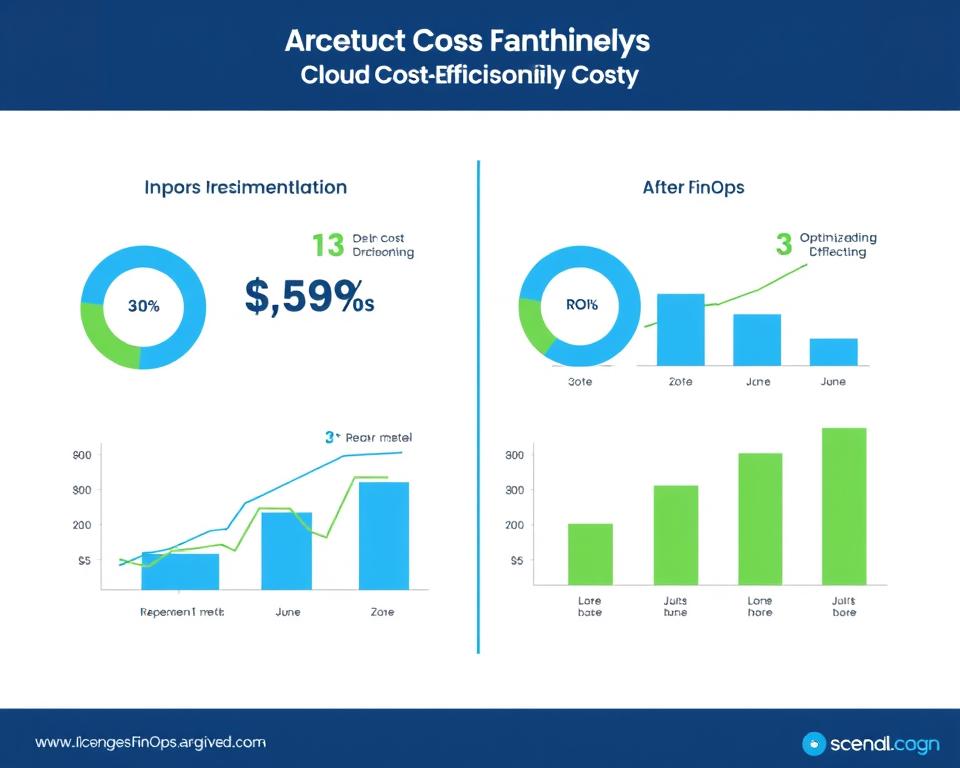
Implementing FinOps can deliver significant benefits to organizations of all sizes. Here are some key metrics to track and the typical improvements organizations see after adopting FinOps practices:
Cost Optimization
- 20-30% reduction in cloud waste
- 15-25% improvement in resource utilization
- Increased usage of discounted pricing options
- Reduced spending on idle or underutilized resources
Financial Management
- Improved forecast accuracy (within 5-10% of actual)
- Better alignment of costs with business activities
- More predictable cloud spending patterns
- Reduced budget overruns and surprises
Operational Efficiency
- Faster identification and resolution of cost anomalies
- Improved collaboration between teams
- More informed decision-making about cloud resources
- Reduced time spent on manual cost management tasks
Beyond these quantitative benefits, organizations often report qualitative improvements such as greater cost awareness across teams, more strategic use of cloud resources, and better alignment between technology decisions and business objectives. The cumulative impact of these benefits can be substantial, with many organizations achieving a return on their FinOps investment within months.
How Opsio Cloud Supports Your FinOps Journey
At Opsio Cloud, we understand the challenges organizations face when implementing FinOps. Our comprehensive suite of services is designed to accelerate your FinOps journey and help you maximize the value of your cloud investments:
FinOps Assessment
Our expert team evaluates your current cloud cost management practices, identifies gaps and opportunities, and develops a customized roadmap for FinOps implementation. This assessment provides a clear starting point and prioritized action plan for your FinOps journey.
Cloud Cost Optimization
We help you identify and implement optimization opportunities across your cloud environment. Our approach combines automated tools with expert analysis to ensure you’re getting the most value from your cloud resources without compromising performance or reliability.
FinOps Platform
Our cloud-native FinOps platform provides comprehensive visibility, allocation, and optimization capabilities. With real-time dashboards, advanced analytics, and automated recommendations, you can monitor and manage your cloud costs with unprecedented precision.
FinOps Training
We offer customized training programs to help your team develop the skills and knowledge needed for effective FinOps. From basic principles to advanced techniques, our training equips your team to drive continuous optimization and financial accountability.
Managed FinOps Services
For organizations that prefer to outsource some or all of their FinOps functions, we offer managed services that provide ongoing monitoring, optimization, and reporting. Our experts become an extension of your team, ensuring your cloud costs remain optimized as your environment evolves.
Multi-Cloud Governance
We help you establish consistent policies, processes, and controls across multiple cloud providers. Our governance framework ensures that your FinOps practices are applied consistently, regardless of where your workloads are running.
Ready to Transform Your Cloud Financial Management?
Take the first step toward optimized cloud costs and greater financial accountability with Opsio Cloud’s FinOps solutions.
Start Your FinOps Journey
Conclusion: The Future of Cloud Financial Management
As cloud adoption continues to accelerate, effective financial management becomes increasingly critical to business success. FinOps represents the evolution of cloud cost management from a siloed, reactive activity to a collaborative, proactive discipline that drives business value.

By implementing FinOps principles and practices, organizations can achieve greater visibility into their cloud costs, establish accountability across teams, optimize their cloud resources, and make more informed decisions about their cloud investments. The result is not just reduced waste and lower costs, but also improved alignment between technology spending and business outcomes.
The journey to FinOps maturity is continuous, with organizations constantly refining their practices as their cloud usage evolves and new optimization opportunities emerge. Those who embrace this journey position themselves to leverage the full potential of cloud computing while maintaining financial control and maximizing return on investment.
Whether you’re just beginning your FinOps journey or looking to enhance your existing practices, Opsio Cloud is here to help. Our comprehensive solutions and expert guidance can accelerate your path to cloud financial excellence and help you turn cloud cost management from a challenge into a competitive advantage.