

In today's fast-evolving digital landscape, businesses are continually seeking ways to enhance agility, foster innovation, and optimize operational efficiency. Cloud Adoption stands as a pivotal strategy for achieving these goals, transforming how organizations store data, run applications, and leverage technology. This comprehensive guide will walk you through the intricacies of a successful cloud journey, from initial strategy to advanced architecture.
Understanding Cloud Adoption: A Strategic Imperative
Cloud Adoption refers to the process of leveraging cloud computing services for business operations. This involves migrating data, applications, and IT infrastructure from on-premise environments to a cloud provider's infrastructure. It represents a fundamental shift in how an organization consumes and manages technology resources, driving significant change.
The strategic imperative behind Cloud Adoption is driven by the demand for flexibility, scalability, and cost-effectiveness. Organizations recognize that traditional IT models struggle to keep pace with rapid market changes and escalating data volumes. Embracing the cloud allows businesses to remain competitive and responsive in their respective markets.
Many companies see Cloud Adoption as a cornerstone of their broader digital transformation initiatives. It provides the underlying platform necessary for modern applications, advanced analytics, and machine learning capabilities. This foundation empowers businesses to innovate faster and deliver superior services to their customers.
Key Benefits of Cloud Adoption for Modern Enterprises
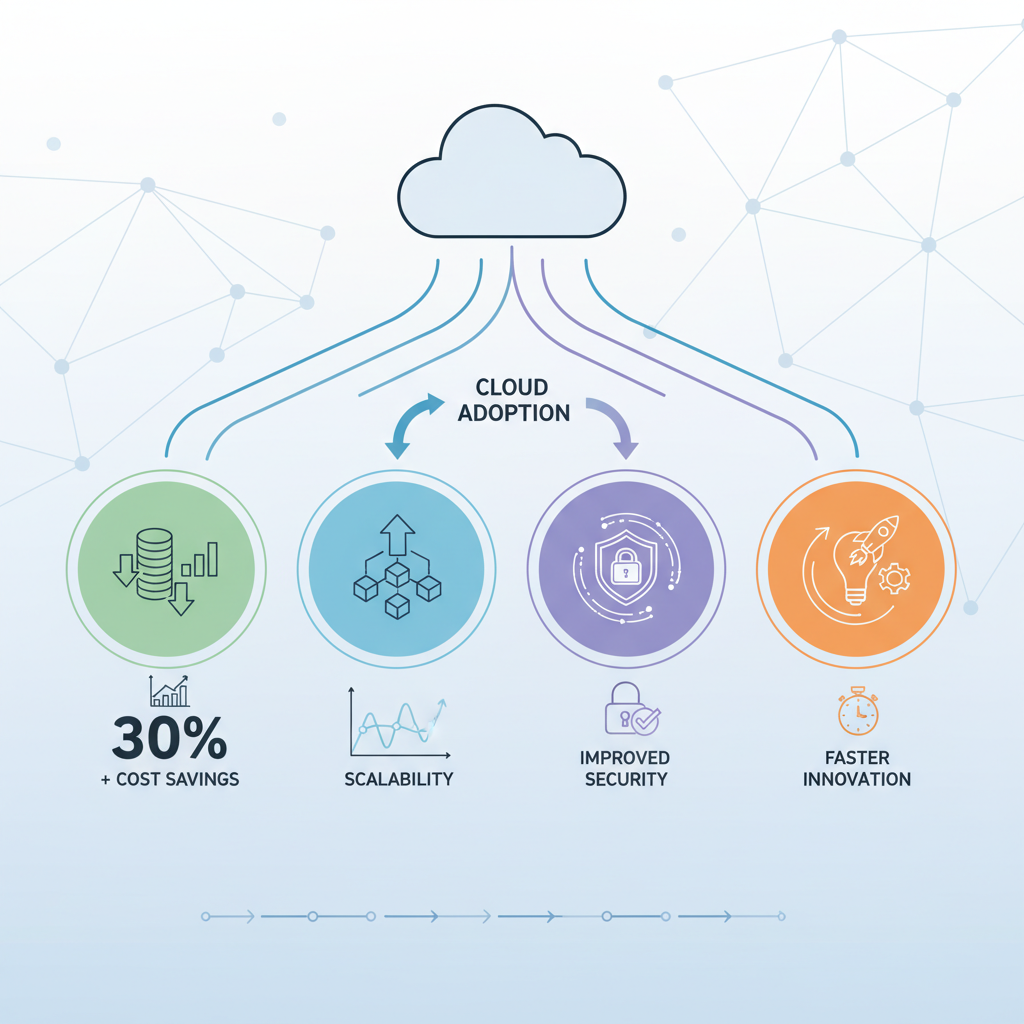
The move to the cloud offers a multitude of compelling advantages that drive business growth and operational excellence. Understanding these benefits of cloud computing for businesses is crucial for building a strong case for Cloud Adoption within any organization. These advantages span across financial, operational, and strategic domains.
One primary benefit is significant cost reduction. Cloud services often operate on a pay-as-you-go model, eliminating the need for large upfront investments in hardware and infrastructure maintenance. This shifts capital expenditures (CapEx) to operational expenditures (OpEx), offering greater financial flexibility and predictability.
Enhanced scalability and elasticity are also critical benefits. Businesses can instantly scale resources up or down based on demand, ensuring optimal performance during peak times and cost savings during low usage periods. This agility is vital for adapting to fluctuating market conditions and supporting rapid business expansion.
Improved operational efficiency and reliability are further advantages. Cloud providers offer robust infrastructure, disaster recovery options, and high availability, often surpassing what individual enterprises can maintain. This leads to reduced downtime, more resilient operations, and minimized operational overhead.
Moreover, Cloud Adoption fosters innovation and agility. By providing access to cutting-edge technologies like AI, machine learning, and serverless computing, the cloud empowers development teams to build and deploy applications faster. This accelerated pace of innovation helps businesses stay ahead in competitive markets.
Crafting Your Cloud Adoption Strategy
Developing a well-defined enterprise cloud strategy is the foundational step for any successful Cloud Adoption journey. This strategy must align with overall business objectives and address both technical and organizational considerations. A clear roadmap minimizes risks and maximizes the value derived from cloud investments.
Begin by assessing your current IT landscape and business requirements. Understand your existing applications, data dependencies, compliance needs, and performance expectations. This comprehensive assessment forms the basis for informed decision-making regarding cloud suitability and potential benefits.
Define clear business objectives for your Cloud Adoption. Are you aiming for cost reduction, increased agility, faster time-to-market, or global expansion? Specific, measurable goals will guide your strategy and allow for effective progress tracking throughout the journey.
Key Elements of an Effective Cloud Strategy
An effective cloud strategy involves several interconnected components. Each element plays a crucial role in ensuring a smooth and successful transition to the cloud environment. Addressing these proactively helps mitigate common challenges and ensures long-term success.
- Business Alignment: Ensure cloud initiatives directly support strategic business goals and desired outcomes. This alignment secures executive buy-in and appropriate resource allocation.
- Application Portfolio Analysis: Categorize applications based on their suitability for cloud migration. This analysis informs your cloud migration strategy by determining which applications to rehost, replatform, or refactor.
- Security and Compliance: Integrate security from the outset, ensuring all cloud deployments meet regulatory requirements and industry best practices.
- Financial Planning: Develop a clear financial model, understanding the total cost of ownership (TCO) in the cloud versus on-premise. Factor in both operational costs and potential savings.
Developing a Robust Cloud Migration Strategy
Once your overall enterprise cloud strategy is in place, the next crucial step is to define a detailed cloud migration strategy. This plan outlines precisely how your existing applications and data will move to the cloud. A well-executed migration minimizes disruption and maximizes efficiency.
Start with a thorough application assessment to determine the best migration approach for each workload. The common strategies, often referred to as the '6 Rs,' include rehosting, replatforming, refactoring, re-purchasing, retaining, and retiring. Each approach has distinct implications for effort, cost, and benefit realization.
Prioritize applications for migration based on complexity, dependencies, business impact, and strategic value. Often, less critical or easier-to-move applications are migrated first to build experience and demonstrate early successes. This phased approach helps reduce overall project risk.
Best Practices for Cloud Migration
Adopting best practices can significantly enhance the success rate of your cloud migration strategy. These guidelines help avoid common pitfalls and ensure a smoother transition to the cloud. Proactive planning and systematic execution are paramount.
- Pilot Projects: Begin with a small, non-critical application as a pilot project. This allows your team to gain valuable experience and refine processes before tackling more complex workloads.
- Automate Where Possible: Leverage automation tools for provisioning, configuration, and deployment to accelerate migration and reduce manual errors.
- Monitor Performance: Continuously monitor migrated applications for performance, cost, and security. Adjust configurations as needed to optimize cloud resources effectively.
- Security First: Embed security considerations into every phase of the migration process, from network design to identity and access management.
Implementing Your Cloud Adoption Roadmap
With a clear strategy and migration plan, the next phase is the actual execution, guided by a well-defined cloud implementation roadmap. This roadmap breaks down the Cloud Adoption journey into manageable stages, tasks, and timelines. It ensures systematic progress and accountability across the organization.
Your roadmap should detail key milestones, dependencies, and responsible teams for each phase. This includes infrastructure provisioning, application migration, data transfer, testing, and go-live activities. Clear communication across all stakeholders is essential for coordination.
Allocate adequate resources and budget for each stage of the implementation. This includes personnel, tools, and necessary vendor support. Under-resourcing can lead to delays and cost overruns, significantly hindering the overall progress of your Cloud Adoption efforts.
Key Stages in the Implementation Journey
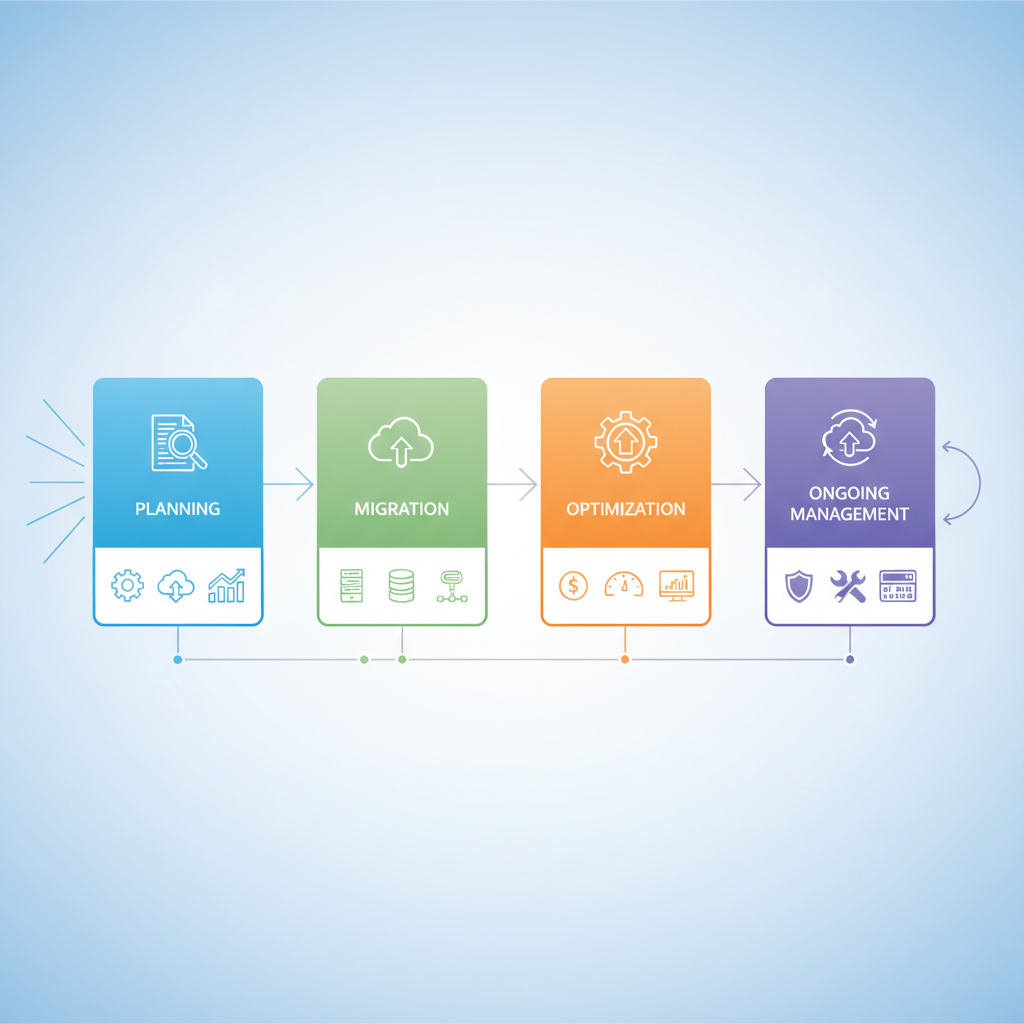
The implementation journey typically involves several distinct stages, each requiring focused effort and attention. Successfully navigating these stages is key to realizing the full potential and benefits of cloud computing for businesses.
1. Preparation Phase: Setting up cloud accounts, establishing network connectivity, and configuring foundational security services. This stage also involves training your teams. 2. Pilot Migration: Migrating a low-risk application to validate the migration process, tools, and operational procedures in a controlled environment. 3. Batch Migrations: Grouping similar applications for migration using repeatable processes. This optimizes efficiency and resource utilization across the board. 4. Optimization: Post-migration, continuously optimizing cloud resources for performance and cost. This includes rightsizing instances and leveraging cloud-native services.
Ensuring Effective Cloud Governance and Security
As your organization expands its Cloud Adoption footprint, establishing a robust cloud governance framework becomes paramount. Governance ensures that cloud resources are used efficiently, securely, and in compliance with organizational policies and regulatory requirements. It is an ongoing process requiring continuous attention.
Define clear policies for resource provisioning, access control, cost management, and security configurations. These policies should be documented and communicated widely across all relevant teams. Automation tools can help enforce these policies consistently and effectively.
Security is a shared responsibility in the cloud. While cloud providers secure the underlying infrastructure, organizations are responsible for securing their data, applications, and operating systems within the cloud. Implement strong identity and access management (IAM) controls, data encryption, and network segmentation.
Regularly audit your cloud environment for compliance and security vulnerabilities. Utilize cloud-native security tools and third-party solutions to continuously monitor configurations and activity. This proactive approach helps identify and remediate risks before they escalate, maintaining a strong security posture.
Key Components of Cloud Governance
A comprehensive cloud governance framework typically includes several essential components. Each component contributes to the overall control and effectiveness of your cloud environment, ensuring proper management and oversight.
- Cost Management: Implement strategies for cost tracking, budgeting, and optimization to prevent unexpected expenditures. Cloud cost management tools are invaluable for this purpose.
- Compliance and Risk Management: Ensure adherence to industry regulations and internal risk policies. Regularly assess potential risks and implement effective mitigation strategies.
- Identity and Access Management (IAM): Control who can access cloud resources and what actions they can perform. Implement the principle of least privilege rigorously.
- Resource Management: Establish clear processes for provisioning, tagging, and de-provisioning cloud resources to maintain order and track usage.
Exploring Advanced Cloud Architectures: Hybrid and Multi-Cloud
Beyond basic Cloud Adoption, many organizations are now exploring advanced architectures like hybrid cloud solutions and multi-cloud architecture. These approaches offer enhanced flexibility, resilience, and vendor diversity, catering to complex and evolving business needs. They represent the next frontier in cloud strategy.
A hybrid cloud solution combines public cloud, private cloud, and on-premises infrastructure, allowing data and applications to move seamlessly between them. This approach is ideal for workloads with specific regulatory requirements or latency needs, while still leveraging the scalability of the public cloud. It offers a balanced approach.
Multi-cloud architecture, on the other hand, involves using services from multiple public cloud providers (e.g., AWS, Azure, Google Cloud). This strategy helps avoid vendor lock-in, improves resilience by distributing workloads, and allows organizations to pick best-of-breed services. It requires careful management and integration expertise.
Implementing these advanced architectures requires sophisticated integration capabilities and robust management tools. It also necessitates a clear understanding of data residency, network connectivity, and inter-cloud security considerations. Strategic planning is crucial to harness their full potential effectively.
Measuring Success and Optimizing Your Cloud Journey
Cloud Adoption is not a one-time project; it's an ongoing journey of continuous improvement and optimization. Measuring success and regularly refining your approach is vital for maximizing the long-term benefits of cloud computing for businesses. Establish clear key performance indicators (KPIs) from the outset.
Monitor critical metrics such as cost efficiency, application performance, uptime, security posture, and developer productivity. Compare these against your initial business objectives to assess the actual value realized from your Cloud Adoption efforts. Use cloud monitoring tools to gain actionable insights.
Regularly review your cloud architecture and resource utilization. Identify opportunities for cost optimization, such as rightsizing instances, leveraging reserved instances or spot instances, and deleting unused resources. Continuous optimization ensures you're getting the most value from your cloud investment.
Foster a culture of continuous learning and adaptation within your organization. The cloud landscape evolves rapidly, so staying updated with new services and best practices is crucial. Regularly re-evaluate your enterprise cloud strategy to ensure it remains aligned with business needs and technological advancements.
Successful Cloud Adoption is a transformative journey that demands strategic planning, meticulous execution, and continuous optimization. By embracing a well-defined cloud migration strategy and a robust cloud governance framework, organizations can unlock unparalleled agility, efficiency, and innovation. The path to cloud success is dynamic, requiring adaptability and a commitment to leveraging technology for sustained competitive advantage.
Ready to accelerate your Cloud Adoption journey and unlock its full potential for your business? Contact our expert team today for a tailored cloud strategy consultation and begin building your future-proof digital infrastructure.
Opsio provides cloud consulting and managed services to help organizations implement and manage their technology infrastructure effectively.