




Essential The service Tools & Technologies
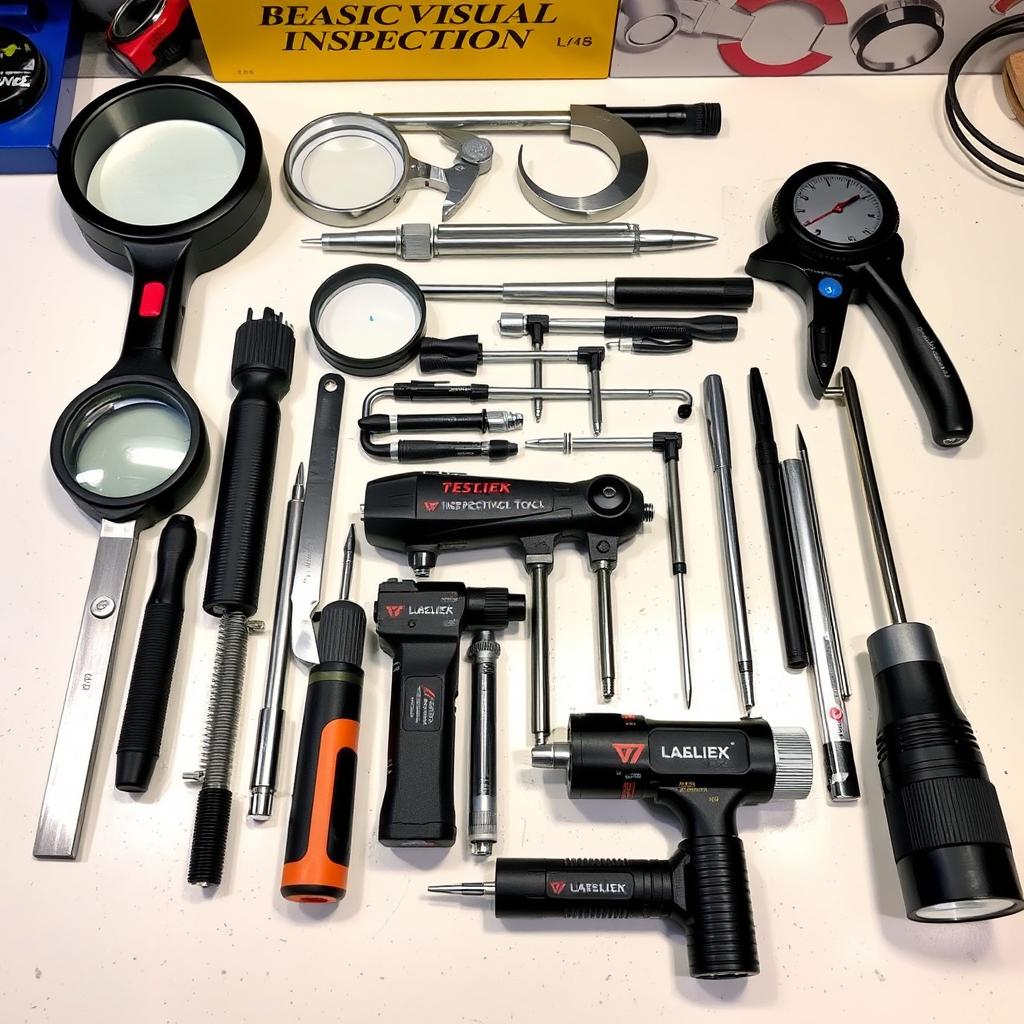
The effectiveness of this inspection depends significantly on the tools and technologies employed. From simple magnifiers to advanced imaging systems, quality professionals have access to a wide range of equipment designed for different inspection scenarios.
Basic Inspection Tools
- Magnifying glasses and loupes
- Inspection mirrors
- Measuring devices (calipers, micrometers)
- Surface comparators
- Specialized lighting (flashlights, UV lights)
Optical Instruments
- Borescopes and fiberscopes
- Video probes and cameras
- Microscopes (digital and optical)
- Endoscopes for confined spaces
- Articulating video probes

Advanced Technologies
- Drone-based inspection systems
- 3D imaging and photogrammetry
- Thermal imaging cameras
- AI-powered defect recognition
- Augmented reality inspection aids

Comparison of This inspection Tools by Application
| Tool Category | Cost Range | Accuracy Level | Best For | Limitations |
| Basic Hand Tools | $10-$500 | Moderate | Surface defects, general inspection | Dependent on inspector skill, limited magnification |
| Borescopes & Video Probes | $500-$15,000 | High | Confined spaces, internal components | Limited maneuverability in complex geometries |
| Digital Microscopes | $200-$5,000 | Very High | Micro-defects, precision components | Limited field of view, requires stable platform |
| Drone Systems | $2,000-$50,000 | Moderate to High | Large structures, hazardous areas | Weather dependent, requires skilled operator |
| AI-Powered Systems | $10,000-$250,000 | Very High | High-volume production, consistent criteria | High implementation cost, requires training data |
These inspection capabilities Best Practices
Standardized procedures and optimal environmental conditions are essential for consistent such solutions results
Environmental Controls
The inspection environment significantly impacts the effectiveness of this approach. Proper controls include:
- Lighting: Maintain a minimum of 500 lux for general inspection tasks and 1000+ lux for precision work. Use diffused lighting to minimize glare and shadows.
- Viewing Angle: Position inspectors within 24 inches (600 mm) of the inspection surface with a viewing angle of no less than 30° to optimize visibility.
- Ergonomics: Design inspection stations to minimize fatigue with adjustable seating, proper work height, and tools that reduce physical strain.
- Background: Use contrasting backgrounds to enhance defect visibility—light backgrounds for dark objects and vice versa.
- Cleanliness: Ensure both the inspection area and the items being inspected are clean and free from contaminants that could obscure defects.
Pro Tip: For critical inspections, implement the "four-eyes principle" where two inspectors independently examine the same item to reduce the risk of missed defects.
Inspector Training and Certification
The human element remains crucial in the service, even with advanced technologies. Effective training programs should include:
- Formal Certification: Industry-recognized certifications such as Certified Welding Inspector (CWI) or ASNT Visual Testing Level II provide standardized knowledge.
- Defect Recognition: Training with actual defect samples and reference standards to develop pattern recognition skills.
- Vision Testing: Regular vision acuity and color perception testing to ensure inspectors can effectively detect visual anomalies.
- Continuous Learning: Ongoing training to maintain skills and learn new inspection techniques as technologies evolve.
- Cross-Training: Familiarity with multiple inspection methods to understand how visual inspection complements other NDT techniques.

Effective training with reference standards is essential for developing inspector proficiency
Documentation and Standardization
Consistent documentation ensures repeatability and traceability in the inspection process:
- Written Procedures: Develop detailed inspection procedures that specify acceptance criteria, inspection methods, and required tools.
- Reference Standards: Maintain calibrated reference samples showing acceptable and unacceptable conditions for comparison.
- Digital Documentation: Use digital systems to record inspection results, including photos of defects for future reference and training.
- Traceability: Implement systems to track which items were inspected, by whom, when, and with what results.
- Regular Audits: Conduct periodic reviews of inspection processes to identify improvement opportunities and ensure compliance with standards.
Case Study: AI-Powered Such solutions Success
How Company X Reduced Defects by 30% Using AI Visual Inspection
Company X, a mid-sized automotive components manufacturer, was struggling with inconsistent quality in their precision machined parts. Manual this approach was time-consuming and subject to inspector fatigue, resulting in customer complaints and costly warranty claims.
The Challenge
- High-volume production (50,000+ parts daily) requiring 100% inspection
- Complex surface finish requirements difficult to standardize
- Inconsistent results between different inspectors and shifts
- Increasing customer quality requirements
The Solution
Company X implemented an AI-powered the service system that combined high-resolution cameras, specialized lighting, and machine learning algorithms trained on thousands of sample images of both acceptable and defective parts.

The AI system was trained to recognize 27 different defect types with 99.7% accuracy
The Results
- 30% reduction in customer-reported defects within 3 months
- 40% increase in inspection throughput
- 22% decrease in quality-related costs
- Redeployment of inspectors to higher-value quality improvement activities
- Comprehensive defect data collection enabling root cause analysis
Common These inspection capabilities Challenges & Solutions
Despite its fundamental importance, such solutions faces several challenges that can impact its effectiveness. Understanding these challenges and implementing appropriate solutions is essential for maintaining inspection quality.
Challenges
- Inspector Fatigue: Prolonged inspection tasks lead to decreased attention and missed defects.
- Subjective Interpretation: Different inspectors may interpret the same visual data differently.
- Complex Geometries: Intricate parts with multiple surfaces are difficult to inspect thoroughly.
- Inaccessible Areas: Internal components or confined spaces may be difficult to view directly.
- Varying Lighting Conditions: Changes in illumination can mask or falsely indicate defects.
- High-Volume Inspection: Large quantities of items require significant time and resources.

Solutions
- Rotation Schedules: Implement regular breaks and task rotation to combat fatigue.
- Standardized Criteria: Develop clear, objective acceptance standards with visual references.
- 3D Imaging: Use photogrammetry and 3D scanning for complex geometries.
- Remote Visual Tools: Deploy borescopes and video probes for inaccessible areas.
- Controlled Lighting: Standardize illumination with consistent, appropriate lighting.
- Automated Systems: Implement AI and computer vision for high-volume inspection.

Future Trends in These inspection capabilities
The field of visual inspection continues to evolve rapidly, driven by advances in imaging technology, artificial intelligence, and connectivity. Understanding these emerging trends can help quality professionals prepare for the future of inspection.
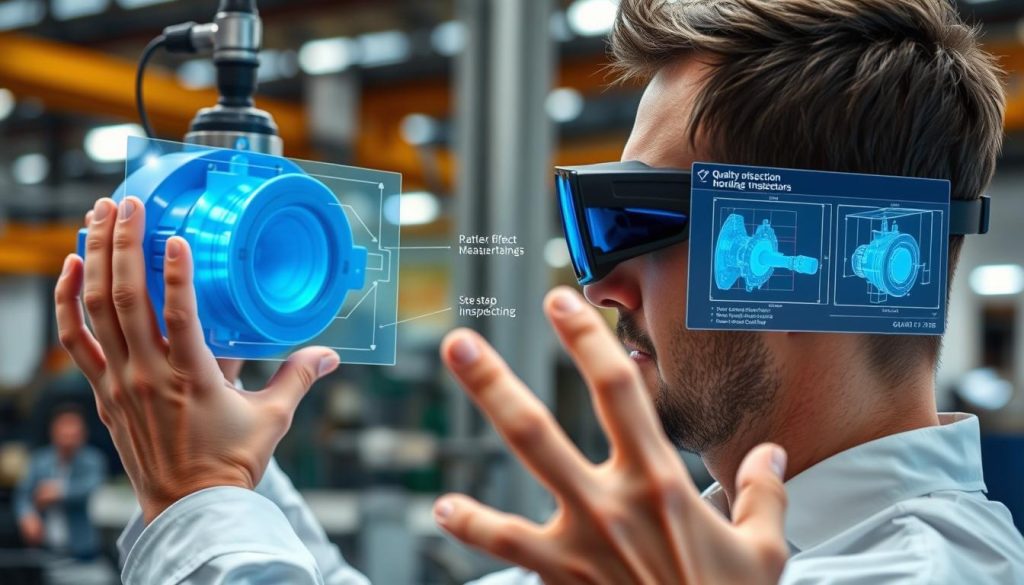
Augmented reality is transforming the service by overlaying reference data and guidance directly in the inspector's field of view
Emerging Technologies
AI/ML Integration
Artificial intelligence and machine learning are revolutionizing visual inspection through:
- Automated defect recognition with increasing accuracy
- Predictive analytics to anticipate quality issues
- Self-learning systems that improve over time
- Natural language processing for automated reporting
Augmented Reality
AR technologies are enhancing human inspector capabilities with:
- Smart glasses displaying inspection checklists
- Real-time overlay of reference standards
- Visual guidance for inspection sequences
- Remote expert assistance for complex issues
Connected Inspection
IoT and cloud technologies are creating integrated inspection ecosystems:
- Real-time data sharing across global operations
- Digital twins for virtual inspection planning
- Blockchain for inspection record verification
- Mobile-first inspection platforms for field use
Industry Adoption Outlook
The implementation of advanced this inspection technologies varies significantly by industry, with aerospace and automotive leading adoption while other sectors follow at different rates:
| Industry | Current Adoption Level | Primary Technologies | Future Outlook |
| Aerospace | High | 3D scanning, AI defect detection, AR-assisted inspection | Full integration of AI with human oversight for critical components |
| Automotive | High | Automated vision systems, robot-assisted inspection | Fully automated inspection lines with minimal human intervention |
| Electronics | Very High | Automated optical inspection (AOI), X-ray systems | Integration of multiple inspection technologies in single systems |
| Oil & Gas | Medium | Drone inspection, remote visual tools | Autonomous robots for hazardous area inspection |
| Food & Beverage | Medium-Low | High-speed vision systems, hyperspectral imaging | AI-powered contamination detection and sorting |
Pro Tip: When implementing new these inspection capabilities technologies, start with pilot projects in critical areas where the ROI is most evident. Use the data and experience gained to guide broader implementation.
Conclusion: Building an Effective Visual Inspection Program
Visual inspection remains a cornerstone of quality assurance across industries, combining the irreplaceable judgment of trained inspectors with increasingly sophisticated technologies. As we've explored throughout this guide, effective visual inspection programs balance traditional methods with emerging technologies to achieve optimal results.
The key elements of a successful visual inspection program include:
- Well-defined inspection criteria and procedures
- Properly trained and certified inspection personnel
- Appropriate tools and technologies for specific inspection needs
- Controlled environmental conditions that optimize visibility
- Comprehensive documentation and traceability systems
- Continuous improvement through data analysis and process refinement
By implementing the methods, tools, and best practices outlined in this guide, quality assurance managers can develop robust visual inspection programs that detect defects early, reduce quality costs, and ultimately deliver superior products to customers.

Continuous improvement through data analysis is essential for evolving visual inspection programs
