

In today's dynamic digital landscape, cloud adoption has become a cornerstone for businesses aiming for agility and innovation. However, uncontrolled cloud expenditures can quickly erode the benefits, transforming a strategic advantage into a significant financial burden. This comprehensive guide will walk you through the essential steps to wisely buy cloud cost optimization software, ensuring your investment delivers maximum value.
Understanding how to effectively buy cloud cost optimization software is crucial for any organization leveraging cloud services. This guide aims to equip you with the knowledge needed to make an informed decision, leading to sustainable savings and improved financial governance. We'll explore various aspects, from identifying your needs to evaluating vendors and successfully implementing your chosen solution.
The Imperative for Cloud Cost Optimization
Cloud services offer unparalleled flexibility and scalability, but they also introduce complexities in cost management. Without proper oversight, organizations often face unexpected expenses, resource wastage, and a lack of visibility into their actual cloud spend. This is where dedicated cloud cost optimization platforms become indispensable.
Many businesses struggle with "bill shock" or realize they are overspending significantly on their cloud infrastructure. This often stems from idle resources, inefficient provisioning, or a failure to leverage discounts and commitment plans. Effective cloud spend management tools purchase decisions are vital to mitigate these risks.
Implementing a robust strategy means proactively managing costs rather than reacting to them. It involves understanding usage patterns, identifying waste, and making data-driven decisions to optimize resource allocation. The right finops software solutions can transform reactive cost management into a strategic advantage.
Organizations seeking to maintain competitive edge and financial health must prioritize optimizing their cloud expenditures. Ignoring this aspect can lead to reduced profitability and hinder future innovation. Therefore, the decision to procure cloud cost analysis tools is a strategic one, impacting the entire organization's financial health and operational efficiency.
Identifying Your Organization's Cloud Spend Challenges
Before you can effectively buy cloud cost optimization software, you must first understand the unique challenges your organization faces. A thorough internal assessment will highlight specific pain points and help define the scope of your future solution. This foundational step is critical for a successful cloud spend management tools purchase.
Start by reviewing your current cloud bills and identifying areas of concern. This might include high data egress charges, underutilized virtual machines, or expensive database instances. Pinpointing these areas will guide your search for the right features in a cloud cost optimization platform.
Understanding Current Cloud Consumption Patterns
Analyzing your existing cloud consumption is the first step in understanding where your money goes. This involves scrutinizing resource usage across different departments and projects. Without this visibility, it's impossible to make informed optimization decisions.
Questions to consider include: Which services are consuming the most budget? Are resources being provisioned efficiently, or is there significant over-provisioning? Are developers spinning up resources without clear decommissioning plans?
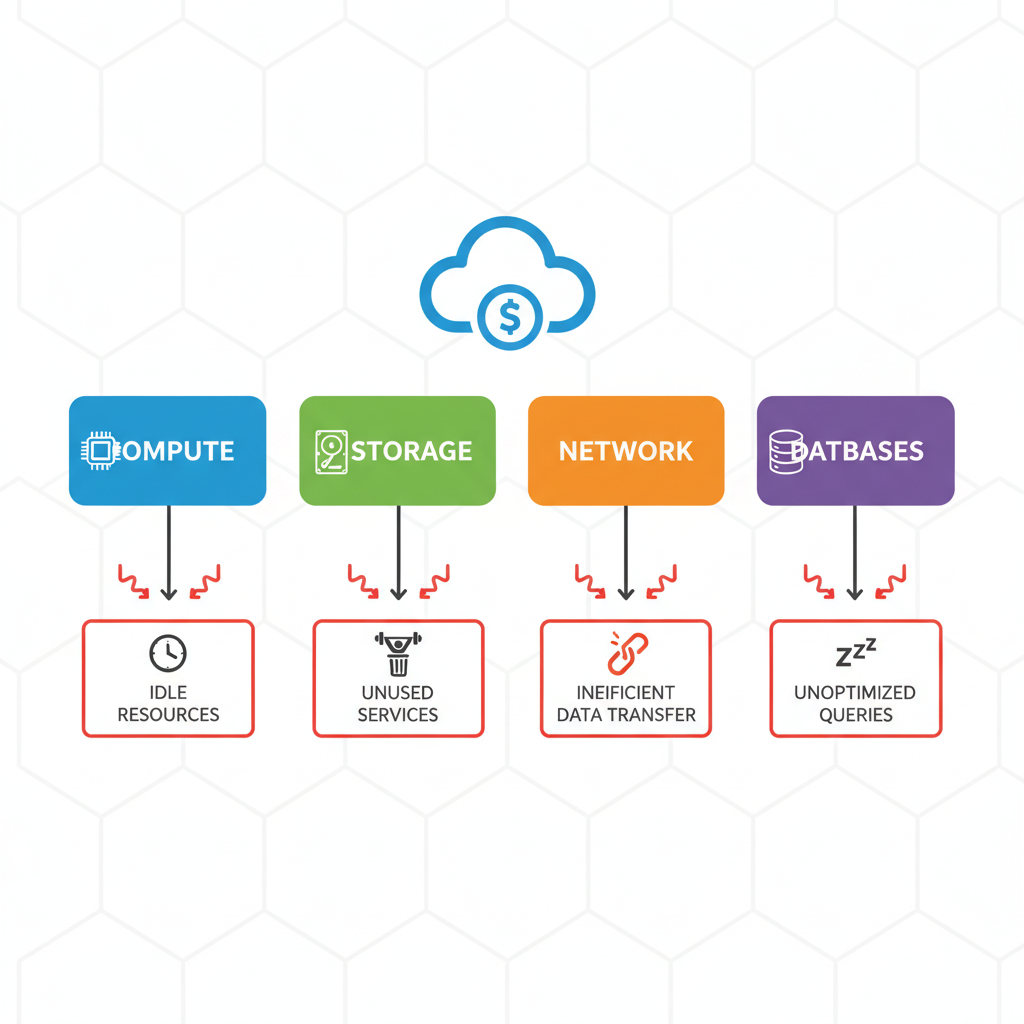
Collecting data on historical spend and resource utilization provides a baseline for future improvements. This data will also be invaluable when demonstrating the ROI of your investment in finops software solutions. Effective data collection underpins every successful cloud financial operations software implementation.
Defining Your Optimization Goals
Once you understand your challenges, clearly articulate what you hope to achieve with new software. Are you aiming for a specific percentage reduction in cloud spend, improved budgeting accuracy, or enhanced cost allocation? Clear goals provide a roadmap for your procurement process.
Your goals might include:
- Reducing overall cloud expenditure by 15-20% within the first year.
- Improving cost visibility across all business units.
- Automating budget alerts and anomaly detection.
- Enhancing forecasting accuracy for future cloud spend.
- Facilitating chargeback or showback mechanisms.
These specific objectives will help you narrow down the best cloud cost optimization vendors and features that align with your strategic vision. A well-defined set of goals ensures that your decision to buy cloud cost optimization software is directly tied to measurable business outcomes.
RECOMMENDED FOR YOU
Connect With Opsio
Tell us about your business requirement and let Opsio take care of the rest.
✓ No commitment required
✓ Trusted by experts
Essential Features When You buy cloud cost optimization software
When you decide to buy cloud cost optimization software, the market offers a wide array of options, each with distinct capabilities. Focusing on key features that address your identified challenges is paramount. The best cloud cost optimization platforms offer a blend of robust analysis, automation, and reporting functionalities.
Look beyond basic cost reporting; comprehensive solutions provide actionable insights and empower users to make real-time adjustments. These advanced features distinguish truly effective cloud financial operations software from simpler tools. Careful consideration of these aspects will inform your best buy cloud cost optimization software decision.
Comprehensive Cost Visibility and Reporting
The fundamental purpose of these tools is to provide unparalleled insight into your cloud spend. This goes beyond a simple bill breakdown, offering granular detail on costs per service, project, team, or application. You need to see exactly where every dollar is going.
Key features for visibility and reporting include:
- Unified Dashboard: A single pane of glass for multi-cloud environments (AWS, Azure, GCP, etc.).
- Granular Cost Breakdowns: Ability to drill down to resource-level costs and tag-based analysis.
- Customizable Reports: Tailor reports to specific stakeholders (finance, engineering, management).
- Historical Data Analysis: Track trends over time to identify anomalies and measure optimization efforts.
Without clear visibility, it's impossible to identify areas for improvement or accurately allocate costs back to departments. This transparency is a cornerstone for any effective cloud spend management tools purchase.
Waste Identification and Optimization Recommendations
Effective cloud cost optimization software doesn't just show you what you're spending; it tells you how to spend less. This proactive guidance is invaluable for driving savings. Solutions should leverage AI and machine learning to detect inefficiencies.
Look for features that provide:
- Idle Resource Detection: Identify unused or underutilized VMs, storage, and databases.
- Rightsizing Recommendations: Suggest optimal instance types and sizes based on actual usage patterns.
- Reserved Instance/Savings Plan Recommendations: Analyze usage patterns to suggest appropriate commitment purchases for maximum discount.
- Spot Instance Advisories: Recommend leveraging spot instances for fault-tolerant workloads to save costs.
These recommendations should be actionable and accompanied by an estimated savings potential. The goal is to move beyond mere reporting to active, intelligent cost reduction.
Budgeting, Forecasting, and Anomaly Detection
Controlling future spend is as important as optimizing current costs. Strong budgeting and forecasting capabilities help prevent unexpected overruns. Anomaly detection acts as an early warning system for unusual spending spikes.
Consider solutions with:
- Budget Creation and Tracking: Set budgets for projects, teams, or services and track against them in real-time.
- Accurate Forecasting: Predictive analytics based on historical data and current trends to estimate future spend.
- Automated Alerts: Notifications for budget overruns, significant spending changes, or policy violations.
- Anomaly Detection: Machine learning algorithms that flag unusual spending patterns that might indicate waste or unauthorized usage.
These features enable proactive financial governance and reduce the risk of bill shock. They are essential components of robust cloud financial operations software.
Automation and Governance
Manual cost optimization is time-consuming and prone to human error. The best solutions offer automation capabilities to implement recommendations and enforce policies. This frees up engineering teams to focus on innovation rather than manual cost management tasks.
Key automation and governance features include:
- Policy-Based Optimization: Define rules to automatically terminate idle resources or rightsizes instances.
- Tagging Enforcement: Ensure resources are consistently tagged for accurate cost allocation.
- API Integrations: Seamlessly integrate with existing cloud provider APIs for automated actions.
- Workflow Automation: Automate common optimization tasks or approval processes.
Automation drives continuous optimization without constant manual intervention, significantly boosting efficiency. When you procure cloud cost analysis tools, consider how much automation they offer.
Navigating the Vendor Landscape for Cloud Cost Optimization
The market for cloud cost optimization platforms is dynamic and growing, with many vendors offering various strengths. Choosing among the best cloud cost optimization vendors requires careful consideration of their offerings, reputation, and fit with your organization's specific needs. This stage of the buy cloud cost optimization software guide is crucial for making an informed selection.
Don't rush the evaluation process; thoroughly vet potential partners. Engaging with multiple vendors will give you a broader perspective on available features and pricing models.
Evaluating Vendor Capabilities and Expertise
Beyond just features, assess the vendor's overall capability and market standing. Are they cloud-agnostic or specialized in a particular cloud provider? Do they have a proven track record?
Key evaluation points include:
- Multi-Cloud Support: Essential if you operate across AWS, Azure, GCP, or other public clouds.
- Integration Ecosystem: How well does the solution integrate with your existing tools (ITSM, monitoring, FinOps)?
- Scalability: Can the solution handle your current and future cloud spend volume?
- Security and Compliance: Does the vendor meet industry standards for data security and privacy?
- Customer Support and Training: What level of support is offered? Are there resources for onboarding and ongoing training?
Reviewing case studies and customer testimonials can provide valuable insights into real-world performance. A vendor's commitment to continuous innovation is also a good indicator of long-term value.
Understanding Pricing Models and ROI
Pricing models for cloud cost optimization platforms vary significantly. Some are based on a percentage of your total cloud spend, others on the number of cloud accounts or resources managed, and some are fixed subscriptions. Understanding these models is vital for predicting your overall cost.
Consider the following when evaluating pricing:
- Transparent Pricing: Is the pricing structure clear and easy to understand, with no hidden fees?
- Tiered Options: Are there different tiers that align with your organization's size and feature requirements?
- Cost-Benefit Analysis: Can the vendor help you project the potential ROI based on your specific cloud spend profile?
- Contract Terms: Review contract length, renewal options, and cancellation policies carefully.
Remember that the cheapest option isn't always the best. Focus on the value and potential savings the software can generate versus its cost. The best buy cloud cost optimization software offers significant ROI.
Requesting Demos and Proofs of Concept (POCs)
Never commit to a solution without seeing it in action with your own data. Requesting a demo tailored to your specific use cases is a crucial step. A Proof of Concept (POC) is even better, allowing you to test the software directly in your environment.
During demos and POCs:
- Prepare Specific Scenarios: Ask the vendor to demonstrate how their tool addresses your identified challenges (e.g., "Show me how to identify idle S3 buckets").
- Involve Key Stakeholders: Ensure finance, operations, and engineering teams participate to gather diverse feedback.
- Evaluate Usability: Is the interface intuitive? How steep is the learning curve?
- Assess Data Accuracy: Verify that the data presented by the tool aligns with your cloud provider billing data.
A successful POC will give you confidence in the chosen solution's ability to meet your needs and provide tangible results. This hands-on experience is critical for a well-informed decision.
The Strategic Procurement Process
Once you've identified potential best cloud cost optimization vendors, the procurement phase begins. This involves negotiation, contract finalization, and preparing for implementation. A structured approach will streamline this process and secure the best terms for your organization. This is where your understanding of how to buy cloud cost optimization software comes into full play.
Effective negotiation can lead to better pricing, more favorable terms, and additional support. Always ensure legal and finance teams are involved in this critical phase.
Building Your Business Case
Before seeking budget approval, you'll need a compelling business case that justifies the investment. This document should clearly outline the problem, the proposed solution (the cloud cost optimization software), the expected benefits, and the return on investment (ROI). This will be crucial to successfully procure cloud cost analysis tools.
Key elements of a strong business case include:
- Problem Statement: Quantify your current cloud overspend or inefficiencies.
- Proposed Solution: Detail the chosen software and its key features.
- Expected Benefits: Outline both tangible (e.g., 15% cost reduction) and intangible (e.g., improved decision-making) benefits.
- ROI Calculation: Present a clear financial projection showing how the investment will pay for itself.
- Risk Assessment: Identify potential risks and mitigation strategies.
A well-researched business case will gain the necessary buy-in from senior management and budget holders. It provides the foundation for your argument to buy cloud cost optimization software.

Negotiation and Contracting
Negotiating with vendors is a critical step to ensure you get the best possible deal. Don't hesitate to leverage the insights gained from evaluating multiple best cloud cost optimization vendors. Be clear about your budget and specific requirements.
Focus on key aspects during negotiation:
- Pricing: Push for discounts, especially for multi-year contracts or if you're a significant customer.
- Service Level Agreements (SLAs): Ensure acceptable uptime, response times for support, and performance metrics.
- Data Security and Privacy: Confirm data handling practices align with your compliance requirements (e.g., GDPR, HIPAA).
- Escalation Paths: Understand how issues will be resolved and who the points of contact are.
- Exit Strategy: What happens to your data if you decide to switch vendors in the future?
Involve your legal counsel to review the contract thoroughly before signing. This protects your organization from unforeseen liabilities and ensures all terms are clearly defined.
Planning for Implementation and Adoption
The purchase is just the beginning. Successful implementation and widespread adoption are vital for realizing the full value of your investment. Develop a clear implementation plan with defined roles, responsibilities, and timelines.
Consider these aspects for a smooth rollout:
- Phased Rollout: Start with a pilot project or a specific department before expanding company-wide.
- Stakeholder Engagement: Communicate the benefits and changes to all affected teams (finance, engineering, operations).
- Training and Documentation: Provide comprehensive training sessions and accessible documentation for users.
- Change Management: Address potential resistance to new tools and processes through clear communication and support.
- Integration with Existing Systems: Plan how the new software will integrate with your existing FinOps tools and workflows.
A well-executed implementation plan ensures your new cloud financial operations software quickly becomes an integral part of your financial management strategy. The success of your buy cloud cost optimization software initiative hinges on adoption.
Maximizing Your Investment in Cloud Cost Optimization Software
After you successfully buy cloud cost optimization software, the real work of maximizing its value begins. It's not a set-it-and-forget-it solution; continuous engagement and refinement are key to achieving sustained savings and optimizing your cloud spend. This ongoing commitment ensures you get the most out of your cloud cost optimization platforms.
Regularly review performance metrics and adapt your strategies based on insights from the software. The landscape of cloud services and pricing models is constantly evolving, so your optimization efforts must evolve too.
Establishing a FinOps Culture
The most successful implementations of cloud cost optimization software are those embedded within a strong FinOps culture. This involves breaking down silos between finance, operations, and engineering teams, fostering shared accountability for cloud spend. A collaborative approach amplifies the impact of your chosen finops software solutions.
Key elements of a FinOps culture include:
- Shared Responsibility: Everyone involved with cloud resources understands their impact on costs.
- Transparency: Cost data is readily available and understandable to all relevant stakeholders.
- Continuous Improvement: Regularly review, refine, and automate optimization processes.
- Education and Awareness: Provide ongoing training on cloud cost best practices and how to use the new software effectively.
Encourage your teams to actively use the cloud cost optimization software tips provided by the platform and engage in discussions about cost efficiency. This collective effort ensures that your investment in cloud financial operations software yields ongoing dividends.
Continuous Monitoring and Refinement
Cloud environments are dynamic, with services, usage patterns, and pricing models constantly changing. Your cloud cost optimization efforts must be continuous, not a one-time project. Leverage your new software for ongoing monitoring and adaptation.
Use the software to:
- Track Performance: Monitor key metrics to ensure you are meeting your optimization goals.
- Identify New Opportunities: Look for emerging areas of waste or new optimization features from cloud providers.
- Review and Adjust Policies: Regularly assess if your automated optimization policies are still effective and make adjustments as needed.
- Stay Updated: Keep abreast of new features and updates from your best cloud cost optimization software vendor.
Regular review meetings with key stakeholders should become a routine practice. These sessions help assess progress, address challenges, and identify new avenues for savings.
Future Trends in Cloud Cost Management 2026
The realm of cloud cost optimization is continuously evolving. Looking ahead to 2026, we can anticipate several key trends that will shape how organizations manage their cloud spend. Your chosen cloud cost optimization software should ideally be capable of adapting to these future developments.
Emerging trends include:
- Increased AI/ML Integration: More sophisticated AI to predict costs, automate remediation, and identify complex optimization patterns.
- Sustainability as a Cost Factor: Growing emphasis on "green cloud" initiatives, where environmental impact also influences cost decisions.
- SaaS and Kubernetes Cost Optimization: Specialized tools to manage costs in containerized environments and SaaS consumption.
- Advanced FinOps Automation: Greater automation in chargeback, budgeting, and financial reporting workflows.
Choosing a vendor that demonstrates innovation and a roadmap aligned with these future trends will ensure your investment remains relevant and valuable in the years to come. Consider these forward-looking aspects when you best buy cloud cost optimization software.
RECOMMENDED FOR YOU
Connect With Opsio
Tell us about your business requirement and let Opsio take care of the rest.
✓ No commitment required
✓ Trusted by experts
Conclusion
The journey to buy cloud cost optimization software is a strategic investment that promises significant returns in financial savings, operational efficiency, and enhanced visibility. By understanding your unique challenges, evaluating essential features, thoroughly vetting vendors, and implementing a robust procurement process, you can make a decision that transforms your cloud financial management. Remember, the true value of this investment is realized through continuous monitoring, a strong FinOps culture, and a commitment to ongoing optimization. Embrace this comprehensive buy cloud cost optimization software guide as your roadmap to mastering your cloud spend and driving sustainable growth.
Opsio provides cloud consulting and managed services to help organizations implement and manage their technology infrastructure effectively.