In today’s data-driven business landscape, protecting critical information isn’t just good practice—it’s essential for survival. Data loss incidents cost businesses an average of $3.86 million per breach, while extended downtime can permanently damage customer trust and market position. Managed backup and disaster recovery (BDR) solutions provide the comprehensive protection modern organizations need against an increasingly complex threat landscape.
This strategic guide explores how businesses can implement effective managed backup and disaster recovery solutions to protect their most valuable assets, ensure regulatory compliance, and maintain operational continuity even in the face of catastrophic events.
Why Businesses Need Managed Backup and Disaster Recovery
The digital transformation of business has created unprecedented opportunities—and vulnerabilities. As organizations become increasingly dependent on data for daily operations, the consequences of data loss have never been more severe.
The Growing Risks of Data Loss
Cyber Threats
Ransomware attacks increased by 150% in 2024, with businesses paying an average of $1.85 million in recovery costs. These sophisticated attacks specifically target backup systems to prevent recovery, making traditional approaches increasingly vulnerable.
Hardware Failures
Despite advances in technology, hardware components still fail. Server crashes, storage corruption, and network outages can all lead to significant data loss when proper backup systems aren’t in place.
Human Error
Studies show that human error accounts for approximately 23% of data loss incidents. Accidental deletions, misconfigurations, and improper data handling remain persistent threats to data integrity.
Natural Disasters
Floods, fires, earthquakes, and other natural events can destroy physical infrastructure and the data stored within. Without offsite backup solutions, recovery becomes impossible.
Regulatory Compliance Requirements
Beyond the operational risks, businesses face increasingly stringent regulatory requirements for data protection:
| Regulation |
Industry |
Key Backup Requirements |
| GDPR |
All businesses handling EU citizen data |
Data must be recoverable in the event of physical or technical incidents |
| HIPAA |
Healthcare |
Requires contingency planning including data backup and disaster recovery plans |
| PCI DSS |
Payment processing |
Mandates regular testing of backup processes and security systems |
| SOX |
Public companies |
Requires controls for protecting financial data integrity and availability |
Don’t Risk Non-Compliance
Regulatory penalties can exceed millions of dollars. Ensure your backup and disaster recovery strategy meets all applicable requirements with expert guidance.
Schedule Compliance Assessment
Key Components of Effective Managed Backup and Disaster Recovery
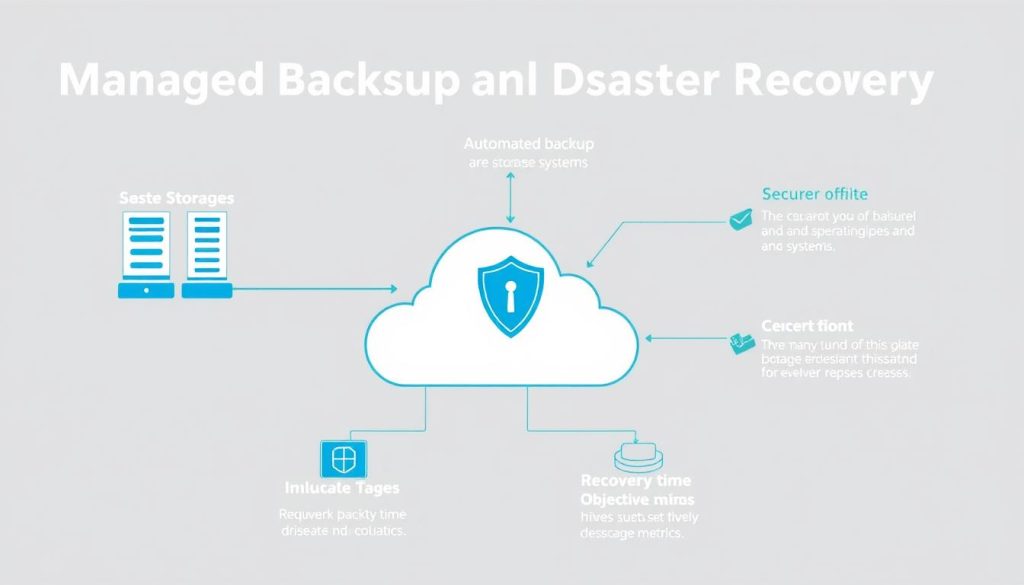
A comprehensive managed backup and disaster recovery solution encompasses several critical components working in harmony to ensure data protection and business continuity.
Automated Backup Systems
Modern backup solutions eliminate human error through automation. Scheduled backups run without intervention, ensuring consistent data protection while reducing administrative burden on IT teams.
Secure Offsite Storage
Following the 3-2-1 rule (three copies of data, on two different media types, with one copy offsite), managed BDR solutions store encrypted backups in geographically separate locations to protect against localized disasters.
End-to-End Encryption
Data is encrypted both in transit and at rest, ensuring that even if backup media is compromised, the information remains protected from unauthorized access.
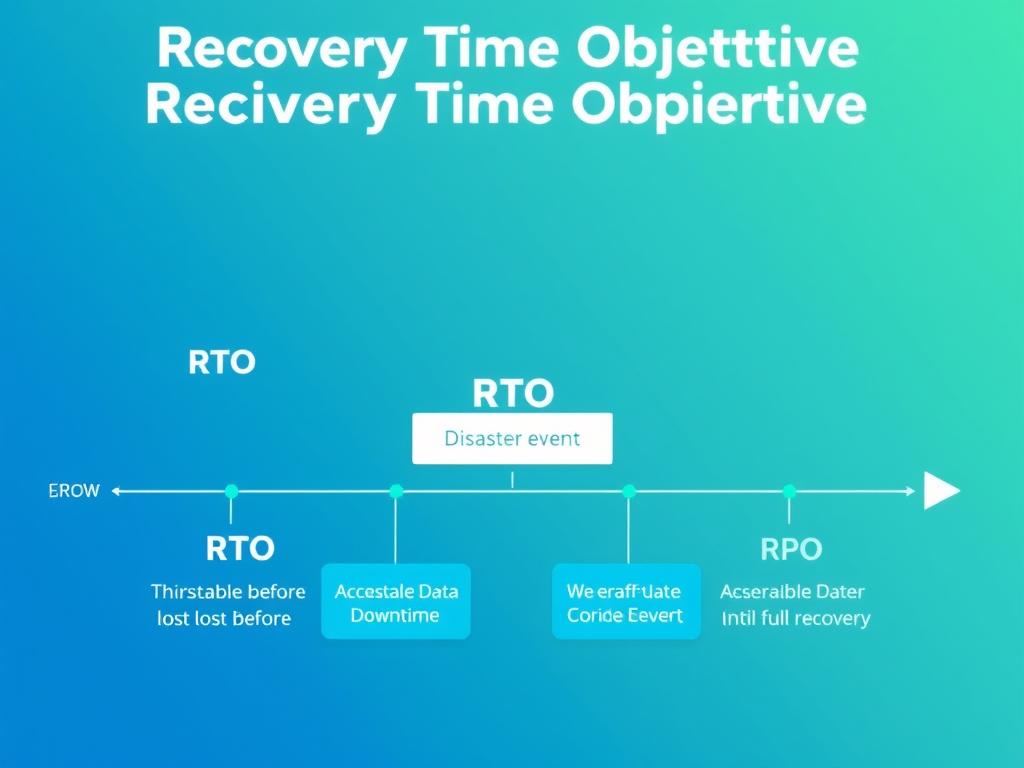
Recovery Time and Point Objectives
Recovery Time Objective (RTO)
RTO defines how quickly systems must be restored after a disaster. Effective managed BDR solutions offer tiered RTOs based on business criticality, with mission-critical systems restored within minutes.
Recovery Point Objective (RPO)
RPO determines the maximum acceptable data loss measured in time. Modern solutions can achieve RPOs of seconds for critical databases through continuous data protection technologies.
Key Insight: While many organizations focus primarily on backup frequency, recovery capabilities are equally critical. The most comprehensive backup is worthless if you can’t restore it quickly and reliably when needed.
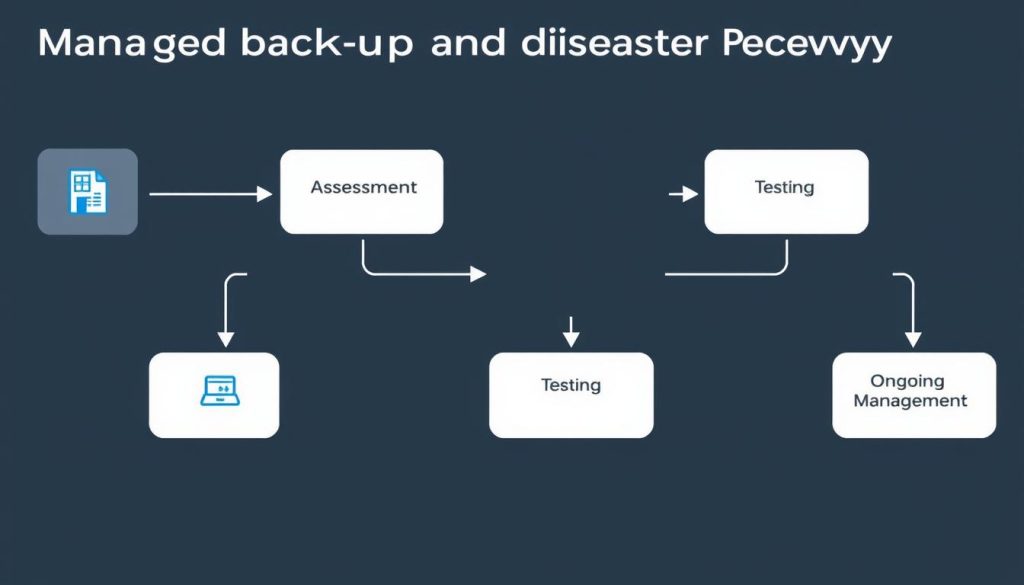
Implementation Steps for Managed Backup and Disaster Recovery
Successfully implementing a managed backup and disaster recovery solution requires careful planning and execution. Follow these proven steps to ensure comprehensive protection for your business data.
1. Assess Business Needs and Risks
Begin with a comprehensive assessment of your data environment, business requirements, and potential threats:
- Identify critical applications and data
- Document current infrastructure and dependencies
- Establish recovery priorities based on business impact
- Define compliance requirements for each data category
- Calculate potential costs of downtime for key systems
“The most common mistake organizations make is treating all data equally. By identifying your crown jewels—the 20% of data that drives 80% of business value—you can allocate protection resources more effectively.”
— IT Security Analyst
2. Choose a Scalable Solution
Select a backup and disaster recovery approach that aligns with your business needs and growth trajectory:
| Solution Type |
Best For |
Considerations |
| Cloud-Based BDR |
Organizations seeking flexibility and minimal capital investment |
Requires reliable internet connectivity; consider bandwidth limitations for large restores |
| Hybrid BDR |
Businesses with mixed workloads and varying recovery requirements |
Balances local recovery speed with offsite protection; more complex to manage |
| On-Premises BDR |
Organizations with strict data sovereignty requirements or limited connectivity |
Higher capital costs; requires physical security and maintenance |
3. Partner with a Managed Service Provider
Working with an experienced managed service provider like Opsio offers significant advantages:
Specialized Expertise
Benefit from dedicated specialists who focus exclusively on backup and disaster recovery technologies and best practices.
24/7 Monitoring
Ensure backup success with continuous monitoring and proactive issue resolution before problems impact recovery capabilities.
Scalable Resources
Adapt your protection strategy as your business grows without the need to hire additional staff or invest in new infrastructure.
Expert Guidance for Your BDR Implementation
Opsio’s consultancy services provide tailored strategies for your unique business requirements, ensuring optimal protection with minimal disruption.
Schedule a Consultation
Opsio’s Role in Managed Backup and Disaster Recovery
Opsio delivers comprehensive managed backup and disaster recovery services designed to protect your critical business data while simplifying compliance and reducing operational burden.
Comprehensive Managed BDR Services
24/7 Monitoring & Management
Our dedicated team continuously monitors your backup systems, proactively addressing issues before they impact your protection status. Detailed reporting provides complete visibility into your data security posture.
Rapid Recovery Capabilities
When disaster strikes, our specialists execute proven recovery procedures to restore your critical systems within defined RTOs. Automated testing ensures recovery readiness at all times.
Compliance Support
Our solutions are designed to meet regulatory requirements across industries, with documentation and audit support to demonstrate compliance with GDPR, HIPAA, PCI DSS, and other frameworks.
Expert Consultancy Services
Beyond managed services, Opsio provides specialized consultancy to optimize your data protection strategy:
- Comprehensive risk assessment and gap analysis
- Custom BDR strategy development aligned with business objectives
- Technology selection and implementation planning
- Recovery testing and validation
- Staff training and documentation
Did You Know? Organizations that work with specialized BDR consultants achieve 42% faster recovery times and experience 67% fewer failed backups compared to those managing backup systems internally.
Best Practices for Managed Backup and Disaster Recovery
Implementing these industry-proven best practices will maximize the effectiveness of your managed backup and disaster recovery solution.
Regular Testing and Validation
The most comprehensive backup solution is worthless if recovery doesn’t work when needed. Implement a rigorous testing schedule:
- Conduct full recovery tests quarterly for critical systems
- Perform table-top exercises to validate response procedures
- Test restoration to alternate environments to verify portability
- Document and address any issues discovered during testing
Warning: 40% of organizations that believe their backups are working discover critical failures during their first recovery attempt. Don’t wait for a disaster to test your recovery capabilities.
Employee Training and Awareness
Human factors remain critical to successful disaster recovery:
Role-Based Training
Ensure each team member understands their specific responsibilities during a recovery scenario through targeted training and documentation.
Security Awareness
Educate employees about ransomware and social engineering threats that could compromise backup systems or trigger recovery scenarios.
Communication Protocols
Establish clear communication channels and escalation procedures for reporting potential data loss incidents or recovery needs.
Continuous Improvement
Backup and disaster recovery is not a “set and forget” solution. Implement these practices to ensure ongoing effectiveness:
- Review and update recovery objectives as business needs evolve
- Regularly assess new threats and adjust protection strategies accordingly
- Incorporate lessons learned from tests and actual recovery events
- Stay current with technology advancements in backup and recovery
Case Study: Preventing Catastrophic Data Loss
The Challenge
A mid-sized manufacturing company with 250 employees and $75 million in annual revenue faced a potentially devastating ransomware attack that encrypted their production systems and business applications. Without access to critical data, production lines stood idle, costing the company approximately $50,000 per hour in lost productivity and revenue.
The Solution
Six months prior to the attack, the company had implemented Opsio’s managed backup and disaster recovery solution, which included:
- Immutable backups stored in secure offsite locations
- Automated verification of backup integrity
- Comprehensive recovery testing and documentation
- 24/7 monitoring and response team
The Results
When the ransomware attack occurred, Opsio’s team immediately initiated the recovery process:
- Critical production systems were restored within 2 hours
- Business applications were back online within 4 hours
- No ransom was paid, saving hundreds of thousands of dollars
- Total data loss was limited to less than 15 minutes of transactions
“Without Opsio’s managed backup and disaster recovery solution, we would have faced weeks of downtime and potentially millions in losses. Their team’s expertise and rapid response turned what could have been a business-ending disaster into a minor disruption.”
— CIO, Manufacturing Company
Protect Your Business from Data Disasters
Discover how Opsio’s managed backup and disaster recovery services can safeguard your critical data and ensure business continuity.
Request a Free BDR Assessment
Conclusion: Securing Your Business Future
In today’s digital business environment, effective managed backup and disaster recovery isn’t just an IT concern—it’s a fundamental business imperative. The question is no longer if a data loss event will occur, but when—and how prepared your organization will be to respond.
By implementing a comprehensive managed backup and disaster recovery solution with Opsio, you gain more than just data protection—you secure business continuity, regulatory compliance, and peace of mind. Our expert team becomes an extension of your organization, providing the specialized knowledge and 24/7 vigilance needed to protect your most valuable assets.
Don’t wait for a disaster to expose gaps in your data protection strategy. Take proactive steps today to ensure your business can weather any storm and emerge stronger on the other side.
Start Your Journey to Complete Data Protection
Contact Opsio today for a comprehensive assessment of your backup and disaster recovery needs. Our experts will help you develop a tailored strategy that aligns with your business objectives and budget.
Schedule Your Free BDR Assessment
Frequently Asked Questions
How quickly can Opsio implement a managed backup and disaster recovery solution?
Implementation timelines vary based on environment complexity, but most organizations can be fully protected within 2-4 weeks. Critical systems can often be secured within days through our rapid deployment option.
What makes managed backup and disaster recovery different from traditional backup solutions?
Managed BDR provides comprehensive protection through expert oversight, proactive monitoring, and guaranteed recovery capabilities. Unlike traditional backup solutions that simply create copies of data, managed BDR ensures those copies are valid, secure, and can be restored quickly when needed.
How does Opsio ensure our backups are secure from ransomware?
We implement multiple security layers including immutable storage, air-gapped copies, encryption, and continuous monitoring for suspicious activity. Our approach ensures that even if primary systems are compromised, clean backups remain available for recovery.
Can Opsio help with compliance requirements for our industry?
Yes, our solutions are designed to meet regulatory requirements across industries including healthcare (HIPAA), finance (SOX, PCI DSS), and general data protection (GDPR). We provide detailed documentation and reporting to demonstrate compliance during audits.
What is the typical return on investment for managed backup and disaster recovery?
Most organizations see ROI within 12-18 months through reduced downtime, prevention of data loss incidents, lower administrative costs, and avoidance of compliance penalties. The exact ROI depends on your specific environment and business requirements.