

Understanding Application Cloud SLA Monitoring Systems
In today’s fast-paced digital landscape, maintaining high availability and performance for cloud-based applications is paramount. Businesses increasingly rely on these applications to deliver critical services and manage operations. This dependence underscores the vital role of robust application Cloud sla monitoring systems. These sophisticated tools ensure that services meet predefined performance and availability commitments.
These systems provide real-time visibility into the health and performance of cloud applications. They are indispensable for organizations aiming to uphold service level agreements (SLAs) with their users and customers. Effective monitoring helps identify issues proactively, preventing potential disruptions and maintaining user satisfaction.
What Are Application Cloud SLA Monitoring Systems?
Application Cloud SLA monitoring systems are specialized tools designed to continuously track, measure, and report on the performance, availability, and reliability of applications deployed in cloud environments. Their primary goal is to verify that these applications consistently meet their agreed-upon Service Level Agreements (SLAs). An SLA typically outlines specific metrics, such as uptime, response time, and error rates, that a service provider commits to.
These systems go beyond basic infrastructure monitoring. They delve into the actual user experience and application functionality. By observing key performance indicators (KPIs), they provide a comprehensive view of how well an application is performing from an end-user perspective. This deep insight is crucial for maintaining operational excellence.
Core Components of Effective Monitoring
A comprehensive monitoring system typically integrates several key functionalities to achieve its objectives. These components work in unison to provide a holistic view of application health.
Key components usually include:
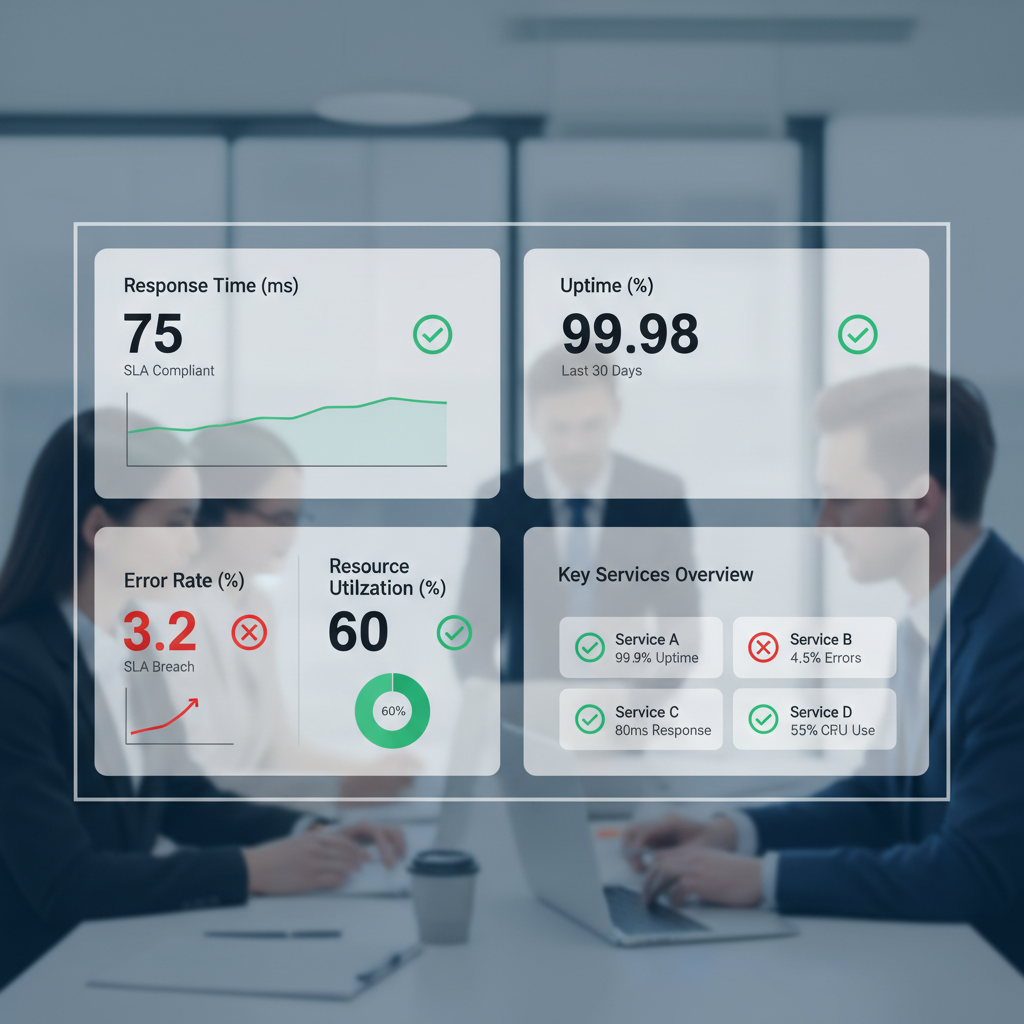
- Performance Monitoring: Tracks metrics like response times, transaction rates, and resource utilization. This helps identify bottlenecks affecting speed and efficiency.
- Availability Monitoring: Verifies that applications and their underlying services are accessible and operational. It often involves uptime checks and synthetic transactions.
- Error Rate Tracking: Monitors the frequency and types of errors encountered by the application. High error rates can indicate underlying issues impacting stability.
- SLA Compliance Reporting: Generates detailed reports demonstrating adherence to or deviation from defined SLA metrics. These reports are essential for accountability and communication.
- Alerting and Notifications: Provides immediate alerts to operations teams when performance thresholds are breached or outages occur. Timely notifications enable rapid response.
Why Are Application Cloud SLA Monitoring Systems Essential?
The adoption of cloud services has transformed how businesses operate, offering scalability and flexibility. However, this shift also introduces complexities in ensuring consistent application performance. Application Cloud SLA monitoring systems address these challenges directly, becoming an indispensable part of any modern IT strategy. They ensure that cloud applications deliver the expected reliability and speed.
Without proper monitoring, organizations risk significant financial losses due to downtime and performance degradation. Poor application performance can lead to customer dissatisfaction, reputational damage, and lost revenue. Therefore, investing in robust monitoring solutions is a strategic decision that safeguards business continuity.
Benefits of Robust Monitoring
Implementing effective app SLA monitoring tools offers numerous advantages for organizations. These benefits extend from operational efficiency to improved customer relationships. They fundamentally transform how businesses manage their cloud-based services.
Key benefits include:
- Ensuring SLA Compliance: Directly verifies that applications meet the agreed-upon performance and availability targets. This builds trust with stakeholders and customers.
- Proactive Issue Detection: Identifies potential problems before they escalate into major outages. Early detection allows teams to address issues with minimal impact.
- Improved User Experience: By maintaining optimal performance, these systems help ensure users have a seamless and positive experience. This directly impacts customer loyalty.
- Optimized Resource Utilization: Provides insights into resource consumption, helping to identify over-provisioned or under-provisioned resources. This leads to cost savings and better efficiency.
- Faster Root Cause Analysis: Detailed metrics and historical data enable quick diagnosis of performance bottlenecks and underlying causes of issues. This reduces mean time to resolution (MTTR).
- Enhanced Business Reputation: Consistent delivery of high-performing applications strengthens a company’s reputation as reliable and customer-focused. This can provide a competitive edge.
Key Features of Effective Application Cloud SLA Monitoring Systems
An effective application Cloud sla monitoring systems solution offers a comprehensive suite of features designed to provide deep visibility and control. These features empower IT teams to manage complex cloud environments efficiently. Choosing a system with the right capabilities is crucial for meeting specific organizational needs.
Beyond basic uptime checks, advanced systems incorporate sophisticated analytics and automation. They provide actionable insights rather than just raw data. This allows for proactive management and continuous improvement of service delivery.
Essential Functionalities
When evaluating software SLA tracking systems, several key functionalities stand out as critical. These features collectively contribute to a robust and comprehensive monitoring solution.
Look for systems that provide:
- End-to-End Visibility: Monitors all layers of the application stack, from the user interface down to the underlying infrastructure components. This holistic view is essential for understanding performance dependencies.
- Customizable Dashboards: Allows users to create personalized views of key metrics relevant to their roles. Visual, intuitive dashboards simplify complex data interpretation.
- Real-time Alerting and Notifications: Configurable alerts via various channels (email, SMS, Slack) for threshold breaches, anomalies, or service degradation. Immediate alerts are crucial for rapid incident response.
- Historical Data Analysis and Reporting: Stores performance data over time, enabling trend analysis, capacity planning, and post-incident reviews. Comprehensive reports are vital for demonstrating SLA compliance.
- Synthetic Monitoring: Simulates user interactions with the application from various geographic locations to proactively measure performance and availability. This provides an external perspective of user experience.
- Real User Monitoring (RUM): Collects data from actual user sessions, providing insights into real-world performance experienced by end-users. RUM captures the true impact of performance issues.
- Integration Capabilities: Seamlessly integrates with existing IT ecosystems, including incident management, CI/CD pipelines, and other observability tools. This fosters a unified operational environment.
- Scalability for Cloud Environments: Designed to handle dynamic and elastic cloud infrastructures, adapting to fluctuating workloads and rapidly changing resources. This ensures the monitoring system itself remains performant.
ENSURE UNINTERRUPTED SERVICE
Ensure uninterrupted service delivery and proactively prevent costly SLA breaches. Leverage our automated, real
✓ Free consultation✓ No commitment required
✓ Trusted by experts
Types of Application Cloud SLA Monitoring Systems
The landscape of application Cloud sla monitoring systems is diverse, with various approaches and tools tailored to different needs. Understanding these types helps organizations select the most appropriate solution for their specific cloud architecture and business requirements. Each type offers unique strengths in collecting and analyzing performance data.
From specialized SaaS solutions to broader enterprise platforms, the choice depends on factors like application complexity, budget, and desired level of control. Many organizations opt for a hybrid approach, combining different tools to achieve comprehensive coverage.
Common Categories of Monitoring Solutions
Different categories of application performance SLA tools cater to various aspects of application health. These can often be combined for a more holistic view.
Key categories include:
- Cloud Provider Native Tools: Major cloud providers (AWS, Azure, Google Cloud) offer their own monitoring services, such as AWS CloudWatch or Azure Monitor. These are tightly integrated with their respective ecosystems but might lack multi-cloud capabilities.
- Third-Party SaaS Monitoring Solutions: These are cloud-based services that offer comprehensive monitoring capabilities for various cloud environments. Examples include Datadog, New Relic, and Dynatrace, offering extensive features like APM, RUM, and synthetic monitoring. Many provide excellent `SaaS SLA monitoring` capabilities.
- Open-Source Monitoring Tools: Solutions like Prometheus, Grafana, and ELK Stack offer powerful, customizable monitoring platforms. While requiring more setup and maintenance expertise, they provide significant flexibility and cost savings.
- On-Premise Monitoring Software: Less common for purely cloud applications but still used in hybrid environments. These tools are installed within an organization’s own data center and can monitor cloud resources through agents or APIs.
- Specialized APM Tools: Application Performance Management (APM) tools focus specifically on deep code-level visibility, transaction tracing, and dependency mapping within applications. They are crucial for understanding `enterprise application SLA` performance from an architectural perspective.
Implementing Application Cloud SLA Monitoring Systems
Successfully implementing application Cloud sla monitoring systems requires a strategic approach. It's not merely about installing software; it involves defining objectives, configuring metrics, and integrating the system into existing workflows. A well-planned implementation ensures maximum value and operational efficiency.
This section provides a step-by-step guide, drawing on insights from an application Cloud sla monitoring systems guide. Following these steps will help establish a robust monitoring framework that delivers actionable insights and supports continuous service improvement.
Step-by-Step Implementation Guide
Here are the key steps to effectively implement and leverage your monitoring solution:
1. Define Your SLAs and KPIs: Clearly articulate what "performance" and "availability" mean for each critical application. Establish specific, measurable, achievable, relevant, and time-bound (SMART) metrics for your SLAs. * Examples include 99.9% uptime, average response time under 500ms, and error rates below 0.1%.
2. Select the Right Monitoring Solution: Evaluate options based on your cloud environment (single-cloud, multi-cloud, hybrid), application architecture, budget, and specific feature requirements. Consider scalability, integration capabilities, and ease of use. This is where researching `best application Cloud sla monitoring systems` becomes critical.
3. Instrument Your Applications and Infrastructure: Deploy agents or configure API integrations to collect data from your cloud resources, servers, databases, and application code. Ensure comprehensive data collection across the entire application stack.
4. Configure Monitoring Thresholds and Alerts: Set appropriate thresholds for your defined KPIs. For example, trigger an alert if response time exceeds 750ms for more than 5 minutes. Configure notification channels (email, SMS, Slack, PagerDuty) and escalation policies.
5. Develop Custom Dashboards and Reports: Create dashboards tailored to different roles (developers, operations, business stakeholders) to visualize key metrics. Automate regular SLA compliance reports to track performance over time.
6. Integrate with Incident Management and DevOps Workflows: Connect your monitoring system with your incident management platform (e.g., ServiceNow, Jira Service Management) for automated ticket creation. Integrate with CI/CD pipelines to ensure performance testing and monitoring are part of the development lifecycle.
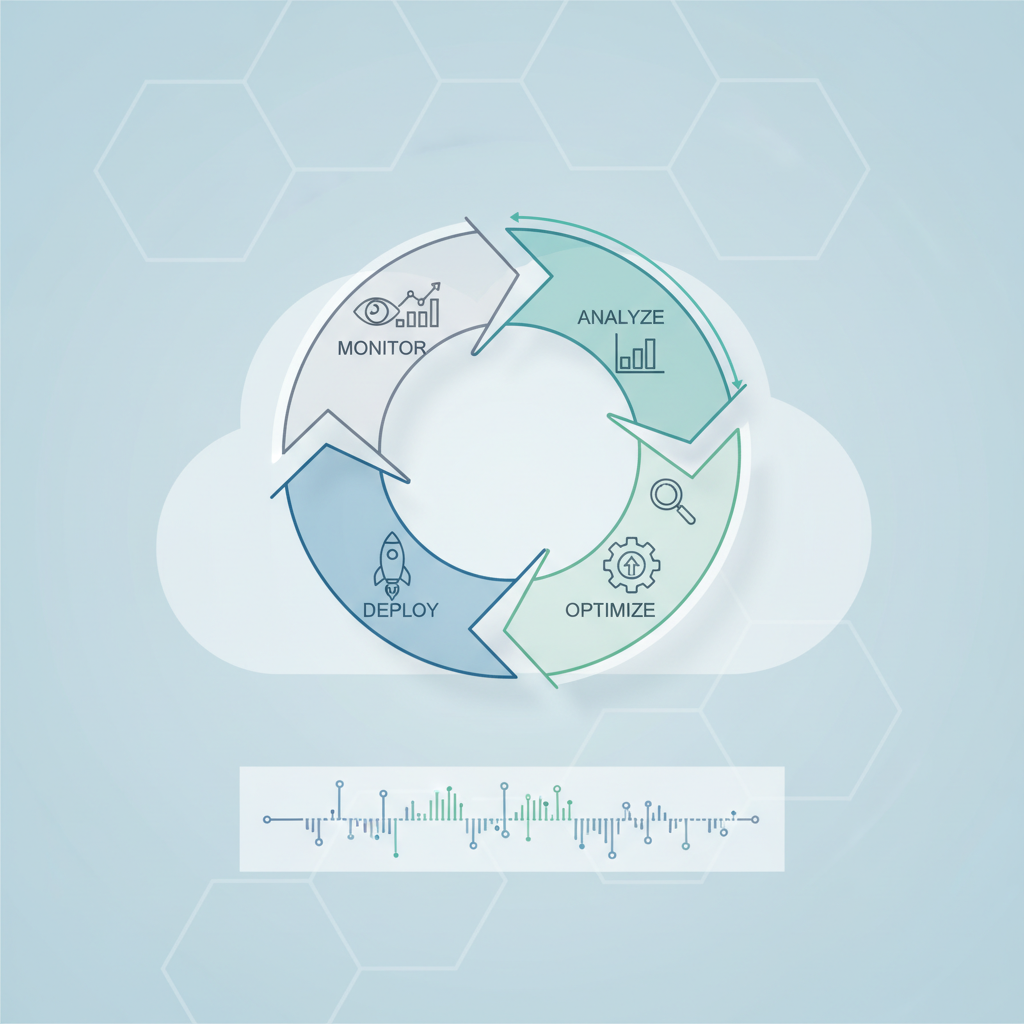
7. Regularly Review and Optimize: Periodically review your SLAs, KPIs, and monitoring configurations to ensure they remain relevant. Use insights from your monitoring data to optimize application performance, architecture, and resource allocation. This iterative process is key to continuous improvement.
Best Practices for Application Cloud SLA Monitoring Systems
Adopting best practices is crucial for maximizing the effectiveness of your application Cloud sla monitoring systems. These practices ensure that your monitoring efforts are proactive, efficient, and aligned with business objectives. They help transform raw data into actionable insights, driving continuous improvement.
Focusing on these tips will help organizations move beyond reactive issue resolution to a more strategic, predictive approach. Effective implementation of these practices significantly enhances the reliability and performance of cloud applications.
Actionable Tips for Optimal Monitoring
Leverage these application Cloud sla monitoring systems tips to get the most out of your monitoring investment and ensure robust `cloud application health monitoring`.
- Monitor What Matters Most: Focus on critical business transactions and user journeys, not just low-level infrastructure metrics. Prioritize monitoring based on business impact.
- Establish Clear Baselines: Understand normal application behavior under various loads. This allows for accurate anomaly detection and avoids alert fatigue.
- Implement Synthetic and Real User Monitoring (RUM): Combine synthetic tests to proactively find issues with RUM to understand actual user experience. This dual approach offers comprehensive visibility.
- Automate Alerting and Remediation: Set up automated alerts with clear escalation paths. For common, predictable issues, consider automated remediation scripts to resolve problems without human intervention.
- Leverage Distributed Tracing: For complex microservices architectures, distributed tracing helps visualize the flow of requests across multiple services, pinpointing bottlenecks quickly.
- Regularly Review and Refine Thresholds: Application behavior evolves, so your monitoring thresholds should too. Adjust them periodically to reflect changes in performance, load, or service level objectives.
- Involve Development Teams: Integrate monitoring into the development lifecycle. Developers can instrument code for better observability, leading to faster debugging and resolution.
- Document Your Monitoring Strategy: Clearly document your SLAs, KPIs, alerting rules, and incident response procedures. This ensures consistency and facilitates onboarding new team members.
Challenges in Application Cloud SLA Monitoring Systems
Despite their immense benefits, implementing and managing application Cloud sla monitoring systems comes with its own set of challenges. Cloud environments are inherently dynamic and complex, which can complicate monitoring efforts. Understanding these hurdles is the first step toward overcoming them.
Addressing these challenges requires a strategic approach, combining appropriate tools, skilled personnel, and well-defined processes. Proactive planning helps mitigate potential issues and ensures the monitoring system remains effective.
Common Hurdles to Overcome
Organizations frequently encounter specific difficulties when striving for effective `application Cloud sla monitoring systems examples`.
These challenges often include:
- Data Volume and Noise: Cloud applications generate vast amounts of data, making it difficult to sift through irrelevant information to find critical insights. Alert fatigue is a common problem.
- Dynamic Cloud Environments: The elasticity and ephemeral nature of cloud resources (auto-scaling, serverless functions) make traditional monitoring approaches insufficient. Tracking rapidly changing components is complex.
- Integration Complexity: Integrating various monitoring tools with existing IT infrastructure and across different cloud providers can be a significant technical challenge. Lack of seamless integration hinders a unified view.
- Skill Gap: Effective monitoring requires specialized skills in cloud architecture, data analytics, and specific monitoring tool expertise. A shortage of such talent can impede successful implementation.
- Defining Meaningful SLAs: Translating business requirements into quantifiable and enforceable technical SLAs can be difficult. It requires close collaboration between business and technical teams.
- Cost Management: While monitoring is essential, the cost of advanced monitoring solutions and the associated data ingestion can be substantial. Balancing features with budget is a constant concern.
- Multi-Cloud and Hybrid Cloud Complexity: Monitoring applications spanning multiple cloud providers or hybrid environments introduces additional layers of complexity. Achieving a consistent monitoring strategy across diverse platforms is a major challenge.
Choosing the Best Application Cloud SLA Monitoring Systems
Selecting the best application Cloud sla monitoring systems is a critical decision that impacts an organization's ability to meet service commitments and maintain operational excellence. With a multitude of options available, a systematic evaluation process is essential. The right choice aligns with your current and future cloud strategy.
Consider factors beyond just feature lists, focusing on how the solution integrates into your existing ecosystem and scales with your business needs. This strategic approach ensures a wise and sustainable investment.
Key Considerations for Selection
When evaluating potential `app SLA monitoring tools`, keep the following factors in mind:
- Cloud Compatibility: Ensure the system fully supports your cloud provider(s) (AWS, Azure, GCP) and any on-premise components if you operate in a hybrid environment.
- Monitoring Scope: Does it cover infrastructure, application performance (APM), real user monitoring (RUM), synthetic monitoring, and log management? A comprehensive solution reduces tool sprawl.
- Ease of Use and Setup: Look for intuitive interfaces, easy agent deployment, and straightforward configuration. A complex system can lead to slow adoption and inefficient use.
- Scalability and Performance: The monitoring system itself must be able to handle the scale and dynamism of your cloud applications without becoming a bottleneck.
- Alerting and Reporting: Evaluate the flexibility of alerting rules, notification channels, and the robustness of custom reporting capabilities for SLA compliance.
- Integration Ecosystem: Check for integrations with your existing tools like incident management, CI/CD, logging, and collaboration platforms.
- Cost Structure: Understand the pricing model (per host, per GB of data, per user) and how it scales with your usage. Look for transparency and predictability.
- Vendor Support and Community: Assess the quality of vendor support, documentation, and the availability of a vibrant user community for troubleshooting and best practices.
- Security and Compliance: Ensure the monitoring solution meets your organization's security standards and relevant compliance requirements (e.g., GDPR, HIPAA).
Future Trends in Application Cloud SLA Monitoring
The field of application Cloud sla monitoring systems is continuously evolving, driven by advancements in cloud technology and increasing demands for resilient applications. Emerging trends promise even more sophisticated and autonomous monitoring capabilities. Staying abreast of these developments is key for future-proofing your monitoring strategy.
These trends will reshape how organizations approach `cloud application health monitoring`. They offer opportunities for greater efficiency, predictive insights, and proactive problem resolution.
Emerging Directions and Innovations
Expect to see several innovations shaping the next generation of monitoring solutions:
- AIOps Integration: Artificial Intelligence for IT Operations (AIOps) will become more prevalent, leveraging machine learning to automatically detect anomalies, predict outages, and suggest root causes from massive data sets. This will reduce human intervention.
- Greater Observability: Moving beyond traditional monitoring, observability tools will provide deeper insights into the internal states of systems through metrics, logs, and traces. This holistic approach empowers faster debugging.
- Predictive Analytics: Advanced analytics will enable monitoring systems to forecast potential performance issues and capacity shortfalls before they impact users. This shifts monitoring from reactive to truly proactive.
- Serverless and Container-Native Monitoring: As serverless and containerization (Kubernetes) become standard, monitoring solutions will offer more native and efficient ways to track these ephemeral, distributed workloads.
- Automated Remediation: Expect increased automation in responding to alerts, with systems automatically triggering predefined actions to resolve minor issues or even scale resources. This enhances operational agility.
- Enhanced Security Monitoring: The integration of security monitoring within performance and availability tools will provide a more unified view of application health, including potential security vulnerabilities or attacks.
Frequently Asked Questions
This section addresses common questions about application Cloud SLA monitoring systems, providing clear and concise answers. It aims to clarify key concepts and provide practical insights for anyone interested in or working with these critical tools.
What is the primary purpose of application Cloud SLA monitoring systems?
The primary purpose is to ensure that cloud-based applications consistently meet their defined Service Level Agreements (SLAs) regarding performance, availability, and reliability. These systems continuously track key metrics to verify compliance and alert teams to deviations, thereby maintaining optimal service delivery.
How do app SLA monitoring tools differ from traditional infrastructure monitoring?
Traditional infrastructure monitoring typically focuses on servers, networks, and storage at a hardware level. In contrast, **app SLA monitoring tools** concentrate on the actual application performance, user experience, and transaction health, often at the code level, and directly against predefined SLA metrics.
Can application Cloud SLA monitoring systems prevent outages?
While no system can guarantee 100% prevention of all outages, these monitoring systems significantly reduce their likelihood and impact. By proactively identifying performance bottlenecks, anomalies, and potential issues before they escalate, they enable IT teams to intervene and prevent full-blown outages, often through automated alerts.
What is the role of Real User Monitoring (RUM) in these systems?
Real User Monitoring (RUM) tracks the actual experiences of end-users interacting with an application. It collects data on page load times, response times, and errors directly from user browsers or devices. RUM provides critical insights into real-world performance, complementing synthetic monitoring which simulates user behavior.
Is it possible to monitor applications across multiple cloud providers?
Yes, many modern **application Cloud sla monitoring systems** are designed for multi-cloud and hybrid cloud environments. They offer connectors, agents, or APIs that allow organizations to consolidate monitoring data from various cloud providers into a single, unified dashboard, providing a comprehensive view of distributed applications.
How do these systems help with cost optimization in the cloud?
By providing detailed insights into resource utilization, **application Cloud sla monitoring systems** help identify under-utilized or over-provisioned cloud resources. This allows organizations to right-size their infrastructure, eliminate unnecessary spending, and optimize cloud costs while maintaining desired performance levels.
ENSURE UNINTERRUPTED SERVICE
Ensure uninterrupted service delivery and proactively prevent costly SLA breaches. Leverage our automated, real
✓ Free consultation✓ No commitment required
✓ Trusted by experts
Conclusion
Application Cloud SLA monitoring systems are no longer a luxury but a fundamental necessity for any organization relying on cloud applications. They provide the critical visibility and control needed to ensure applications perform optimally, remain available, and consistently meet user expectations. By embracing these systems, businesses can safeguard their reputation, enhance customer satisfaction, and drive operational excellence.
From proactive issue detection to strategic resource optimization, the benefits are clear and far-reaching. As cloud environments continue to evolve, investing in comprehensive and intelligent monitoring solutions remains a strategic imperative. Regularly reviewing and optimizing your monitoring strategy will ensure your applications continue to thrive in the dynamic cloud landscape.
Opsio provides cloud consulting and managed services to help organizations implement and manage their technology infrastructure effectively.