

Navigating the AI Frontier with Machine Learning Operations Consulting
The promise of artificial intelligence and machine learning has captivated industries worldwide, driving innovation and transforming business operations. However, translating complex machine learning models from development environments into robust, scalable, and continuously performing production systems remains a significant challenge. This is where Machine Learning Operations Consulting becomes indispensable, providing specialized expertise to bridge the gap between AI aspiration and operational reality.
Organizations are increasingly recognizing the need for structured approaches to manage their ML models throughout their lifecycle. Effective MLOps ensures that models deliver consistent value, adapt to changing data, and comply with regulatory standards. This comprehensive guide will explore the intricacies of Machine Learning Operations Consulting, detailing its importance, the services it offers, and how it empowers businesses to harness the full potential of their AI investments.
Understanding MLOps: The Foundation for AI Success
Machine Learning Operations (MLOps) represents a set of practices that aims to deploy and maintain machine learning models in production reliably and efficiently. It extends the principles of DevOps, such as continuous integration, continuous delivery, and continuous monitoring, specifically to machine learning workflows. MLOps is not just a technology; it is a cultural shift and a methodological framework that integrates data science, software engineering, and operations.
The primary goal of MLOps is to streamline the entire machine learning lifecycle, from data preparation and model training to deployment, monitoring, and retraining. It tackles the unique complexities of ML systems, which include data drift, model decay, and the challenge of reproducibility. By systematizing these processes, MLOps ensures that AI applications remain performant and relevant over time.
Why Machine Learning Operations Consulting is Crucial for Businesses
While the benefits of MLOps are clear, implementing it effectively can be a complex undertaking for many organizations. This is precisely why Machine Learning Operations Consulting has emerged as a critical service. Consulting firms bring specialized knowledge and experience, helping businesses navigate the technical and organizational hurdles associated with operationalizing machine learning.
Many companies struggle with integrating their data science teams with IT operations, leading to bottlenecks and delays in model deployment. They may lack the internal expertise to design scalable MLOps architectures or to implement robust monitoring solutions. External consultants provide an objective perspective and proven frameworks to overcome these common challenges, accelerating the journey from prototype to production-ready AI.
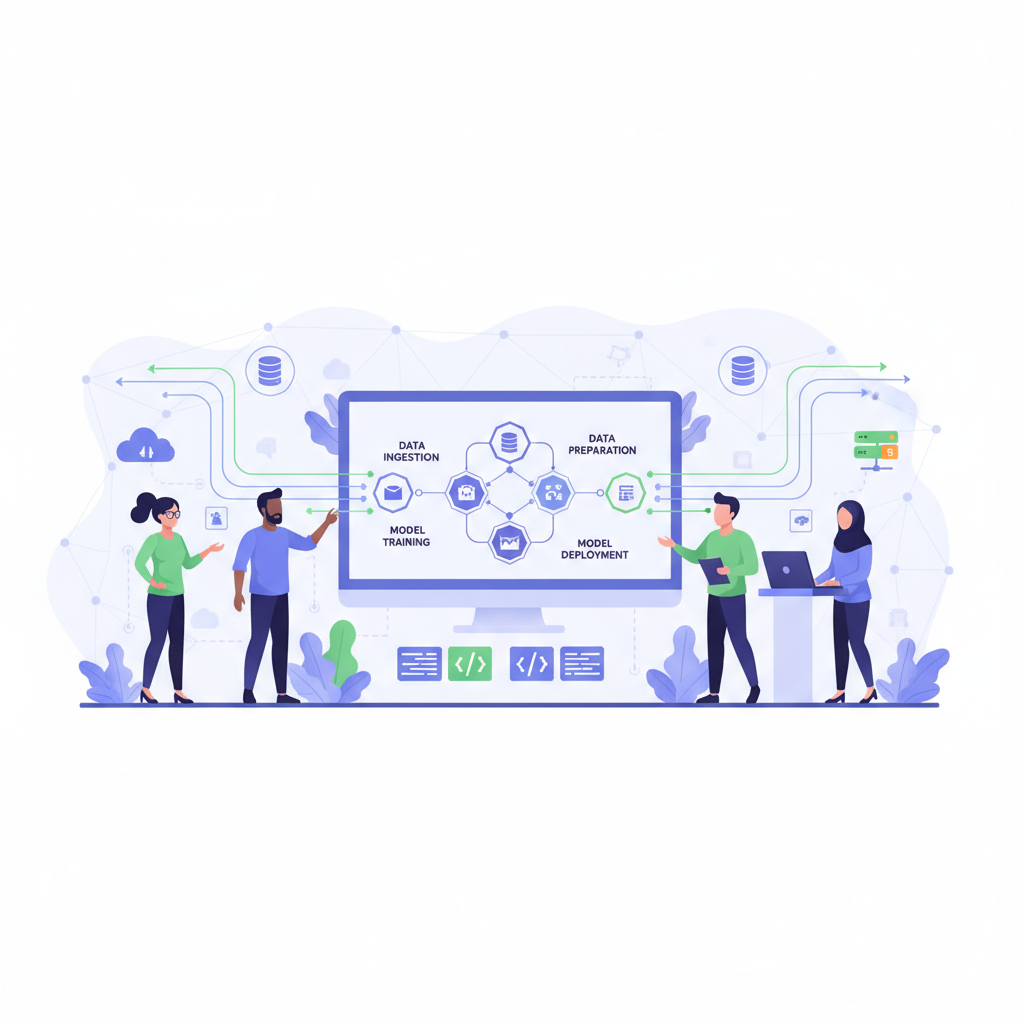
Addressing Specific Challenges with Expert Guidance
Machine Learning Operations Consulting helps organizations address a variety of specific pain points. These often include poor model governance, inconsistent deployment practices, and insufficient infrastructure to support dynamic AI workloads. Consultants offer strategic guidance to establish best practices and build resilient MLOps ecosystems.
They enable businesses to achieve faster model iteration cycles, enhance model reliability, and ensure compliance with industry regulations. This expert intervention frees internal teams to focus on core innovation, rather than getting bogged down in operational complexities. The result is a more efficient, secure, and impactful deployment of machine learning capabilities across the enterprise.
OPTIMIZE YOUR DEVELOPMENTTOPRODUCTION
Optimize your ML development-to-production pipeline. Secure reliable, scalable AI
Learn More ↗ ✓ Free consultation✓ No commitment required
✓ Trusted by experts
Key Services Offered by Machine Learning Operations Consulting Firms
Machine Learning Operations Consulting encompasses a broad range of services designed to support every phase of the ML lifecycle. These services are tailored to an organization's specific needs, whether they are just starting their MLOps journey or looking to optimize existing pipelines. Consultants provide comprehensive support, from initial strategy development to ongoing operational maintenance.
Understanding these core offerings helps businesses identify where external expertise can provide the most value. Each service plays a vital role in building a scalable, efficient, and reliable machine learning ecosystem. Firms offering AI operations services bring deep technical expertise and practical experience to the table.
MLOps Strategy Development
At the outset, Machine Learning Operations Consulting often involves developing a clear MLOps strategy consulting framework. This phase focuses on understanding an organization's current AI maturity, business goals, and existing infrastructure. Consultants work closely with stakeholders to define a roadmap for MLOps adoption.
This includes identifying key performance indicators (KPIs), establishing governance policies, and outlining resource requirements. A well-defined strategy ensures that MLOps initiatives align with broader business objectives and deliver measurable value. It sets the foundation for a successful and sustainable machine learning program.
Model Deployment and Management
One of the most critical aspects of MLOps is machine learning model deployment. Consultants specialize in designing and implementing robust deployment pipelines that automate the process of moving models from development to production. This ensures consistency and reduces manual errors, making the productionizing ML models process efficient.
They help establish practices for versioning models, managing dependencies, and ensuring models are easily rollback-able if issues arise. Furthermore, they provide expertise in managing the entire model lifecycle, including continuous integration and continuous delivery (CI/CD) specifically for ML code and models. This expertise is crucial for maintaining model performance and reliability.
Data Pipeline Optimization
Effective MLOps relies heavily on high-quality and readily available data. Machine Learning Operations Consulting includes optimizing data pipelines to ensure data is properly ingested, transformed, and prepared for model training and inference. This often involves implementing data pipeline automation solutions.
Consultants help design scalable data infrastructure, integrate various data sources, and ensure data lineage and governance. They focus on creating reliable and automated data flows that feed production models, minimizing manual intervention and improving data quality. This foundational work is essential for the health and accuracy of any ML system.
Infrastructure and Platform Integration
Choosing and integrating the right MLOps platform integration is paramount for a successful MLOps implementation. Consulting firms provide guidance on selecting appropriate cloud platforms, on-premise solutions, or hybrid environments that meet specific business and technical requirements. They offer expertise in integrating various tools and technologies.
This includes setting up containerization (e.g., Docker, Kubernetes), orchestrating workflows, and configuring compute resources. They ensure the chosen infrastructure supports the scalability, security, and performance demands of machine learning workloads. Their deep understanding of different MLOps platforms ensures optimal architectural choices.
Monitoring and Governance
Once models are in production, continuous monitoring is essential to ensure they perform as expected. Machine Learning Operations Consulting establishes comprehensive monitoring frameworks that track model performance, data drift, and concept drift. This allows for proactive identification and resolution of issues before they impact business outcomes.
Consultants also help implement strong ML lifecycle management governance frameworks, ensuring compliance with data privacy regulations (e.g., GDPR, CCPA) and ethical AI principles. They define roles, responsibilities, and approval processes for model changes and updates. This holistic approach ensures models are not only performant but also responsible and compliant.
Implementing MLOps: A Step-by-Step Approach
Engaging in Machine Learning Operations Consulting typically follows a structured approach, ensuring a systematic and effective implementation. This iterative process allows organizations to build out their MLOps capabilities incrementally, delivering value at each stage. Understanding these steps can help businesses prepare for a successful consulting engagement.
Step 1: Discovery and Assessment
The consulting process begins with a thorough discovery phase to assess the client's current state. This involves evaluating existing ML initiatives, data infrastructure, development practices, and organizational structure. Consultants identify pain points, technical debt, and opportunities for improvement.
They conduct interviews with data scientists, engineers, and business stakeholders to gather comprehensive insights. This initial assessment forms the basis for a tailored MLOps strategy. It provides a clear picture of the current landscape and the desired future state.
Step 2: Strategy and Roadmap Development
Based on the assessment, consultants develop a customized MLOps strategy and a detailed roadmap. This roadmap outlines specific goals, prioritized initiatives, required technologies, and estimated timelines. It aligns the MLOps vision with the client's overall business objectives.
The strategy includes recommendations for best practices, tool selection, and team structure changes. This phase is crucial for establishing clear expectations and a actionable plan for implementation. It ensures a shared understanding across all relevant teams.
Step 3: Pilot Project Implementation
Rather than a big-bang approach, MLOps implementation often starts with a pilot project. Consultants work with internal teams to apply the new MLOps practices to a specific machine learning model or use case. This allows for testing the new workflows, tools, and processes in a controlled environment.
This iterative approach helps refine the MLOps framework and address any unforeseen challenges before a broader rollout. It builds internal confidence and demonstrates the value of the new operational model. Learning from a pilot project is vital for scaling later.
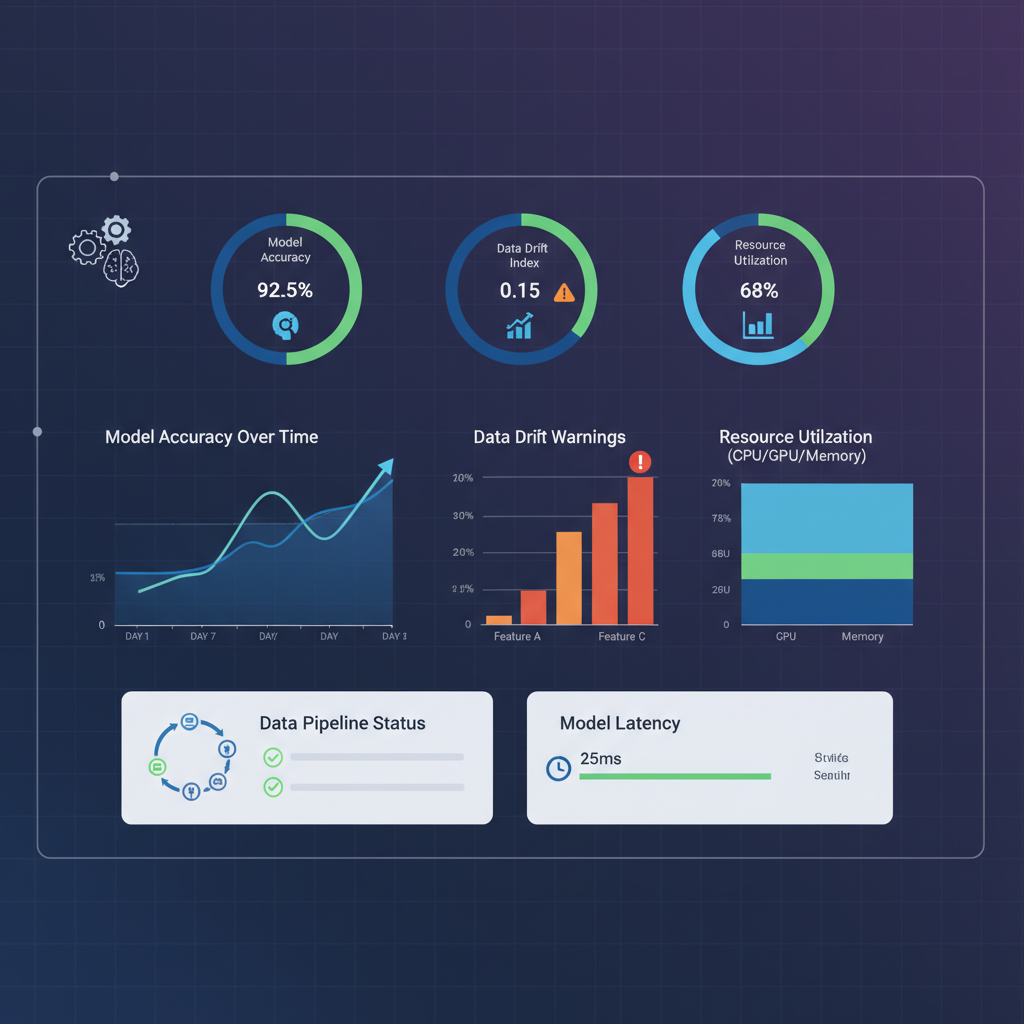
Step 4: Full-Scale MLOps Platform Integration and Pipeline Development
Following a successful pilot, consultants proceed with the full-scale implementation of the MLOps platform integration. This involves configuring infrastructure, setting up automated CI/CD pipelines for ML models, and integrating various MLOps tools. They focus on creating a robust system for machine learning model deployment.
This stage also includes establishing data pipeline automation for continuous data feeding and retraining mechanisms. The goal is to create a fully operational MLOps environment that supports efficient ML lifecycle management for all relevant models. Building scalable pipelines is key here.
Step 5: Training and Knowledge Transfer
A critical component of Machine Learning Operations Consulting is empowering internal teams. Consultants provide comprehensive training to data scientists, ML engineers, and operations staff on the new MLOps tools, processes, and best practices. This ensures sustained capability within the organization.
Knowledge transfer sessions focus on practical skills, enabling teams to independently manage and evolve their MLOps environment. This investment in internal expertise is essential for long-term success and reduces ongoing reliance on external consultants. Building self-sufficiency is a primary objective.
Step 6: Continuous Improvement and Support
MLOps is an ongoing journey, not a one-time project. Consultants often provide post-implementation support, helping organizations continuously monitor their MLOps pipelines and optimize performance. They assist with adapting to new technologies and evolving business needs.
This phase includes regular reviews, performance tuning, and guidance on how to evolve the MLOps framework over time. The continuous improvement mindset ensures that the MLOps system remains agile and effective in a rapidly changing AI landscape. Long-term partnership is often beneficial.
Challenges and Solutions in MLOps Adoption
Despite its clear advantages, adopting MLOps can present several challenges for organizations. These hurdles often involve a blend of technical complexities, organizational resistance, and a lack of specialized skills. Machine Learning Operations Consulting offers practical solutions to overcome these obstacles.
One common challenge is the siloed nature of data science and operations teams, leading to communication breakdowns and inefficient handoffs. Consultants help bridge this gap by fostering collaboration and establishing common workflows, essentially implementing DevOps for machine learning principles. They act as facilitators to ensure smooth interactions.
Navigating Technical and Cultural Hurdles
Technical challenges include choosing the right tools from a fragmented MLOps landscape and integrating them effectively. Organizations may struggle with setting up scalable infrastructure or implementing robust monitoring for model drift. Machine Learning Operations Consulting brings expertise in navigating these complex technical decisions.
Culturally, transitioning to MLOps requires a shift in mindset, encouraging data scientists to think about production readiness and operations teams to understand the nuances of ML models. Consultants often act as change agents, providing the guidance and frameworks needed for this organizational transformation. Their experience helps smooth the transition.
Ensuring Scalability and Reproducibility
Another significant hurdle is ensuring that ML systems are scalable and that experiments are reproducible. Without proper MLOps, scaling from a few models to dozens or hundreds becomes unmanageable. Consultants design architectures that support growth and implement version control for both code and data.
They help establish clear procedures for tracking experiments, managing model versions, and documenting every step of the ML lifecycle. This focus on reproducibility is crucial for debugging, auditing, and continuous improvement. It builds trust and accountability into the AI development process.
Selecting the Right Machine Learning Operations Consulting Partner
Choosing the right Machine Learning Operations Consulting firm is a critical decision that can significantly impact the success of your MLOps initiatives. Organizations should look for partners with deep technical expertise, a proven track record, and a collaborative approach. The ideal consultant understands not just the technology but also the unique business context.
Consider firms that have demonstrable experience with `MLOps strategy consulting` and successfully `productionizing ML models` across various industries. Look for partners who prioritize knowledge transfer and empower your internal teams rather than creating dependency. A strong consulting relationship is built on trust and shared objectives.
Key criteria for selection include:
- Industry Experience: Look for firms that understand your specific industry challenges and regulatory landscape.
- Technical Acumen: Assess their expertise in various MLOps tools, cloud platforms, and data technologies.
- Methodology: Evaluate their approach to MLOps implementation, ensuring it aligns with your organizational culture.
- Client Testimonials: Review case studies and references to gauge their past performance and client satisfaction.
- Cultural Fit: Choose a partner whose working style and values resonate with your own team.
A well-chosen partner will act as an extension of your team, guiding you through the complexities of `ML lifecycle management` and ensuring your `AI operations services` are world-class. They become an invaluable asset in your journey towards advanced AI capabilities.
Frequently Asked Questions
What exactly is Machine Learning Operations Consulting?
Machine Learning Operations Consulting involves expert guidance and services to help organizations efficiently deploy, manage, and scale their machine learning models in production. It bridges the gap between data science development and IT operations, applying DevOps principles to the unique challenges of AI systems. Consultants assist with strategy, implementation, and ongoing optimization of MLOps practices.
Why do companies need MLOps consulting services?
Companies need MLOps consulting because they often lack the internal expertise to build robust MLOps pipelines, integrate complex tools, or manage the entire ML lifecycle effectively. Consultants provide specialized knowledge, accelerate implementation, establish best practices, and help overcome technical and organizational challenges to ensure AI models deliver continuous business value. They are vital for productionizing ML models successfully.
What are the main benefits of implementing MLOps with a consultant?
Implementing MLOps with a consultant offers several benefits, including faster machine learning model deployment, improved model reliability and performance, enhanced scalability of AI initiatives, and better governance. It also leads to more efficient resource utilization, reduced operational costs, and the ability to adapt quickly to changing business requirements or data conditions. Consultants help in defining a sound MLOps strategy consulting framework.
How does MLOps relate to DevOps?
MLOps is often described as "DevOps for machine learning." It extends the core principles of DevOps—like automation, continuous integration, continuous delivery, and continuous monitoring—to the specific workflow of machine learning projects. While DevOps focuses on software development, MLOps addresses the additional complexities of data, models, and experimentation inherent in AI systems. It ensures smooth ML lifecycle management.
What kind of technical expertise do MLOps consultants provide?
MLOps consultants typically possess deep expertise in cloud platforms (AWS, Azure, GCP), containerization technologies (Docker, Kubernetes), workflow orchestration tools (Airflow, Kubeflow), and various ML frameworks. They are skilled in data pipeline automation, setting up monitoring and logging systems, and implementing CI/CD pipelines tailored for machine learning. Their knowledge covers all aspects of MLOps platform integration.
What is the typical duration of an MLOps consulting engagement?
The duration of an MLOps consulting engagement varies significantly based on the client's current maturity, the scope of work, and the complexity of their machine learning initiatives. It can range from a few weeks for strategic assessments and roadmap development to several months for full-scale platform implementation and integration. Many engagements also include ongoing support for continuous improvement.
OPTIMIZE YOUR DEVELOPMENTTOPRODUCTION
Optimize your ML development-to-production pipeline. Secure reliable, scalable AI
Learn More ↗ ✓ Free consultation✓ No commitment required
✓ Trusted by experts
Conclusion
Machine Learning Operations Consulting is no longer a luxury but a strategic imperative for organizations serious about scaling their AI capabilities. By providing the frameworks, tools, and expertise necessary for seamless `ML lifecycle management`, consultants enable businesses to move beyond experimental models to truly transformative production AI. They empower teams to streamline `machine learning model deployment` and ensure ongoing model performance and governance.
Embracing expert guidance in `Machine Learning Operations Consulting` means securing a future where AI investments yield consistent, measurable returns. It transforms the potential of machine learning into a tangible competitive advantage, allowing organizations to innovate faster and smarter. The journey to a robust MLOps ecosystem is complex, but with the right partner, it is a highly achievable and rewarding endeavor.
Opsio provides AI and machine learning services and managed services to help organizations implement and manage their technology infrastructure effectively.