MigrFrequently Asked QuestionsWhat does a cloud solutions consultant do?A cloud solutions consultant assesses an organization's existing IT environment, recommends the right cloud platforms (AWS, Azure, or Google Cloud), designs migration strategies, and oversees implementation. They balance technical architecture with business objectives to ensure cloud adoption delivers measurable ROI. What skills does a cloud consultant need?Core skills include cloud architecture design across major platforms, infrastructure-as-code proficiency (Terraform, CloudFormation), security and compliance knowledge (HIPAA, GDPR, PCI DSS), cost optimization analysis, and the ability to translate technical capabilities into business value for stakeholders. How much does cloud consulting cost?Cloud consulting rates vary based on scope and complexity. Independent consultants typically charge $150 to $300 per hour, while managed service providers offer monthly retainer models that bundle strategy, migration, and ongoing operations. Fixed-price project engagements range from $25,000 to $250,000 or more depending on environment complexity and compliance requirements. When should a business hire a cloud consultant?Businesses benefit from a cloud consultant when planning a first-time migration, managing multi-cloud environments, facing compliance audits, experiencing cloud cost overruns, or modernizing legacy applications. If internal teams lack specialized cloud architecture or security expertise, an external consultant fills that gap faster than hiring full-time staff. What is the difference between a cloud consultant and a managed service provider?A cloud consultant typically provides advisory and project-based services such as strategy, architecture design, and migration planning. A managed service provider (MSP) delivers ongoing operational support including monitoring, incident response, patching, and cost management. Many organizations use both: a consultant for the initial transformation and an MSP for continuous day-to-day operations. Can a cloud consultant help reduce my cloud bill?Yes. Cloud consultants identify cost optimization opportunities through right-sizing analysis, reserved instance planning, unused resource cleanup, and architecture redesign. When paired with an MSP that provides continuous FinOps monitoring, organizations typically reduce addressable cloud waste by 20–30% within the first quarter. Need Cloud Consulting and Managed Services?Get a tailored cloud strategy backed by 24/7 managed operations. Talk to Opsio about your migration, optimization, or compliance needs. Categories: Cloud Solutions Consultant: Skills, Services & ROIPublisert: ·Oppdatert: ·Gjennomgått av Opsios ingeniørteam  Group COO & CISO Operational excellence, governance, and information security. Aligns technology, risk, and business outcomes in complex IT environments
A cloud solutions consultant helps organizations plan, migrate, and optimize cloud environments across AWS, Azure, and Google Cloud Platform. As enterprises push deeper into digital transformation, these specialists bridge the gap between infrastructure complexity and measurable business outcomes. Gartner projects worldwide end-user spending on public cloud services will reach $723.4 billion in 2025, a 21.5% increase from 2024. That sustained growth means demand for qualified cloud consultants continues to outpace supply, particularly in multi-cloud governance, FinOps, and compliance-heavy verticals. This guide covers the consulting role in detail: what these professionals do day-to-day, the skills that set top performers apart, common engagement challenges, how managed service partnerships extend consulting value, and how to evaluate providers for your next cloud initiative. The Evolving Role of Cloud Consultants Cloud consulting has shifted from simple lift-and-shift execution to strategic advisory that spans architecture, security, cost governance, and application modernization. Early cloud projects focused on moving workloads to a single provider. Today, most enterprise engagements involve multi-cloud design, container orchestration with Kubernetes, serverless compute, and FinOps disciplines that tie infrastructure spending to business value. A typical consulting engagement moves through four phases: - Environment assessment: Documenting workloads, dependencies, licensing, and performance baselines across on-premises and existing cloud infrastructure.
- Architecture recommendation: Selecting the right platform mix (AWS, Azure, or Google Cloud) based on compliance posture, data-residency requirements, team skill sets, and total cost of ownership.
- Migration planning and execution: Building sequencing plans, rollback procedures, acceptance criteria, and cutover schedules that minimize downtime.
- Post-migration optimization: Tuning performance, implementing monitoring and alerting, establishing FinOps workflows, and training internal teams to operate independently.
This expanded scope requires consultants to balance deep technical knowledge with business acumen. They translate cloud capabilities into outcomes executives care about: reduced time-to-market, predictable operational expenditure, and lower risk exposure. They also coordinate across IT, finance, and compliance teams to ensure every stakeholder sees measurable value. Core Skills Every Cloud Consultant NeedsTechnical depth and communication skills carry equal weight in successful engagements. The most effective cloud infrastructure consultants combine hands-on platform expertise with the ability to present trade-offs clearly to non-technical decision-makers. | Skill Area | What It Covers | Why It Matters |
|---|
| Cloud architecture design | VPCs, IAM, networking, high availability, disaster recovery | Prevents costly rework after go-live | | Infrastructure as code | Terraform, CloudFormation, Pulumi, Bicep | Ensures repeatable, auditable deployments | | Security and compliance | HIPAA, GDPR, PCI DSS, SOC 2, zero-trust frameworks | Protects data and avoids regulatory penalties | | Cost optimization (FinOps) | Right-sizing, reserved instances, savings plans, showback | Delivers measurable savings clients expect | | Migration planning | The 7 Rs, dependency mapping, cutover scheduling | Reduces downtime and unexpected failures | | Containerization and modernization | Kubernetes, Docker, microservices, CI/CD pipelines | Enables scalability and faster release cycles | | Stakeholder communication | Executive briefings, risk framing, ROI reporting | Secures continued investment and alignment |
Certifications such as AWS Solutions Architect Professional, Azure Solutions Architect Expert, and Google Cloud Professional Cloud Architect validate platform-specific knowledge. However, real-world project experience across industries carries equal weight, especially in regulated sectors like healthcare and financial services where compliance missteps are costly. Common Challenges Cloud Consultants FaceComplex Migration ScenariosLegacy system transitions rarely follow a straight line. Intricate application dependencies, incompatible data formats, and tightly coupled architectures turn what looks like a simple migration into a multi-phase project. Each client environment is unique, requiring customized sequencing, testing, and rollback plans. Cost Optimization PressuresClients expect cloud to cost less, not more. Balancing performance targets with budget constraints demands continuous right-sizing, reserved-instance planning, and spend-anomaly detection. Without proper cloud financial management, organizations routinely overspend by 20–30% on unused or oversized resources. Security and Compliance DemandsRegulatory complexity grows with every workload moved to the cloud. Maintaining HIPAA, GDPR, and PCI DSS compliance across multiple platforms requires automated policy enforcement, continuous monitoring, and audit-ready documentation—all without slowing development velocity.  Beyond these technical hurdles, consultants must manage stakeholder alignment across departments, communicate progress in business terms, and adapt plans when requirements shift mid-project. The ability to maintain momentum while absorbing scope changes separates effective consultants from average ones. Cloud Consultant vs. Managed Service ProviderUnderstanding the distinction helps organizations decide what kind of support they actually need. A cloud strategy consultant typically delivers project-based advisory work: assessments, architecture blueprints, and migration execution. A managed service provider (MSP) focuses on ongoing operations: monitoring, incident response, patching, backup management, and continuous optimization. | Dimension | Cloud Consultant | Managed Service Provider |
|---|
| Engagement model | Project-based or retainer | Monthly subscription | | Primary focus | Strategy, design, migration | Operations, monitoring, optimization | | Typical deliverables | Architecture docs, migration plans, training | SLA reports, incident resolution, cost reports | | Duration | Weeks to months | Ongoing (12–36 month contracts typical) | | Coverage hours | Business hours or as-needed | 24/7/365 NOC and SOC | | Best for | One-time transformations, expertise gaps | Continuous operations, 24/7 coverage |
Many organizations benefit from both. A consultant designs and executes the migration, then an MSP like Opsio takes over day-to-day cloud managed services to keep the environment healthy, secure, and cost-efficient. How Managed Services Amplify Consulting Results Pairing consulting expertise with managed operations creates a complete cloud lifecycle model that sustains results long after the initial project ends. Consultants bring strategic vision and architecture skills; a managed services partner handles the continuous work that keeps environments reliable, compliant, and cost-effective. Architecture and Migration SupportPre-built architecture frameworks and automated assessment tools let consultants reduce design cycles significantly. Dependency mapping identifies compatibility risks before migration begins, and structured runbooks minimize downtime during cutovers. For organizations undertaking their first cloud migration, this combination of strategic planning and operational readiness shortens timelines and lowers risk. Cost Optimization at Scale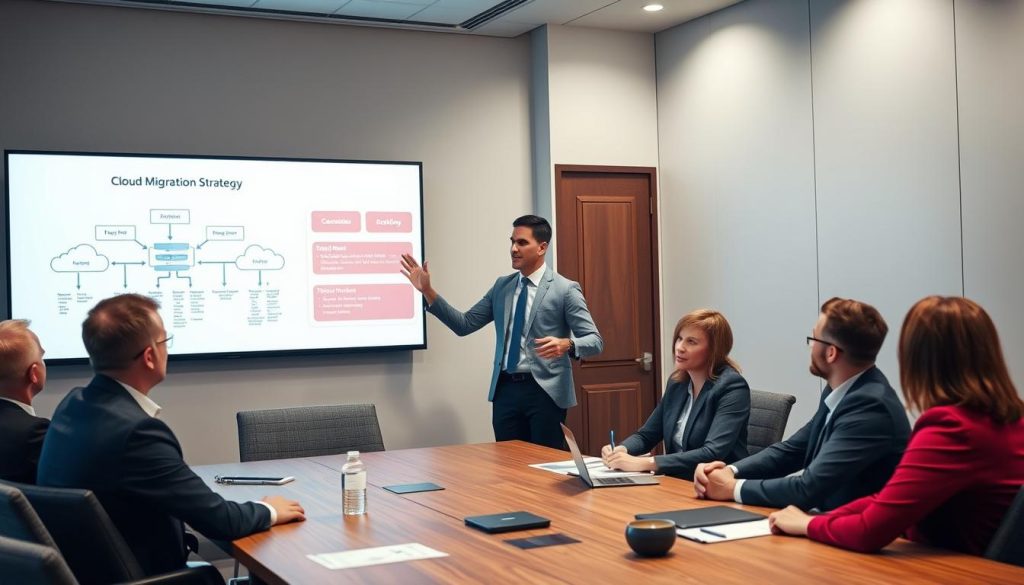 Continuous cost management platforms analyze resource utilization, recommend right-sizing actions, and forecast spending based on growth patterns. This ongoing optimization goes far beyond what a one-time consulting engagement can deliver. A managed partner keeps costs aligned with actual usage month after month, converting cost management from a project task into a continuous discipline. Organizations that adopt this approach typically identify 20–30% in addressable cloud waste within the first 90 days. Automated Compliance and SecurityCompliance engines automate security-control implementation and verification across AWS, Azure, and Google Cloud. By mapping controls to regulatory frameworks such as HIPAA, PCI DSS, and GDPR, these systems generate audit-ready documentation automatically. Consultants can focus on strategic cloud security architecture rather than manual checklist verification, while the MSP ensures ongoing posture management. Workflow Integration and White-Labeling A well-designed MSP platform enhances existing consulting methodology rather than replacing it. Shared dashboards, real-time analytics, and integrated communication tools improve transparency across all stakeholders. White-label capabilities let consulting firms present managed services under their own brand, expanding their portfolio without building operational infrastructure from scratch. Real-World Applications and Use Cases Multi-Cloud Environment ManagementOrganizations running workloads across two or more cloud providers need unified governance to avoid configuration drift and cost blind spots. A cloud consultant designs the target architecture and defines networking, identity, and security policies for each platform. A managed partner then provides continuous monitoring, cost allocation, and policy enforcement across all environments. According to Flexera's 2025 State of the Cloud Report, 89% of enterprises have a multi-cloud strategy, making this one of the most common consulting scenarios. Legacy Application Modernization Choosing between refactoring, replatforming, and rebuilding is one of the hardest decisions a consultant makes. Assessment tools help quantify technical debt, map dependencies, and model costs for each path. Containerization frameworks and microservices templates accelerate whichever approach the organization selects, while ongoing managed operations ensure the modernized application remains performant and secure. For more detail on migration approaches, see our guide to lift-and-shift vs. replatforming. Continuous Compliance for Regulated IndustriesIn healthcare, finance, and government, compliance is a continuous obligation rather than a one-time audit checkpoint. Real-time monitoring tracks security posture and flags deviations before they become findings. Automated remediation workflows fix common misconfigurations without waiting for a manual review cycle. Comprehensive reporting packages simplify audit preparation, saving weeks of effort each quarter. How Much Does Cloud Consulting Cost?Cloud consulting pricing depends on engagement scope, provider size, and whether advisory work is bundled with operational services. Understanding the fee structures helps organizations budget realistically and compare proposals. | Pricing Model | Typical Range | Best For |
|---|
| Hourly (independent consultant) | $150–$300/hr | Short advisory engagements, architecture reviews | | Fixed-price project | $25K–$250K+ | Defined-scope migrations, assessments | | Monthly retainer (consulting firm) | $5K–$50K/mo | Ongoing advisory with dedicated hours | | Bundled consulting + managed services | Custom (often % of cloud spend) | End-to-end lifecycle support |
Total project costs vary based on environment complexity, the number of workloads, compliance requirements, and whether post-migration operations are included. Organizations that bundle consulting with managed services often achieve a lower total cost of ownership because the same team that designed the architecture also operates it. How to Choose the Right Cloud Consultant Selecting the right consultant starts with matching their experience to your specific challenge, not just their certification list. Use the following criteria during evaluation: - Platform certifications and partnerships: Verify current AWS, Azure, or Google Cloud certifications. Partner-tier status with cloud providers indicates a track record of successful implementations.
- Industry experience: A consultant who has worked in your sector understands relevant compliance frameworks and operational patterns. Ask for case studies or references in your vertical.
- Migration methodology: Request a documented approach covering assessment, planning, execution, and post-migration optimization. Ad-hoc methods increase risk and lengthen timelines.
- Operational handoff plan: Ask how the consultant transitions the environment to your internal team or to a managed services partner. A clean handoff prevents knowledge gaps and post-project drift.
- Pricing transparency: Understand whether the engagement is fixed-price, time-and-materials, or outcome-based. Clarify what triggers change orders and how overruns are handled.
- Ongoing support options: The strongest consulting partners offer a path from project delivery to continuous operations, ensuring the architecture remains optimized as your business evolves.
Business Benefits of Expert Cloud Consulting Faster Time to ValuePre-built frameworks and proven migration runbooks shorten project timelines compared to building everything from scratch. Faster delivery means organizations realize cloud benefits sooner and free up budget for innovation rather than extended implementation cycles. Reduced Operational RiskExpert architecture design avoids common pitfalls like single points of failure, over-permissioned IAM roles, and unencrypted data paths. Proper planning includes disaster recovery and business continuity testing, reducing the blast radius when incidents occur. Measurable Cost SavingsConsultants who pair strategy with ongoing FinOps practices typically identify 20–30% in addressable cloud waste within the first 90 days. Continuous optimization sustains those savings as workloads scale and provider pricing models evolve. The combined effect of faster delivery, lower risk, and ongoing cost control creates a compounding return on the consulting investment. Organizations that treat cloud consulting as a strategic function rather than a one-time expense see stronger long-term outcomes. Getting Started with Opsio Opsio combines cloud consulting expertise with managed service operations under one roof. Whether you need a migration assessment, ongoing cloud management, or both, the onboarding process is designed to minimize disruption and deliver value quickly: - Initial assessment: A comprehensive review of your current environment, business objectives, and compliance requirements.
- Architecture and planning: A tailored cloud strategy with clear milestones, risk mitigations, and cost projections.
- Execution and migration: Structured migration with automated dependency checks, rollback procedures, and acceptance testing.
- Ongoing managed operations: 24/7 monitoring, incident response, cost optimization, and compliance management post-migration.
Most organizations complete the assessment and planning phase within two weeks and begin migration execution within a month. Contact Opsio to discuss your cloud consulting needs. Conclusion Cloud solutions consultants play a critical role in helping organizations navigate increasingly complex cloud environments. The most effective engagements combine strategic consulting with operational managed services, creating a lifecycle approach that covers everything from initial assessment through ongoing optimization. By choosing the right consultant and pairing their expertise with a capable managed services partner, organizations can accelerate their cloud journey, control costs, and maintain compliance with confidence. Frequently Asked QuestionsWhat does a cloud solutions consultant do?A cloud solutions consultant assesses an organization's existing IT environment, recommends the right cloud platforms (AWS, Azure, or Google Cloud), designs migration strategies, and oversees implementation. They balance technical architecture with business objectives to ensure cloud adoption delivers measurable ROI. What skills does a cloud consultant need?Core skills include cloud architecture design across major platforms, infrastructure-as-code proficiency (Terraform, CloudFormation), security and compliance knowledge (HIPAA, GDPR, PCI DSS), cost optimization analysis, and the ability to translate technical capabilities into business value for stakeholders. How much does cloud consulting cost?Cloud consulting rates vary based on scope and complexity. Independent consultants typically charge $150 to $300 per hour, while managed service providers offer monthly retainer models that bundle strategy, migration, and ongoing operations. Fixed-price project engagements range from $25,000 to $250,000 or more depending on environment complexity and compliance requirements. When should a business hire a cloud consultant?Businesses benefit from a cloud consultant when planning a first-time migration, managing multi-cloud environments, facing compliance audits, experiencing cloud cost overruns, or modernizing legacy applications. If internal teams lack specialized cloud architecture or security expertise, an external consultant fills that gap faster than hiring full-time staff. What is the difference between a cloud consultant and a managed service provider?A cloud consultant typically provides advisory and project-based services such as strategy, architecture design, and migration planning. A managed service provider (MSP) delivers ongoing operational support including monitoring, incident response, patching, and cost management. Many organizations use both: a consultant for the initial transformation and an MSP for continuous day-to-day operations. Can a cloud consultant help reduce my cloud bill?Yes. Cloud consultants identify cost optimization opportunities through right-sizing analysis, reserved instance planning, unused resource cleanup, and architecture redesign. When paired with an MSP that provides continuous FinOps monitoring, organizations typically reduce addressable cloud waste by 20–30% within the first quarter. Need Cloud Consulting and Managed Services?Get a tailored cloud strategy backed by 24/7 managed operations. Talk to Opsio about your migration, optimization, or compliance needs. Schedule a Free Consultation Om forfatteren Fredrik KarlssonGroup COO & CISO at Opsio Operational excellence, governance, and information security. Aligns technology, risk, and business outcomes in complex IT environments Editorial standards: This article was written by a certified practitioner and peer-reviewed by our engineering team. We update content quarterly to ensure technical accuracy. Opsio maintains editorial independence — we recommend solutions based on technical merit, not commercial relationships. Vil du implementere det du nettopp leste?Våre arkitekter kan hjelpe deg med å omsette disse innsiktene i praksis. |