What if the most significant threat to your operational efficiency and workforce well-being is an outdated approach to protection? Globally, about 340 million workplace accidents happen every year. These incidents cause immense personal hardship and cripple productivity.
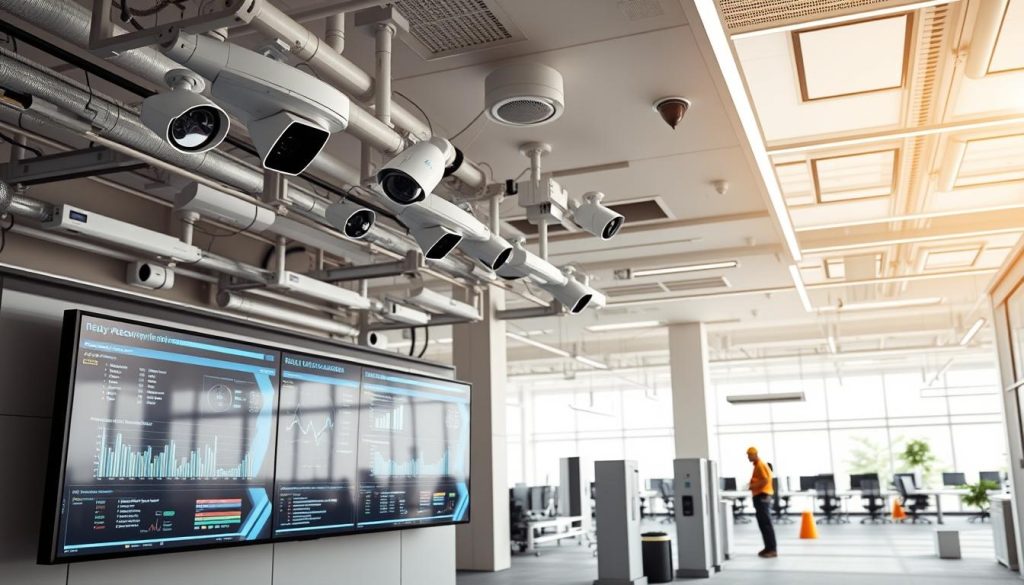 Compliance-Vision-System.jpeg 1344w" sizes="(max-width: 750px) 100vw, 750px" />
In the United States alone, the financial impact is staggering. Preventable injuries cost businesses over $167 billion annually. This makes traditional, manual monitoring methods financially unsustainable for modern operations.
We introduce a transformative solution. Our approach turns basic protection into an intelligent, automated shield for your team. This proactive strategy addresses the immense pressure leaders face in managing complex sites and tight budgets.
We eliminate the dangerous blind spots of old-fashioned checklists. Our technology positions protection as a powerful competitive advantage, not just a cost. This article will guide you from understanding core operational roles to implementing advanced detection that delivers measurable improvements in incident reduction and return on investment.
Key Takeaways
- Global workplace accidents number in the hundreds of millions annually, with severe human and financial costs.
- The U.S. faces over $167 billion in annual costs from preventable workplace injuries.
- Manual monitoring methods are no longer financially sustainable for modern businesses.
- A proactive, intelligent approach transforms protection from a reactive cost into a strategic advantage.
- Advanced technology eliminates the blind spots inherent in traditional compliance checks.
- This solution is crucial for leaders managing complex operations across multiple sites with budget constraints.
- Implementation leads to measurable improvements in incident rates and return on investment.
Understanding the Importance of PPE in Workplace Safety
In environments where physical risks are inherent, the gear worn by on-site personnel serves as the critical barrier between routine operations and preventable incidents. This essential equipment ranges from head protection to respiratory devices, each designed to address specific workplace hazards.
Role of PPE in Reducing Operational Risks
Proper protective equipment enables workers to perform high-risk tasks with confidence. When team members feel secure in their gear, productivity naturally increases as fear diminishes.
The right equipment transforms hazardous environments into controlled workspaces. This proactive approach significantly reduces incident rates while maintaining operational efficiency.
Compliance and Regulatory Overview
Federal regulations mandate that all protective gear must properly fit each worker. Fall protection remains the most frequently cited standard, highlighting its critical importance.
Inadequate protocols create compound risks beyond immediate injuries. Organizations face legal liabilities, regulatory penalties, and reputational damage when standards aren't met.
| Protective Gear Type |
Primary Function |
Secondary Benefits |
Required Environments |
| Head Protection |
Impact resistance |
Weather protection |
Construction, manufacturing |
| Eye Protection |
Debris shielding |
UV radiation blocking |
Welding, chemical handling |
| Hand Protection |
Cut resistance |
Enhanced grip |
Assembly, material handling |
| Respiratory Gear |
Air filtration |
Comfort during extended use |
Dusty, fume-filled areas |
| Body Protection |
Chemical resistance |
Temperature regulation |
Hazardous material sites |
Manual monitoring of protective gear usage often fails to meet modern operational demands. This foundation understanding sets the stage for exploring automated solutions that transform supervision into systematic advantage.
Implementing Safety PPE Compliance Vision System: How It Works
Modern facilities require intelligent monitoring that operates continuously without human intervention. Our approach leverages sophisticated computer algorithms to analyze visual data streams in real-time.
The core methodology employs artificial intelligence to perform complex tasks like image classification and object recognition. These algorithms can distinguish between various types of protective gear with remarkable accuracy.
Strategically placed cameras capture continuous footage throughout your operational areas. Our systems process this video data at frequent intervals, creating persistent oversight.
This technology rapidly analyzes multiple video streams simultaneously across different locations. It maintains comprehensive oversight without requiring additional supervisory staff.
The detection capabilities form the foundation of effective ppe detection protocols. Our solution integrates seamlessly with existing camera infrastructure through ONVIF-conformant platforms.
This automated approach eliminates the gaps inherent in manual inspections. It provides your team with immediate insights into equipment usage patterns.
We designed these systems to scale across multiple sites and high-risk zones. The advanced detection algorithms ensure consistent monitoring regardless of operational complexity.
This technological foundation enables the next level of operational oversight we will explore.
Benefits of Computer Vision in Monitoring PPE Compliance
The financial argument for upgrading from manual oversight to automated detection is overwhelmingly clear from the outset. For every dollar invested in advanced oversight technology, organizations typically realize four to six dollars in savings. These gains come from reduced workplace incidents, lower insurance premiums, and avoided regulatory penalties.
Top-performing organizations using automated ppe detection systems achieve remarkable results. They experience 85% fewer recordable incidents than industry averages. This demonstrates the tangible impact of systematic compliance monitoring on operational outcomes.
Automated oversight eliminates the limitations of human-based supervision. It provides consistent, unbiased detection without fatigue or distraction. The technology can simultaneously observe multiple locations across expansive facilities.
Beyond simple violation detection, these systems generate valuable insights into usage patterns. They identify systemic issues like inadequate training or uncomfortable equipment. This enables targeted improvements that address root causes.
The real-time nature of automated monitoring enables immediate intervention when violations occur. This transforms protection management from reactive incident-response to proactive risk mitigation. It prevents injuries before they happen, protecting both workforce and operational continuity.
Organizations implementing these solutions see marked improvements in ppe compliance rates. The technology provides comprehensive oversight that manual methods cannot match. This advanced approach to ppe detection delivers measurable improvements in incident reduction and return on investment.
Addressing Challenges in Manual PPE Monitoring
The reliance on human supervision for equipment adherence creates systemic vulnerabilities that impact both workforce protection and operational continuity. We recognize these inherent challenges require thoughtful solutions.
Human Error and Oversight
Even dedicated employees may forget essential gear or choose comfort over protocol. Different tasks require specific protective items, creating confusion without proper training. These human factors represent significant challenges in maintaining consistent protection standards.
When workers neglect proper equipment, the risk of non-compliance increases dramatically. Discomfort often drives these decisions, particularly in demanding environments.
Limitations of Manual Supervision
Human monitors cannot observe all areas simultaneously, especially in large facilities. This creates gaps where non-compliance goes unnoticed until incidents occur. The financial burden of staffing multiple supervisors adds operational expense.
Traditional inspection methods provide only sporadic snapshots of actual conditions. They miss critical events between checkpoints, preventing accurate assessment of true performance. We address these limitations through comprehensive monitoring approaches.
These supervision gaps undermine the effectiveness of even well-designed protection programs. They prevent organizations from gaining the complete visibility needed for proactive risk management.
Leveraging Artificial Intelligence for Safety and Compliance
Digital oversight powered by AI algorithms delivers unprecedented consistency in monitoring protective equipment usage across complex operations. We transform intermittent human checks into continuous automated vigilance that analyzes visual data at frequent intervals.

This approach captures every moment rather than relying on limited point-in-time snapshots. The technology provides comprehensive coverage that manual methods cannot achieve.
Real-Time Detection Advantages
Our AI-powered ppe detection capabilities identify violations as they occur. This enables immediate intervention before unsafe conditions escalate into injuries or operational disruptions.
The detection technology triggers instant alerts to appropriate supervisory personnel. This real-time response capability represents a significant advancement in protective oversight.
Automated Alert Systems and Reporting
Configurable systems deliver intelligent escalation paths based on violation severity. This ensures appropriate personnel receive timely information without alert fatigue.
Automated reports eliminate administrative burdens while creating robust documentation. The system generates timestamped incident records and searchable video evidence.
| AI Capability |
Detection Frequency |
Alert Response Time |
Reporting Feature |
| Real-time monitoring |
Continuous analysis |
Instant notifications |
Timestamped incidents |
| Pattern recognition |
Multiple intervals |
Escalation protocols |
Video evidence logging |
| Violation tracking |
24/7 operation |
Customizable thresholds |
Compliance documentation |
The complete audit trail protects organizations during regulatory inspections and incident investigations. This objective evidence documents your commitment to safety compliance standards.
Integrating PPE Detection with Existing Safety Management Systems
The most effective technological implementations respect existing infrastructure while enhancing current capabilities. We design our approach to work within your established operational framework, not against it.
Our open API architecture enables seamless connection between detection insights and your Environmental Health and Safety platforms. This integration centralizes critical indicators within the dashboards your team already uses daily.
The platform works with existing camera networks and ONVIF-conformant Video Management Systems. This eliminates proprietary lock-ins and preserves your current technology investments.
| Integration Component |
Compatibility Feature |
Business Benefit |
Implementation Time |
| Camera Networks |
ONVIF-conformant VMS |
Preserves existing investments |
Immediate connectivity |
| EHS Platforms |
Open API architecture |
Centralized data management |
Rapid deployment |
| Business Intelligence |
Standard data formats |
Enhanced reporting capabilities |
Seamless integration |
| Safety Management |
Unified dashboard views |
Streamlined oversight |
Quick adoption |
User-centric event feeds deliver instant visibility into non-compliance trends across all facilities. Intuitive dashboards present actionable insights that help identify high-risk areas and recurring issues.
Our AI-powered Copilot functionality enhances analytical capabilities by surfacing patterns and correlations within compliance data. This enables proactive decision-making based on comprehensive intelligence rather than reactive responses.
The platform integration transforms disparate data sources into cohesive operational intelligence. This allows correlation of protection metrics with production schedules and environmental conditions for holistic understanding.
Hardware and Software Requirements for PPE Detection
Building a reliable detection system requires carefully selected hardware and software components that work together seamlessly. We establish the technical foundation that enables accurate monitoring across diverse operational areas.
This integration ensures comprehensive coverage and consistent performance in challenging work environments.
Key Camera and Sensor Technologies
High-resolution cameras form the core of effective detection capabilities. These devices capture detailed visual data from multiple angles across your facility.
Industrial-grade equipment must withstand harsh conditions like temperature extremes and dust exposure. Power over Ethernet cameras deliver superior performance with simplified installation.
Their reliable operation continues through demanding industrial environments that compromise lesser devices.
Deep Learning and Integration Tools
Edge computing architecture processes visual data locally using powerful single-board units. NVIDIA Jetson and Raspberry Pi modules enable real-time accelerated computations.
This approach delivers immediate violation detection without cloud processing dependencies. Advanced models like YOLO and Faster-RCNN provide accurate object recognition.
We integrate these with industry-standard frameworks including TensorFlow and PyTorch. This combination ensures production-grade performance for intelligent detection systems.
Data Collection, Annotation, and Pre-Processing for Model Training
Before algorithms can identify protective equipment, they must learn from diverse and well-annotated datasets. We build our recognition capabilities on comprehensive visual data that represents real operational conditions.
Effective model training requires exposure to varied lighting, angles, and workplace settings. This diversity ensures accurate detection across different environments.
Best Practices for Data Annotation
We employ sophisticated annotation platforms that support multiple labeling methods. These tools allow precise marking of equipment using bounding boxes and segmentation techniques.
Automated features like object tracking and interpolation significantly speed up the annotation process. This approach maintains consistency while reducing manual effort.
Effective Data Curation Techniques
Proper data curation identifies patterns and removes irrelevant information. We use advanced tools to filter datasets, eliminating duplicates and outliers that could skew learning.
This systematic approach ensures training materials focus on relevant visual information. The result is more efficient model development.
| Processing Stage |
Key Activities |
Tools Used |
Quality Control |
| Data Collection |
Gather diverse images and videos |
Camera systems |
Verify variety and relevance |
| Annotation |
Label equipment with precision |
AI-assisted platforms |
Ensure labeling accuracy |
| Curating |
Filter and organize datasets |
Data management tools |
Remove noise and duplicates |
| Validation |
Test detection patterns |
Quality assessment |
Confirm model readiness |
Training and Validating AI Models for PPE Detection
Our approach to developing intelligent detection capabilities begins with teaching algorithms to recognize specific equipment through extensive exposure to diverse scenarios. We transform annotated visual data into predictive intelligence that operates reliably across your operational environments.
Model Training Approaches
We employ advanced fine-tuning techniques using proven foundation models rather than building from scratch. This strategy leverages existing knowledge while adapting to your specific requirements.
Models like YOLO-World and Detection Transformer provide superior generalization abilities. They reduce training time and computational costs significantly while maintaining high accuracy standards.
Validation Metrics and Techniques
Validation ensures your detection system performs consistently across real-world conditions. We test against unseen datasets representing your operational diversity.
Critical metrics including accuracy, precision, and recall quantify detection reliability. The F1-score provides balanced assessment of model performance.
| Validation Metric |
Primary Function |
Target Threshold |
Business Impact |
| Accuracy |
Overall detection correctness |
>95% |
Reduces false alerts |
| Precision |
Minimize false positives |
>92% |
Prevents unnecessary interruptions |
| Recall |
Capture all violations |
>90% |
Ensures comprehensive coverage |
| F1-Score |
Balance precision and recall |
>91% |
Optimizes system performance |
Our validation platform provides detailed visualizations across multiple quality dimensions. This comprehensive analysis identifies specific detection challenges requiring refinement.
Iterative improvement cycles systematically eliminate weaknesses until the system achieves production-ready reliability. This meticulous approach ensures consistent performance across all operational areas.
Deploying and Integrating PPE Detection Solutions on Site
Choosing the right deployment strategy forms the critical foundation for effective equipment monitoring across your facilities. We guide organizations through the decision between edge-based and centralized processing architectures.

Edge devices with NVIDIA Jetson chips enable on-site real-time processing. This approach processes visual data locally and transmits alerts immediately.
Local processing delivers faster response times through parallel computation. It maintains operations during network disruptions that would disable cloud-dependent systems.
Alternatively, centralized servers consolidate processing from multiple camera feeds. This method offers superior computational capacity for complex analysis.
Hybrid architectures combine the benefits of both approaches. Edge devices perform initial detection while central systems provide advanced analytics.
Seamless integration with existing infrastructure minimizes disruption to ongoing operations. This establishes the foundation for continuous monitoring that delivers immediate improvements.
We help you optimize the balance between real-time response and computational efficiency. The right deployment choice depends on your specific operational requirements.
Real-World Case Study: From Construction Sites to Enterprise Safety
Our case study examines how one construction company overcame significant operational hurdles through intelligent monitoring. They faced dynamic illumination levels, multiple activities, and diverse protective gear types across their work zones.
Implementation on High-Risk Construction Sites
The company deployed customized 2D cameras with integrated power and processing units. These devices captured wide-angle coverage from strategic locations despite harsh environmental conditions.
Dust, sunlight, and heavy equipment vibration presented constant challenges. The solution utilized solar power where electrical supply was unavailable, recording 41-second video clips for optimal data management.
Automated data curation tools organized thousands of images while identifying quality issues. This approach ensured accurate detection training despite occlusions and rapid activity.
Measurable ROI and Safety Improvements
The implementation delivered substantial improvements in equipment usage rates across all monitored locations. Recordable incidents decreased significantly, reducing project delays and compensation claims.
Subcontractor accountability improved through documented performance tracking. The company strengthened their competitive position when bidding on new projects.
| Business Metric |
Before Implementation |
After Implementation |
Improvement Percentage |
| Equipment Usage Rate |
68% |
94% |
38% increase |
| Recordable Incidents |
12 monthly |
3 monthly |
75% reduction |
| Insurance Premiums |
High-risk category |
Standard category |
22% savings |
| Project Bid Success |
45% win rate |
67% win rate |
49% improvement |
This real-world example demonstrates how intelligent detection creates tangible business value. The approach transforms challenging environments into controlled, efficient operations.
Compliance Monitoring and Automated Reporting in Safety Management
By establishing clear usage thresholds and automated tracking, businesses gain unprecedented visibility into equipment adherence patterns across their operations. Our approach enables organizations to define specific targets tailored to different work zones, shift schedules, and risk levels.
Automated pipelines continuously compare actual usage against pre-defined benchmarks, identifying gaps that require immediate intervention. This transforms subjective observations into objective measurements that drive continuous improvement.
When deviations occur, configurable alert systems notify appropriate personnel with precise details about violation locations, timing, and equipment types. These immediate notifications enable proactive responses before situations escalate.
Every detection event generates timestamped records that create comprehensive documentation trails. This objective evidence satisfies regulatory requirements and protects organizations during audits or investigations.
Our reporting extends beyond simple violation counting to reveal underlying patterns and root causes. Management receives detailed insights that support evidence-based interventions like targeted training or protocol adjustments.
This automated approach dramatically reduces administrative burdens, freeing personnel to focus on strategic improvements rather than manual documentation. The system creates a foundation for sustainable adherence that evolves with operational needs.
Integrating Non-Edge and Edge Devices for Scalable Solutions
Architecting the optimal infrastructure balance between edge and non-edge devices represents a critical decision point for organizations scaling their monitoring capabilities. We provide strategic guidance on designing solutions that match your specific operational requirements.
Edge solutions excel where data privacy is paramount or budgets favor incremental investments. These systems keep video footage within controlled infrastructure while delivering immediate local processing. This approach avoids substantial upfront expenditures on centralized server infrastructure.
Non-edge cloud platforms offer superior computational power for complex analytics across multiple facilities. They simultaneously process hundreds of video streams and integrate detection data with business intelligence platforms. Slight latency becomes acceptable when gaining deeper analytical insights.
Our construction-specific training ensure system reliability across demanding environments. Models learn from real-world footage featuring harsh sunlight, heavy rain, and foggy conditions. This prepares the technology for accurate performance regardless of weather or lighting challenges.
Hybrid approaches leverage both edge and non-edge capabilities for comprehensive coverage. Edge devices provide real-time alerts while central systems handle long-term trend analysis. This integration creates scalable solutions that grow with your operational expansion.
Advancements in Technology: Video AI and Protex's Approach
We bridge the gap between advanced video technology and practical application through interfaces designed for non-technical users. Our approach transforms complex detection algorithms into tools that deliver immediate value across diverse operational environments.
User-Centric Dashboards and Event Feeds
Our platform presents detection events through intuitive interfaces that prioritize clarity and actionability. Users access comprehensive dashboards showing real-time adherence patterns across all monitored areas.
The event feed organizes violations chronologically with visual evidence and contextual details. This design empowers teams to identify trends and respond effectively to emerging patterns.
Seamless Integration with Existing Infrastructure
We ensure our technology integrates smoothly with your current operational systems. The platform connects effortlessly with existing camera networks and management software.
Different facility areas require customized monitoring parameters, which our rule builder accommodates perfectly. This flexibility allows precise configuration for high-visibility vests, head protection, and other essential gear.
| Feature |
User Benefit |
Operational Impact |
Integration Ease |
| Real-time Video Analysis |
Immediate violation alerts |
Proactive intervention |
Works with existing cameras |
| Custom Rule Builder |
Zone-specific parameters |
Targeted monitoring |
No technical expertise needed |
| AI-Powered Insights |
Pattern recognition |
Root cause identification |
Seamless data integration |
| Corrective Action Tracking |
Progress monitoring |
Continuous improvement |
Links with existing workflows |
The Copilot assistant provides natural language queries about detection patterns and recommends targeted interventions. This technology delivers actionable insights that help users address underlying issues systematically.
Best Practices for Maximizing PPE Detection ROI
Maximizing the value of detection technology requires a phased approach that builds momentum through targeted initial successes. We recommend beginning with high-impact zones where protection equipment adherence delivers immediate benefits.
Focus your team on main entry points, high-risk zones, equipment operation areas, and restricted locations. This strategic prioritization demonstrates rapid value and builds organizational confidence.
| Implementation Area |
Primary Focus |
Expected Impact |
Expansion Timeline |
| Entry/Exit Points |
Basic equipment adherence |
Foundation for broader rollout |
Immediate |
| High-Risk Zones |
Specialized protection |
Critical risk reduction |
2-4 weeks |
| Equipment Areas |
Task-specific gear |
Operational efficiency |
4-6 weeks |
| Restricted Zones |
Access control |
Liability management |
6-8 weeks |
Implement continuous feedback loops that allow supervisors to flag detection inaccuracies. These corrections enhance model accuracy over time, making your ppe detection progressively smarter with every shift.
Foster trust by clearly communicating that this technology serves as a coaching tool, not for punitive measures. Leadership should demonstrate commitment to using insights for training improvements and protocol refinements.
Track specific metrics including compliance rate improvements, incident reductions, and cost savings. Quantifying how technology investments translate to measurable business benefits justifies expansion and ongoing support.
Conclusion
The journey toward comprehensive equipment adherence monitoring culminates in a proactive approach that safeguards both personnel and productivity. We believe implementing intelligent detection represents a transformative advancement in operational oversight.
This guidance equips your organization to navigate implementation phases effectively. From understanding fundamental roles to deploying production solutions, the path leads to measurable improvements.
The financial imperative is compelling, with workplace injuries costing billions annually. Every dollar invested in detection technology generates significant returns through reduced incidents and lower costs.
Successful implementation balances technical capabilities with organizational change. It requires fostering trust among team members and securing leadership commitment.
We encourage beginning with strategic phased deployment in high-impact areas. This builds stakeholder confidence while creating continuous improvement feedback loops.
Ultimately, this approach transforms protection management from reactive response to proactive risk mitigation. It strengthens operational efficiency while demonstrating genuine commitment to workforce well-being.
FAQ
What exactly is a PPE detection system?
A PPE detection system is an automated monitoring solution that uses advanced video analytics and artificial intelligence to verify that workers are wearing required protective equipment, such as hard hats, safety vests, and glasses, in designated areas.
How does the system improve upon manual monitoring methods?
Our technology eliminates human error and oversight by providing continuous, real-time monitoring. It instantly identifies violations and generates automated alerts, ensuring consistent enforcement of safety rules across all operations.
Can this platform integrate with our current safety management tools?
Yes, we design our solutions for seamless integration with your existing infrastructure. The system can connect with various management platforms to centralize data, streamline reporting, and provide unified operational insights.
What kind of hardware is needed to deploy this technology on-site?
Deployment typically utilizes standard CCTV cameras already present in many workplaces. For optimal performance, we recommend specific camera technologies and sensors, which we can help you select based on your site's unique environment and requirements.
What measurable benefits can we expect from implementing this system?
Organizations typically see a significant reduction in safety incidents and compliance violations. This leads to lower risk, improved workplace safety rates, and a strong return on investment through enhanced operational efficiency and reduced downtime.
How does the system handle data privacy for workers?
We prioritize privacy by designing our AI to focus solely on detecting the presence or absence of safety gear, not on identifying individuals. Our processing is configured to respect privacy while ensuring full compliance with regulations.