Remote visual inspection (RVI) has transformed how organizations monitor assets, conduct quality control, and ensure safety across industries. By leveraging digital technologies to examine equipment and infrastructure from a distance, companies can dramatically reduce costs, improve safety, and make faster decisions. This comprehensive guide explores the essential best practices, tools, and implementation strategies that make remote visual inspection a cornerstone of modern industrial operations.
Why Remote Visual Inspection Matters Today
The evolution from traditional in-person inspections to remote visual inspection has accelerated across industries. This shift is driven by compelling operational advantages that directly impact the bottom line while enhancing workplace safety and decision-making capabilities.
Remote visual inspection turns limited human reach into continuous visual coverage—when implemented correctly, it improves safety, speed, and long-term asset reliability.
The Evolution from In-Person to Remote Visual Inspection
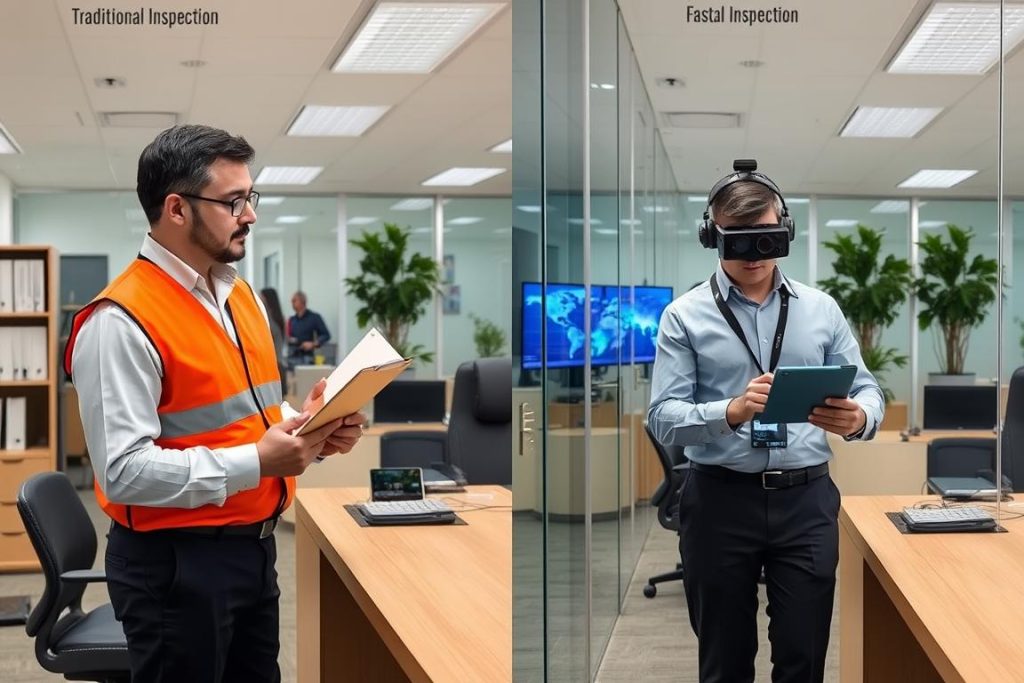
Traditional inspection methods require physical presence, often in hazardous environments. This approach presents numerous challenges: scheduling difficulties, travel costs, safety risks, and limited inspection frequency. Remote visual inspection technologies overcome these limitations by enabling thorough examinations without requiring on-site presence.
Key Objectives for Successful Remote Inspection Implementation
Organizations implementing remote visual inspection typically focus on four core objectives:
Accuracy
Detect and document defects at rates comparable to or better than in-person inspection, ensuring reliable asset condition assessment.
Compliance
Meet regulatory and audit requirements with defensible records that satisfy industry standards and internal quality protocols.
Efficiency
Reduce time and cost per inspection while improving throughput, allowing more frequent monitoring without proportional cost increases.
Scalability
Extend inspection capabilities across more assets and geographies without requiring linear increases in personnel or resources.
Understanding Key Terms in Remote Visual Inspection
Before diving deeper into best practices, it’s important to clarify the terminology used throughout this guide:
| Term |
Definition |
| Remote Visual Inspection (RVI) |
Any inspection where visual data (images, video, streaming) is captured off-site or by remotely operated systems and reviewed either live or asynchronously. |
| Tools for Remote Visual Inspection |
Hardware and software such as drones, borescopes, wearable cameras, mobile inspection apps, AR overlays, and AI-powered analysis engines. |
| Cloud-Based Visual Inspection Technologies |
Platforms that store, process, and enable collaboration on inspection media using cloud infrastructure—offering centralized data, real-time sharing, and AI-assisted analytics. |
Core Remote Visual Inspection Best Practices
Implementing effective remote visual inspection requires more than just purchasing technology. Organizations must establish clear procedures, ensure data integrity, and invest in proper training to realize the full benefits of these systems.
Establish Clear Procedures and Standards for Inspections
Standardization forms the foundation of consistent, auditable inspections. Without clear procedures, remote visual inspection results can vary widely between operators, undermining the reliability of your data.
Standardized checklists for each asset class (valves, flanges, transformers) specifying required views, lighting conditions, and camera angles.
Image and video quality requirements including minimum resolution (typically 1080p for general inspections), frame rate, and acceptable formats.
Acceptance criteria that clearly define what constitutes a defect, including size thresholds and severity classifications.
Metadata templates ensuring each inspection record contains consistent information: timestamps, GPS coordinates, inspector ID, and environmental conditions.
Example checklist structure for valve inspection:
{
"asset_id": "TX-524",
"required_views": ["front", "rear", "seal_closeup"],
"image_specs": {"min_resolution": "1920x1080", "format": "jpg"},
"acceptance_criteria": {"crack_length_mm": 2, "corrosion_pct": 5}
}
Ensure Data Integrity, Security, and Compliance with Remote Systems
Cloud-based visual inspection technologies offer convenience but require robust governance to protect sensitive information and maintain regulatory compliance.
Role-based access control (RBAC) limiting who can capture, upload, annotate, and approve inspection records.
End-to-end encryption in transit (TLS) and at rest (AES-256) for all inspection data.
Audit trails providing immutable logs of who accessed or modified records, essential for regulatory compliance.
Data residency considerations ensuring storage locations meet local regulatory requirements (GDPR, industry-specific regulations).
Training, User Adoption, and Change Management
Even the most sophisticated remote visual inspection technologies will fail without proper training and organizational buy-in.
Structured training programs combining hands-on sessions with e-learning modules tailored to different user roles.
Certification processes verifying that inspectors can consistently capture and interpret visual data according to standards.
Champion programs where early adopters demonstrate benefits to colleagues and provide peer support.
Adoption metrics tracking usage patterns and identifying areas where additional training or workflow adjustments are needed.
Benefits of Standardized Training
- Consistent inspection quality across teams
- Reduced interpretation variability
- Faster onboarding of new inspectors
- Improved compliance with procedures
Challenges Without Proper Training
- Inconsistent image capture techniques
- Missed defects due to improper angles
- Technology underutilization
- Resistance to new workflows
Workflow Optimization and Operational Considerations
Effective remote visual inspection depends not just on technology but on well-designed workflows that maximize efficiency and data quality. Organizations must carefully consider how inspection tasks are sequenced, assigned, and managed.
Designing an Efficient Remote Inspection Workflow
A well-structured workflow minimizes delays between inspection and action while ensuring consistent quality and documentation.
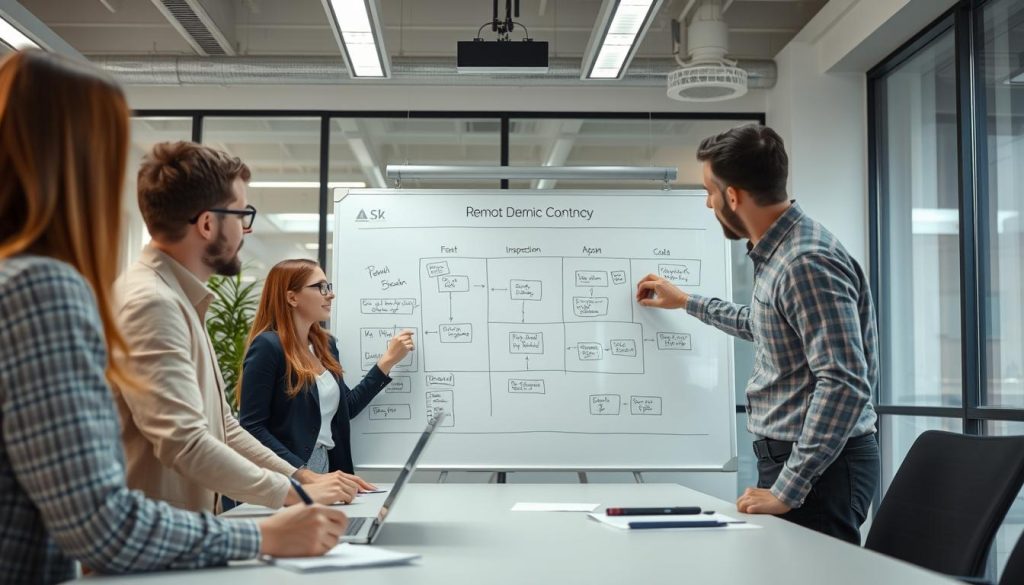
Clear task sequencing from capture to review to action, with defined handoffs between stages.
Role definition specifying responsibilities for field capture, remote review, quality assurance, and maintenance planning.
Automated notifications alerting appropriate personnel when their input is required or when critical issues are identified.
Exception handling with clear escalation paths for unusual findings or situations requiring immediate attention.
Automation and AI Augmentation in Remote Inspection
Automation and artificial intelligence can dramatically reduce manual effort while improving consistency and detection rates.
Automated metadata extraction capturing timestamps, locations, and asset identifiers without manual entry.
Anomaly detection algorithms highlighting potential defects for human review, reducing the risk of missed issues.
Severity classification automatically prioritizing findings based on predefined criteria and historical patterns.
Continuous learning systems that improve over time as reviewers confirm or correct AI-generated findings.
Metrics and KPIs to Monitor Success
Measuring the effectiveness of remote visual inspection programs requires tracking key performance indicators that align with business objectives.
| Metric Category |
Key Performance Indicators |
Target Improvements |
| Efficiency |
Time-to-complete inspections, inspections per day, cost per inspection |
20-40% reduction in cycle time, 30-50% increase in throughput |
| Quality |
Defect detection rate, false positive rate, first-time-right percentage |
10-30% improvement in detection accuracy,
|
| Business Impact |
Downtime reduction, mean time to repair, compliance pass rate |
15-25% reduction in unplanned downtime, 100% regulatory compliance |
Challenges in Remote Visual Inspection and How to Overcome Them
While remote visual inspection offers significant benefits, organizations must address several common challenges to ensure successful implementation and reliable results.
Technical Limitations and Environmental Constraints
Remote visual inspection technologies can face technical and environmental challenges that affect data quality and reliability.
Connectivity Issues
Limited or unreliable network access in remote locations can disrupt real-time inspection and data transmission.
Solution: Implement edge-first capture systems that store data locally and synchronize when connectivity is available.
Lighting and Visibility
Poor lighting conditions can obscure defects and reduce the effectiveness of visual inspection.
Solution: Establish lighting standards and provide supplemental lighting equipment for challenging environments.
Hardware Reliability
Equipment failures in the field can delay inspections and create gaps in documentation.
Solution: Maintain redundant equipment and develop rapid replacement protocols for critical devices.
Environmental Factors
Weather conditions, dust, and other environmental factors can interfere with capture quality.
Solution: Use equipment rated for relevant environmental conditions and establish weather-related inspection guidelines.
Human Factors and Data Interpretation Challenges
The human element remains critical in remote visual inspection, presenting both challenges and opportunities for improvement.
Operator variability in capture techniques and angles can affect data consistency and completeness.
Interpretation differences between reviewers may lead to inconsistent findings and recommendations.
Attention fatigue during extended review sessions can increase the risk of missed defects.
Resistance to new technologies may slow adoption and reduce effectiveness.
Regulatory, Legal, and Privacy Considerations
Remote visual inspection programs must navigate various regulatory and legal requirements that vary by industry and geography.
Data sovereignty requirements dictating where inspection data can be stored and processed.
Privacy regulations affecting the capture and retention of images that may include people or private property.
Industry-specific compliance standards for inspection documentation and record-keeping.
Chain of custody considerations for inspection data that may be used in legal proceedings or insurance claims.
Compliance Tip: Consult with legal and compliance teams early in the implementation process to ensure your remote visual inspection program meets all applicable regulatory requirements.
Case Studies on Remote Inspections: Real-World Examples
Examining successful implementations provides valuable insights into the practical benefits and implementation strategies for remote visual inspection technologies.
Case Study A: Industrial Plant Inspections Using Drones and Cloud Analytics
Objective
A chemical processing plant sought to reduce inspection time and safety exposure for elevated equipment and piping while improving detection accuracy.
Implementation Approach
- Deployed multi-rotor drones equipped with high-resolution RGB and thermal cameras
- Integrated drone feeds into a cloud-based visual inspection platform with AI-based anomaly detection
- Connected inspection findings directly to the plant’s EAM system for automated work order generation
- Trained internal pilots and established standardized flight paths and capture protocols
Results
- Reduced inspection cycle time by approximately 40% compared to traditional methods
- Eliminated safety incidents related to elevated access in the first year of implementation
- Detected early signs of seal degradation that prevented a potential unplanned shutdown, saving an estimated $250,000
- Increased inspection frequency from quarterly to monthly without additional personnel
Key Lessons
The organization found that regulatory approvals and flight planning required significant upfront investment but delivered substantial returns once established. They also discovered that focusing AI models on common failure modes provided immediate value while more complex detection capabilities were developed over time.

Case Study B: Utilities and Infrastructure—Reducing Downtime with Remote Visual Inspection
Objective
An electric utility sought to improve inspection frequency and reduce outages across its distributed network of transmission and distribution assets.
Implementation Approach
- Combined pole-mounted drones, wearable cameras for field technicians, and cloud-based analytics
- Implemented a risk-based inspection schedule driven by asset criticality and historical failure data
- Integrated inspection outputs with GIS and outage management systems
- Established remote expert centers to provide real-time guidance to field technicians
Results
- Reduced average outage duration by 20% through faster detection and targeted maintenance
- Decreased inspection costs per asset by 30% by eliminating unnecessary site visits
- Increased inspection coverage by 150% within the first 12 months
- Improved customer satisfaction scores by 15% due to fewer and shorter outages
Key Lessons
The utility found that integration with existing GIS and work order systems was critical to realizing the full benefits of remote visual inspection. They also discovered that field teams adopted wearable cameras more readily when remote experts were available in real time to provide guidance and answer questions.
Key Takeaways and Replicable Patterns for Successful Implementation
These case studies reveal several common success factors that organizations can apply to their own remote visual inspection initiatives:
Start with high-impact assets where inspection challenges or failure consequences are greatest
Combine automation with human expertise rather than relying exclusively on either approach
Integrate inspection data with existing systems to streamline workflows and maximize value
Invest in training and change management to ensure adoption and consistent implementation
Measure and communicate results to build support and justify continued investment
Roadmap to Implement Remote Visual Inspection Technologies Successfully
Implementing remote visual inspection requires a structured approach that addresses technology, processes, and people. This roadmap provides a framework for organizations at any stage of their implementation journey.
Recap of Remote Visual Inspection Best Practices and Essential Tools
Successful remote visual inspection programs incorporate several core elements:
Standardized procedures with clear image requirements, acceptance criteria, and documentation standards
Appropriate technology selection based on specific inspection scenarios and asset types
Secure data management with proper access controls, encryption, and compliance considerations
Integration with existing systems to maximize value and streamline workflows
Comprehensive training to ensure consistent implementation and interpretation
Performance measurement with relevant metrics and continuous improvement processes
Practical Next Steps for Teams Planning Implementation
Organizations looking to implement or enhance remote visual inspection can follow these practical steps:
Pilot Planning (1-2 months)
Select 1-2 asset types with clear KPIs for a focused pilot. Define success metrics including time savings, cost reduction, and quality improvements. Establish a 3-6 month timeline with specific milestones.
Vendor Selection (1-2 months)
Evaluate technology providers based on integration capabilities, security certifications, and performance in similar environments. Request demonstrations with your specific use cases and data requirements.
Process Design (1-2 months)
Create standardized capture templates, quality control rules, and workflow definitions. Map integration points with existing systems and define roles and responsibilities.
Training and Rollout (2-3 months)
Develop training materials and certification processes for inspectors and reviewers. Identify and support champions who can demonstrate benefits and provide peer guidance.
Scale and Optimize (Ongoing)
Use pilot results to refine processes and technology implementation. Expand to additional asset classes and locations based on prioritized value and complexity.
Final Recommendations for Sustaining Long-Term Success
Beyond initial implementation, organizations should focus on these key areas to ensure continued success:
Continuous improvement through regular review of metrics, refinement of AI models, and iteration of inspection protocols
Business alignment ensuring inspection objectives directly support broader goals for safety, reliability, and cost management
Governance and compliance with periodic audits, access reviews, and data retention policies
Collaborative culture fostering communication between field technicians, remote experts, and data analysts
Technology roadmap planning for hardware refreshes, software updates, and emerging capabilities
Ready to Transform Your Inspection Process?
Start with a focused 90-day pilot to validate the benefits of remote visual inspection for your specific assets and operations. Our team can help you develop a customized implementation plan based on industry best practices and your unique requirements.
Request Your 90-Day Pilot Plan